 Sudden Valley Siding
 Siding Built for Barkley's Weather, Not Just Its Curb Appeal
Homes in and around Barkley sit in a stretch of Whatcom County where the weather does real, measurable work on a house every single year. You get salt-tinged air moving in off the water, long stretches of driving rain that comes in sideways more often than straight down, and a moss season that can run from early fall clear through spring. None of that is exotic — it's just the Pacific Northwest doing what it does — but it adds up fast on the wrong siding material. We install James Hardie fiber cement siding exclusively, and pages like this one exist because homeowners here deserve a straight explanation of why that's the case, not a sales pitch.
This is a local trade, and the houses in this part of Whatcom County have a lot in common: moderate age, wood-heavy original construction, exposure that varies a lot depending on which side of the property faces the prevailing weather, and tree cover that keeps things shaded, damp, and slow to dry. That combination is exactly what separates siding materials that hold up from siding materials that quietly fail from the inside out.
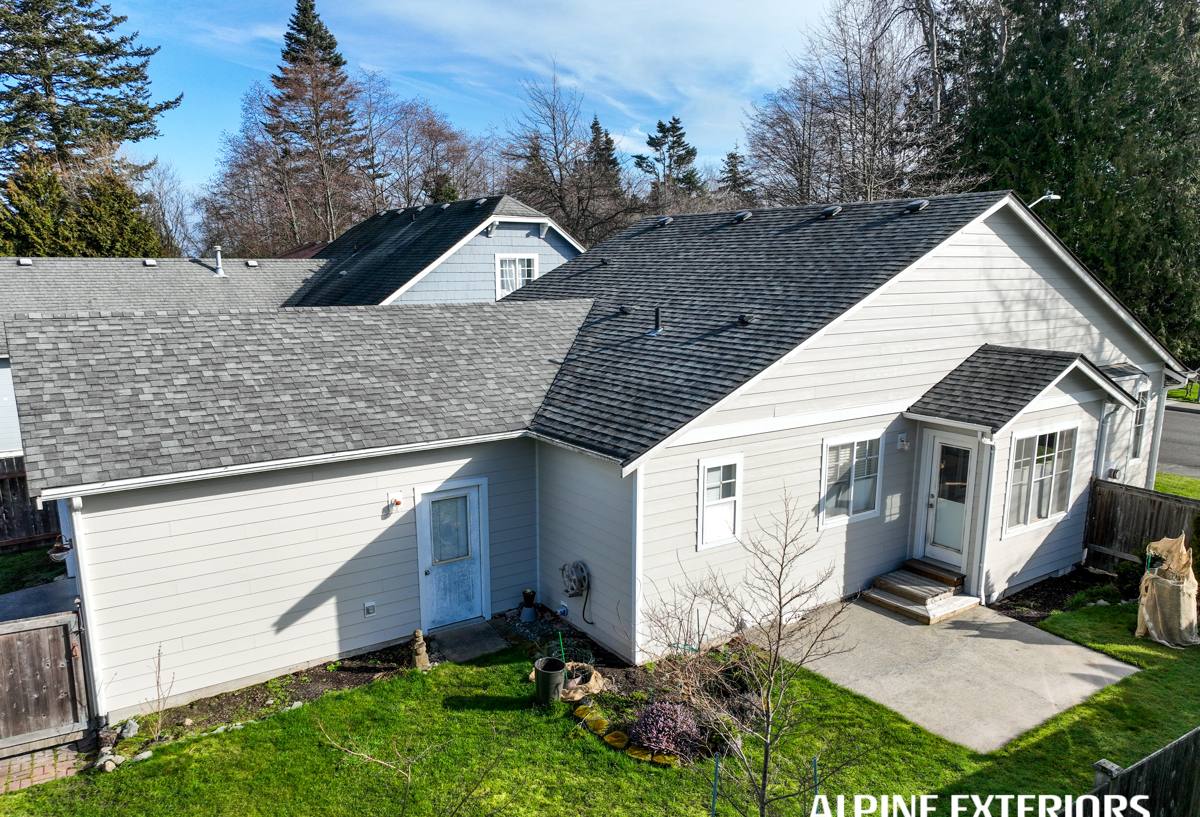
What the Local Climate Actually Does to Siding
Salt Air and Metal Fasteners
Proximity to Puget Sound and the Salish Sea means a steady trickle of salt-laden moisture in the air, even well inland. Salt air accelerates corrosion on exposed fasteners, flashing, and any metal trim components. It also speeds up the breakdown of lower-grade paint and sealants, which is part of why factory-applied, baked-on finishes matter more here than they would in a drier inland climate.
Driving Rain and Wind-Driven Moisture
Rain in this region rarely falls straight down. Wind pushes it sideways and up under laps, around trim, and into any gap in the water-resistive barrier. Siding that depends on a perfect, unbroken paint film to stay dry — like primed wood — is vulnerable the moment that film is compromised by a scratch, a nail pop, or years of UV exposure.
The Long Moss Season
Shade, humidity, and mild temperatures make Whatcom County prime moss and algae territory. Moss holds moisture directly against a wall surface for extended periods. On wood-based products, that sustained dampness is the single biggest driver of rot at seams, butt joints, and anywhere water can sit instead of shed.
Why We Only Install James Hardie Fiber Cement
We made a decision as a company to stop installing anything other than James Hardie fiber cement siding. That's not brand loyalty — it's a response to what we've seen happen to other materials in exactly this climate.
What We Stopped Installing, and Why
- Vinyl siding: Lightweight and inexpensive, but it expands and contracts with temperature swings, can warp or crack in cold snaps, and its color is baked through the material rather than factory-cured onto a fiber cement substrate — which means fading and brittleness over time in a climate with real seasonal swings.
- Primed spruce and cedar: Real wood siding can look excellent, but it's fully dependent on paint film integrity. In a driving-rain, high-moss climate, any breach in that film lets moisture in, and wood siding doesn't forgive sustained dampness the way fiber cement does.
- LP SmartSide (engineered wood): A wood-strand product with a resin binder and coating. It performs reasonably when installation and maintenance are perfect, but it shares wood's fundamental vulnerability to moisture intrusion at cut edges and seams if that coating is ever compromised.
- Cemplank and Allura (competing fiber cement brands): These are legitimate fiber cement products, not junk. Our decision to standardize on Hardie specifically comes down to product line depth for this climate, finish warranty structure, and consistency of supply and support — not a claim that competing fiber cement is unsafe or defective.
Every one of those products has homeowners who are happy with them. Our position is narrower: for the specific combination of salt air, wind-driven rain, and moss exposure that Barkley and the surrounding Sudden Valley area deal with, James Hardie fiber cement is the product we're willing to put our name behind.
What James Hardie Gets Right for This Climate
Non-Combustible, Moisture-Stable Core
Fiber cement is made from cement, sand, and cellulose fibers. It doesn't rot, it doesn't feed moss the way wood does, and it holds up to repeated wet-dry cycling far better than wood-based products. It's also non-combustible, which matters increasingly for wildfire-adjacent insurance considerations even in a wet climate like this one.
ColorPlus Factory Finish
Rather than relying on field-applied paint, Hardie's ColorPlus finish is baked on at the factory in multiple coats, engineered specifically to resist fading, chipping, and moisture intrusion at the finish level. In a salt-air environment, a factory-cured finish holds its color and its protective integrity far longer than a job-site paint job.
Climate-Engineered HZ Product Lines
Hardie manufactures different HZ (HardieZone) formulations for different climate zones, accounting for regional moisture and temperature patterns. We install the HZ5 product line appropriate for the Pacific Northwest, which is engineered around exactly the wet, moderate-temperature conditions Whatcom County sees most of the year.
Warranty Backing
James Hardie backs its siding with a long, transferable limited warranty on the substrate, plus a separate finish warranty on ColorPlus products. A transferable warranty is a real asset at resale — it tells a future buyer the exterior was done right, not patched together.
Comparing Siding Options for a Barkley Home
| Material | Moisture Resistance | Finish Durability | Typical Maintenance |
|---|---|---|---|
| James Hardie Fiber Cement | Excellent — moisture-stable core | Factory ColorPlus finish, long fade resistance | Periodic wash, minimal repainting |
| Vinyl | Fair — can trap moisture behind panels if installed loose | Color fades over time, can become brittle | Low, but limited repair options if damaged |
| Primed Wood (Cedar/Spruce) | Poor to fair — fully dependent on paint film | Requires regular repainting | High — repainting, caulking, spot repairs |
| Engineered Wood (LP SmartSide) | Fair — vulnerable at cut edges/seams | Coating holds up if maintained | Moderate — edge sealing, coating checks |
This table reflects general product characteristics, not a claim about any single manufacturer's failures. The right choice depends on budget, home style, and how much ongoing maintenance a homeowner wants to take on.
Beyond Siding: Roofing, Windows, and Decks
Siding doesn't work in isolation. A home's exterior is a system, and we handle roofing, windows, and decks alongside siding because they all interact with the same weather.
Roofing
A roof in poor condition sends water down onto siding and trim in ways that accelerate wear, even on fiber cement. Flashing details where roof meets wall are a common failure point in wind-driven rain conditions.
Windows
Window flashing and trim integration is one of the most common sources of hidden water intrusion behind siding. When we replace siding, we check window flashing details as part of the job rather than working around them.
Decks
Decks take the same driving rain and moss exposure as siding, often with less protection from overhangs. Proper board spacing, fastener choice, and ledger flashing matter just as much here as siding choice does on the walls above.
What a Siding Project Looks Like
Assessment First
We start by looking at what's actually happening on the house — moisture staining, moss buildup patterns, trim condition, and how the existing siding has held up on different exposures. That tells us where the real problems are, not just where the siding looks worn.
Installation to Spec
Fiber cement performs the way it's supposed to only when installed correctly — proper fastening, correct clearances at grade and roofline, sealed cut edges, and flashing integrated the right way at windows, doors, and penetrations. Most fiber cement complaints trace back to installation shortcuts, not the material itself.
A Practical Pre-Project Checklist
- Confirm what's driving the need for new siding — moisture damage, moss/algae buildup, or straightforward age and appearance
- Check trim, window flashing, and roofline details, not just wall panels
- Ask what HZ product line and ColorPlus color options fit the home
- Get clarity on warranty coverage for both the substrate and the finish
- Confirm the crew doing the work is factory-trained on fiber cement installation, not just general carpentry
Why a Local Crew Matters in This Area
A crew that works this part of Whatcom County regularly knows which sides of a house take the worst of the wind-driven rain, where moss tends to build up fastest, and how salt air behaves differently a few blocks from the water versus further inland. That local pattern recognition shows up in small decisions — flashing details, fastener spacing, clearance at grade — that matter more over ten years than they do on install day.
If you're weighing a siding, roofing, window, or deck project on a Barkley-area home, we're glad to take a look and talk through what's actually going on with your exterior. A free, no-pressure estimate is a good place to start — there's a form below whenever you're ready.