 Sudden Valley Siding
 Siding Built for Life Along Lake Whatcom
Silver Beach sits in one of the more distinctive pockets of Whatcom County — a lakeside community wrapped in evergreens, tucked against the water, and exposed to the same wet, moss-friendly climate that defines exterior maintenance across this part of Washington. Homes here don't fail because owners neglect them. They fail because most siding products simply weren't engineered for this much sustained moisture, shade, and seasonal freeze-thaw cycling. We install exterior siding, roofing, windows, and decks for homeowners throughout the Sudden Valley and Silver Beach area, and we've built our siding program around one product line for a reason: James Hardie fiber cement. Not vinyl, not LP SmartSide, not primed wood — Hardie, exclusively. This page explains why that matters specifically for a home in your neighborhood.
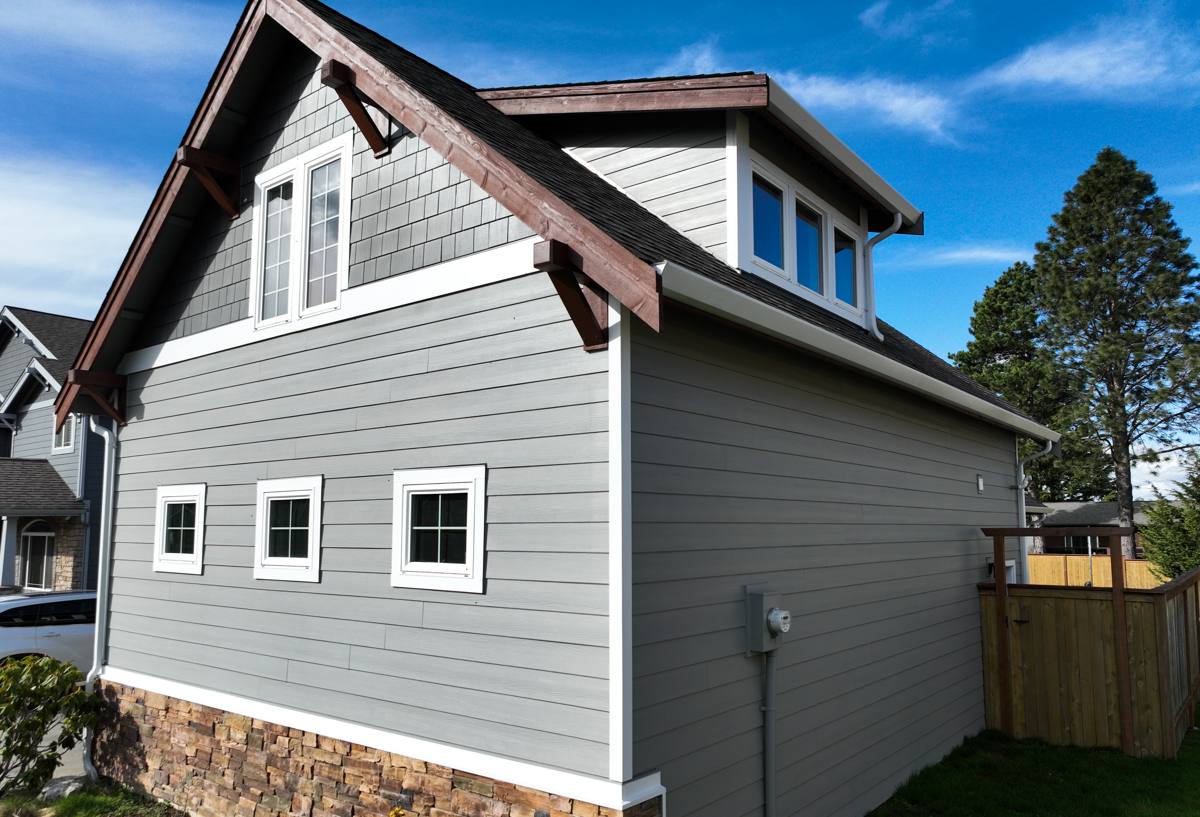
What the Local Climate Does to Exterior Siding
Whatcom County's maritime climate brings long, damp stretches of weather from fall through spring, moisture-laden air moving in off the Sound and settling into low-lying, tree-shaded areas like the lake basin, and short, cool summers that never fully dry the ground out before the next rainy season starts. For a home near Silver Beach, that combination shows up as a few very specific, very predictable problems.
Driving Rain and Wind-Driven Moisture
Rain in this region rarely falls straight down. Wind off the lake and the surrounding terrain pushes it sideways into wall assemblies, seams, and trim joints. Siding materials that rely on paint film or a factory coating to keep water out are only as good as that coating's weakest point — and every seam, fastener hole, and cut edge is a weak point over time.
Extended Moss and Mildew Season
Heavy tree cover, lake humidity, and limited direct sun on north- and east-facing walls mean many homes in this area stay damp for weeks at a stretch. That's exactly the environment moss, algae, and mildew need to take hold on a wall surface — and once organic growth gets a foothold on a porous or wood-based product, it holds moisture against the material and accelerates whatever damage is already happening underneath.
Freeze-Thaw and Swelling Cycles
Whatcom County doesn't get brutally cold, but it does cycle through freezing nights and wet, above-freezing days often enough to matter. Any siding material that absorbs water — even a small amount — will expand and contract with those cycles. Over years, that's how paint fails early, seams open up, and edges start to swell or delaminate.
Why We Standardized on James Hardie Fiber Cement
We used to install a wider range of siding products. We don't anymore, and it's not a marketing position — it's what years of service calls and tear-offs in this exact climate taught us. Fiber cement siding is made from cement, sand, and cellulose fibers, engineered specifically to resist moisture absorption, hold paint far longer than wood-based products, and stay dimensionally stable through wet-dry and freeze-thaw cycles. James Hardie is the manufacturer we trust to deliver that consistently, and their HZ5 product line is engineered specifically for climates like ours — cold, wet, and humid for much of the year.
What Sets Hardie Apart in Practice
- Non-combustible core material, which also matters for insurance consideration in wildfire-adjacent regions of the state
- ColorPlus factory-applied finish, baked on under controlled conditions rather than field-painted, which resists fading and chipping far longer than site-applied paint
- Engineered specifically for moisture-heavy, freeze-thaw climates through the HZ5 product designation
- A transferable limited warranty that follows the house, which matters to future buyers as much as current owners
- Decades of real-world performance data in Pacific Northwest conditions, not just lab testing
Why We Don't Install Vinyl, LP SmartSide, or Primed Wood
Homeowners near Silver Beach ask us about these alternatives often, usually because they're less expensive up front. We're honest about the trade-offs rather than dismissive of the products.
Vinyl Siding
Vinyl is affordable, low-maintenance in dry climates, and easy to install quickly. Its weakness here is moisture management at the seams and its tendency to warp or bow under our region's temperature swings and prolonged damp exposure. It also can't be painted a genuinely different color without voiding warranty terms, which limits a home's resale flexibility over time.
LP SmartSide and Engineered Wood
Engineered wood products have improved substantially over the decades, and LP SmartSide performs reasonably well when installation details are followed to the letter. The risk is the installation sensitivity: any gap in caulking, flashing, or edge sealing gives moisture a path into a wood-fiber substrate, and in a climate as wet as ours, that's not a small risk — it's a near-certainty over a long enough timeline.
Primed Spruce and Cedar
Real wood siding has genuine aesthetic appeal, and cedar in particular has a long tradition in the Pacific Northwest. But both require an ongoing maintenance commitment — recoating, caulking, and moisture monitoring — that most homeowners underestimate when they choose it, especially on a lake-adjacent, tree-shaded lot where wall surfaces rarely get a chance to fully dry.
Siding Cost Factors for a Silver Beach Home
Every home is different, and we don't publish blanket pricing because wall complexity, access, and existing substrate condition all move the number. What we can walk through honestly are the factors that actually drive cost on a project like yours.
| Factor | Why It Matters Locally |
|---|---|
| Home size and wall complexity | More corners, dormers, and trim details mean more cutting, fitting, and flashing work |
| Existing siding removal | Tear-off and disposal of old material adds labor, especially with wood or vinyl hiding moisture damage underneath |
| Substrate condition | Sheathing and framing damaged by long-term moisture intrusion needs repair before new siding goes on |
| Access and lot terrain | Sloped, wooded, or lake-adjacent lots can affect staging, scaffolding, and material handling |
| Product line and profile | Lap width, shingle-style panels, and trim board selection all carry different material costs |
| Color and finish | Factory ColorPlus finishes cost more up front than primed board but eliminate a full repaint cycle |
How a Siding Project Works, Start to Finish
Inspection and Assessment
We start by walking the exterior and, where relevant, opening up small sections to check what's happening behind the current siding. In a damp, shaded environment like the lake basin, hidden moisture damage is common enough that we treat this step as essential, not optional.
Removal and Substrate Repair
Old siding comes off, and any compromised sheathing or framing gets repaired before anything new goes up. Installing new siding over a damaged substrate just hides the problem for a few more years — it doesn't fix it.
Weather-Resistive Barrier and Flashing
This is the step that determines how a home performs in wind-driven rain, and it's the step that gets rushed on lower-end jobs. Proper house wrap, correctly lapped and taped, along with flashing at every window, door, and roofline intersection, is what actually keeps water out — the siding itself is the second line of defense, not the first.
Installation to Manufacturer Spec
James Hardie publishes specific fastening patterns, clearances, and caulking requirements, and those specs exist because the manufacturer's warranty depends on them being followed. We install to that spec every time, which is also why we're comfortable standing behind the work.
Final Detailing and Walkthrough
Trim, caulking, and touch-up work happen last, followed by a walkthrough so you understand what was done and what maintenance, if any, to expect going forward.
What to Look for in a Contractor for This Area
Siding work in a climate this demanding is not a place to shop on price alone. A poorly installed premium product will fail faster than a well-installed budget one, and the failure often hides behind the wall for years before it shows up as a soft spot, a stain, or a mold smell inside the house.
- Confirm the contractor is licensed and insured to work in Washington State
- Ask specifically how they handle flashing at windows, doors, and roof intersections — this is where most water intrusion actually starts
- Ask whether they're a certified installer for the siding brand they're proposing, and what that certification actually required
- Get the warranty terms in writing, both the manufacturer's material warranty and the contractor's labor warranty
- Ask how they handle substrate repair if they find hidden moisture damage during tear-off
- Check that they have experience specifically in lake, coastal, or heavily wooded settings, not just general suburban siding work
Roofing, Windows, and Decks Alongside Your Siding
Siding doesn't work in isolation. A roof with failing flashing, windows with degraded seals, or a deck trapping moisture against a wall all undermine even a well-installed siding job. Because we handle roofing, windows, and decks in addition to siding, we look at the whole exterior envelope together rather than treating each component as a separate problem — which matters most in a climate where water finds every gap eventually.
A Local Crew That Knows This Environment
A contractor who mainly works drier, sunnier parts of the state will make different assumptions than one who works Whatcom County year-round. We know which walls in a Silver Beach-area home are going to stay shaded and damp longest, which corners take the most wind-driven rain, and why moss control matters as much as the initial install. That local knowledge shapes how we detail flashing, where we pay extra attention during installation, and what we tell homeowners to watch for afterward.
If you're weighing a siding, roofing, window, or deck project for a home near Silver Beach or anywhere in the Sudden Valley area, we're happy to take a look and give you an honest, no-pressure assessment of what your home actually needs. Use the form below to request a free estimate.