 Sudden Valley Siding
 New Construction Is a Different Job Than Replacement
Homeowners building or framing a new house in Barkley sometimes assume window installation is window installation. It isn't. Replacing a window in an existing wall means working around finished siding, existing trim, and a wall assembly that's already sealed and weathered in. New-construction window installation happens at the framing stage, before siding goes up, while the wall is still open to the elements and every flashing layer has to be built from scratch in the right order.
That's actually an advantage if it's done right — there's no old caulk to fight, no hidden rot to discover, no guessing what's behind the wall. But it also means there's no margin for skipping steps. Every layer that keeps water out of a Barkley home for the next 30-40 years gets installed once, during framing, and then covered up by siding and trim. Mistakes made here don't show up as a leak for years, and by then they're expensive to fix.
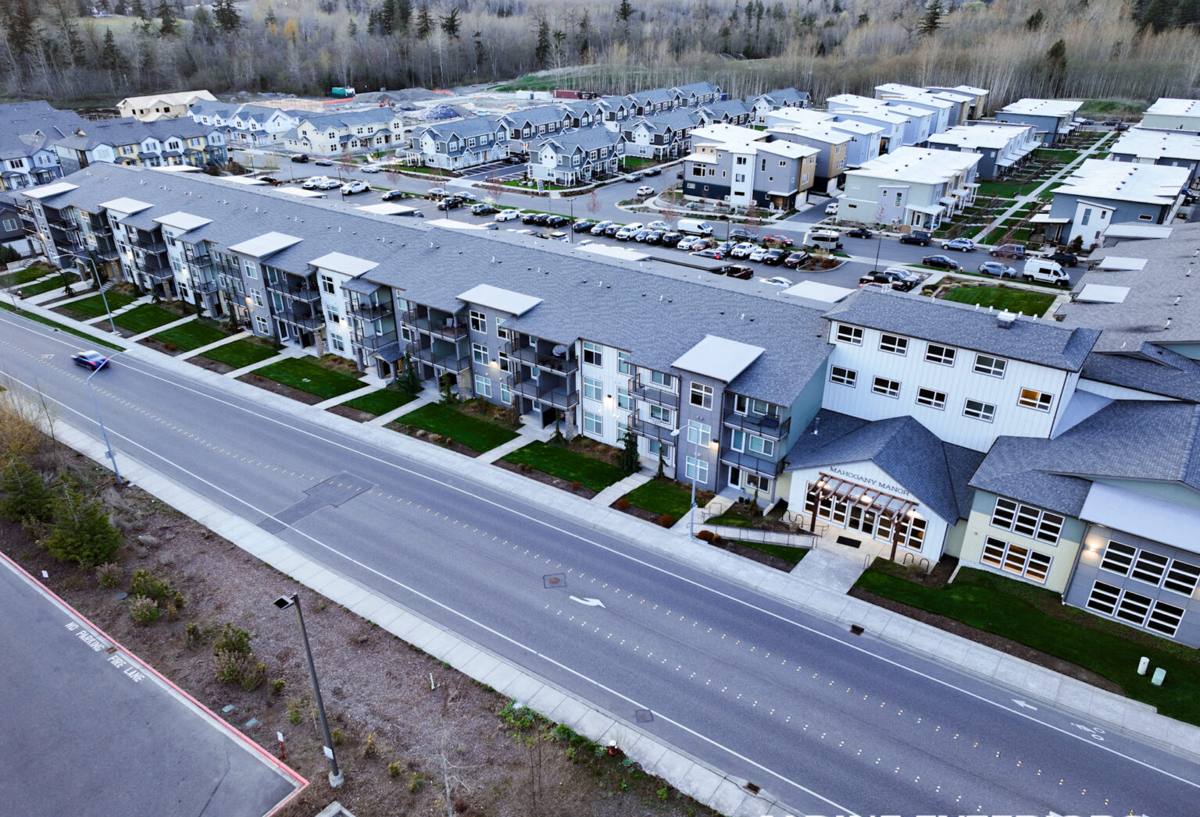
What Barkley's Climate Actually Demands From a Window Install
Sudden Valley sits in Whatcom County, and like most of Northwest Washington, the building envelope here has to deal with a long wet season, sustained driving rain rather than just occasional showers, and a marine-influenced air mass that keeps everything damp for months at a time. That combination is exactly what turns a mediocre window install into a moisture problem.
Driving Rain and Wind-Driven Water
Wind-driven rain doesn't just fall on a window — it gets pushed sideways and upward into the smallest gaps around the frame. A flashing detail that would be fine in a dry climate simply doesn't hold up here. Sill pans, proper lap sequencing, and continuous sealant beads aren't optional upgrades in this region; they're the baseline for a window that won't let water into the wall cavity.
Moss, Algae, and Prolonged Dampness
Whatcom County's long moss season is a symptom of the same root cause: surfaces stay damp for extended stretches of the year. Around windows, that dampness accelerates any weak point — a gap in house wrap, a missed flashing tape lap, a nailing fin that wasn't fully sealed — turning a small oversight into trapped moisture and eventual rot or mold inside the wall.
Salt Air and Corrosion
Whatcom County's proximity to the coast means marine air reaches inland communities like Sudden Valley more than people expect. Salt-laden air accelerates corrosion on fasteners, hardware, and unprotected metal flashing over time. That's part of why fastener choice and flashing material matter as much as the window unit itself.
The Anatomy of a Correct New-Construction Install
A proper new-construction window installation follows a specific sequence, and each layer depends on the one before it being done correctly. Skipping the order — or rushing it to keep a framing schedule moving — is where most future callbacks originate.
- Rough opening check. Confirm the opening is square, plumb, and sized correctly for the window unit before anything else happens.
- Sill pan flashing. A sloped, back-dammed sill pan is installed first so any water that does get past the window has a path back out, not into the framing below.
- Side and head flashing integration. Flashing tape or membrane is lapped in the correct shingle-style order — sides over the sill pan, head flashing over the sides — so water sheds downward and outward at every layer.
- House wrap integration. The weather-resistive barrier is cut, lapped, and taped into the window flashing so the whole wall functions as one continuous drainage plane, not a patchwork of separate materials.
- Window setting and shimming. The unit is set, shimmed level and plumb without racking the frame, and fastened per the manufacturer's schedule — over-driving or under-driving fasteners both cause long-term problems.
- Sealant and backer rod. Exterior sealant joints are backed and sized correctly so they flex with temperature and moisture cycling instead of splitting.
- Interior air sealing. Low-expansion foam or backer rod seals the interior gap for energy efficiency without bowing the frame.
Every one of those steps has to be inspected before the next layer covers it — which is why we document flashing and sill pan work with photos before house wrap goes over it. Once siding is up, that inspection window is gone.
Choosing Frame Material for a Barkley Build
New construction gives you a real choice of frame material, since you're not constrained by an existing opening. For a home in this climate, the trade-offs come down to maintenance, moisture tolerance, and long-term performance rather than looks alone.
| Frame Material | Moisture Tolerance | Maintenance | Typical Fit for Barkley |
|---|---|---|---|
| Vinyl | Good — won't rot, minor expansion/contraction | Low — no painting or sealing needed | Cost-effective, solid standard choice |
| Fiberglass | Excellent — very stable in wet, temperature-swinging conditions | Low | Strong long-term value for exposed elevations |
| Wood-clad | Depends heavily on cladding integrity and installation detail | Higher — cladding and joints need periodic attention | Best for owners who want the interior wood look and will maintain it |
| Aluminum | Poor thermal performance, prone to condensation in this climate | Moderate | Generally not our recommendation for Whatcom County homes |
We're upfront about aluminum's condensation tendency in a marine climate like this — not because it's a bad product everywhere, but because a cold, conductive frame in a house with a long damp season invites interior condensation and eventual moisture issues at the sill. That's a maintenance burden we'd rather steer clients away from than deal with as a callback later.
How We Work With Builders and Owner-Builders in Barkley
Most of our new-construction window work in Sudden Valley happens on a schedule set by a general contractor or, on smaller lots, directly with an owner managing their own build. Either way, our process is the same:
- Review the window schedule and rough opening sizes against the actual units ordered before they arrive on site
- Coordinate timing with the framer and house wrap installer so flashing sequencing isn't rushed or done out of order
- Install sill pans, flashing, and house wrap integration as one continuous scope rather than handing pieces off between trades
- Photograph flashing and sill pan details before they're covered, for the builder's records and our own
- Set and seal windows to manufacturer spec, including fastener type and spacing
- Walk the finished openings with the builder or owner before siding crews start
Working the same neighborhood repeatedly matters here. We already know how local framers in this area typically size and square rough openings, what the prevailing wind and rain exposure looks like on different lots around Sudden Valley, and how to sequence our work so it doesn't hold up the rest of the build schedule.
Mistakes That Show Up Years Later
Because new-construction window problems get buried under siding immediately, the costliest mistakes are the ones that look fine on install day and only surface as a leak, stain, or soft spot years down the road.
- House wrap taped over the flashing instead of under it, reversing the drainage path
- Missing or flat (non-sloped) sill pans, which trap rather than shed water
- Fasteners over-driven, crushing the frame and distorting weatherstripping
- Sealant applied without backer rod, leading to joint splitting within a few seasons
- Flashing tape applied to dusty, damp, or cold framing lumber that it never actually bonded to
- Window openings framed out of square, forcing installers to rack the frame to fit
Every one of these is invisible at final walkthrough and only becomes obvious after a wet Whatcom County winter or two. Catching them requires knowing what to look for before the wall closes up — not after a homeowner reports a stain on the drywall.
What Drives Cost on a New-Construction Window Job
New-construction window installation is typically quoted per opening, and the total depends on more than just the window unit price. The factors below are what actually move the number on a real bid.
| Cost Factor | Why It Matters |
|---|---|
| Number and size of openings | More openings and larger units mean more flashing, sealant, and labor time |
| Frame material selected | Vinyl, fiberglass, and wood-clad carry different unit costs and handling requirements |
| Wall height and access | Second-story and high gable openings require staging or lift access |
| House wrap and flashing system specified | Higher-performance flashing membranes cost more but perform better long-term in this climate |
| Schedule coordination | Tight framing schedules or multiple trade handoffs can add coordination time |
| Exposure of the elevation | Openings facing prevailing wind and rain often warrant extra flashing detail |
Rather than quoting a flat per-window number sight unseen, we walk the plans or the framed shell, count actual openings, and note anything about the lot — exposure, elevation, wall height — that affects the work before giving a number.
Why Hiring a Crew That Already Works Barkley Matters
Barkley is one of the neighborhoods within Sudden Valley where we've done this kind of work before, and that familiarity isn't just local color — it changes how the job runs. We already understand the general exposure conditions around Sudden Valley's terrain and tree cover, how local framing crews typically size and finish rough openings, and what inspectors in Whatcom County expect to see at flashing checkpoints. That means fewer surprises, less rework, and a crew that isn't learning the area on your dime.
It also means accountability. A crew that plans to keep working in this community has every reason to get the flashing right the first time, because a callback on a leaking window is a conversation we'd rather not have with a neighbor down the road.
If you're building or framing a home in Barkley and want new-construction windows installed the right way the first time, we're happy to walk the plans or the framed shell with you and give a straightforward, no-pressure estimate — just fill out the form below.