 Sudden Valley Siding
 Decks in Barkley Face a Different Set of Problems
A deck built the same way you'd build one in a dry inland climate does not last long in Barkley. Between the salt-laden air moving in off the water, the driving rain that Whatcom County sees for months at a stretch, and a moss season that can run from fall through spring, an outdoor structure here is under near-constant moisture pressure. We've replaced enough failed decks in this area to know that most of the damage isn't from age — it's from a handful of decisions made at the framing and fastener stage that never accounted for what this climate actually does to wood, metal, and composite over time.
A deck built for Barkley needs to handle three things well: shedding water fast, resisting corrosion, and staying clean enough that moss and algae don't get a foothold in the first place. Get those three right and the deck will look and perform the same in year twelve as it did in year one. Get them wrong and you're looking at soft boards, rusted hardware, and a slick, moss-covered surface within a few seasons.
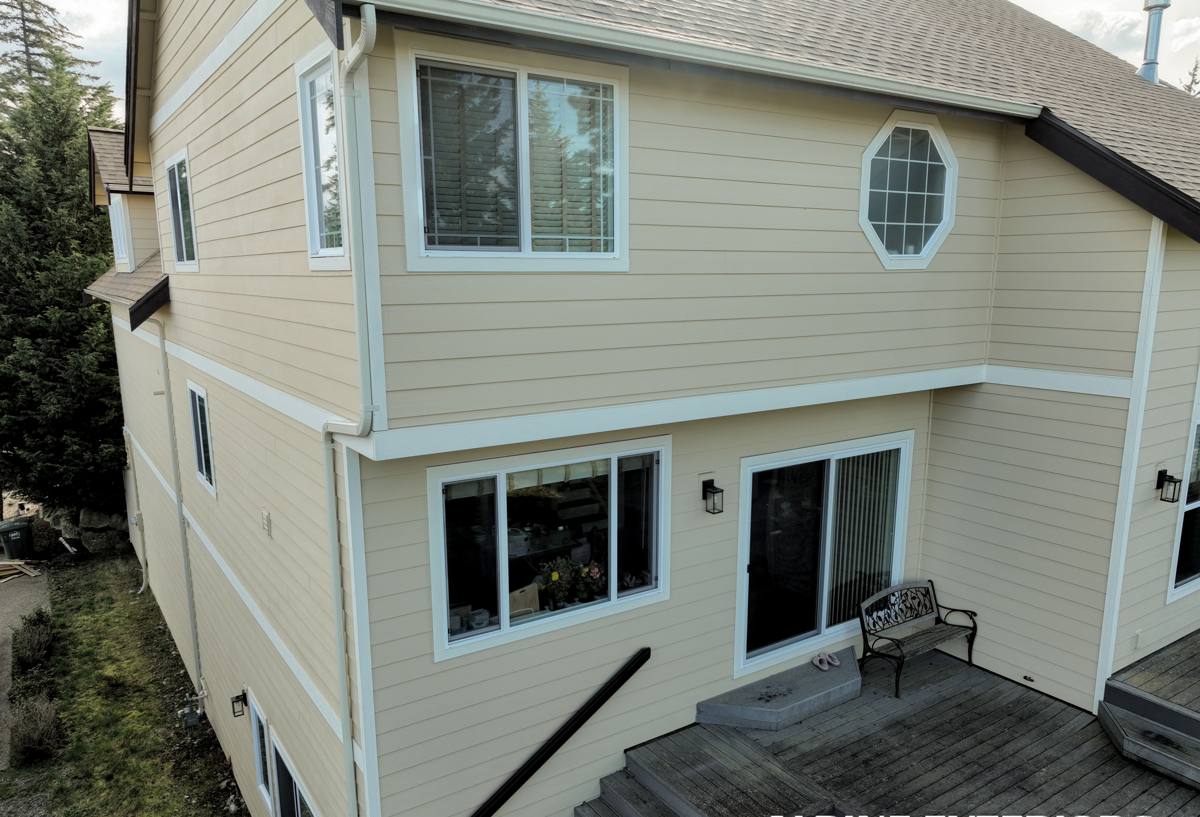
What Salt Air and Driving Rain Do to a Deck
Corrosion Nobody Sees Until It's a Problem
Salt air doesn't just affect homes right on the water — it travels, and Whatcom County properties well inland still see accelerated corrosion on exposed metal compared to drier parts of the state. On a deck, that means fasteners, joist hangers, post bases, and railing hardware are all working harder than the manufacturer's generic spec sheet assumes. Standard galvanized hardware can start showing rust streaks and pitting years before it should, and once a fastener corrodes, it loses holding strength quietly — you won't see it until a board is loose or a railing has play in it.
Driving Rain and Water Path
Rain that comes in sideways, which is common through fall and winter here, gets pushed into places vertical rain never reaches — under railing caps, behind ledger boards, into end grain on stair stringers. A deck that isn't detailed with that in mind ends up with hidden rot at the ledger connection (one of the most common structural failure points we find) or at the base of posts where water pools and never fully dries between storms.
Why the Moss Season Matters for Deck Design
Whatcom County's extended damp, low-sun stretch is ideal growing conditions for moss and algae on any horizontal wood surface that doesn't get airflow or sun exposure. On a deck, that shows up first in shaded corners, under furniture that never moves, and on boards installed too tight together to drain and dry. Moss isn't just cosmetic — it holds moisture against the wood surface, which accelerates rot, and it makes stairs and walking surfaces genuinely slippery. A deck designed for this climate accounts for board spacing, drainage, and sun/shade patterns from the start, rather than leaving the owner to fight moss with a pressure washer every spring.
What a Correctly Built Deck Involves Here
Footings and Framing
Footings need to be set below frost depth and sized for the soil conditions on the lot — Barkley area soils vary enough that we don't assume a standard footing size works everywhere without checking. Framing lumber should be pressure-treated rated for ground contact where it's within a few inches of soil or in a consistently damp zone, not just treated for above-ground use.
Ledger Attachment
The ledger board — where the deck attaches to the house — is the single most important structural and moisture detail on the whole project. It needs proper flashing that directs water out and away from the house wall, not just caulk and a hope. This is the connection point we see fail most often on older decks in this area, usually because flashing was skipped or installed backward.
Fasteners and Hardware
Given the salt air exposure, we specify stainless steel or heavy-duty coated fasteners and connectors rated for coastal or corrosive environments, not the base-grade galvanized hardware that's fine in drier inland regions. It costs more up front and saves the deck's structural integrity over its life.
Decking Surface and Spacing
Board spacing needs to allow for drainage and airflow underneath so surfaces actually dry between rain events instead of staying damp. Tight-fit installs look clean on day one but trap moisture and accelerate both rot and moss growth in a climate like this one.
Decking Material Comparison for This Climate
| Material | Moisture Behavior Here | Maintenance Burden | Typical Lifespan (this climate) |
|---|---|---|---|
| Pressure-treated wood | Prone to checking and graying if not sealed regularly; can hide rot under a painted surface | Needs re-sealing/staining every 2-3 years | 15-20 years with upkeep |
| Cedar | Naturally rot-resistant but softer; still needs sealing to resist moisture and moss | Sealing every 2-3 years, moss cleaning | 15-20 years with upkeep |
| Composite decking | Doesn't absorb water or rot, but can develop surface mold/moss film in shaded, damp spots without cleaning | Periodic washing, no sealing/staining | 25-30+ years |
| PVC/capped composite | Fully water-resistant surface; least prone to moss adhesion of the common options | Occasional washing | 25-30+ years |
We install all of the above depending on budget and the look a homeowner wants. Our professional standard is that whatever material goes down, the framing, flashing, and fasteners underneath it are built to the same high standard — a premium composite deck built on a poorly flashed ledger will still fail structurally, just more slowly and expensively.
Our Deck Building Process
- On-site assessment — we look at sun/shade exposure, drainage, existing structure if it's a rebuild, and how the deck ties into the house.
- Design and material selection — sized and laid out for the lot, with material recommendations based on budget, maintenance tolerance, and how exposed the deck is to weather.
- Permitting — decks above a certain height or attached to the structure typically require a permit; we handle that so the build is inspected and code-compliant.
- Footings and framing — built to below-frost-depth footings and ground-contact-rated lumber where needed.
- Ledger flashing and structural connections — the step we never shortcut, since it's the most common failure point in this climate.
- Decking, railing, and stairs — installed with proper spacing and corrosion-resistant hardware throughout.
- Final walk-through — we go over basic care so the deck holds up the way it's supposed to.
Common Problems We Find on Existing Barkley-Area Decks
- Ledger boards with missing or improperly installed flashing, leading to hidden rot at the house connection
- Standard galvanized fasteners showing rust and reduced holding strength years earlier than expected
- Decking boards installed too tight, trapping moisture and growing moss in shaded areas
- Post bases sitting directly on grade without proper drainage, leading to base rot
- Railings with hidden fastener corrosion that isn't visible until there's noticeable movement
- No airflow underneath low decks, keeping the framing damp long after rain has stopped
Deck Maintenance in a Climate Like Whatcom County's
Even a well-built deck needs some seasonal attention here. A short annual routine keeps small issues from becoming structural ones:
- Clear leaves and debris from between boards and off ledger flashing before the wet season sets in
- Check for moss buildup in shaded corners and stair treads and clean it before it gets slick
- Inspect visible fasteners and railing hardware for rust or looseness once a year
- Re-seal or re-stain wood decking on the schedule appropriate to the product, don't wait for visible graying
- Confirm gutters and downspouts near the deck are directing water away, not onto the structure
- Keep planters and furniture mobile so no single spot stays shaded and damp all season
Permits and Local Building Requirements
Most attached decks and any deck above a modest height require a building permit in Whatcom County, and the review will look at footing depth, ledger attachment, guardrail height, and stair geometry. Skipping this step is a common shortcut on older decks in the area, and it's part of why we find so many structural surprises when we're called out to repair or rebuild one. We pull permits as part of every applicable project so the finished deck is inspected and built to current code, not just built to look finished.
Why Hire a Crew That Already Works in Barkley
A contractor who mainly builds in drier inland areas will often spec the same materials and details they'd use anywhere else, because that's what they know. A crew that regularly works in and around Sudden Valley and the greater Whatcom County area already knows which fastener grades hold up against the local salt air, how far up a ledger flashing needs to run to handle the driving rain this area gets, and where moss tends to take hold on a given lot orientation. That local knowledge shows up in fewer callbacks and a deck that's still solid a decade in, not just on installation day.
If you're planning a new deck or looking at repairing or replacing an existing one, we're happy to take a look and walk you through what your specific lot and layout need. Reach out for a free, no-pressure estimate — the form below only takes a minute.