 Sudden Valley Siding
 Building a Deck That Actually Holds Up in Barkley
Barkley homes sit in a part of Whatcom County where the weather does real work on an outdoor structure. Between driving rain off the water, salt-laden air moving through the region, and a moss season that can stretch for months, a deck here is tested in ways a deck in a drier climate never is. We build custom decks for homes around Sudden Valley with those conditions treated as the starting point, not an afterthought.
A lot of deck problems we get called out to fix didn't come from bad luck. They came from a deck built to a generic plan instead of the site it sits on. Framing that trapped water. Fasteners that weren't rated for the exposure. Boards laid without enough slope or airflow underneath to ever really dry out. Every one of those is preventable at the design stage.
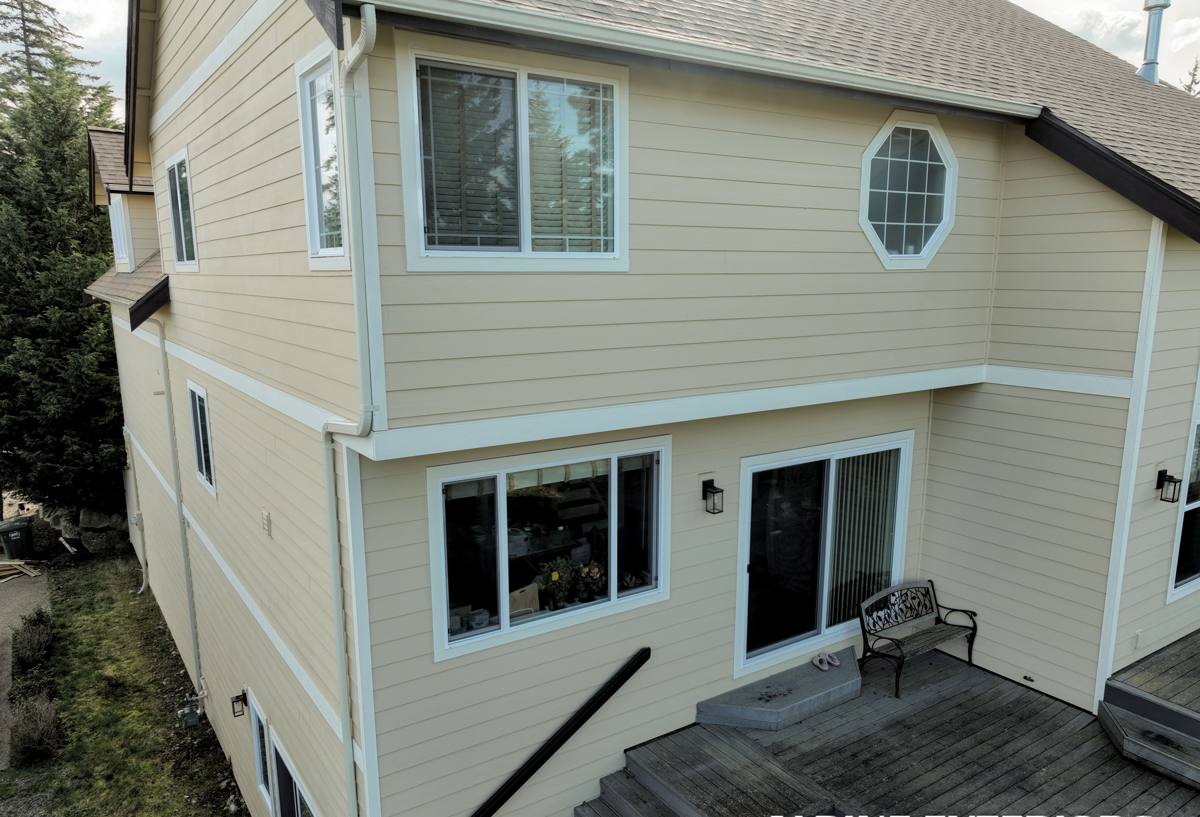
What the Local Climate Actually Does to a Deck
It helps to be specific about what "tough climate" means for a deck rather than just calling it "rainy." Three things drive most of the wear we see on decks in this area:
- Driving rain — wind-blown rain doesn't just fall on a deck surface, it gets pushed sideways and up under rail caps, into fastener holes, and behind ledger boards where standard flashing details fall short.
- Salt air — airborne salt accelerates corrosion on fasteners, brackets, and hardware. Standard zinc-coated screws and connectors can start showing rust and staining years before a deck's wood or composite surface shows its age.
- A long moss season — extended damp, low-light stretches mean anything shaded, poorly drained, or under tree cover grows moss and algae fast. On decking, that's a slip hazard and a maintenance headache; on framing underneath, sustained dampness is what actually shortens a structure's life.
None of these are exotic problems. They're the normal cost of building outdoors in Whatcom County. The fix isn't a gimmick product — it's choosing the right materials, detailing the framing correctly, and using hardware rated for the exposure.
Site Conditions That Vary Around Barkley
Homes in and around Barkley aren't all sitting on the same lot conditions. Some sites get more direct sun and dry out faster; others sit under mature tree cover or on a north-facing slope that stays damp most of the year. Elevation changes, existing tree canopy, and how close a deck sits to grade all change the drainage and ventilation plan we recommend. A deck design that ignores this and just copies a standard layout is one of the more common reasons we see early moss growth and soft spots within the first few years.
Choosing Materials for Wet, Moss-Prone Conditions
There's no single "best" decking material for every home — there's a best fit for a given budget, look, and maintenance appetite. Here's how the common options actually compare for a site like this one:
| Material | Moisture Behavior | Maintenance | Typical Lifespan |
|---|---|---|---|
| Pressure-treated wood | Absorbs and releases moisture; needs sealing to manage swelling/checking | Annual cleaning and re-sealing recommended | 15–20 years with upkeep |
| Cedar | Naturally moisture- and rot-resistant, but surface still needs protection over time | Periodic cleaning, sealing every 1–3 years | 20-plus years with care |
| Composite decking | Doesn't absorb water like wood, but still needs airflow underneath to shed moisture and resist mold on the surface | Occasional washing, no sealing/staining | 25-plus years, varies by product warranty |
| PVC decking | Fully moisture-resistant surface; most tolerant of standing dampness | Lowest maintenance of the group | 25-plus years, varies by product warranty |
We don't push one product line across every job. We'll walk a homeowner through the honest trade-offs — composite and PVC cost more up front but cut down on the sanding, sealing, and staining cycle that wood requires; wood costs less initially but only performs long-term if someone keeps up with maintenance. What matters more than the brand name on the board is whether the substructure underneath is built to let that board do its job.
Framing and Substructure: Where Most Failures Actually Start
The decking surface gets all the attention, but the framing underneath is what determines whether a deck lasts one decade or three. In a climate with this much driving rain, a few details make an outsized difference:
- Ledger flashing — where a deck attaches to the house, proper flashing (not just caulk) keeps wind-driven rain from working its way behind the ledger board and into the house framing.
- Joist protection — a joist tape or protective barrier on top of each joist keeps fastener penetrations from becoming entry points for water, which is one of the most common causes of hidden rot.
- Post and footing depth — footings sized and set to local frost and soil conditions, not just "deep enough to look right."
- Drainage slope — a slight pitch away from the house so water sheets off the surface instead of pooling against siding or door thresholds.
- Under-deck ventilation — enough clearance and airflow beneath the deck that the framing can actually dry out between rain events instead of staying damp for weeks at a stretch.
Every one of these is invisible once the deck is finished — which is exactly why it's worth asking a contractor to walk through their framing details before work starts, not after.
Hardware That Holds Up to Salt Air
Fastener and hardware corrosion is one of the more underrated deck problems in this region. Salt air speeds up rust on standard hardware, and once a fastener starts corroding, it can stain the decking around it and lose holding strength well before the boards themselves need replacing. For custom decks in this area, we standardize on:
- Stainless steel or high-grade coated fasteners rated for coastal/marine exposure
- Hidden fastener systems where the decking product supports them, which also reduces the number of exposed metal points
- Corrosion-resistant structural connectors and brackets at every load-bearing point
- Compatible metals throughout — mixing incompatible metals (like the wrong screw in an aluminum bracket) can cause galvanic corrosion that eats hardware from the inside
Cutting corners on hardware saves very little on a project's total cost and is one of the most common reasons we get called out to older decks with rust streaks, loose railings, or a ledger connection that's failed years ahead of schedule.
Living With Moss Season: Design Choices That Actually Help
You can't eliminate moss season in Whatcom County, but you can design a deck so it doesn't become a maintenance project every spring. The choices that matter most:
- Board spacing and gap width sized to shed water and debris instead of trapping it
- Avoiding low, shaded corners with no airflow wherever the site layout allows it
- Choosing a surface texture that sheds algae growth rather than holding onto it
- Planning gutter or drip-line management so runoff from the roof isn't dumping directly onto or under the deck
None of this makes a deck maintenance-free. It just means the maintenance a homeowner actually does — a seasonal wash-down, a quick check of drainage paths — is enough to keep it in good shape, instead of fighting a design that was working against the climate from day one.
Our Process for a Barkley Custom Deck
1. Site Visit and Assessment
We walk the property, look at drainage patterns, sun and shade exposure, existing structures the deck will tie into, and any slope or soil conditions that affect footing design.
2. Design and Material Selection
We put together a layout and material plan based on how the space will actually be used, the home's style, and the maintenance level the homeowner wants going forward — not a one-size-fits-all template.
3. Permitting
Most new decks and many significant deck rebuilds require a permit through the county. We handle the permit application and inspection scheduling as part of the project so the homeowner isn't chasing paperwork.
4. Construction
Framing first, with all the moisture-management details built in from the ground up — flashing, joist protection, proper fastener selection — followed by decking, railings, and any stairs or built-ins.
5. Final Walkthrough
We go over the finished deck together, confirm drainage is working as designed, and explain what routine maintenance (if any) the chosen materials need going forward.
Cost Factors for a Custom Deck Near Sudden Valley
Every deck is priced around its own combination of size, material, and site conditions, so a single flat number isn't honest. What we can lay out are the factors that move the price up or down:
| Factor | Effect on Cost |
|---|---|
| Decking material (treated wood vs. cedar vs. composite/PVC) | Composite and PVC cost more upfront; wood costs less but adds long-term maintenance |
| Deck height / elevation | Taller decks need more substantial footings, posts, and often stairs or additional railing |
| Site access and slope | Difficult access or a sloped lot increases labor time for footings and material staging |
| Railing style | Cable, glass, and custom metal railings cost more than standard baluster railing |
| Roof or cover integration | Adding a pergola, roof, or partial cover adds structural and material cost |
| Permit and inspection requirements | Larger or attached decks generally require more inspection steps, which adds time, not just fees |
Broadly speaking, a modest, well-built deck sits at one end of the range, and a large multi-level deck with premium materials, custom railing, and integrated cover sits at the other. We'll give a homeowner a real number for their specific project after a site visit — not a ballpark pulled from a generic price list.
Why a Crew That Already Works Barkley Matters
A contractor who's worked this specific area already understands the site conditions that come up again and again — the tree cover and shade patterns common to certain lots, the way lake-adjacent properties handle grading and drainage, and the practical realities of scheduling work around this region's wetter months. That local familiarity shows up in fewer surprises during construction and a design that's already accounting for the conditions that matter here, instead of learning them on the job.
It also matters for permitting and inspections. A crew that regularly pulls permits in Whatcom County knows the process, the typical timeline, and what inspectors are looking for, which keeps a project moving instead of stalling on paperwork.
What to Ask Before You Hire a Deck Builder Here
- Are you licensed and insured to build in Whatcom County?
- Will you pull the permit, or is that left to me?
- What fastener and hardware grade do you use, and is it rated for coastal/marine exposure?
- How do you flash and protect the ledger board and joists from water intrusion?
- What drainage or slope plan are you using for this specific site?
- What does routine maintenance look like for the material we choose?
- Can I see the written scope of work and material specifications before signing anything?
A contractor who answers these questions clearly and specifically — not with vague reassurances — is one who's actually thought through how a deck needs to perform in this climate.
Let's Talk About Your Deck
If you're planning a new deck or replacing one that's showing its age around Barkley or elsewhere near Sudden Valley, we're happy to take a look and talk through what makes sense for your home, your budget, and your site. Fill out the form below for a free, no-pressure estimate.