 Sudden Valley Siding
 Siding in Sehome: What Whatcom County Weather Actually Does to a House
Homes in and around Sehome sit inside one of the more demanding exterior climates in Washington. You've got proximity to salt water pushing airborne salt onto siding and trim, long stretches of driving rain off the Sound, and a moss and algae season that can run most of the year in shaded, north-facing exposures. None of that is exotic or rare — it's just the baseline. But it means exterior materials that perform fine in a drier inland climate can struggle here, and it's why the choice of siding material matters more in Whatcom County than it does in a lot of the country.
Salt air is corrosive to fasteners and finishes over time. Driving rain finds every gap in flashing, caulking, and butt joints, and it doesn't take much of a path for moisture to get behind siding and start doing damage that isn't visible from the street. And constant damp shade — common on the north and west sides of a lot of properties here — is exactly the environment moss, algae, and mildew need to take hold on a painted or wood-based surface. A siding system that can't shed water cleanly and resist organic growth is going to show it within a few years, not a few decades.
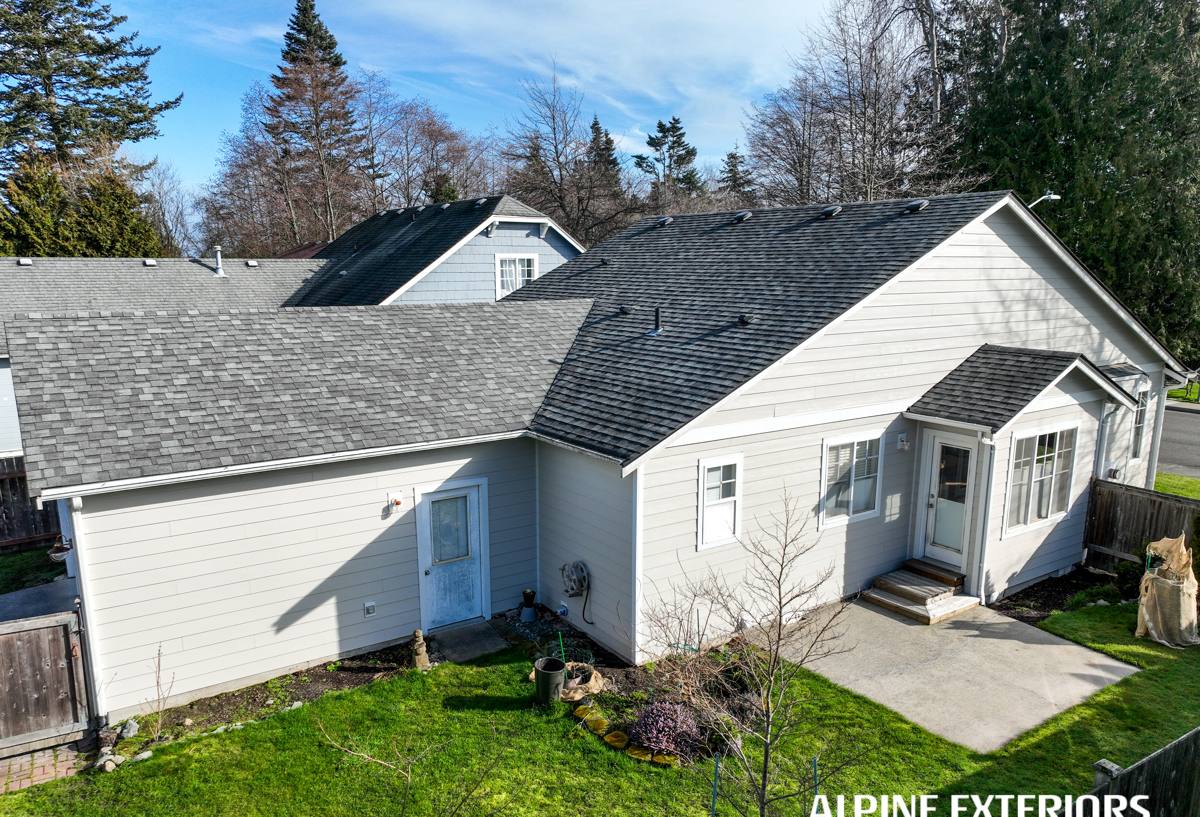
Why We Only Install James Hardie Fiber Cement
We install one siding product: James Hardie fiber cement. We don't install vinyl, LP SmartSide, cedar, primed spruce, or other fiber cement brands like Allura or Cemplank. That's not a marketing position — it's a standard we hold because of what we've seen happen to exterior materials in this specific climate over years of installations across the region.
Fiber cement is non-combustible, which matters more each year as wildfire smoke and ember exposure become a regular part of Pacific Northwest summers even in areas that don't see direct fire risk. It doesn't absorb moisture the way engineered wood products can, so it's far less prone to swelling, delaminating, or rotting at cut edges and butt joints when water inevitably gets past a flashing detail. And Hardie's ColorPlus factory-applied finish is baked on and warrantied for fade resistance, which means less repainting over the life of the siding than you'd budget for wood or many primed products.
We standardized on James Hardie specifically — not just "fiber cement" generically — because of the combination of their HZ5 product engineering for wet climates, the depth of their color and profile lineup, and a transferable warranty structure that holds up when a home changes hands. Other fiber cement brands exist and some are reasonable products; we simply don't have field experience with them locally, and we'd rather install one system we know inside and out than split our expertise across several.
What We're Asking Homeowners to Weigh
If you're comparing quotes and another contractor is offering vinyl or an engineered wood product at a lower upfront price, that's a legitimate option and we won't tell you it isn't. What we'll tell you honestly: vinyl can warp and fade in UV and temperature swings and it's a poor performer in high-wind, wind-driven-rain conditions because of how the panels lap and fasten. Engineered wood siding needs consistent field maintenance — sealed cut edges, prompt repainting, careful caulking — to avoid moisture problems, and that maintenance burden falls on you for the life of the product. Fiber cement costs more to install than vinyl and is more labor-intensive than engineered wood, but it's the trade-off we think is worth making for a house that has to stand up to this coastline for the next 30-50 years.
How Our Siding Installation Process Works
Inspection and Assessment
Every project starts with a walk of the exterior, not just a look at the siding surface. We're checking the condition of the sheathing underneath, existing flashing at windows, doors, and roof-to-wall transitions, and any signs of past moisture intrusion — soft spots, staining, or organic growth patterns that tell us where water has been finding a way in. This is the step that gets skipped by contractors trying to move fast, and it's the step that determines whether new siding actually solves the problem or just covers it up.
Removal, Sheathing Repair, and Weather Barrier
Old siding comes off down to the sheathing so we can address anything compromised underneath — rot, delamination, or damaged framing — before anything new goes on. We install a proper weather-resistive barrier and flash all penetrations, windows, and doors correctly. This layer is what actually keeps water out of the wall assembly; the siding on top is the second line of defense, not the first.
Installation to Manufacturer Spec
James Hardie siding is engineered to perform when installed to their published specifications — correct fastener type and spacing, proper clearances at grade and roof lines, and sealed or capped cut edges. Installed off-spec, even a good product can fail early and the warranty can be affected. This is a big part of why the installing crew matters as much as the material choice, and it's an area where an experienced local crew that installs Hardie regularly will do a noticeably cleaner job than a generalist who sees it once or twice a year.
Finish and Cleanup
Trim, caulking at appropriate joints, touch-up paint where field-cut ColorPlus edges need it, and a full site cleanup close out the job. We walk the finished exterior with the homeowner before we consider the project done.
Beyond Siding: Roofing, Windows, and Decks
Siding doesn't work in isolation — it's one part of a building envelope that includes the roof, windows, and any attached structures like decks. We handle all four because they interact with each other constantly. A roof that's shedding water improperly onto a wall, a window that's flashed incorrectly, or a deck ledger board that's trapping moisture against the house can undermine even a perfectly installed siding job. Having one contractor who understands how these systems connect means fewer gaps between trades and fewer places for water to find a way in.
- Roofing: proper roof-to-wall flashing and drainage planning that protects the siding below it
- Windows: correct flashing and integration with the weather barrier and new siding
- Decks: ledger and attachment details built to keep moisture away from the house structure
- Siding: the exterior cladding that ties it all together and takes the daily weather
Comparing Siding Materials for a Sehome-Area Home
| Material | Moisture Behavior in This Climate | Maintenance | Typical Lifespan Range |
|---|---|---|---|
| James Hardie Fiber Cement | Resists swelling, rot, and delamination; sheds water well when installed to spec | Occasional wash; ColorPlus finish reduces repainting | Multiple decades with proper install |
| Vinyl | Doesn't absorb water but can warp/gap under UV and temperature swings, especially in wind | Low, but limited repair options if damaged | Varies widely by product grade |
| Engineered Wood (e.g. LP SmartSide) | Vulnerable at cut edges and joints if not consistently sealed and maintained | Regular repainting and edge sealing required | Shorter without diligent upkeep |
| Cedar / Primed Spruce | Natural material, prone to moisture absorption, cupping, and rot in wet coastal exposure | High — repainting/staining on a recurring cycle | Depends heavily on maintenance discipline |
What Drives the Cost of a Siding Project
Every home is different, but the same handful of factors move the price up or down on most jobs. Rather than quote a number that won't mean much without seeing your house, here's what actually goes into the estimate:
| Factor | Why It Matters |
|---|---|
| Sheathing/framing condition | Rot or moisture damage found during tear-off adds repair scope before new siding can go on |
| Home size and complexity | Dormers, multiple gables, and cut-up wall lines take more labor and material than simple rectangular walls |
| Siding profile and accessories | Lap width, trim details, and accent features affect material cost and install time |
| Access and site conditions | Steep lots, tight setbacks, or limited staging area affect crew efficiency |
| Existing flashing and window integration | Bringing older window and roof flashing details up to current standards adds scope but prevents future leaks |
Signs Your Current Siding Needs a Closer Look
A lot of siding problems in this climate stay hidden until they're significant. A few things worth checking or having a contractor look at:
- Persistent moss, algae, or dark streaking that returns quickly after cleaning
- Soft spots, bubbling, or visible warping, especially near the bottom courses or window trim
- Paint that's peeling or blistering rather than just fading evenly
- Gaps opening up at butt joints, corners, or trim over time
- Any musty smell or visible staining on interior walls that share an exterior wall
- Siding that flexes or feels hollow/spongy when pressed at the lower edge
Maintenance in a Marine, Moss-Prone Climate
Even a good siding system benefits from some basic upkeep in this environment. Periodic gentle washing (not high-pressure blasting, which can force water behind panels or strip finish) keeps moss and algae from establishing. Keeping gutters clear and downspouts directed away from the foundation reduces splash-back onto lower siding courses, which is one of the more common places we see early wear. And a quick annual look at caulking around windows, doors, and trim catches small gaps before they become a path for water intrusion. Fiber cement reduces the maintenance burden compared to wood-based products, but "low maintenance" isn't "no maintenance" anywhere on this coastline.
Why a Local Crew Matters
A contractor who works Whatcom County exteriors regularly knows how this specific combination of salt air, rain volume, and shade patterns behaves on a house, and builds in the flashing, clearance, and product decisions that account for it. That's different from a crew that installs siding in a range of climates and treats every job the same way. It also means someone who's local, reachable, and around after the job is finished if a question comes up — not a crew that's moved on to another region entirely.
If you're weighing a siding, roofing, window, or deck project on a home in the Sehome area, we're glad to come take a look and give you a straightforward, no-pressure estimate — including an honest read on what your current exterior actually needs versus what it doesn't.