 Sudden Valley Siding
 Exterior Work in Sunnyland: What the Climate Demands
Sunnyland sits in the part of Whatcom County where marine air off the Salish Sea meets the wetter, greener climate that surrounds Sudden Valley and Lake Whatcom. That combination is beautiful to live in and hard on a house. Homes here deal with salt-tinged air moving in off the water, long stretches of driving rain through fall and winter, and a moss season that can run from October well into spring if a home's siding and roof don't shed water and dry out properly between storms.
None of that is unusual for this part of Washington. What matters is how a home's exterior is built and installed to handle it, year after year, without becoming a maintenance project every spring. That's the lens we bring to every siding, roofing, window, and deck job we do in the area.
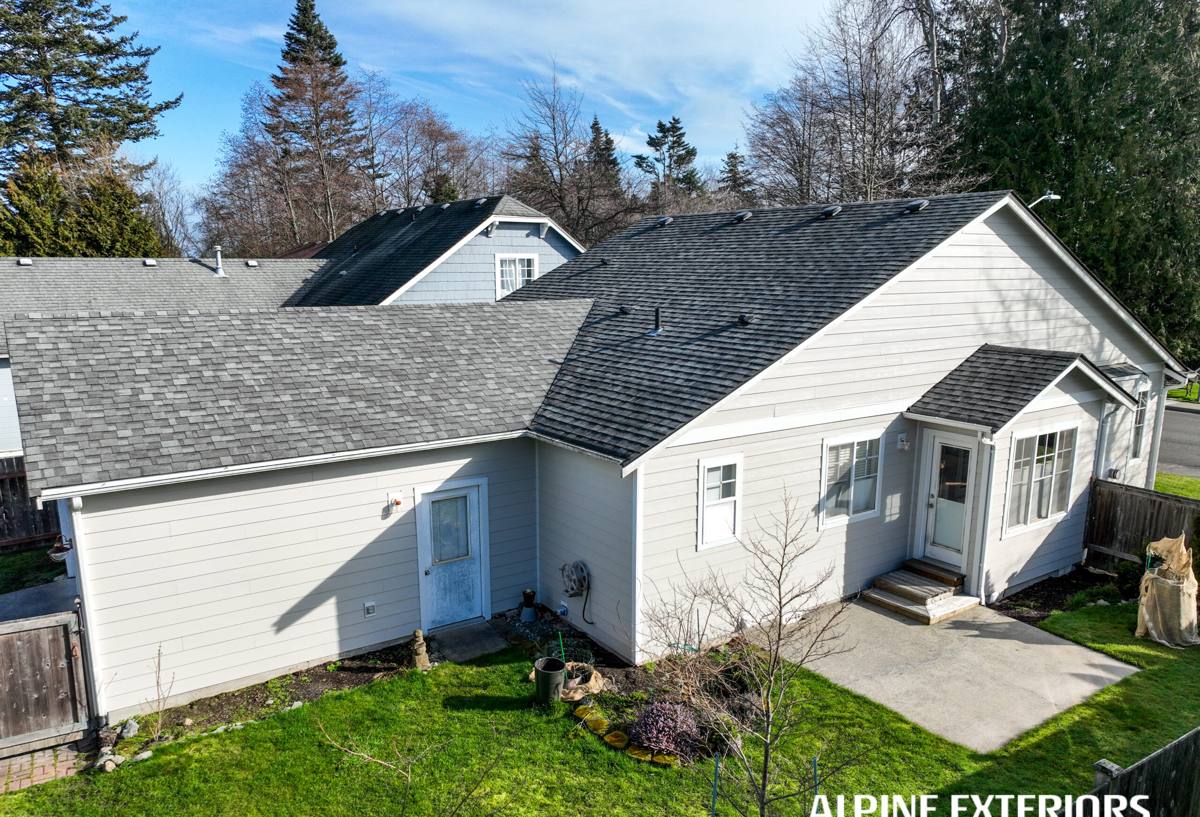
How Local Homes Show Wear
We see the same patterns repeat on houses in and around Sunnyland:
- Moss and algae staining on north- and shade-facing walls, especially under tree cover
- Paint failure and swelling on wood-based siding where caulk joints have opened up
- Soft or delaminating trim boards at corners and window returns
- Roof edges and valleys holding moisture longer than they should because of debris and tree canopy
- Window seals fogging or failing years before their rated lifespan
Most of this traces back to one root issue: moisture that gets in, or sits against the building, longer than the material was designed to tolerate. Siding choice and installation quality are the biggest levers a homeowner has over that outcome.
Why We Install James Hardie — and Only James Hardie
We are a fiber cement contractor. We install James Hardie siding exclusively, and we don't offer vinyl, LP SmartSide, Cemplank, Allura, primed spruce, or cedar as alternatives. That's a deliberate standard, not a lack of options, and it's worth explaining plainly rather than just asserting.
Vinyl
Vinyl is inexpensive and low-maintenance in the sense that it doesn't need painting, but it's a thin plastic product that expands and contracts with temperature swings, can crack in cold snaps, and tends to show its age in UV exposure and impact damage. In a climate with real weather variation like ours, that shows up over time as warping, fading, and brittle panels that are hard to match years later.
LP SmartSide, Cemplank, and Allura
LP SmartSide is an engineered wood product — it performs reasonably well when installed and maintained exactly to spec, but wood-based substrates are inherently more vulnerable to moisture intrusion at cut edges and joints, which is a real liability in a region with our rain volume. Cemplank and Allura are fiber cement competitors to Hardie; they're not bad materials in the abstract, but we've standardized on one manufacturer so we can guarantee consistent quality control, factory finish performance, and warranty support rather than juggling multiple product lines and specs.
Primed Spruce and Cedar
Solid wood siding, primed spruce or cedar, is a legitimate traditional choice and can look excellent, but it demands an ongoing maintenance commitment — recoating, caulking, and vigilance against rot — that most homeowners underestimate until they're a few years in. In a moss-prone, high-rainfall area, that maintenance burden compounds fast.
We're not saying these products have no place anywhere. We're saying that after years of exterior work in this climate, we don't think they're the right long-term bet for homes here, and we'd rather turn down a job than install something we don't believe in.
The James Hardie System We Install
James Hardie fiber cement is non-combustible, dimensionally stable, and engineered specifically for regional climate demands through its HZ product lines. For the Pacific Northwest, that means a formulation designed around sustained moisture exposure rather than a one-size-fits-all product.
ColorPlus Factory Finish
Most of what we install uses Hardie's ColorPlus finish — a baked-on, factory-applied color coat that's more consistent and more resistant to fading and moisture intrusion than field-applied paint. It also comes with a longer finish warranty than a typical repaint job would carry, which matters in a climate where repainting a full exterior is a recurring expense homeowners would rather avoid.
Warranty Structure
Hardie backs its products with a long, transferable limited warranty. Transferability matters for resale — a documented, warrantied exterior is something a buyer's inspector and a listing agent both notice.
Product Lines We Work With
| Product | Common Use | Why It Fits Here |
|---|---|---|
| HardiePlank lap siding | Primary wall cladding | Traditional lap look, engineered for moisture cycling |
| HardiePanel | Modern vertical/board-and-batten looks | Clean lines, strong moisture performance at seams when properly flashed |
| HardieTrim | Corners, window and door trim, fascia | Replaces rot-prone wood trim at the most exposed edges |
| HardieSoffit | Eaves and overhangs | Resists the moisture and moss buildup common under shaded eaves |
Why Installation Quality Matters as Much as the Product
Fiber cement siding fails prematurely far more often from bad installation than from the material itself. In a wet climate, the details are everything.
What Correct Installation Includes
- Proper rain-screen or drainage plane behind the siding so water that gets past the surface can drain and the wall can dry
- Correctly lapped and sealed weather-resistant barrier before any siding goes up
- Flashing at every window, door, and roof intersection — the points where most leaks actually start
- Manufacturer-specified fastener spacing, clearance from grade, and gaps at butt joints to allow for expansion
- Caulking only where Hardie's specifications call for it, not as a substitute for proper flashing
We install to those specifications on every job, because a beautiful siding job that traps moisture behind it is worse than doing nothing at all.
Roofing, Windows, and Decks: The Rest of the Envelope
Siding is only part of what keeps a Sunnyland-area home dry. We also handle roofing, window replacement, and deck construction, because these systems work together — a roof that sheds water poorly, or windows that leak at the flange, will undermine even the best siding job.
Roofing
Roof condition directly affects siding longevity. Poor flashing at rooflines, clogged gutters, and moss buildup on shaded slopes all send excess water down onto walls below. We look at the roof whenever we're evaluating an exterior, not just the siding.
Windows
Window flashing and integration with the siding plane is one of the most common failure points we find on older homes. When we replace siding around existing windows, we check and correct flashing details rather than just siding around a problem.
Decks
Decks in this area take the same beating as siding — standing moisture, moss on shaded boards, and ledger connections that need proper flashing against the house to avoid rot at the band joist. We build and repair decks with the same moisture-first mindset.
Cost Factors for a Sunnyland-Area Siding Project
Every home is different, but the following factors tend to drive the biggest swings in scope and price on local jobs:
| Factor | Why It Affects Cost |
|---|---|
| Extent of hidden moisture or rot damage | Sheathing and framing repair adds labor and material beyond the siding itself |
| Home size and wall complexity | More corners, gables, and trim details mean more cutting, flashing, and labor time |
| Siding profile and finish choice | ColorPlus finishes and specialty profiles cost more than basic plank in a standard color |
| Existing siding removal | Tear-off of old vinyl, wood, or failed fiber cement adds disposal and labor time |
| Trim, soffit, and fascia scope | Replacing rotted wood trim alongside siding is common and adds to the total |
| Tree cover and site access | Heavily shaded, hard-to-access lots common in this area can extend project timelines |
What to Look for in a Local Exterior Contractor
Whatcom County has no shortage of contractors willing to bid a siding job. Fewer of them will walk a homeowner through why they're recommending one product over another, or explain their flashing and drainage plan before they ever pick up a nail gun.
- Ask what moisture barrier and drainage plane system they use, and why
- Ask to see how they flash windows and rooflines, not just how they hang siding panels
- Confirm they're a factory-trained or certified installer for the product they're proposing
- Get the manufacturer warranty terms in writing, not just a verbal assurance
- Ask how they'd handle rot or damage discovered once old siding comes off
- Check that their bid separates material, labor, and any trim or roofing scope clearly
A contractor who's confident in their materials and methods should be able to answer all of these without hesitation.
Get a Straightforward Estimate
If you're weighing a siding, roofing, window, or deck project on a home in the Sunnyland area, we're glad to take a look and give you an honest read on condition, scope, and options — no pressure, no obligation. Use the form below to request a free estimate.