 Sudden Valley Siding
 Exterior Work in Columbia, Part of the Sudden Valley Community
Columbia is one of the residential pockets that make up the broader Sudden Valley area in Whatcom County, Washington. Like the rest of Sudden Valley, homes here sit in a landscape shaped by water, tree cover, and a marine climate that doesn't let up for long. If you own a home in this part of the county, you already know the drill: long stretches of gray, driving rain that comes in sideways more often than straight down, and a green film that shows up on north-facing walls whether you want it or not.
We're a local siding, roofing, window, and deck contractor working this part of Whatcom County, and this page is meant to be useful whether you're planning a full siding replacement this year or just trying to understand what's actually happening to your home's exterior. No sales pitch, just what we see on houses like yours.
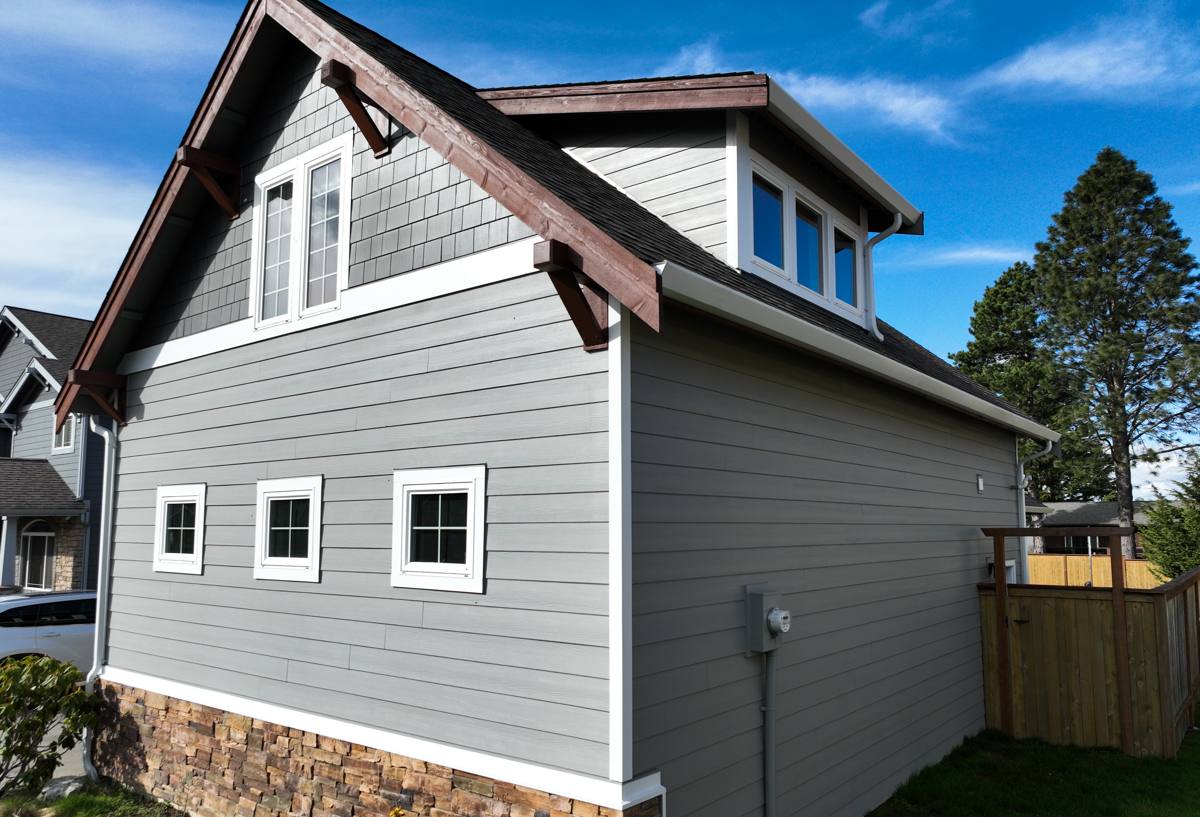
What the Local Climate Actually Does to a House
Whatcom County's exterior challenges aren't dramatic — no hailstorms, no hurricane-force wind events most years. The damage here is slow and cumulative, which is exactly why it catches homeowners off guard. A few specific things stack up over time in the Columbia and Sudden Valley area:
- Salt-influenced marine air that migrates inland from the Puget Sound region and accelerates corrosion on fasteners, flashing, and metal trim.
- Driving, wind-pushed rain that hits siding at an angle instead of falling straight down, which stresses joints, seams, and butt ends far more than a calm vertical rain would.
- A long moss and algae season — shaded, tree-covered lots (common throughout this area) stay damp for extended stretches, and organic growth on siding isn't just cosmetic; it holds moisture against the wall longer than bare siding would.
- Temperature swings between damp and dry that cause repeated expansion and contraction in materials that aren't dimensionally stable.
None of this is unique to any one street or subdivision — it's the baseline reality of building in this part of Western Washington. What varies is how much of it a given siding material can absorb before it starts costing you money.
Why Moss and Shade Matter More Than People Expect
A lot of Columbia-area lots back up to trees or sit lower relative to their neighbors, which means less direct sun and slower drying after a storm. Siding that stays damp longer is siding that's more likely to hold onto moss spores, algae, and mildew. On some materials that's a maintenance nuisance. On others, it's a structural risk — because what's growing on the surface is a sign of what's happening underneath the surface too.
Why We Standardized on James Hardie Fiber Cement
We install James Hardie fiber cement siding exclusively. We don't install vinyl, LP SmartSide, Cemplank, Allura, or primed wood products like spruce or cedar lap siding. That's a deliberate standard, not a limitation of what we're capable of installing — and it comes directly from what we see happening to exteriors in this climate over a 10, 15, 20-year timeline.
Fiber cement doesn't rot, it doesn't feed insects, and it's non-combustible. It's engineered specifically for moisture cycling, which is the exact stress this region puts on a house. Hardie's factory-applied ColorPlus finish is baked on under controlled conditions rather than field-applied, which matters a lot in a climate where you rarely get more than a few consecutive dry days to paint or caulk correctly. And Hardie makes a version of its product line — the HZ5 formulation — specifically engineered for cold, wet, freeze-prone climates like the Pacific Northwest.
We're not going to tell you every other product is junk. Vinyl is inexpensive and low-maintenance in the right climate. Wood siding, done right, still has genuine appeal. LP SmartSide has improved a lot over the years. But each of those comes with a trade-off — seam sealant that needs reapplication, wood fiber cores that are sensitive to sustained moisture exposure, or appearance and rigidity compromises — and in a marine, moss-heavy, rain-driven climate like Whatcom County's, those trade-offs show up faster and cost more to manage than most homeowners expect going in. Hardie removes the guesswork.
How a Siding Project Works for a Columbia Home
Every house is different, but the process for a typical Sudden Valley-area siding replacement generally follows the same arc:
- On-site assessment. We look at existing siding, moisture intrusion signs, trim condition, and what's happening behind the wall — not just the surface.
- Water management plan. Before a single board goes up, we talk through flashing, house wrap, and drainage — the part of the job that determines whether siding lasts 10 years or 40 in this climate.
- Product and profile selection. Lap, shingle, or panel Hardie profiles, plus trim and color, matched to the home's style and to what actually holds up on north- and west-facing exposures locally.
- Installation to manufacturer spec. Correct nailing patterns, clearances, and caulking practices — details that determine whether a warranty is actually valid down the road.
- Final walkthrough. We go over the work with you directly before calling it done.
Roofing, Windows, and Decks — The Rest of the Exterior Envelope
Siding doesn't work in isolation. On a lot of Columbia-area homes, the siding call gets made at the same time as a roofing, window, or deck decision, because they all deal with the same enemy: sustained moisture exposure. A few ways these connect:
- Roofing: A roof that's shedding water poorly or has failing flashing at the wall line will undermine even the best siding install by feeding moisture behind it.
- Windows: Old or poorly flashed window units are one of the most common points of hidden water intrusion we find when we open up a wall for a siding job.
- Decks: Ledger board connections and deck-to-house flashing detail are a frequent trouble spot in wet climates, and they're worth addressing at the same time as exterior siding work rather than as a separate afterthought.
Because we handle all four trades, we can look at a Columbia home's exterior as one connected system instead of four separate quotes that don't talk to each other.
Material Comparison for a Wet, Wooded Climate
| Factor | James Hardie Fiber Cement | Vinyl | Wood / Engineered Wood |
|---|---|---|---|
| Moisture tolerance | Engineered for cycling; not organic material | Won't rot, but seams and J-channels can trap water | Sensitive to sustained damp exposure |
| Moss/algae resistance | Doesn't feed organic growth; cleans up easily | Can host algae in shaded, damp spots | More prone to organic growth if finish fails |
| Finish durability | Factory-baked ColorPlus finish | Color molded in, can fade/chalk over time | Field-applied paint needs regular recoating |
| Fire rating | Non-combustible | Combustible | Combustible |
| Typical repaint interval | Rarely needed if factory finish intact | N/A (no repainting, but limited color change options) | 5-10 years depending on exposure |
This isn't meant to declare every other product unusable — plenty of homes around the region are sided in vinyl or wood and holding up fine. It's meant to explain, honestly, why we chose to specialize rather than offer everything.
Signs Your Current Siding Needs a Second Look
If you're not sure whether your home needs attention now or can wait, a few things worth checking from the ground:
- Soft or spongy spots when you press on siding near the bottom courses or around window trim
- Persistent moss or dark streaking that comes back within weeks of cleaning
- Visible gaps, warping, or separation at seams and butt joints
- Paint that's peeling or bubbling rather than just fading
- Interior signs like musty smells or discoloration near exterior walls
- Caulking that's cracked, shrunk, or pulled away from trim
Any one of these on its own might be minor. A few of them together is usually a sign it's worth having someone take a closer look before it turns into a bigger repair.
Why a Local Crew Matters
A siding installer who works this specific climate day in and day out makes different calls than a crew that mostly works drier inland regions. Flashing details, house wrap sequencing, caulk selection, and even where you leave gaps for drainage all get adjusted for a place that sees this much sustained moisture and shade. A local crew also knows how to schedule around this region's weather windows — because in Whatcom County, timing a siding install around dry stretches is part of doing the job right, not an afterthought.
We live and work in this climate too, which means we're not guessing about what holds up here — we're looking at the same rain, the same moss season, and the same salt-tinged air affecting our own homes and the ones we've already worked on nearby.
Get a Straightforward Estimate
If you're weighing a siding replacement — or want an honest read on your roof, windows, or deck while we're out there — we're happy to come take a look. There's no pressure and no obligation. Use the form below to request a free estimate for your Columbia or Sudden Valley home.