 Sudden Valley Siding
 Windows Built for Barkley's Climate
Barkley sits close enough to Bellingham Bay and the Whatcom County waterways that homes here deal with a specific combination of weather stress: salt-tinged air, long stretches of driving rain, and a moss season that can run from October well into spring. None of that is dramatic on its own, but stacked together year after year, it's exactly the kind of slow, steady exposure that finds every weak point in a window — a soft spot in the sill, a gap in the flashing, a seal that was never quite right to begin with. Custom windows done correctly in this area aren't about looks first. They're about managing moisture and air infiltration in a climate that never really dries out.
When we talk about "custom" windows for a Barkley home, we mean windows sized, flashed, and detailed for that specific opening and that specific exposure — not a stock size forced into a rough opening with extra caulk to make up the difference. That distinction matters more here than in a drier climate, because a marginal install that might get away with it in Eastern Washington will show its problems within a few wet seasons on this side of the Cascades.
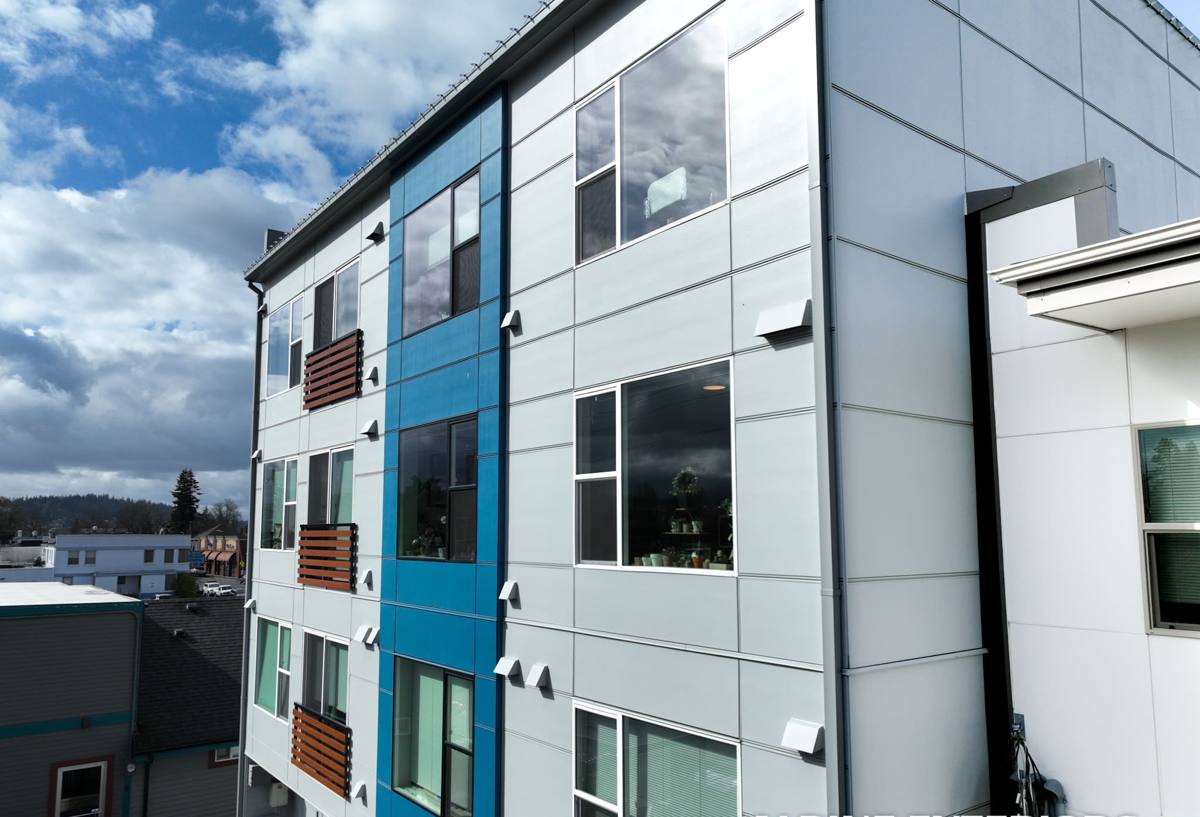
What Local Homes Actually Need
Moisture Management First
The single biggest factor in how long a window installation lasts in Barkley is what happens behind the trim, not what you see from the street. Correct flashing sequencing — so water sheds down and out over each layer below it, never trapped behind the siding — is non-negotiable. We see more window failures caused by poor flashing detail than by the window unit itself wearing out.
Standing Up to Driving Rain
Wind-driven rain off the water doesn't just hit a window straight on — it gets pushed sideways and upward under sills and around frames. Windows with a weaker sill design or a lower design pressure rating can let water past the exterior seal even when everything looks intact from outside. For homes with more open exposure, we pay close attention to sill pan flashing and the water resistive barrier detail around the rough opening.
Moss and Organic Growth
A long moss season means anything horizontal or slightly pitched — sills, sash tracks, exterior trim — becomes a place for moss and algae to take hold if it stays damp too long. That growth holds moisture against wood and finish surfaces, which accelerates rot and paint failure. Material choice and drainage detailing both play into how much maintenance a homeowner ends up doing to keep that in check.
What a Correct Window Job Involves
A proper custom window replacement or install isn't just "old window out, new window in." Here's what should happen on every job, whether it's one window or a whole house:
- Accurate measurement of the actual rough opening, not just the old window's nominal size
- Removal of the old unit with inspection of the framing and sheathing underneath for hidden rot or water damage
- Repair of any compromised framing or sheathing before the new window goes in — never installed over a known problem
- Sill pan flashing installed to shed water outward, ahead of the window unit going in
- Proper integration of the window flange with the house's water resistive barrier, shingled correctly (upper layers over lower layers)
- Low-expansion foam or backer rod and sealant at the perimeter — not just caulk alone
- Interior and exterior trim work sealed and finished to shed water away from the frame
- A final check of operation, seal, and squareness before we call it done
Skip any one of these steps and the window can still look fine for a year or two. In a climate with this much sustained moisture, the shortcuts show up eventually — usually as soft trim, interior staining, or a window that's harder to open than it used to be.
Choosing Materials and Glass for This Climate
There's no single "best" window material for every Barkley home — it depends on exposure, budget, and how much maintenance a homeowner wants to take on. Here's how the common options actually compare for this climate:
| Material | Moisture Performance | Maintenance | Typical Fit |
|---|---|---|---|
| Vinyl | Won't rot; seals can degrade over time in constant damp/UV cycling | Low — occasional cleaning | Budget-conscious replacement, rental or resale prep |
| Fiberglass | Very stable in wet/dry cycling, minimal expansion movement | Low | Higher-exposure walls, longer-term ownership |
| Wood-clad | Good if the cladding and flashing detail are done right; interior wood still needs protection | Moderate to high | Homes prioritizing a traditional interior look |
| Aluminum | Prone to condensation and thermal transfer unless thermally broken | Moderate | Specific architectural applications only |
For glass, we generally recommend dual-pane units with a low-E coating and an argon fill as the baseline for this region — the coating helps with both heat retention in the damp winters and glare reduction in the brighter summer months. The bigger performance variable, though, is almost always the installation quality around the unit, not the glass package itself.
A Note on Wood Windows
Wood-clad windows can look excellent and perform well, but they ask more of both the installer and the homeowner. If the cladding has any gap in coverage, or the sill isn't detailed to shed water immediately, wood behind that cladding can start absorbing moisture without it being visible from outside. We'll install wood windows when that's what a homeowner wants, but we're upfront that it comes with a higher maintenance commitment in a climate like ours — not because the product is bad, but because the margin for error is smaller.
Our Process for Barkley Jobs
1. On-Site Assessment
We look at each opening individually — exposure to prevailing wind and rain, current condition of the trim and sheathing, and any signs of past water intrusion. Two windows on the same house can need different details depending on which direction they face.
2. Product Selection
We walk through material and glass options against the homeowner's budget and priorities — not a one-size push toward whatever's easiest to sell.
3. Install
Full removal, framing inspection and repair as needed, correct flashing sequence, and a finished install per the checklist above. We don't install over a problem and hope it holds.
4. Final Walkthrough
We check operation, seals, and finish work with the homeowner before considering the job complete, and we're straightforward about any maintenance the homeowner should keep an eye on going forward — particularly moss buildup on sills and trim.
Signs Your Current Windows Are Losing the Fight
Homeowners in Barkley often live with a slowly worsening window problem for longer than necessary because the signs are subtle at first. Worth checking for:
- Fogging or moisture between panes on dual-pane units — the seal has failed
- Soft or discolored trim and sill wood, especially on north- or west-facing windows
- Visible moss or dark streaking on sills or exterior trim
- Drafts you can feel with a hand near the frame on a windy day
- Windows that have become harder to open, close, or lock than they used to be
- Interior condensation building up on the glass or frame during cold, wet stretches
Any one of these on its own isn't an emergency. Several together, or any sign of soft wood, is worth having looked at before another wet season passes.
Why Local Experience Matters Here
A crew that already works in Whatcom County knows how differently a window install needs to be detailed here compared to a drier inland climate. That's not marketing — it shows up in specific decisions: how much attention the sill pan gets, whether the flashing sequence accounts for wind-driven rain rather than just vertical rainfall, and how a job gets scheduled around a weather window that's genuinely narrower here than in most of the state. A crew unfamiliar with this climate can install a window that looks correct and still fails within a couple of wet seasons because a detail that matters less elsewhere got skipped.
We also know that a rushed job in this climate costs a homeowner more later — in trim repair, in interior damage, in redoing work that should have been done right the first time. That's the standard we hold ourselves to on every Barkley job, whether it's a single window or a full-house replacement.
Get a Straight Answer on Your Windows
If you're dealing with drafts, fogged glass, soft trim, or you're just planning ahead for a home in the Barkley area, we're happy to take a look and give you an honest read on what's actually needed — no pressure, no upsell. Fill out the form below for a free estimate.