 Sudden Valley Siding
 What Board & Batten Actually Is
Board and batten is a vertical siding pattern: wide flat panels or boards installed edge to edge, with narrow strips (battens) covering each seam. It's one of the oldest siding styles in the Pacific Northwest — you'll see it on old barns and farmhouses all over Whatcom County — and it's had a strong comeback as the signature look of the modern farmhouse and craftsman-contemporary styles homeowners in Sudden Valley are drawn to. Done well, it reads as clean, linear, and intentional. Done poorly, it's one of the fastest siding styles to show its age.
The reason board and batten is trickier than standard horizontal lap siding comes down to water. Horizontal siding is engineered to shed water downward, course over course, the way shingles do. Vertical siding runs against that natural flow, so every seam, every batten, and every board end has to be detailed correctly or water finds a way behind the cladding. That's the whole story of this page — not just what board and batten looks like, but what it takes to keep it dry for the next 30-plus years.
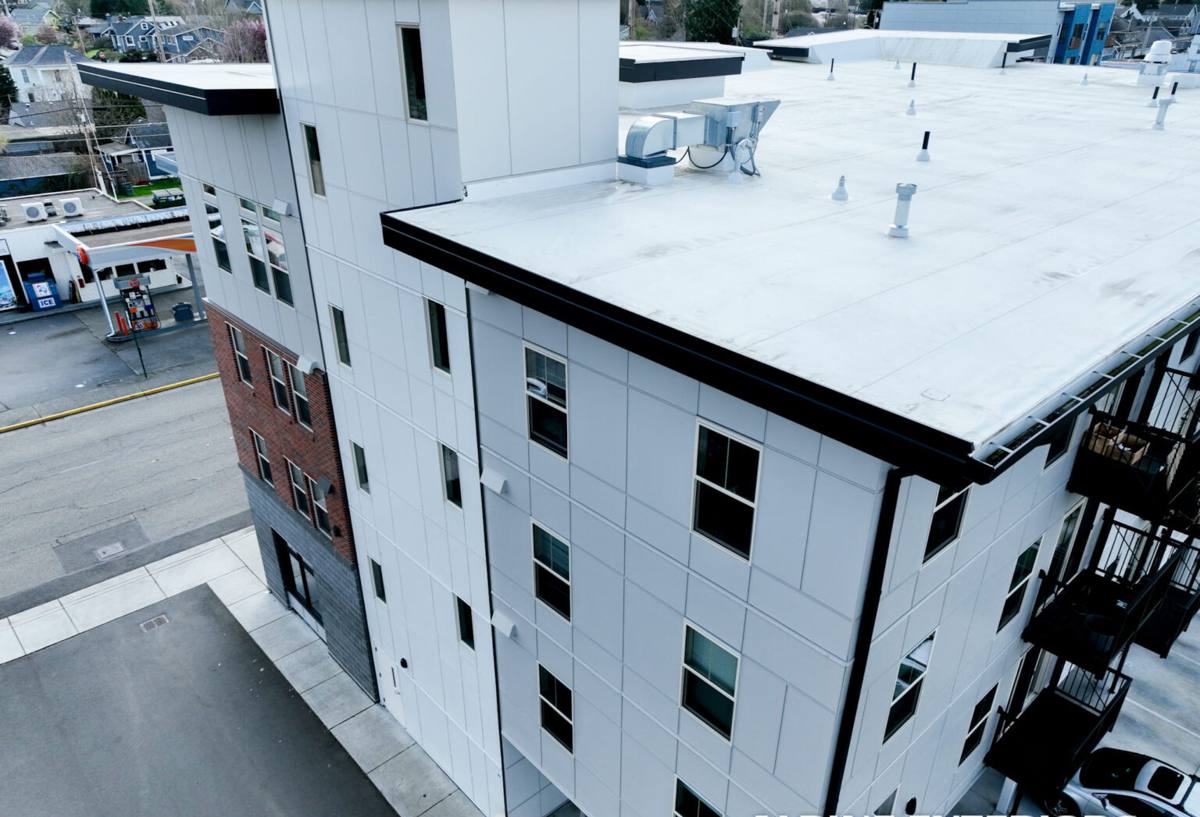
Why Material Choice Matters More With Board & Batten
The Vertical Seam Problem
Every vertical seam in a board and batten wall is a potential water path. With wood or engineered wood panels, the seams and the panel faces themselves are the weak point — end grain soaks up moisture, panel edges swell, and paint or factory coatings crack at those movement points first. Once water gets behind a batten, it can travel a long way down the wall before it shows up as a stain, a soft spot, or peeling paint at the base of the wall.
Why Fiber Cement Changes the Equation
James Hardie fiber cement doesn't have end grain to wick moisture, doesn't swell when it gets wet, and doesn't rot. That doesn't mean the installation details stop mattering — they matter just as much — but it removes the material itself as a failure point. The panel can take repeated wetting and drying cycles, which is exactly what Sudden Valley's long moss season and driving winter rain put every exterior wall through, without breaking down the way wood-based products eventually do.
James Hardie Board & Batten Product Options
Hardie offers more than one way to build this look, and the right one depends on the home's style and budget:
| Product | How It's Built | Best For |
|---|---|---|
| HardiePanel Vertical Siding | Large-format flat panels with separate battens installed over the seams | Classic board and batten look, whole-wall or accent applications |
| Artisan Panel | Premium panel with a smoother, higher-end factory finish and tighter reveal detailing | Higher-visibility elevations, modern farmhouse designs |
| Board & Batten as an Accent | Vertical panel paired with HardiePlank lap siding elsewhere on the home | Gables, dormers, entry features — mixing textures without covering the whole house |
A lot of the board and batten we install in Sudden Valley isn't a full-house treatment — it's used as an accent on a gable end, a porch surround, or a garage face, paired with HardiePlank lap siding on the main walls. That combination gives a home visual variety without asking a fully vertical system to do all the work of shedding water off every wall.
Sudden Valley's Climate Is Not Gentle on Vertical Siding
Sudden Valley sits along the shore of Lake Whatcom, and homes here deal with a specific combination of stresses: moisture off the lake, driving rain that comes in sideways during winter storms, and a moss and algae season that runs long compared to drier parts of the state. Add in the salt air that reaches Whatcom County from the Puget Sound and Strait of Georgia, and you've got a climate that's actively testing every seam and fastener on a home's exterior, year-round.
Vertical siding is more exposed to that driving rain than horizontal lap siding, simply because there's no overlapping course to break the water's path down the wall. That's not a reason to avoid board and batten — it's a reason to be strict about the details that keep water out: proper flashing, correct fastening, and a drainage plane behind the cladding. Skip any of those and a home in this microclimate will show problems faster than one in a drier inland location would.
Installation Details That Actually Determine Longevity
Rainscreen and Drainage Gap
Behind the panels, a drainage gap (rainscreen) lets any moisture that does get past the cladding drain and dry out instead of sitting against the wall sheathing. On a vertical siding system in a wet climate like this one, that gap isn't optional extra credit — it's the difference between a wall that dries out after a storm and one that stays damp all winter.
Flashing at Every Horizontal Transition
Anywhere board and batten meets a window, door, roofline, or the foundation, flashing has to be installed to direct water back out, not into the wall. These transitions are the single most common failure point on vertical siding jobs done without enough attention to detail.
Fastening and Panel Gaps
Fiber cement panels need room to expand and contract with temperature. James Hardie specifies exact gap widths at panel joints and fastener placement and spacing — get those wrong and you either get a wall that looks pinched and uneven within a couple of years, or fasteners that back out and create their own leak points.
Batten Attachment
Battens have to be fastened into structural framing, not just into the panel or the sheathing, and spaced to Hardie's published specifications. This is a detail that's easy to shortcut and hard for a homeowner to catch just by looking at the finished wall — it's one of the reasons the crew doing the work matters as much as the product itself.
Color and Finish: ColorPlus vs. Field-Painted
Board and batten's clean lines show color and shadow lines more than a lot of other siding styles, which makes finish quality more noticeable, not less. James Hardie's ColorPlus Technology bakes the finish onto the panel at the factory, under controlled conditions, before it ever reaches the jobsite. That gives more even color and a finish that resists fading and chipping better than most field-applied paint jobs, and it means touch-up paint is formulated to match rather than guessed at with a swatch.
Field-painting is still an option, particularly for custom colors, but it puts the long-term performance of the finish in the hands of weather conditions on install day and the quality of the paint job — a variable we'd rather not introduce on a siding style where every seam and batten edge is visible.
What Board & Batten Actually Costs
Board and batten typically runs somewhat higher than standard lap siding installation, mostly because of labor — cutting and fitting battens, and the extra flashing detail work, takes more time per square foot than a straightforward lap job. Full-house vertical siding costs more than using it as an accent. The factors that move the price most:
| Factor | Why It Affects Cost |
|---|---|
| Full wall vs. accent use | Accent applications (gables, entries) cost less overall than whole-house vertical siding |
| Panel vs. Artisan line | Artisan's tighter reveal and finish detailing costs more than standard HardiePanel |
| Wall complexity | Dormers, multiple gables, and window/door density all add flashing and cutting labor |
| Removal of existing siding | Tear-off and any sheathing repair adds cost versus a straightforward re-side |
We'll always walk a homeowner through where their specific home lands on these factors before quoting anything.
What to Ask Before Hiring Anyone for Board & Batten
- Ask specifically how they detail flashing at window and door heads on vertical siding — a vague answer is a red flag
- Confirm a drainage gap (rainscreen) is part of the install, not just panels against the sheathing
- Ask which Hardie panel gap width and fastener spacing they follow, and whether they're James Hardie trained or certified
- Get the batten fastening plan in writing — into framing, at what spacing
- Ask to see the manufacturer's installation instructions they're actually building to, not just a general description
The Warranty Behind a Correct Install
James Hardie backs its siding with a non-prorated limited warranty, and ColorPlus finishes carry their own finish warranty separate from the substrate warranty. That warranty coverage is real, but it's tied to installation that follows Hardie's published instructions — which is exactly why the details above aren't optional extras. A board and batten wall installed to spec is a system built to hold up through decades of Whatcom County winters; one installed with shortcuts is a warranty claim waiting to happen, regardless of what material sits on the wall.
If you're considering board and batten for a home in Sudden Valley — whether as a full exterior or an accent feature — we're happy to walk your home, talk through where it makes sense, and put together a free, no-pressure estimate.