 Sudden Valley Siding
 Exterior Work in Deming: What the Climate Demands
Deming sits inland from the coast but still lives inside the same wet, temperate weather system that shapes exterior maintenance across Whatcom County. Homes here deal with a long, damp stretch of the year rather than a short rainy season — moisture sits against siding, trim, and roofing for months at a time, and the shaded, tree-lined lots common in this part of the county keep surfaces from drying out quickly after a storm passes. Add in the salt-tinged air that moves inland off the Sound on prevailing winds, and you get a slow, steady combination of dampness and airborne minerals working against whatever is on the outside of a house.
None of that is dramatic on its own. The problem is cumulative. A siding product that handles one wet week without issue can still fail after a decade of repeated soak-and-dry cycles, freeze-thaw swings in the colder months, and moss and algae taking hold in shaded corners and north-facing walls. Homeowners in Deming who've dealt with paint peeling early, trim boards going soft at the bottom edge, or green-black staining creeping up siding panels are seeing the predictable result of this climate acting on materials that weren't built for it.
Why Local Crews Matter Here
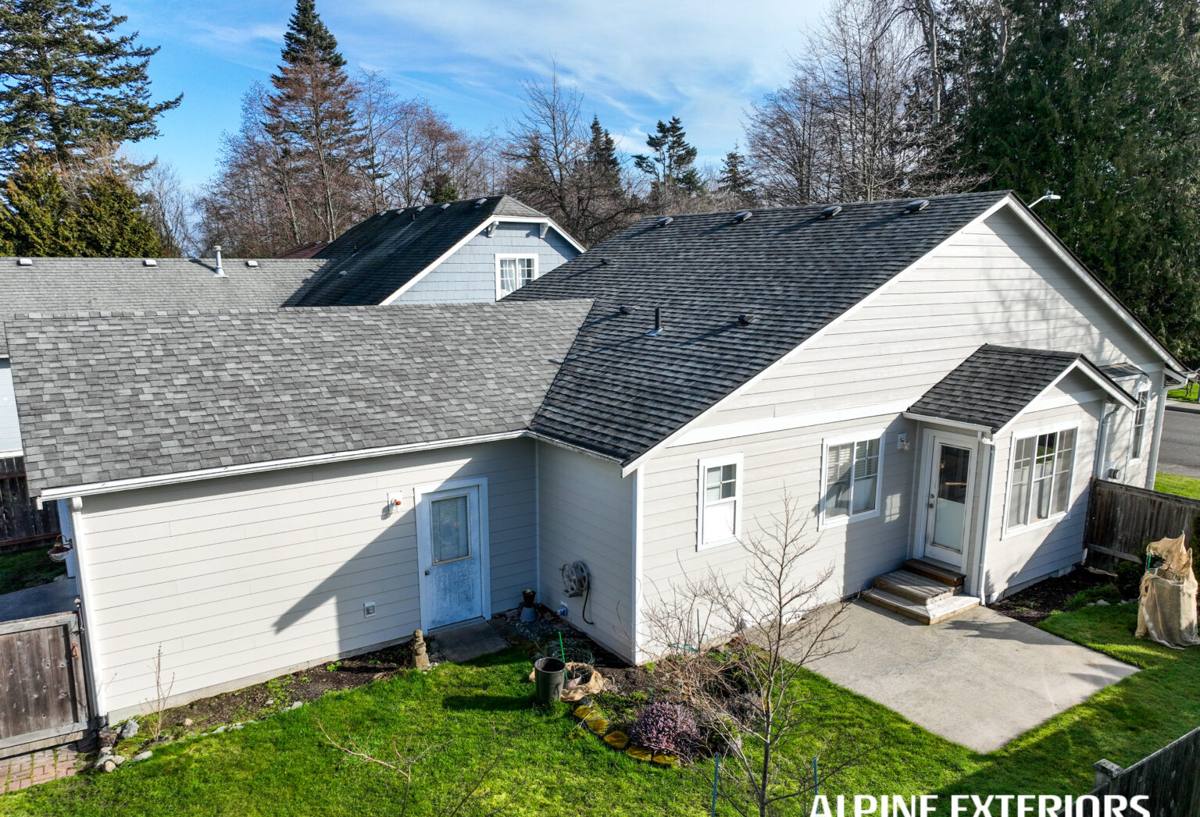
Exterior work in this part of Washington isn't the same job as exterior work in a dry climate. Flashing details, water management behind the siding plane, and product selection all have to account for how long moisture stays in contact with a wall assembly — not just how hard it rains. A crew that works Whatcom County full-time knows which wall orientations take the worst of the wind-driven rain, where moss pressure is heaviest, and how to detail penetrations (hose bibs, vents, light fixtures) so they don't become the first failure point.
That local knowledge shows up in small decisions that add up over the life of a job: how tight to run caulk joints, where to add extra flashing that isn't strictly required by code but is smart given the exposure, and which parts of a house need the most attention during installation. A crew that installs the same way in Deming as they would in a dry inland climate is setting a homeowner up for problems that won't show up for a few years — by which point it's a warranty argument, not a quick fix.
Siding: Why We Only Install James Hardie
We install James Hardie fiber cement siding exclusively. We don't install vinyl, LP SmartSide, Cemplank, Allura, or primed wood siding like spruce or cedar, and we're upfront about why. Each of those products can be installed correctly and can perform reasonably well in the right setting — but in a climate like this one, with sustained moisture exposure and salt air, the trade-offs stack up in ways that matter over a 20-30 year ownership horizon.
Vinyl Siding
Vinyl is inexpensive and low-maintenance in mild, dry climates, but it's a thin plastic product that expands and contracts with temperature swings, can warp or crack in wind-driven rain events, and traps moisture behind it if the water-resistive barrier isn't detailed perfectly. It also isn't fire-resistant, which matters given Washington's growing wildfire exposure even on the wet side of the state.
LP SmartSide (Engineered Wood)
LP SmartSide is a wood-strand product with a resin-saturated shell. It performs well when maintained on schedule, but any breach in that shell — a nail pop, a cracked corner, a scuff from a ladder — gives moisture a path into a wood-based substrate. In a climate where surfaces stay damp for extended stretches, that's a maintenance burden we don't think is worth the upfront savings.
Cemplank, Allura, and Other Fiber Cement Alternatives
These are fiber cement products, similar in concept to Hardie, and not inherently bad materials. Our decision here is less about the raw material and more about factory finish quality, product engineering for this specific climate zone, and warranty backing — areas where we've found Hardie's system to be the strongest fit for what Whatcom County homes go through.
Primed Spruce and Cedar
Real wood siding is beautiful, but it's also the highest-maintenance option on this list. Primed spruce needs repainting on a tight cycle to stay ahead of moisture intrusion, and cedar — even with its natural rot resistance — will gray, cup, and eventually need significant upkeep in a climate this wet. For homeowners who love the look, we're honest that it's a real commitment, not a set-it-and-forget-it exterior.
What James Hardie Gets Right for This Area
James Hardie fiber cement is non-combustible, which matters more each year as wildfire risk expands across Washington. It's engineered specifically for climate zones — the HZ5 product line used in the Pacific Northwest is formulated to resist moisture intrusion and hold up under sustained damp conditions rather than short bursts of rain. The ColorPlus factory finish is baked on under controlled conditions, which gives it better fade and wear resistance than field-applied paint, and it comes with a long transferable warranty that backs the product itself, not just workmanship.
Fiber cement also doesn't feed moss and algae growth the way wood-based products can, and it holds paint and caulk lines far longer than vinyl, which helps keep the small maintenance items (caulking, touch-up) from becoming bigger ones.
Comparing Siding Options for a Deming Home
| Material | Moisture Resilience Here | Maintenance Load | Typical Lifespan |
|---|---|---|---|
| Vinyl | Fair — can trap moisture behind panels | Low, but limited repairability | 15-25 years |
| LP SmartSide | Good if shell stays intact | Moderate — watch for breaches | 20-30 years |
| Cedar / Primed Wood | Fair — needs active protection | High — regular repainting/sealing | Varies widely with upkeep |
| James Hardie Fiber Cement | Strong — engineered for this climate zone | Low — factory finish, minimal upkeep | 30+ years with proper install |
Roofing, Windows, and Decks for the Same Climate
Siding is only one piece of a home's defense against a wet, moss-prone climate. Roofing in this area needs attention to moss and algae resistance, proper ventilation to control condensation in the attic, and flashing details around valleys and penetrations that keep water from finding its way in during long rain events. Windows need to be sealed and flashed correctly the first time — in a climate where a wall stays damp for days after a storm, a poorly flashed window opening is a slow, hidden problem rather than an obvious one.
Decks face their own version of the same issue: standing moisture, moss on horizontal surfaces, and ledger board connections that need to be detailed so water doesn't collect where the deck meets the house. We handle all four trades — siding, roofing, windows, and decks — because they're connected systems on a house, and treating them as one coordinated exterior plan produces better long-term results than handling each in isolation.
What to Expect From an Estimate
A thorough exterior estimate for a Deming home should include more than a price. Look for a contractor who will walk the property, note which walls take the worst weather exposure, check for existing moisture damage at trim and transitions, and explain — specifically — what they'd do differently for those problem areas versus the rest of the house.
- A written scope that names the specific James Hardie product line and profile being proposed
- Notes on which sides of the house face the worst wind-driven rain and moss exposure
- A plan for flashing and water management details, not just "remove and replace"
- Clear separation of material cost, labor, and any code-required upgrades
- A realistic timeline that accounts for weather windows in this climate
- Warranty terms explained in plain language — both product and workmanship
Planning an Exterior Project in Deming
Whether it's one wall that's showing early wear or a full exterior replacement, the right approach starts with an honest look at what's actually happening to the house — not just what's visible from the curb. Homes in this part of Whatcom County often show damage first in the least obvious places: behind downspouts, under window sills, at the base of walls where splashback keeps siding wet longer than the rest of the surface.
If you're weighing options for siding, roofing, windows, or decking on a Deming property, we're happy to come take a look, point out what we see, and give straight answers about what would hold up best given the specific exposure your house deals with. There's no pressure and no obligation — just a clear look at the job and what it would take to do it right. Reach out for a free estimate using the form below.