 Sudden Valley Siding
 Why Homeowners in Sudden Valley Keep Asking About Cedar
Cedar siding has a reputation that's hard to argue with on looks alone. It's a Pacific Northwest classic, it ages with a certain character, and plenty of homes around Lake Whatcom and the rest of Whatcom County still wear it. So when homeowners call us about a re-side and mention cedar, we understand exactly why. What we don't do is install it — and we think you deserve a straight answer about why, instead of a sales pitch that avoids the subject.
This isn't about cedar being a "bad" product. It's a real, time-tested wood siding material with genuine strengths. It's about what cedar demands from a homeowner over the life of a house, and how that demand collides with the specific weather Sudden Valley sees year after year.
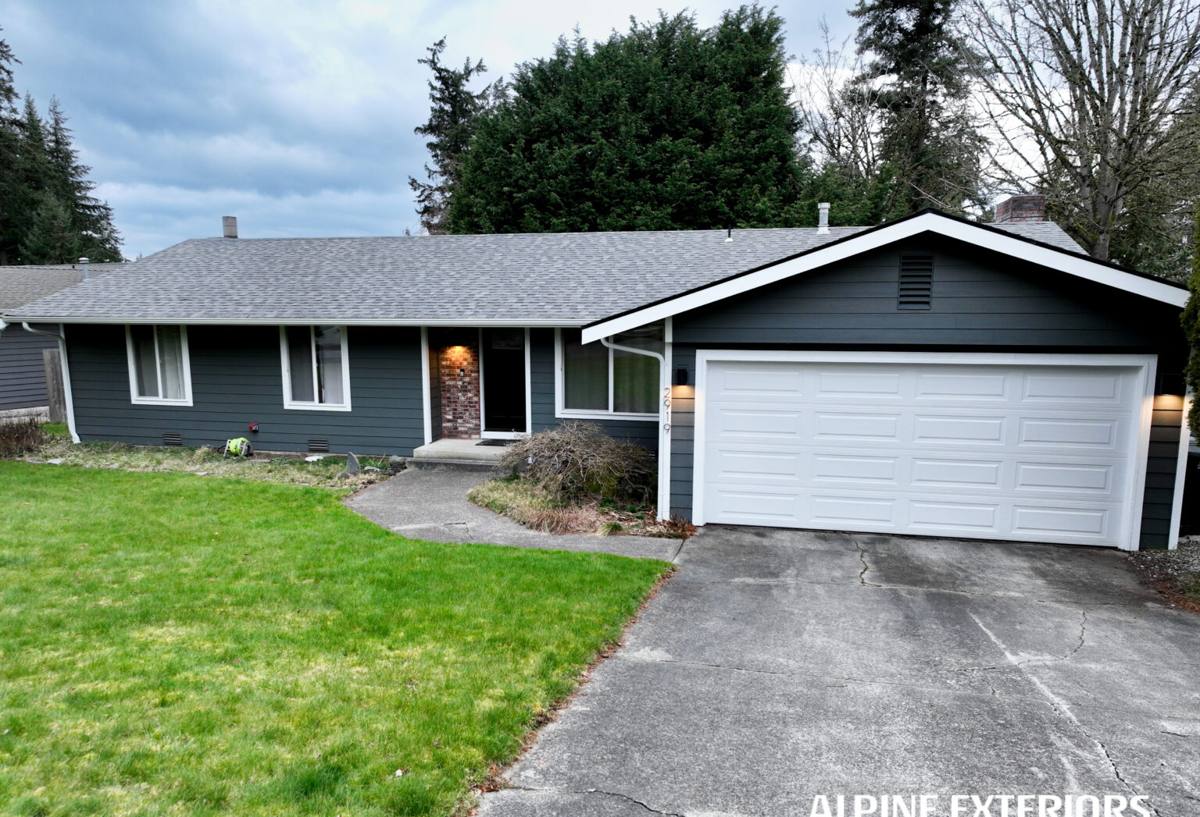
What Cedar Siding Actually Gets Right
Fair is fair. Western red cedar, which is what most homes in this region were sided with historically, has real advantages:
- Natural resistance to insects and decay compared to other softwoods, due to the oils in the wood
- A genuine, non-manufactured look that some homeowners simply prefer to any composite material
- Good insulating properties relative to its weight
- A long regional history — it's been used on homes here for generations, so there's no mystery about how it ages
If cedar were maintenance-free, this would be a much shorter page. It isn't, and that's the entire issue.
The Maintenance Reality: What Cedar Actually Requires
Cedar siding is wood. Wood moves, absorbs moisture, and breaks down under UV exposure and repeated wet-dry cycles unless it's protected — and protecting it is not a one-time job, it's an ongoing commitment for as long as you own the house.
Refinishing on a Schedule, Not When It's Convenient
Stain or paint on cedar doesn't last indefinitely. Semi-transparent stains typically need reapplication every 2–4 years; solid-body stains and paint can stretch to 5–7 years under good conditions, but in a wet marine climate like ours, that window shrinks. Skip a cycle and you're not just touching up appearance — you're letting bare wood take on moisture, which starts the clock on cupping, checking, and rot.
Caulking, Sealing, and Fasteners
Every board joint, corner, and penetration needs caulking that stays intact. Nail heads back out or corrode over time and need attention. None of this is optional maintenance — it's the difference between cedar lasting decades or failing at individual boards within 10–15 years.
Cleaning
Cedar needs periodic washing to remove surface dirt, mildew, and the early stages of moss and algae growth before they take hold. Pressure washing has to be done carefully — too aggressive, and you strip the wood fibers and finish right along with the grime.
Moisture, Moss, and the Whatcom County Climate
This is where the conversation gets specific to where you live. Whatcom County sees a long wet season, driving rain that gets pushed sideways into wall assemblies during winter storms, and a moss season that can run most of the year in shaded, north-facing areas around properties near Lake Whatcom. Add in the salt-tinged air that moves inland off the Sound on windy days, and you've got a combination that's tough on any exterior material — but it's especially tough on wood.
Moss and algae aren't just cosmetic. They hold moisture directly against the wood surface, which accelerates decay in exactly the spots where sunlight and airflow are already limited — under eaves, behind landscaping, on the north and west elevations that catch the worst of the driving rain. On a lot of Sudden Valley properties, tree cover makes this worse, not better, because it keeps siding shaded and slow to dry between storms.
Cedar can absolutely handle this climate — but only with maintenance that keeps pace with it. Skip a refinishing cycle here, and the consequences show up faster than they would in a drier region.
Cost Over Time: Cedar vs. Fiber Cement
The sticker price on materials only tells part of the story. What matters to most homeowners is what the siding costs them over the 20–30 years they'll actually own the house.
| Factor | Cedar Siding | James Hardie Fiber Cement |
|---|---|---|
| Refinishing cycle | Every 2–7 years depending on finish type | ColorPlus factory finish holds up for many years with minimal touch-up |
| Moisture vulnerability | High — wood absorbs and swells if finish fails | Low — engineered to resist moisture-driven damage |
| Insect/rot risk | Present, especially at unmaintained joints | Non-organic material, not a food source for insects or rot fungi |
| Fire resistance | Combustible | Non-combustible fiber cement |
| Typical homeowner labor | Regular cleaning, inspection, and refinishing | Occasional washing; no refinishing cycle |
| Warranty structure | Varies by finish product, not the siding itself | Manufacturer warranty on the siding, transferable |
Cedar isn't necessarily cheaper in the long run once you add up labor and materials for repeated refinishing over a few decades. It just spreads the cost out differently — smaller amounts, more often, and largely dependent on the homeowner staying on top of it.
Where Cedar Fails Homeowners in Practice
We've walked plenty of homes where cedar siding was original or close to it, and the pattern is consistent. It's rarely the wood itself that fails first — it's the maintenance schedule slipping. A homeowner gets busy, skips a refinishing cycle, or doesn't catch a failed caulk joint behind a shrub. Water gets behind the finish, and once wood is trapping moisture instead of shedding it, individual boards start to go. At that point you're not maintaining siding anymore, you're doing selective board replacement and trying to match finish on patched sections — which is harder and more expensive than staying ahead of it would have been.
None of that is a defect in cedar as a product. It's a mismatch between what the material needs and what most homeowners realistically have time for, especially in a climate that doesn't give you much of a dry season to catch up in.
Why We Standardized on James Hardie
We made a decision as a company to install James Hardie fiber cement siding exclusively, and this is the reasoning behind it. Hardie's HZ5 product line is engineered specifically for climates like ours — freeze-thaw cycles, sustained moisture exposure, and the kind of driving rain Whatcom County gets in the winter months. It's non-combustible, it doesn't feed insects or rot fungi because it isn't organic material, and the ColorPlus factory finish is baked on under controlled conditions rather than applied on-site, which is a meaningfully different process than field-applied stain or paint.
It also comes with a strong, transferable manufacturer warranty on the siding itself — something that matters if you ever sell the house, since a buyer's inspector will ask about exterior condition and maintenance history either way.
None of that makes Hardie zero-maintenance. Every exterior material needs periodic washing and inspection. But it removes the recurring refinishing cycle that's the single biggest maintenance and cost driver with cedar, and it holds up to our specific weather without asking you to be the one keeping it dry.
What Real Cedar Maintenance Looks Like, Year to Year
If you already own cedar siding, or you're weighing it against other options, here's the honest maintenance checklist involved in keeping it in good shape long-term:
- Inspect all caulked joints, corners, and penetrations at least once a year, ideally before the wet season starts
- Wash siding annually to remove dirt, mildew, and early moss growth, using low pressure and a wood-safe cleaner
- Watch north- and west-facing elevations and shaded areas near trees closely — they hold moisture longest
- Reapply stain or paint on the manufacturer's recommended schedule, not just when it looks faded
- Replace or reset popped and corroded fasteners promptly, before water tracks in behind them
- Trim back landscaping so siding gets airflow and sun exposure to dry out between storms
- Address any soft, spongy, or discolored boards immediately rather than waiting for a full refinishing cycle
That's not a criticism of cedar — it's just what the material asks of you. Some homeowners are genuinely fine with that trade-off. Our position is that most people would rather not sign up for it, especially once they see what it costs in time and money over the life of the house.
Making the Right Call for Your Home
We're not going to tell you cedar siding is a mistake for every homeowner in Sudden Valley — some people love the look enough to accept the upkeep, and that's a legitimate choice. What we won't do is install it and let you find out about the maintenance schedule after the fact. We'd rather be upfront: in a climate with this much driving rain, moss pressure, and salt-tinged air, we've seen fiber cement hold up with far less demanded of the homeowner, and that's why James Hardie is the only siding system we put on houses.
If you're weighing cedar against fiber cement, or just want an honest look at what your current siding needs, we're happy to walk your property and give you a straight assessment. Reach out for a free, no-pressure estimate — there's a form right below.