 Sudden Valley Siding
 Why Color Choice Matters More Here Than People Think
Most homeowners start a siding project by picking a color they like off a sample chip. In Sudden Valley, that's backwards. Between the salt-laden air coming off Bellingham Bay, the near-constant rain moving through Whatcom County most of the year, and the shade and moisture that keep moss thriving on north-facing walls and rooflines, your siding's finish is doing real work every single day. The color you choose — and more importantly, how that color is applied to the board — determines whether your house still looks sharp in year twelve or starts showing chalky fade, streaking, and moss staining by year five.
This page walks through how James Hardie's ColorPlus Technology finish system works, what the actual color palette looks like, and what to think about when you're matching a color to a home that has to survive a Pacific Northwest coastal climate, not a showroom.
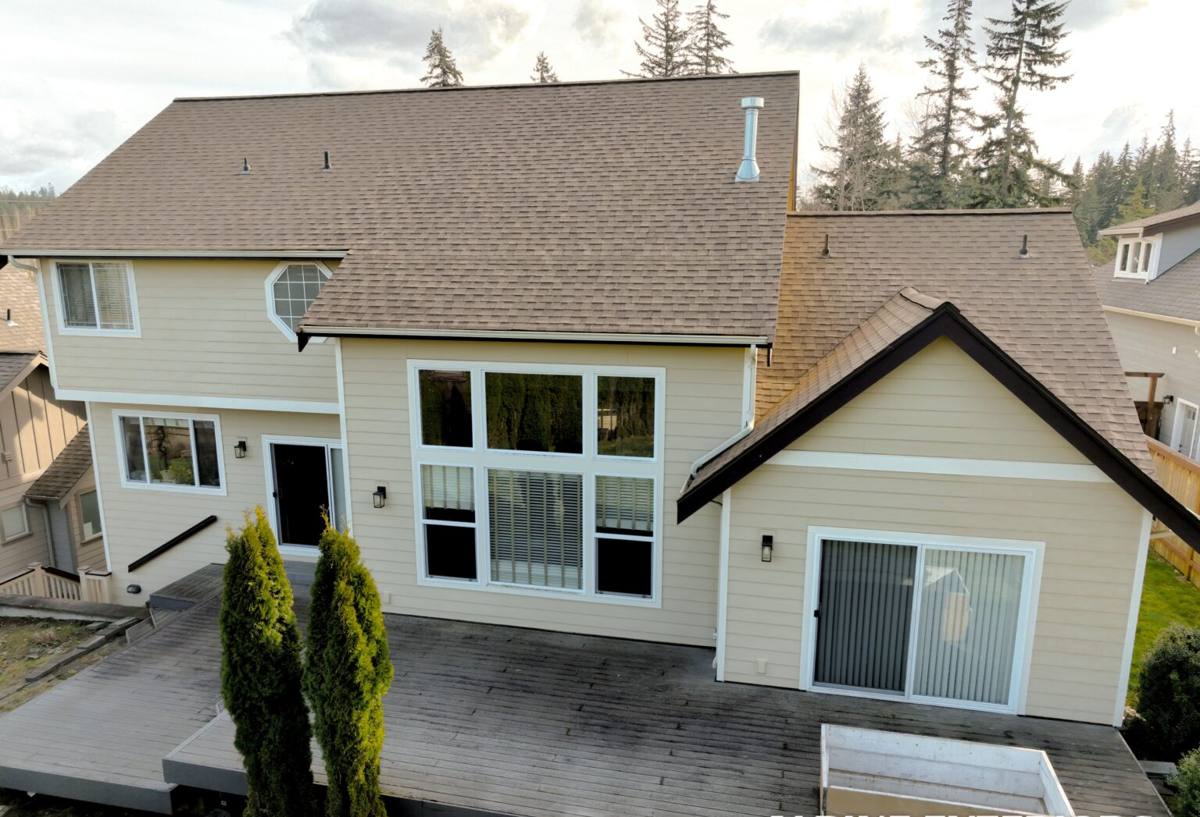
ColorPlus Technology: Factory-Applied, Not Site-Painted
The single biggest difference between James Hardie siding and almost every other fiber cement or wood-alternative product on the market is that the color is baked on at the factory, not brushed or sprayed on after installation. ColorPlus Technology applies multiple coats of a 100% acrylic finish to each plank, panel, or trim piece, then bakes it on in a controlled environment before it ever ships to a job site.
That matters in a climate like ours because field-applied paint is only as good as the weather conditions on the day it's applied and the skill of whoever's holding the sprayer. A factory finish doesn't care whether it was drizzling that morning or whether the crew was rushing to beat a storm window — every board gets the same consistent coating thickness and cure.
What ColorPlus Actually Resists
- UV fading from the long summer daylight hours we get this far north
- Moisture intrusion at the surface, which is what lets mold and moss get a foothold on painted wood and some composite sidings
- Chip and crack from the freeze-thaw cycles we get in the shoulder seasons
- Color mismatch on cut edges, thanks to matching touch-up product and pre-finished trim
The Sudden Valley Climate Factor
Sudden Valley sits right up against Lake Whatcom with heavy tree cover on most lots, which means two things working against ordinary siding finishes at the same time: shaded, damp walls that rarely get a full dry-out between rain events, and airborne salt influence carried in from the Sound side of Whatcom County. Add in a moss season that can run from fall through spring, and you've got a finish environment that's genuinely harder on a house than most inland Washington towns.
Wood and primed spruce siding products are the most vulnerable here — they depend on a paint film staying intact to keep water out, and once that film cracks, the substrate underneath starts absorbing moisture and moss gets a place to grip. Fiber cement with a factory finish doesn't have that vulnerability because the substrate itself is non-combustible and moisture-resistant cement board, not organic material.
The ColorPlus Color Palette
James Hardie's ColorPlus lineup runs a real range — not just a handful of neutrals. Depending on the product line and region, homeowners are typically choosing from a palette that includes colors like Arctic White, Iron Gray, Cobble Stone, Countrylane Red, Evening Blue, Khaki Brown, Monterey Taupe, Mountain Sage, Navajo Beige, Night Gray, Pearl Gray, Rich Espresso, Sandstone Beige, Timber Bark, and Woodstock Brown. Trim, fascia, and soffit come in coordinated colors so the whole exterior reads as one designed system instead of a patchwork of separately sourced materials.
What's useful about this palette for our area specifically is the range of light-reflecting versus light-absorbing options. On a heavily treed Sudden Valley lot with limited direct sun, a lighter body color like Arctic White or Pearl Gray will show less of the green-black moss streaking that tends to be more visible against darker tones, while a color like Iron Gray or Rich Espresso can hide some of that same staining longer between cleanings — it's a genuine trade-off, not a right answer.
Color and Trim Combinations
Because trim, corner boards, and fascia are also ColorPlus finished, you're not stuck field-matching a stark white trim to a body color and hoping it holds up the same way over time. The trim ages at the same rate as the field material because it's the same finish system, which keeps a house looking intentional instead of mismatched five years in.
HZ5 — Built for This Specific Climate
James Hardie engineers its siding in regional formulations called HZ (HardieZone) products, and the Pacific Northwest falls into the HZ5 category — the formulation built for wetter, more humid climates prone to moisture and moss exposure. That's a meaningful distinction from siding sold as one-size-fits-all nationally. HZ5 boards are engineered with that damp-climate performance in mind from the manufacturing stage, not just the finish stage.
Plank, Panel, or Shingle
Beyond color, the profile you choose affects how the finish performs visually over time:
- HardiePlank lap siding — the most common choice for Sudden Valley homes, available in smooth or cedar-textured finishes
- HardiePanel vertical siding — often used as an accent on gables or modern-style homes
- HardieShingle — a shaped, staggered profile for homes going for a more traditional Northwest look
Factory Finish vs. Field Painting: A Real Comparison
| Factor | ColorPlus Factory Finish | Field-Applied Paint |
|---|---|---|
| Application conditions | Controlled factory environment, every time | Dependent on weather the day of the job |
| Coating consistency | Uniform thickness across every board | Varies by applicator and technique |
| Typical repaint interval | Not required for 15+ years under warranty | Often needed every 5-8 years in wet climates |
| Cut-edge matching | Factory touch-up product matches exactly | Depends on leftover paint and mixing accuracy |
| Moss/mildew resistance at the finish | Formulated acrylic resists surface staining | Standard exterior paint has no special resistance |
What the Warranty Actually Covers
James Hardie backs the fiber cement substrate itself with a 30-year non-prorated limited warranty, and ColorPlus finished products carry a separate finish warranty — typically running around 15 years, depending on the product and region at time of installation — covering the coating against peeling, cracking, and fading beyond normal limits. That's two layers of coverage stacked on the same product: one for the board, one for the color. It's also transferable to a new owner if you sell within the warranty period, which is worth mentioning to anyone weighing resale value in Sudden Valley's market.
Warranty coverage assumes correct installation to Hardie's published specifications — proper fastening, clearances, and flashing. That's part of why installation quality matters as much as the product choice itself.
Living With It: Maintenance in a Moss and Salt-Air Climate
ColorPlus siding isn't zero-maintenance, but it's a fraction of the upkeep of painted wood siding in this climate. A yearly rinse-down and occasional gentle wash keeps moss and airborne salt residue from building up on the surface.
- Rinse siding annually with a garden hose and soft brush — avoid high-pressure washing directly at seams
- Trim back vegetation and tree limbs that keep any wall shaded and damp longer than necessary
- Check caulking at trim joints and penetrations once a year, since caulk failure (not the siding finish) is the most common source of moisture problems
- Clear gutters before the fall rains so overflow doesn't run down the face of the siding
- Address any moss on adjacent roofing promptly, since spores spread to siding surfaces nearby
Choosing a Color for a Sudden Valley Home
A few practical things worth weighing before you commit to a color:
- North-facing and heavily shaded walls will show moss and mildew streaking faster regardless of color — lighter tones tend to hide it less than you'd think, since the contrast is what shows
- Homes close to the lake or with more open exposure get more sun and will hold true color longer with less staining
- Darker colors show dust and pollen less but can show water spotting after heavy rain more than lighter tones
- Coordinating trim color against a body color in a wooded lot generally reads better with warmer, more muted tones than stark white against deep green surroundings
Why We Install Only James Hardie
We don't install vinyl, LP SmartSide, primed wood, or other fiber cement brands, and the color system is a real part of that decision. A factory-cured acrylic finish that's engineered specifically for HZ5 conditions, backed by a real substrate and finish warranty, is a fundamentally different proposition than a product that depends on a paint job holding up against Whatcom County rain year after year. When we put a color on a house here, we want it to still look like that color a decade from now, not require a repaint before the loan on the siding is even paid off.
If you're planning a siding project and want to see actual ColorPlus samples against your home's exposure and tree cover, we're happy to walk the property with you. Reach out for a free, no-pressure estimate — there's a form right below this page.