 Sudden Valley Siding
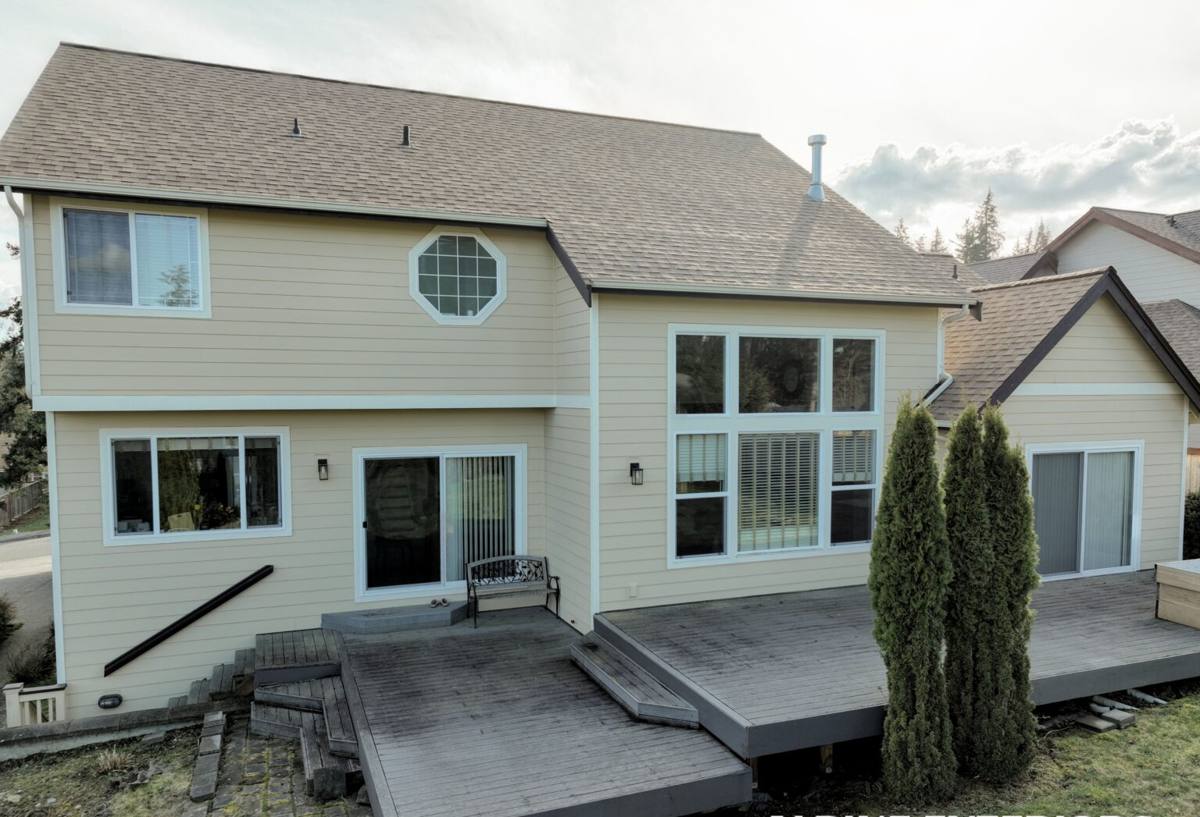
 Deck Replacement Built for Silver Beach Conditions
Silver Beach sits right up against the kind of weather that shortens the life of an ordinary deck. Homes here take a steady combination of salt-laden air, driving rain off the water, and a moss season that can stretch for months in the wetter part of the year. A deck built to a generic spec — the kind you'd see on a big-box lumber cutsheet — often looks fine for a season or two and then starts showing problems that a deck built for this specific location wouldn't have: soft spots near the ledger, corroded fasteners, slick moss buildup on shaded boards, and joints that never quite dry out between storms.
Deck replacement is not the same job as deck repair, and it's not the same job everywhere in Whatcom County. A deck on a dry, sun-exposed lot inland behaves differently than one on a shaded, moisture-heavy lot near the water. This page covers what a proper deck replacement looks like specifically for Silver Beach homes, what we build into the job to account for local conditions, and how our process works from first look to final walkthrough.
Signs Your Deck Has Crossed From "Repairable" to "Replace It"
Homeowners often call us thinking they need a few boards swapped, and sometimes that's true. But there's a point where patching individual boards is just delaying a bigger, more expensive failure — usually in the framing underneath, which is harder to see than the surface decking. Here's what tells us a deck is past the point of spot repair:
- Soft, spongy, or bouncy spots when you walk across the deck, especially near the house or stairs
- Fasteners that have rusted, bled orange streaks into the wood, or backed out of their holes
- Persistent moss or black-green staining that comes back within weeks of cleaning, especially on north-facing or shaded sections
- Visible gaps or separation where the deck meets the house (the ledger board connection)
- Cracked, split, or delaminating boards in more than a handful of spots
- Support posts or footings that show rot, movement, or are no longer plumb
- A deck older than 15–20 years that has never had the substructure inspected
If what you're seeing is limited to a few boards on an otherwise sound frame, repair is the honest answer and we'll tell you that. If the framing itself is compromised, replacement is the only option that actually solves the problem rather than covering it up.
Why Moisture-Related Failure Shows Up Differently Here
In a climate with a long wet season and salt air off the water, deck failure tends to start from the inside out. Water gets trapped between boards, around fastener heads, and at the ledger connection, and it doesn't get the drying window that a drier inland location would give it. That's why a deck here can look fine on top while the joists underneath are already compromised — which is exactly why we check the substructure, not just the visible decking, before quoting a repair versus a full replacement.
What a Correct Deck Replacement Actually Involves
A deck replacement done right isn't just pulling up old boards and screwing down new ones. It's a full rebuild of the structural system that the decking sits on, with attention to the parts that fail first in this climate.
The Substructure
Footings, posts, beams, and joists are the parts of the deck you don't see once it's finished — and the parts most responsible for how long it lasts. We check footing depth and condition, post connections, and joist spacing against current code requirements, not whatever was standard when the original deck went in. In a lot of Silver Beach homes, older decks were built to lighter framing standards than what's expected today.
The Ledger Board Connection
This is where the deck attaches to the house, and it's the single most common point of hidden rot on any deck in a wet climate. A proper replacement includes correct flashing at this connection so water is directed away from the house framing instead of trapped against it. This is also the detail that's easiest to get wrong on a fast, low-cost job — and the one most likely to cause expensive damage to the house itself if it's done poorly.
Fasteners and Hardware
Salt air accelerates corrosion on standard fasteners and connectors. We use corrosion-resistant fastener and hardware ratings appropriate for coastal-influenced exposure, not the minimum-grade hardware that shows rust streaks within a couple of years.
Drainage and Airflow Underneath
A deck that traps moisture underneath — because of poor grading, no airflow, or boards set too tight — will grow moss and rot faster no matter what decking material sits on top. Part of a correct rebuild is making sure water has somewhere to go and air can move underneath the structure.
Decking Material Options for This Climate
There's no single "best" decking material — there's a best material for your budget, your maintenance appetite, and how much shade and moisture your specific deck deals with. Here's how the common options actually perform in a wet, moss-prone environment:
| Material | Moisture Behavior | Maintenance | Typical Lifespan |
|---|---|---|---|
| Pressure-treated wood | Resists rot with proper sealing; needs re-sealing to stay protected | Annual cleaning and periodic re-staining/sealing | 10–15 years with upkeep |
| Cedar | Naturally rot-resistant but still needs sealing in a wet climate | Regular sealing; can gray or stain if neglected | 15–20 years with upkeep |
| Composite decking | Doesn't absorb water like wood, but can still trap surface moisture and grow moss if shaded and not cleaned | Periodic washing; no staining or sealing required | 20–25+ years |
| PVC/capped decking | Fully resists moisture absorption; best option for consistently shaded or splash-exposed areas | Occasional washing | 25+ years |
We don't push one material as universally "best." A dry, sun-exposed deck can do perfectly well in cedar with regular sealing. A shaded deck under trees or on the north side of the house is where composite or PVC earns its higher upfront cost, because it removes the wood-rot variable entirely and cuts down on the moss regrowth cycle. We'll walk your specific site conditions with you before recommending a material rather than defaulting to whatever's easiest to install.
Our Deck Replacement Process
1. On-Site Assessment
We inspect the existing deck from the ground up — footings, framing, ledger connection, and decking — and identify exactly what's failing and why. We'll tell you plainly if repair is a viable option before recommending full replacement.
2. Straightforward Scope and Options
You get a clear scope of work and material options with honest trade-offs explained, not a hard sell toward the most expensive choice. If your budget points toward pressure-treated with a good sealing schedule, we'll say so.
3. Permitting
Deck replacements, especially ones involving structural changes, height above grade, or attachment to the house, typically require a permit through Whatcom County. We handle the permit process and build to current code, including footing depth, guardrail height, and stair requirements.
4. Demolition and Disposal
Old decking, framing, and hardware are removed and hauled off. We check the area under the deck and around the ledger connection for any hidden moisture damage to the house before framing begins.
5. Rebuild
New footings, framing, ledger flashing, and decking go in to current code and to the material spec you approved. We don't shortcut the structural work to speed up the visible finish.
6. Final Walkthrough
We walk the finished deck with you, check for level, secure railings, and clean site cleanup before calling the job done.
Permits and Code Considerations
Whatcom County requires permits for most deck replacements that involve structural rebuilding, particularly when the deck attaches to the house or sits above a certain height. Code requirements cover footing depth (frost depth matters here), guardrail and stair specifications, and ledger attachment methods. Skipping permits on a deck rebuild isn't just a legal risk — it can also create real problems when you go to sell the house, since an unpermitted structural rebuild can hold up a sale or trigger a required retrofit at the worst possible time. We pull the necessary permits as part of the job rather than leaving that step to the homeowner.
What Deck Replacement Costs Depend On
There's no honest flat price for a deck replacement — it depends on size, material, structural condition, and site access. What we can tell you is what actually moves the number:
| Cost Factor | Why It Matters |
|---|---|
| Deck size and footprint | More square footage means more framing, material, and labor |
| Decking material chosen | Pressure-treated is the lowest upfront cost; PVC/composite cost more but need less upkeep over time |
| Height and stairs | Multi-level decks and stairs add framing complexity and railing requirements |
| Substructure condition | Rotted footings or posts add rebuild scope beyond just the visible decking |
| Site access | Tight lots or difficult material access can add labor time |
| Permit and code requirements | Structural changes required to meet current code add to scope |
We give a real number after seeing the deck and the substructure — not a phone estimate based on square footage alone, since the condition underneath is often what actually drives cost.
Why a Crew That Already Works Silver Beach Matters
A deck built for a dry inland lot and a deck built for a shaded, moisture-heavy lot near the water shouldn't be built the same way, even if they're the same size. Crews that work Silver Beach and the broader Sudden Valley area regularly already know which details matter most here: where moss tends to reestablish fastest, which ledger connections take the most water exposure, and how much drying window a given site actually gets through the wet months. That local knowledge shows up in small decisions — hardware grade, flashing detail, board spacing for drainage — that a crew unfamiliar with the area might not think twice about.
It also matters for permitting. We work within Whatcom County's permit process regularly, so there's no learning curve or delay figuring out what's required for your specific job.
Keeping Your New Deck in Good Shape
A well-built deck still needs some ongoing attention in this climate, regardless of material:
- Sweep off standing debris and leaves regularly, especially in shaded areas prone to moss
- Wash the deck surface at least once or twice a year to interrupt moss and algae growth before it sets in
- Check and re-seal wood decking on the schedule recommended for the product — don't wait until it looks dry and gray
- Keep gutters and downspouts clear so runoff isn't dumping extra water directly onto or under the deck
- Inspect the ledger board connection and railings once a year for movement, gaps, or fastener corrosion
- Trim back overhanging vegetation that keeps sections of the deck shaded and slow to dry
None of this is complicated, but skipping it is how a well-built deck ends up needing early repairs in a climate like this one.
If your deck is showing soft spots, persistent moss, or you're just not sure whether it needs repair or full replacement, we're happy to take a look. Fill out the form below for a free, no-pressure estimate — we'll give you a straight answer about what your deck actually needs.