 Sudden Valley Siding
 Why Decks in Silver Beach Need to Handle More Than Sunny Days
A deck in Silver Beach lives a harder life than the same structure would twenty miles inland. This corner of Whatcom County gets long stretches of driving rain, humid air off the lake that lingers in shaded corners, and a moss season that can run most of the year on north-facing or tree-covered lots. A deck that looks great going up in July can start showing soft spots, green film, or loose railings by the following spring if it wasn't built with that in mind.
None of that means a deck can't last for decades here — it means the framing, fasteners, drainage, and material choices all have to account for water that doesn't dry out quickly. That's the real difference between a deck that needs structural repair in five or six years and one that just needs an occasional wash.
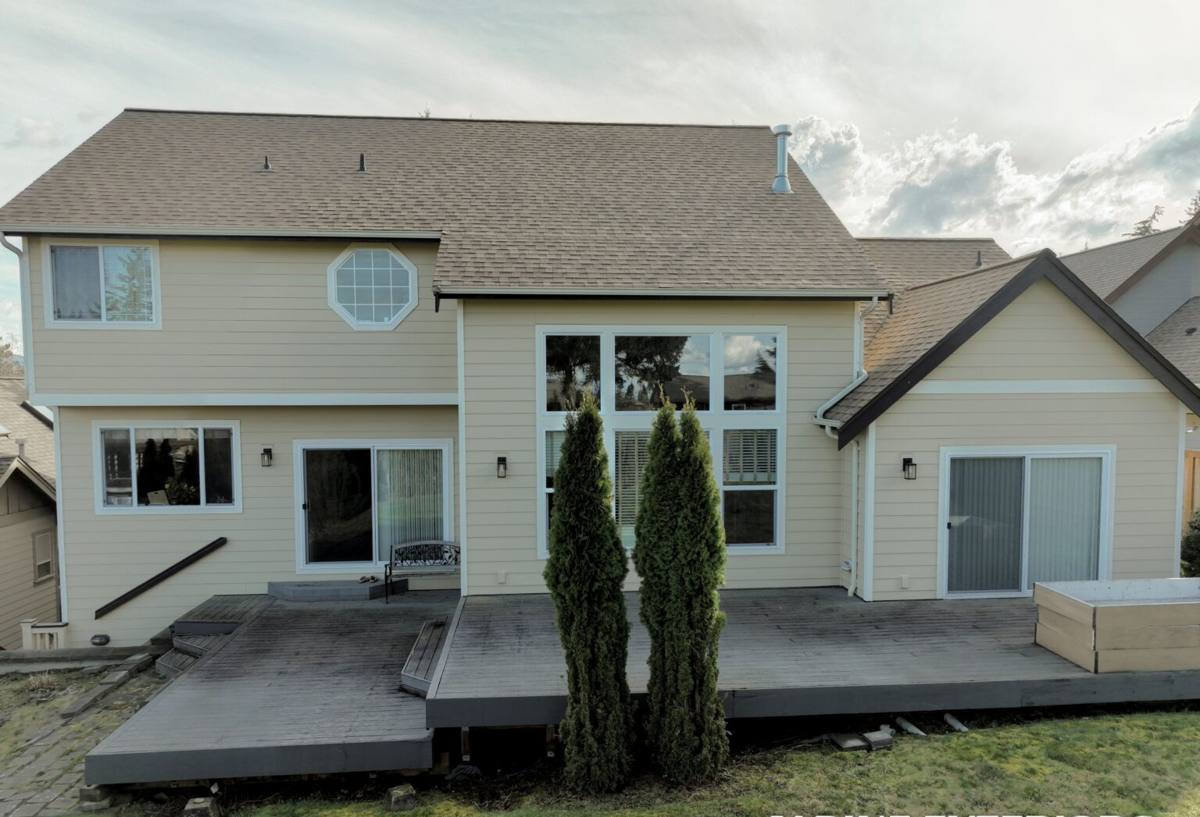
What Local Conditions Actually Do to a Deck
Moss and Standing Moisture
Moss and algae don't just make boards slippery — they hold moisture against the surface, which slows drying after every rain and keeps joist tops, board gaps, and hardware wet longer than they should be. Wooded, shaded lots common around Silver Beach and the wider Sudden Valley area are especially prone to sections that stay damp for days after a storm passes, even when the rest of the yard has dried out.
Moisture in the Air and Fastener Corrosion
The humid, moisture-laden air that moves through this part of Whatcom County accelerates corrosion on the wrong hardware. Fasteners and structural connectors rated for high-moisture exposure aren't an upgrade out here — they're the difference between hidden rust quietly weakening a connection over a decade and hardware that still looks new when the boards get re-stained.
Driving Rain and the Ledger Connection
Rain that comes in sideways instead of straight down pushes water into places a fair-weather build never accounts for — especially where the deck ledger board attaches to the house. That single connection is one of the most common failure points on older decks in wet regions, and it's almost always a flashing and waterproofing problem rather than a framing problem. Get that detail wrong and the deck can look solid for years while moisture works into the rim joist behind it.
What a Correctly Built Deck Actually Involves
Framing and Fasteners
Correct framing starts with pressure-treated lumber rated for ground contact where it's near soil, corrosion-resistant fasteners throughout (not just at the connections you can see), and joist tape or a similar protective barrier over the tops of joists and beams before decking goes down. That tape layer is inexpensive during construction and does more to prevent long-term rot than almost anything else in the build.
Ledger Flashing
Where the deck meets the house, proper flashing — installed in the right order with the house's existing water-resistive barrier, not just caulked over the top of it — keeps water from tracking behind the siding and into the rim joist. This is a detail that's easy to shortcut and hard to inspect once the deck is finished, which is exactly why it matters who's doing the work.
Footings on Sloped or Wooded Lots
A lot of lots in this area slope toward the lake or sit among mature trees, which means footing depth, drainage around posts, and root interference all need to be assessed on site rather than assumed from a standard plan. Footings poured too shallow, or without adequate drainage around them, are more likely to shift as the ground saturates and dries through the wet season.
Drainage and Board Spacing
Board gaps that are too tight trap debris and moss spores; gaps that are too wide look sloppy and can be a hazard. Getting spacing right — and making sure the substructure sheds water instead of pooling it — reduces how often moss gets a foothold in the first place.
Choosing a Decking Material for This Climate
There's no single "right" material for every project — it depends on budget, how much upkeep you want to do, and how much shade and moisture the deck's location gets. Here's how the common options actually perform in a climate like this one.
| Material | Upfront Cost | Moss/Moisture Resistance | Maintenance | Typical Local Lifespan |
|---|---|---|---|---|
| Pressure-treated wood | Lowest | Fair — needs sealing to perform well | Annual cleaning and re-sealing | 10–15 years with upkeep |
| Cedar | Moderate | Good natural resistance, but surface still needs care | Regular cleaning, periodic oil or stain | 15–20 years with upkeep |
| Capped composite | Higher | Very good — shell resists moisture absorption | Occasional washing, no sealing | 25+ years |
| PVC decking | Highest | Excellent — no wood fiber to hold moisture | Occasional washing | 25+ years |
Solid, uncapped wood-plastic composite is worth mentioning on its own: older-style composites without a protective cap can absorb moisture at the core over time, especially in a climate this wet, which is why we steer most Silver Beach clients toward either a well-maintained natural wood or a fully capped composite/PVC product instead. It's a maintenance and moisture-behavior tradeoff, not a knock on composite decking as a category — capped composite and PVC are engineered specifically to solve that old absorption issue.
Railings, Fascia, and Finish Details That Hold Up
The parts of a deck that fail first are rarely the field boards — it's usually the smaller details. Railing post connections need the same corrosion-resistant hardware as the frame, since they take the same rain exposure with less airflow to dry them out. Fascia boards, especially on the shaded side of a deck, benefit from a material choice that doesn't rely on paint or stain alone to stay dry. Stair stringers, which sit closer to grade and splashback, deserve the same ground-contact-rated lumber or composite treatment as the footings above them.
For metal railings or accent hardware, powder-coated or stainless finishes hold up far better here than standard coated steel, which can start showing rust streaks within a couple of wet seasons in a shaded, humid spot.
Our Process for a Silver Beach Deck Project
- On-site assessment. We walk the lot, note slope, shade, drainage, and how the deck will tie into the house, and check the condition of any existing structure being replaced or expanded.
- Design and material conversation. We go over layout, decking material, and railing options honestly — including what each choice costs to maintain over time, not just to install.
- Permitting. Deck projects in unincorporated Whatcom County typically require a permit depending on size and height; we handle that process as part of the job.
- Build. Framing, ledger flashing, joist protection, and footings go in first and get inspected before decking and railings are installed.
- Final walkthrough. We go over the finished deck with you, including basic care specific to the material you chose, before calling the job done.
Keeping a Deck Ahead of Moss Season
Even a well-built deck needs some seasonal attention in a climate like this one. A short, consistent routine does more than an occasional deep clean.
- Sweep leaves and debris out of board gaps regularly, especially in fall — trapped organic matter is what moss and algae feed on.
- Rinse or gently wash the deck surface a few times a year, more often in shaded sections, before moss gets a real foothold.
- Check railing posts and stair connections annually for looseness, which can signal hardware corrosion underneath.
- Keep gutters and downspouts near the deck clear so runoff isn't dumping extra water onto or under the structure.
- Re-seal or re-stain wood decking on the schedule the product calls for — skipping a cycle in a wet climate compounds fast.
- Trim back overhanging branches where practical to cut down on shade and debris over the deck surface.
Why Hiring a Crew That Already Works This Neighborhood Matters
A contractor who mostly builds decks in drier climates or on open, sunny lots is working from different assumptions than what Silver Beach actually needs. The flashing details, fastener choices, and footing decisions that matter here aren't exotic — but they only get done right consistently when a crew has already seen what a season of Whatcom County rain and shade does to the shortcuts. Local familiarity also means a more realistic read on permitting timelines and site conditions specific to the area, instead of guesswork.
If you're planning a new deck or need an honest look at whether an existing one is holding up the way it should, we're happy to walk the property with you and talk through real options — no pressure, no obligation. Use the form below to request a free estimate.