 Sudden Valley Siding
 Why Silver Beach Homes Go Through Siding Faster Than the National Average
Silver Beach sits in one of the wettest, moistest corners of Whatcom County, and the siding on homes here works harder than siding almost anywhere else in the country. The marine climate that defines this part of Washington brings salt-tinged air, long stretches of driving rain, and a moss season that can run from October through May in a heavy year. None of that is a problem for the right siding installed the right way — but it is exactly the combination that exposes weak materials and shortcuts fast.
Wood-based products swell and split when they take on repeated moisture cycles without ever fully drying out between storms. Vinyl gets brittle and can warp or fade under sustained UV and temperature swings. Even good materials fail early when the install skips proper flashing, clearance, or ventilation. When we talk about siding replacement in Silver Beach, we're really talking about matching the material and the installation detail to a climate that doesn't forgive corner-cutting.
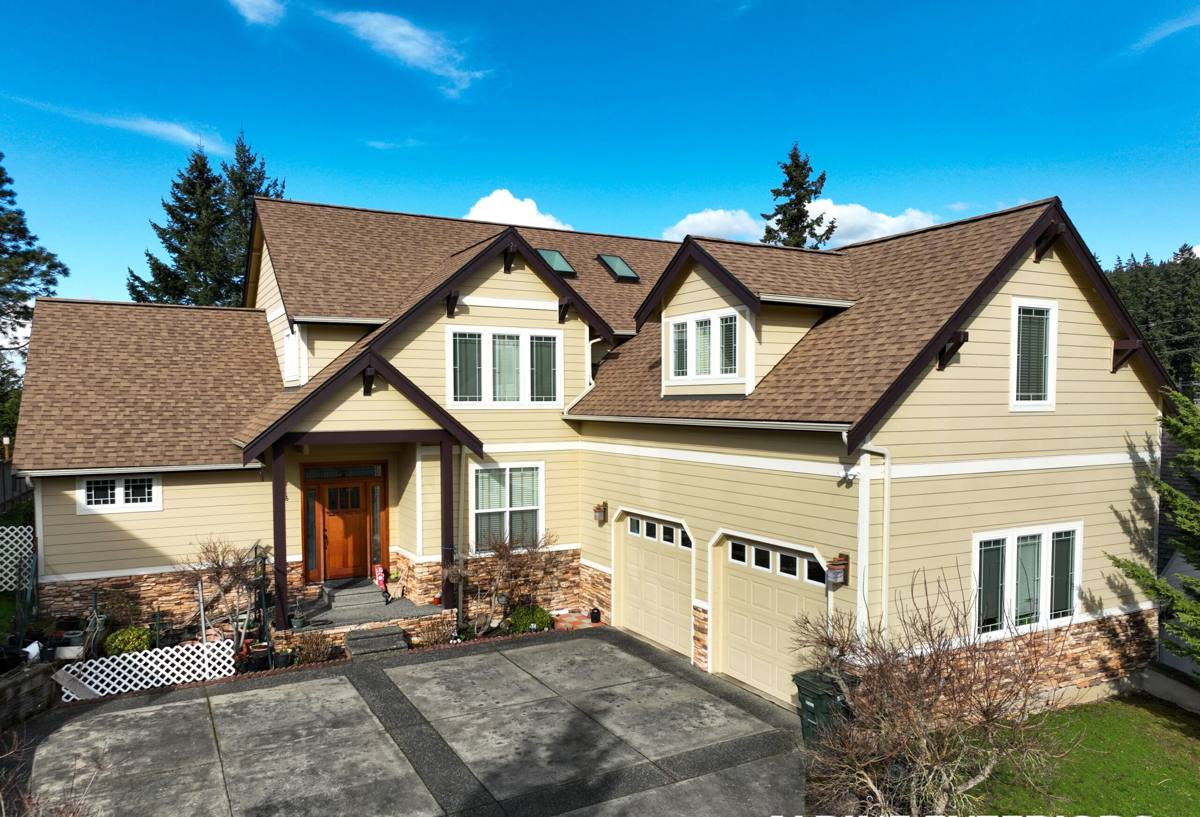
Signs a Silver Beach Home Needs Siding Replacement, Not Another Repair
Repairs make sense when the damage is isolated and the substrate underneath is still sound. Replacement becomes the honest answer once the damage is systemic — spread across multiple walls, tied to trapped moisture, or symptomatic of an installation that was wrong from day one. Here's what tends to separate the two:
- Soft or spongy spots when you press on the siding, especially near the bottom courses and around window trim
- Persistent moss or algae growth that comes right back within weeks of cleaning
- Paint that's bubbling, peeling, or won't hold no matter how often it's redone
- Visible gaps, warping, or boards pulling away from the wall
- A musty smell or moisture staining on interior walls that back up to exterior siding
- Siding that's original to a home built more than 20-25 years ago with wood-based or early composite products
If you're seeing two or more of these, it's worth having someone look at the sheathing underneath before deciding on a fix. A siding surface can look rough while the wall behind it is fine, or it can look presentable while hiding rot that's been building for years — you can't tell which from the driveway.
Why Silver Beach's Combination of Sun, Shade, and Moisture Matters
Silver Beach's mix of tree cover, hillside lots, and proximity to the water creates microclimates from one side of a house to the other. A north-facing wall that never gets direct sun can stay damp for days after a storm while the south side dries out in an afternoon. That's why moss and mildew problems on local homes are so often concentrated on one or two walls rather than spread evenly — and why a competent siding replacement plan accounts for orientation, not just square footage.
What a Correct Siding Replacement Job Actually Involves
Siding replacement is not just pulling off old boards and nailing up new ones. In a climate like this, the parts you never see matter as much as the finished look. A proper job includes:
- Full removal of old siding down to the sheathing, not installation over existing material
- Inspection and repair of any water-damaged sheathing, framing, or insulation found underneath
- A correctly lapped weather-resistive barrier (housewrap) installed to shed water downward, not trap it
- Proper flashing at every window, door, deck ledger, and roofline intersection
- Rain screen or drainage gap where the siding line and climate call for it, so water has somewhere to go besides into the wall
- Correct fastening pattern and nailing schedule specific to the product being installed
- Manufacturer-specified clearance from grade, decks, patios, and roof lines
- Factory-finished or properly field-finished trim, corners, and caulking at every joint
Skip any one of these steps and you can end up with siding that looks fine for a year or two and then fails from the inside out — which is a common story behind Silver Beach homes that needed a second replacement well ahead of schedule.
Why We Install Only James Hardie Fiber Cement
We made a decision years ago to stop installing vinyl, LP SmartSide, primed spruce, cedar, and other fiber cement brands, and to install James Hardie exclusively. That's not a sales pitch — it's a standard we hold because of what this climate does to alternatives over time.
Vinyl can work fine in drier regions, but it moves with temperature, doesn't hold paint if you ever want a color change, and can crack in the kind of wind-driven weather that comes through Whatcom County. Wood products — cedar, primed spruce, engineered wood like LP SmartSide — depend on flawless paint maintenance to keep moisture out, and a marine climate with this much rain and shade doesn't give paint film much of a break. Other fiber cement brands exist, but Hardie's ColorPlus factory finish, its HZ5 product engineering for wet climates, and the depth of its installer network and warranty backing are the reasons we standardized on one manufacturer instead of juggling several.
James Hardie siding is non-combustible, holds its factory finish for decades without repainting, and is engineered specifically for climates that see exactly what Silver Beach sees: sustained moisture, temperature swings, and salt-tinged coastal air. It costs more up front than vinyl. It earns that back in a maintenance bill that stays close to zero for a very long time.
How Our Siding Replacement Process Works
- On-site assessment — we walk the exterior, check for soft spots and moisture entry points, and look at how each wall is exposed to sun, shade, and prevailing weather
- Written estimate — a clear scope covering tear-off, sheathing repair contingencies, product line and color, and a realistic timeline
- Tear-off and inspection — old siding comes off, sheathing gets inspected, and any rot or damage is addressed before anything new goes up
- Weather barrier and flashing — housewrap, drainage plane, and flashing installed correctly at every penetration
- Hardie installation — installed to manufacturer specification for fastening, clearance, and joint treatment
- Final detail and cleanup — trim, caulking, touch-up, and a full site cleanup before we call the job done
We don't skip the assessment step to get to a number faster. What we find under the old siding often changes the scope, and homeowners deserve to know that before work starts, not after.
What Siding Replacement Costs Depend On
Every Silver Beach home is different, so we won't quote a number without seeing the house. What we can tell you is what drives the range up or down:
| Factor | Why It Matters |
|---|---|
| Home size and wall complexity | More square footage, corners, and dormers mean more material and labor hours |
| Condition of the sheathing underneath | Rot discovered during tear-off adds repair scope that can't be priced sight unseen |
| Product line and profile chosen | Hardie's lap siding, shingle-style panels, and board-and-batten options carry different material and labor costs |
| Trim and detail work | Window and door trim, corner boards, and fascia detail add time beyond flat wall coverage |
| Site access | Hillside lots, tight setbacks, and limited staging areas common in this area can slow the work |
| Color and finish choice | Factory ColorPlus finishes vs. field-painted trim affect both cost and long-term maintenance |
Beware of any quote that skips a physical inspection — a number given over the phone or from a photo can't account for what's happening behind the old siding, and that's usually where the real cost swings live.
Why Hiring a Crew That Already Works This Area Matters
Siding installation is detail work, and the details that matter in Silver Beach aren't identical to the details that matter in a drier inland climate. A crew that regularly works Sudden Valley and the surrounding Whatcom County communities already knows how to sequence flashing for sustained rain, where moss tends to establish itself on local homes, and how hillside and lakeside lots affect drainage and staging. That's knowledge you don't get from a general contractor who does a handful of siding jobs a year alongside everything else.
It also matters for accountability. A crew with an ongoing presence in this area has a reason to stand behind the work years down the line — reputation in a smaller community carries weight. Ask any siding contractor how many jobs they've completed nearby, whether they carry manufacturer certification for the specific product they're installing, and what their warranty actually covers versus what it excludes. The answers tell you a lot before a single board goes up.
Questions Worth Asking Before You Hire
- Do you install one siding brand or several, and why?
- Who inspects the sheathing before new siding goes on, and what happens if you find rot?
- Is your crew certified to install the specific Hardie product line being quoted?
- What does the warranty cover — material only, or labor too, and for how long?
- Can you provide a written scope that details flashing and weather barrier work, not just the finish material?
Living With Hardie Siding After Replacement
One of the practical benefits of switching to James Hardie in a climate like this is how little upkeep it demands once it's installed correctly. There's no repainting cycle to manage — the ColorPlus finish is baked on at the factory and holds up under UV and moisture far longer than field-applied paint. Occasional gentle washing to keep moss and algae from taking hold is really the extent of routine maintenance, and even that's more about appearance than protecting the material itself.
That's a meaningful shift for homeowners who've spent years managing paint touch-ups or patching soft spots on wood-based siding. It doesn't mean the siding is maintenance-free forever — caulking joints, checking flashing after major storms, and keeping gutters clear so water isn't dumping directly onto walls are still worth a homeowner's attention. But the constant battle against moisture intrusion that comes with the wrong material in this climate largely goes away.
If your siding is showing its age or you're just not sure whether you're looking at a repair or a replacement, we're happy to take a look and give you a straight answer. The estimate is free, there's no pressure attached to it, and you'll walk away knowing exactly what your home needs and why.