 Sudden Valley Siding
 Why Silver Beach Homes Wear Out Their Siding Faster Than People Expect
Silver Beach sits in one of the wetter, damper pockets of Whatcom County, and the siding on these homes works harder than most homeowners realize. Between salt-tinged marine air moving in off the Sound, long stretches of driving rain, and a moss season that can run half the year in shaded, tree-lined lots, exterior cladding here is under near-constant moisture pressure. Add in the tree cover common around Sudden Valley and the surrounding hillsides, and you get siding that rarely gets a full dry-out period between storms.
None of that is a reason to panic about your siding. It's a reason to be picky about what goes on the wall and how it's installed. Products and installation shortcuts that might get away with mediocre results in a drier climate tend to show their weaknesses here in a few years instead of a few decades — swelling seams, soft spots at the bottom courses, paint that won't hold, moss and algae staining that keeps coming back no matter how many times it's pressure washed off.
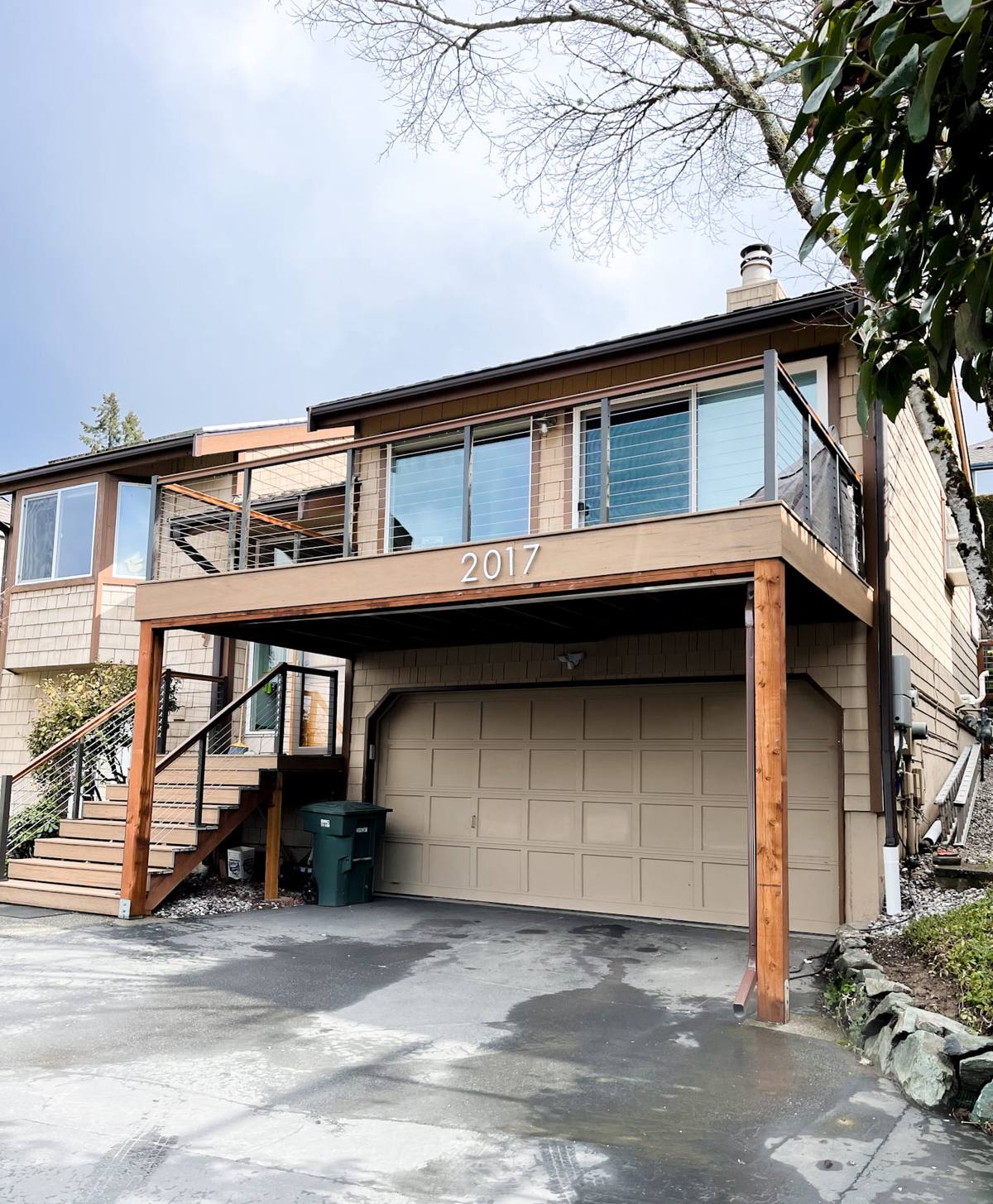
What the Local Climate Actually Does to Siding
Salt Air and Driving Rain
Wind-driven rain doesn't just wet a wall — it pushes water sideways and up under laps, trim, and butt joints that were never designed to handle water moving in that direction. Combined with salt-tinged air common across this part of Whatcom County, fasteners and metal flashing corrode faster, and any siding material with even small gaps or unsealed cut edges starts absorbing moisture it can't easily release.
A Long Moss Season
Shaded lots, morning dew that doesn't burn off until midday, and cool damp air for much of the year add up to conditions moss and algae love. Moss holds moisture against the siding surface, which is exactly the wrong thing for any wood-based or wood-substitute product. It also traps grime that breaks down paint and factory finishes well before their rated lifespan.
None of this means Silver Beach is a uniquely brutal place to own a home — it's a normal Pacific Northwest climate. But it does mean the siding and the installation have to be matched to that climate, not just to whatever looks good on a sample board.
What Goes Wrong With a Bad Installation Here
Most siding failures we get called out to inspect aren't a product problem — they're an installation problem that the local climate exposed faster than it would somewhere drier. The patterns repeat:
- Butt joints and seams caulked instead of properly flashed, so water gets behind the siding and stays there
- Bottom courses installed too close to grade, decks, or roof lines, holding splashback moisture against the material
- Missing or undersized weep gaps, which trap moisture behind the siding with nowhere to drain
- Fasteners driven at the wrong depth or spacing, cracking the material or leaving it loose enough to work moisture in over time
- No rainscreen gap or house wrap detailing behind the siding, so the wall assembly never gets a chance to dry
Every one of those is fixable with correct technique — the material choice matters, but the installation is what actually determines whether siding lasts 15 years or 50.
What a Correct Siding Installation Includes
Prep and Moisture Management
Before a single piece of siding goes up, the wall needs a properly lapped weather-resistive barrier, flashing at every window, door, and penetration, and a drainage plane that lets any moisture that does get behind the cladding find its way back out instead of sitting there.
Fastening and Clearances
Fastener type, spacing, and depth all matter — over-driven nails crack fiber cement and create entry points for water, while under-driven fasteners leave siding loose. Clearance from grade, roofing, decks, and other siding-adjacent surfaces has to meet manufacturer minimums so splashback and standing moisture never sit against the bottom edge.
Joints, Trim, and Finish Details
Butt joints get flashed, not just caulked. Corners, trim, and any factory-cut edges get properly sealed with the right primer or touch-up product so the cut end doesn't become the weak point in an otherwise solid installation. These are the details that separate a siding job that looks fine on install day from one that still looks fine in year twelve.
Why We Install Only James Hardie Fiber Cement
We don't install vinyl, LP SmartSide, Cemplank, Allura, primed spruce, or cedar. That's not a marketing position — it's a standard we settled on after years of seeing which products actually hold up in Northwest exterior conditions and which ones require more maintenance, patching, or replacement than homeowners expect going in.
Non-Combustible
James Hardie fiber cement is non-combustible, which matters for insurance considerations and long-term peace of mind, unlike wood-based or engineered-wood siding products.
Engineered for This Climate
Hardie's HZ5 product line is engineered specifically for climates with prolonged moisture exposure — the kind of conditions Whatcom County delivers for much of the year. That's a meaningfully different design target than a general-purpose siding product.
ColorPlus Factory Finish
Hardie's ColorPlus finish is baked on at the factory under controlled conditions, which gives it more consistent coverage and better fade and moisture resistance than field-applied paint — and it comes backed by its own finish warranty separate from the product warranty.
A Warranty You Can Actually Transfer
Hardie backs its siding with a strong, transferable limited warranty. For a homeowner planning to stay in Silver Beach long-term — or one who wants that warranty to be a selling point down the road — that's a real, practical advantage over products with thinner or non-transferable coverage.
Our Process for Silver Beach Installations
- Walk and assess — we look at the existing wall assembly, moisture history, grading, and any problem areas specific to your lot before quoting anything
- Tear-off and inspection — old siding comes off and we check the sheathing and framing underneath for hidden rot or moisture damage before covering it back up
- Weather barrier and drainage plane — house wrap or building paper installed correctly lapped, with a rainscreen gap where the wall assembly calls for it
- Flashing at every penetration — windows, doors, vents, and any trim transitions get flashed, not just caulked
- Hardie installation to manufacturer spec — correct fastener schedule, clearances, and joint treatment throughout
- Finish and touch-up — cut edges sealed, trim finished, site cleaned up
- Final walkthrough — we go over the finished job with you before calling it done
Fiber Cement vs. Other Siding Options
| Factor | James Hardie Fiber Cement | Vinyl | Cedar / Primed Wood |
|---|---|---|---|
| Moisture behavior in wet climates | Engineered for prolonged exposure (HZ5) | Doesn't rot, but seams and gaps can trap moisture behind it | Absorbs moisture; prone to swelling and rot without diligent upkeep |
| Combustibility | Non-combustible | Combustible | Combustible |
| Finish longevity | Factory ColorPlus finish, separate finish warranty | Color molded in, can fade and chalk over time | Field-applied paint/stain, needs recoating on a cycle |
| Maintenance in moss-prone areas | Cleans up well, doesn't feed rot from surface staining | Cleans up well but doesn't address underlying moisture risk | Moss and algae accelerate wood decay if not kept clean |
| Warranty | Strong, transferable limited warranty | Varies widely by product tier | Typically no material warranty beyond paint/stain product |
Cost Factors for a Silver Beach Siding Installation
| Factor | Why It Moves the Price |
|---|---|
| Tear-off and sheathing condition | Hidden moisture damage under old siding adds repair scope before new siding can go on |
| Home size and wall complexity | More corners, gables, and trim details mean more labor and cut waste |
| Siding profile chosen | Lap width, texture, and trim style affect material cost and install time |
| Access and site conditions | Sloped lots, tree cover, and tight access common around Sudden Valley can affect staging and labor time |
| Trim and flashing scope | Full flashing replacement at windows and doors is more thorough — and more durable — than reusing old trim |
We don't post fixed pricing because every home's condition and scope is different — an accurate number takes a walk-through, not a guess from a photo.
Signs It's Time to Replace, Not Patch
- Soft or spongy spots when you press on the siding, especially near the bottom courses
- Paint that won't hold no matter how often it's redone
- Persistent moss or algae staining that returns within a season of cleaning
- Visible gaps, warping, or buckling at seams and butt joints
- Rising energy bills that track with drafts or cold spots along exterior walls
- Siding that's original to a home more than 20-25 years old, especially wood-based products
Why a Crew That Already Works Silver Beach Matters
Siding installation isn't just a product decision — it's a set of judgment calls about flashing details, clearances, and drainage that have to be right for the specific conditions a home faces. A crew that regularly works Silver Beach and the wider Sudden Valley area already knows how the local rain patterns, shade cover, and moisture load tend to hit a wall, and builds the installation around that instead of treating every job as generic. That familiarity shows up years later, not on install day — in siding that's still doing its job through the next decade of Whatcom County winters.
If you're weighing a siding replacement or want a second opinion on an installation someone else quoted, we're happy to walk your property, look at what's actually going on with your current siding, and give you a straight assessment. Reach out for a free, no-pressure estimate using the form below.