 Sudden Valley Siding
 Sehome's Older Homes Face a Tougher Climate Than Most Siding Was Built For
Sehome is one of Bellingham's older, more established neighborhoods — mature trees, a mix of early-1900s bungalows and craftsman-style homes alongside newer infill construction, and a lot of shaded, sloped lots. That combination looks great and it also creates one of the harder environments in Whatcom County for exterior siding to survive long-term. Homes here sit close enough to Bellingham Bay to pick up salt-laden air, squarely in the path of the driving, wind-pushed rain that defines a Pacific Northwest fall and winter, and under enough tree canopy that north- and west-facing walls can stay damp for days after a storm passes. Siding that isn't engineered for that combination — salt air, sustained moisture, and long stretches of shade — tends to show it early, whether that's paint failure, soft trim, or moss creeping up from the foundation line.
This page is about one job, done right, in this one neighborhood: fiber cement siding installation on Sehome homes, using James Hardie products exclusively. Not a general overview of siding — the specific product, the specific climate problems it solves here, and what a correct install actually looks like.
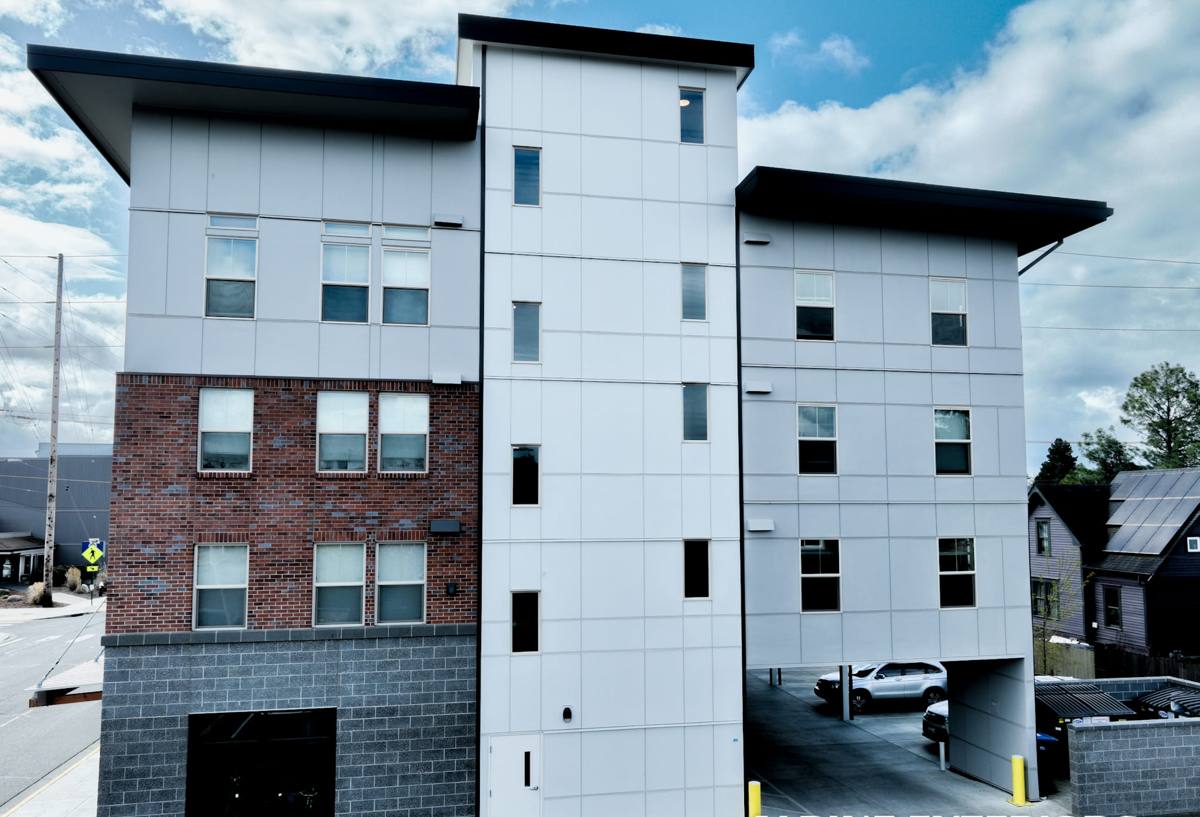
What Salt Air, Rain, and Moss Actually Do to Exterior Siding
Salt Air and Coastal Moisture
Even a few miles inland from the water, salt-carrying air accelerates corrosion on fasteners, flashing, and any exposed metal trim, and it keeps organic siding materials (wood, primed wood composites) perpetually a little more moisture-saturated than they'd be further from the coast. Over years, that moisture cycling is what drives paint failure and edge swelling on products that aren't dimensionally stable.
Driving Rain and Wind-Driven Water
Whatcom County's rain doesn't fall straight down for much of the year — it comes in sideways off weather systems moving through the Strait of Georgia and Puget Sound, which means siding, trim, and window flashing take direct water impact that vertical-rain climates don't see. Lap joints, butt seams, and penetrations (hose bibs, vents, light fixtures) are where this shows up first if they weren't detailed correctly.
Moss, Shade, and Extended Dampness
Sehome's tree cover is a defining feature of the neighborhood, but shaded siding dries slower after every rain event, and slower drying is exactly what moss and algae need to establish. On wood and wood-composite products, that sustained dampness is also what feeds rot at butt joints and bottom edges. Siding material matters here — some products shrug this off, others don't.
Why We Install Only James Hardie Fiber Cement
We don't install vinyl, LP SmartSide, Cemplank, Allura, primed spruce, or cedar. That's a deliberate standard, not a sales pitch, and it's worth explaining honestly rather than just asserting it.
- Vinyl is affordable and low-maintenance in dry climates, but it expands and contracts with temperature swings, can warp or crack in impact, and doesn't hold paint if you ever want a color change — none of that plays well with our wet-dry cycling.
- LP SmartSide and other engineered wood products perform reasonably when installation and caulking are perfect and stay perfect for decades — a bet we're not willing to make on a client's home in a climate this wet, since any breach in the factory coating opens the door to moisture intrusion and swelling at cut edges.
- Cedar and primed spruce look beautiful and many owners genuinely want that look, but real wood siding in a shaded, damp, salt-touched neighborhood needs a repainting and caulking maintenance schedule that most homeowners underestimate going in.
James Hardie fiber cement is non-combustible, dimensionally stable (it doesn't expand/contract with moisture the way wood-based products do), and comes factory-finished with ColorPlus technology — a baked-on finish that resists fading and doesn't need repainting on the schedule wood or vinyl does. Hardie also engineers specific product lines (the HZ5 line) for climates like ours, and backs the product with a long, transferable non-prorated warranty when installed to their specification. That's the standard we hold every Sehome job to.
The Hardie Product Lines That Fit Sehome's Homes
HardiePlank Lap Siding
The most common choice for the craftsman and bungalow-style homes throughout the neighborhood — available in a range of exposures and textures (smooth or cedar-grain) that match the traditional lap look without the maintenance burden of real wood.
HardieShingle
For homes with gable accents, dormers, or full shingle-style facades — common on some of Sehome's older houses — HardieShingle gives that staggered, textured look in a non-combustible, factory-finished panel.
HardieTrim and HardieSoffit
Trim and soffit are where a lot of moisture and moss problems actually start — mismatched materials at these transition points are a common source of callbacks industry-wide. We spec Hardie trim and soffit boards alongside the field siding so the whole envelope is one consistent, moisture-stable system rather than fiber cement panels bordered by wood trim that will fail on its own timeline.
What a Correct Installation Actually Involves
Fiber cement is only as good as the install behind it. Manufacturer specifications exist for a reason, and skipping steps is where most of the siding failures we get called to diagnose actually originate — not the product itself.
- Removal of old siding down to the sheathing, not installation over existing material
- Inspection and repair of sheathing, framing, and any hidden moisture damage before new siding goes up
- A code-compliant weather-resistive barrier (house wrap) installed and lapped correctly, shingle-style, so water sheds outward
- Correct flashing at every window, door, and penetration — this is the single most common shortcut that causes moisture problems later
- Minimum clearance maintained between siding and grade, decks, roofs, and walkways per Hardie's published specifications
- Fasteners installed at the correct spacing, depth, and location (not overdriven, not into butt joints incorrectly)
- Factory-cut ColorPlus edges sealed with the correct touch-up product where field-cut, to protect the factory finish
- Caulking only at specified joints — over-caulking traps moisture just as much as under-caulking lets it in
Our Process, Start to Finish
- On-site assessment — we look at your existing siding, sheathing condition, drainage patterns, and shade exposure specific to your lot
- Written estimate — product line, color, trim details, and scope spelled out, no vague allowances
- Tear-off and sheathing inspection — any rot or moisture damage found gets addressed before new material goes up, with you informed first
- Weather barrier and flashing installation — the unglamorous layer that determines whether the job lasts
- Hardie siding, trim, and soffit installation to manufacturer spec
- Final walkthrough — we go over the finished work with you before calling the job complete
What Fiber Cement Siding Costs in Sehome
Every home is different, and we won't quote a number without seeing the house, but these are the factors that actually move the price on a real estimate:
| Factor | Why It Matters |
|---|---|
| Home size and number of stories | More surface area and height affect both material and labor, plus staging/scaffolding needs |
| Tear-off vs. new construction | Removing old siding and repairing hidden sheathing damage adds labor that's hard to predict until walls are opened up |
| Product line (Plank vs. Shingle vs. Panel) | Shingle-style and architectural profiles run higher in material and installation time than standard lap |
| Trim complexity | Gables, dormers, and multiple roof planes (common on Sehome's older homes) add cut work and detailing |
| Access and lot conditions | Sloped, tree-covered, or tight-access lots — typical in this neighborhood — affect staging and disposal logistics |
Maintenance: What You'll Actually Need to Do
One of the real advantages of ColorPlus-finished Hardie siding is how little upkeep it needs compared to wood or vinyl, but "low-maintenance" isn't "no-maintenance," especially under Sehome's tree cover.
- Rinse siding annually (a garden hose is enough) to clear pollen, dust, and organic buildup before it becomes a moss anchor
- Keep gutters clear so water isn't sheeting down the wall face during heavy rain
- Trim back vegetation and tree limbs that keep specific wall sections shaded and damp longer than the rest of the house
- Inspect caulking at trim joints every couple of years and have any cracked or missing sections redone
- Watch for any soft or discolored trim boards, which usually signal a flashing or clearance issue worth catching early
Why Hiring a Crew That Already Works Sehome Matters
Fiber cement is forgiving of Whatcom County weather when it's installed correctly — and unforgiving of shortcuts in exactly the same climate. A crew that already works this neighborhood has seen which walls take the worst wind-driven rain, which lots hold moisture longest under tree cover, and where moss tends to establish first, and builds the flashing and clearance details around that instead of applying a generic installation to a house that has its own microclimate. That local pattern recognition is the difference between siding that needs attention in year five and siding that's still doing its job at year thirty.
If you're weighing a siding replacement in Sehome, we're glad to walk the house with you, look at what your current siding is telling us, and put together a straightforward, no-pressure estimate — just fill out the form below to get started.