 Sudden Valley Siding
 James Hardie Siding, Specified for Sehome
Sehome's housing stock is a mix of older Bellingham homes, mid-century construction, and newer infill packed onto the rise of land around Sehome Hill. A lot of that siding is on its second or third act, replaced once already, showing its age again, or original to a house old enough that whatever went up originally was never built for the moisture load this part of Whatcom County actually carries. When we talk about "James Hardie siding for Sehome," we're not talking about a generic product page. We're talking about one material, installed one way, chosen specifically because of what salt air, driving rain, and a moss season that barely lets up do to a wall in this neighborhood over time.
We install James Hardie fiber cement siding exclusively. Not as one option among several, but as the only siding system we put on houses, in Sehome or anywhere else in Whatcom County. That's a professional standard built from what we see when we open up old walls here, not a supplier arrangement or a marketing angle.
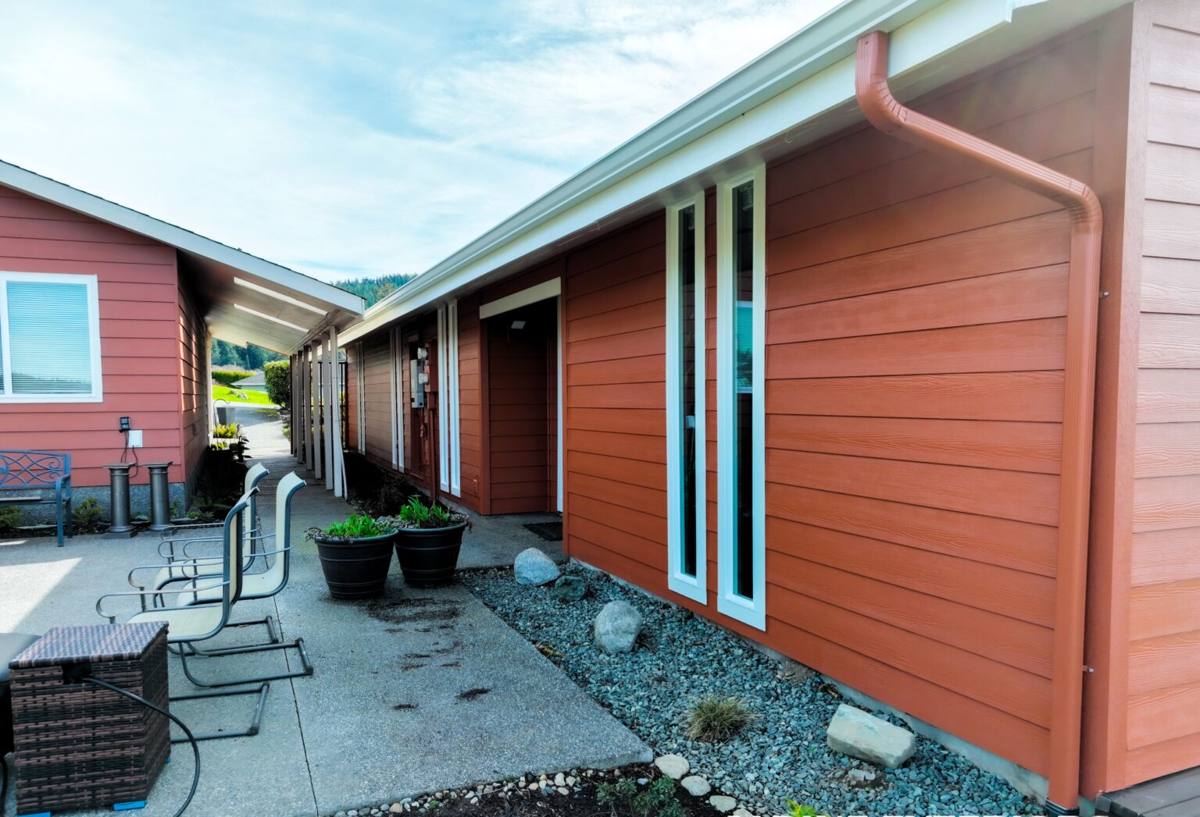
What Sehome's Climate Asks of a Siding System
Salt Air Off the Salish Sea
Sehome sits far enough inland that it doesn't feel like a waterfront neighborhood, but Bellingham as a whole sits close enough to the Salish Sea that salt-laden air moves through the entire area, including up onto the hill. Salt accelerates corrosion on fasteners, flashing, and any exposed metal trim, and it degrades weaker paint and coatings faster than they'd wear in a drier, inland market. A siding system for this neighborhood has to assume that corrosion exposure from day one, not treat it as a rare condition.
Wind-Driven Rain and Wall Assemblies
Rain here rarely falls straight down. It comes in on a wind, which pushes moisture sideways into siding laps, window and door flashing, and roof-to-wall transitions instead of just sheeting off a roof edge. That matters more on a wall than most homeowners assume, because the siding itself is only the first line of defense. What's behind it, the weather-resistive barrier, the flashing at every penetration, the clearances at the bottom of the wall, is what actually decides whether wind-driven rain stays outside or works its way into the sheathing over a few wet winters.
A Moss Season That Doesn't Really End
Bellingham's tree cover and mild, damp temperatures add up to a moss and mildew season that runs most of the year rather than a few weeks in fall. Shaded, north-facing walls and anywhere airflow is limited are where it shows up first. Materials that are even slightly porous, or that hold moisture against the substrate rather than shedding it, become growth surfaces, and once moss or algae takes hold it holds even more water against the wall than before. Over a decade or two, that cycle is what actually shortens the life of a lot of siding in this climate, more than any single storm does.
The James Hardie Product Lines We Spec Here
HZ5: Built for This Kind of Moisture
James Hardie engineers its siding into climate-specific formulations rather than one universal product, and HZ5 is the line built for regions with sustained moisture exposure and freeze-thaw cycling, which describes Whatcom County's climate accurately. For a Sehome home, HZ5 is the appropriate specification, not a generic national product line pulled off a shelf. If a contractor quoting Hardie siding in this area can't tell you which climate-zone formulation they're specifying, that's worth asking about directly.
Lap, Panel, and Shingle Profiles
Hardie's fiber cement comes in a few distinct profiles: traditional lap siding in various reveal widths, vertical panel siding often used for accents or modern-style facades, and shingle-style siding for homes going for a more textured, traditional look. The right profile for a given Sehome home usually comes down to the house's existing architecture and how the current siding is detailed at corners, trim, and transitions, not just a color or style preference. We walk through those options as part of the estimate rather than defaulting to one profile across every job.
ColorPlus Factory Finish
Hardie's ColorPlus finish is baked on in a controlled factory process rather than brushed on in the field, which means it holds color and resists fading and moisture penetration far longer than site-applied paint would on the same board. That matters directly in a climate where UV exposure alternates with long wet stretches, since a field-painted finish has to be maintained and repainted on a cycle that a factory finish generally doesn't.
What a Correct James Hardie Installation Involves
Fiber cement is a forgiving material in a lot of ways, it doesn't rot or feed insects, but it's also specific about how it needs to be installed, and those specifics are exactly where a rushed or unfamiliar install and a correct one separate. On a Sehome home, four details matter most:
- Clearances: Siding held off rooflines, decks, and grade by the manufacturer's specified gap, so a board isn't sitting in standing water or wicking moisture up from below during a wet season.
- Fastening: The correct nail type, driven to the correct depth, at the correct spacing and distance from board ends, so the wall performs under wind load and doesn't develop stress cracks around overdriven or misplaced fasteners.
- Flashing and the weather-resistive barrier: Properly lapped house wrap, pan flashing over every window and door, and kick-out flashing wherever a roofline meets a wall, installed before a single board goes up, since this is what actually keeps wind-driven rain out of the sheathing.
- Cut-edge sealing: Every field cut on a ColorPlus board sealed or touched up with the manufacturer's approved products, not general-purpose paint, so the cut edge doesn't become the one spot on the house that absorbs water.
None of these show up as a line item on an estimate, and none of them are visible once the job is finished. They're also the difference between a wall that handles thirty years of Whatcom County winters and one that starts showing soft spots at the fifth or sixth wet season.
Our Process on a Sehome Siding Project
- Site visit and assessment. We look at the existing siding, the trim, and what we can reasonably tell about the sheathing condition before anything comes off the wall, and we walk the lot to see how water and shade actually move around the house.
- Written estimate. Scope, the specific Hardie product line and profile, and warranty terms, in writing, before any work starts.
- Tear-off and inspection. Old siding comes off, and if we find moisture damage or compromised sheathing underneath, we flag it and price the repair honestly rather than covering it back up.
- Installation to spec. Flashing, weather-resistive barrier, and fastening done to James Hardie's published requirements, photographed before the siding covers it, so there's a record of what's actually behind the boards.
- Walkthrough and documentation. You get the manufacturer's product and finish warranty paperwork plus our workmanship warranty in writing at the end of the job, not just a verbal assurance.
Why We Only Install James Hardie
We don't install LP SmartSide, vinyl siding, Cemplank, Allura, primed spruce, or cedar. Each of those products has a place in the broader market, and plenty of homeowners are satisfied with them in the right climate. But in a neighborhood with this much sustained salt exposure, wind-driven rain, and a moss season that runs most of the year, we've made a professional call: engineered wood products depend on every cut edge and fastener hole staying sealed for decades in a climate where that's a hard ask, vinyl can warp and loosen under sustained wet-and-dry cycling and doesn't offer the same fire performance, and site-finished wood siding carries a maintenance schedule most homeowners underestimate until they're three years behind on it. Fiber cement's inorganic core, cement, sand, and cellulose fiber, doesn't rot, swell, or feed insects, and it's non-combustible. Standardizing on one manufacturer's system also means every crew habit, every truck stock item, and every training hour is built around installing this one product correctly, instead of splitting attention across five different spec sheets.
Why Hiring a Crew That Already Works Sehome Matters
A crew that installs siding across Bellingham day to day, rather than occasionally, sees how salt air, wind-driven rain, and moss actually behave on real Sehome walls over a full year, not just how a product performs on a data sheet. That shapes real decisions on a job: how much extra flashing attention a shaded, north-facing wall on a Sehome Hill lot needs compared to a sunnier, more open one; how a sloped lot changes where water actually sits against the foundation; and which details are worth the extra hour on install day so a homeowner isn't dealing with a soft spot two winters later. A contractor who only occasionally works this specific climate tends to apply generic installation habits that don't quite account for what this part of Whatcom County throws at a house year-round.
Cost Factors for James Hardie Siding in Sehome
| Factor | What Drives It | Sehome-Specific Consideration |
|---|---|---|
| Home size and wall complexity | Square footage, number of gables, dormers, and corners | Older homes often have more trim detail and additions to work around |
| Tear-off vs. reside | Whether existing siding and sheathing can stay or need to come off | Moisture trapped behind older siding is common in this climate and usually only found at tear-off |
| Product line and profile | Lap, panel, or shingle-style HZ5 siding, and reveal width | Profile choice often follows the home's existing architectural style |
| Trim and flashing scope | Number of windows, doors, and roof-to-wall transitions | Each one is a flashing detail that has to be done correctly given the driving rain here |
| Site access and lot conditions | Grading, slope, and how equipment and materials reach the walls | Sloped, shaded lots near Sehome Hill can add setup time |
Exact numbers depend on the specific house and scope, which is why we walk each property before giving a real number instead of quoting off a generic price list.
Signs Your Sehome Home's Siding Needs Attention
- Moss or dark staining that comes back quickly after cleaning, especially on shaded or north-facing walls
- Soft or spongy siding, particularly low on the wall or around window and door trim
- Visible warping, cupping, or peeling paint on wood or engineered wood siding
- Cracking or chalking on vinyl siding, or panels that have loosened from the wall
- Caulk filling gaps where flashing should be doing the work instead
- Rust staining running down from fastener heads
- A noticeable rise in heating bills, which can point to moisture-compromised insulation behind the siding
If your Sehome home needs new siding, or you already have fiber cement on the house and want an honest read on how it was installed, we're glad to take a look. The estimate is free, there's no pressure attached to it, and you'll get a straight answer about what your house actually needs. Use the form below to schedule a time.