 Sudden Valley Siding
 Why Siding Takes More Abuse in Sehome and Sudden Valley
Homes in this part of Whatcom County sit in a climate that's harder on exterior cladding than most homeowners realize. You've got proximity to salt water carrying fine airborne salt onto exterior surfaces, long stretches of driving, wind-blown rain rather than gentle vertical rainfall, and a moss and algae season that can run most of the year in shaded, north-facing exposures. None of these factors are dramatic on their own, but stacked together over years they expose every weakness in a siding system — bad flashing details, gaps in the weather barrier, or a product that simply wasn't built to handle sustained moisture.
Sudden Valley's tree cover and lake-adjacent humidity add another layer: siding on shaded walls stays damp longer after a storm, which is exactly the condition moss and mildew need to take hold. Sehome-area properties closer to open exposure deal more with wind-driven rain finding its way behind poorly lapped siding or under-flashed trim. The right installation approach has to account for both conditions, not just pick one generic detail and apply it everywhere.
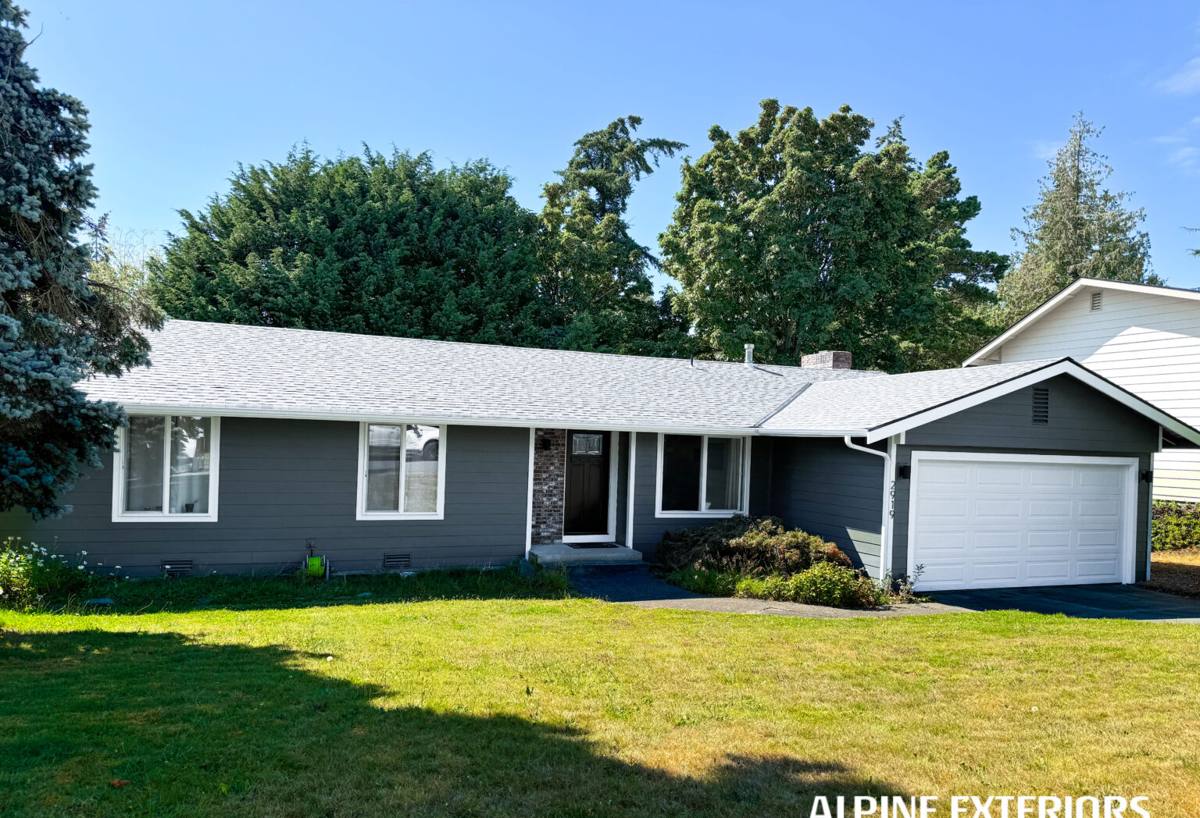
What Correct Installation Actually Involves Here
A siding job that holds up in this climate isn't just about the panel or plank you choose — it's about everything behind it. The materials and techniques below are what separates an installation that lasts decades from one that starts showing problems in five to seven years.
Weather-Resistive Barrier and Flashing
Every penetration — windows, doors, hose bibs, vents, light fixtures — needs proper flashing integrated with the weather-resistive barrier using a shingle-lap sequence so water moving down the wall never meets an upward-facing seam. In a region with this much sustained rain, a flashing shortcut isn't a cosmetic issue; it's a guaranteed future leak.
Rain-Screen Gap
A drainage gap between the siding and the weather barrier lets any moisture that does get past the outer layer drain and dry out instead of sitting against the sheathing. This detail matters more in shaded, damp-prone areas like much of Sudden Valley than it does in drier climates, where builders sometimes skip it without consequence.
Fastening and Clearances
Fiber cement has specific fastener spacing, embedment depth, and clearance requirements from grade, roofing, and decks. Getting these wrong doesn't just void the manufacturer's warranty — it creates the exact wicking points where trapped moisture starts breaking down the substrate underneath.
Why We Install Only James Hardie Fiber Cement
We made a decision to standardize on James Hardie products and stop installing everything else — vinyl, LP SmartSide, Cemplank, Allura, primed spruce, cedar. That's not a marketing position; it's a practical one built on what actually performs in this specific climate.
Fiber cement is non-combustible, which matters increasingly in this region. It doesn't absorb and swell with moisture the way wood-based products can, and it doesn't go brittle and crack in cold snaps the way some vinyl formulations do over time. Hardie's ColorPlus factory finish is baked on under controlled conditions rather than field-applied, which gives more consistent coverage and better fade resistance against the UV exposure homes get here even under frequent cloud cover. And Hardie engineers its HZ product lines by climate zone — the HZ5 formulation used in the Pacific Northwest is built around moisture and freeze-thaw performance specific to regions like ours, not a one-size-fits-all national spec.
The other products we don't install aren't bad products in every setting. But each comes with a trade-off — moisture sensitivity, field-finish inconsistency, shorter real-world lifespan against sustained coastal moisture, or warranty structures that don't hold up as well over time — that we're not willing to put our name behind on a Whatcom County home.
How Siding Materials Actually Hold Up in This Climate
| Material | Moisture Behavior | Maintenance Burden | Typical Lifespan Here |
|---|---|---|---|
| Vinyl siding | Doesn't absorb water but can warp/crack in temperature swings; seams can allow water intrusion behind panels | Low, but repairs are visible (color mismatch on old runs) | 15-25 years |
| Cedar siding | Absorbs moisture readily; needs to dry fully between rain events or rot and mold set in | High — refinishing every few years, ongoing moss/mildew treatment | 15-25 years with diligent upkeep |
| LP SmartSide (engineered wood) | Resists moisture better than raw wood but relies on intact factory coating and correctly sealed cut edges | Moderate — edge sealing and caulking need monitoring | 20-30 years |
| James Hardie fiber cement | Dimensionally stable; doesn't swell, rot, or support moss growth the way wood-based sidings can | Low — periodic washing, no refinishing needed for the ColorPlus warranty period | 30-50+ years installed to spec |
These are general performance patterns, not guarantees — every material's lifespan depends heavily on installation quality, sun/shade exposure, and upkeep. But the pattern holds consistently: moisture-tolerant, dimensionally stable materials do better in Whatcom County's specific combination of rain volume, humidity, and salt exposure than materials that depend on a perfect coating or constant drying-out periods to perform.
Our Installation Process
- On-site assessment. We look at your home's specific exposure — shade patterns, wind direction, existing moisture damage, and current siding condition — before recommending anything.
- Tear-off and substrate inspection. Old siding comes off and we inspect the sheathing underneath for rot, soft spots, or prior water damage that needs to be addressed before new siding goes on.
- Weather barrier and flashing installation. This is the step that determines whether the siding performs for 10 years or 40. We install the weather-resistive barrier and integrate flashing at every penetration per manufacturer detail, not shortcuts.
- Rain-screen furring where appropriate. On shaded or moisture-prone walls in particular, we build in the drainage gap that lets incidental moisture escape instead of sitting against the wall assembly.
- Hardie panel or plank installation. Fastened to spec, with correct clearances from grade, roofline, and any horizontal trim.
- Trim, caulking, and final detailing. The finish details — corner boards, window trim, caulk joints — are what make the job look right and keep water managed at every transition.
- Walkthrough. We go over the finished work with you before calling the job done.
Signs Your Current Siding Is Already Failing
- Persistent moss or dark streaking that comes back within weeks of cleaning
- Soft or spongy spots when you press on the siding, especially near the bottom courses
- Visible warping, cupping, or gaps opening between boards or panels
- Paint that's peeling or bubbling rather than just fading
- Interior signs — musty smell, discoloration on interior walls near exterior corners
- Siding that's more than 20-25 years old and has never been fully inspected behind the surface
Any one of these on its own might just need a repair. Several together, especially on a home with wood-based or older vinyl siding, usually means the underlying wall assembly has been taking on moisture for a while and a full replacement is the more honest recommendation.
What to Ask Any Contractor Before You Hire Them
- Will you show me the specific flashing and weather-barrier details you'll use, not just the finish product?
- Are you a certified installer for the siding brand you're proposing, and does that affect the warranty?
- Who's actually on the crew doing the work — is it your employees or a subcontractor you haven't worked with before?
- What's your plan if you find rot or damage once the old siding comes off?
- Can you walk me through why you're recommending this specific product for my home's exposure?
Cost Factors to Understand
Every home is different, so we won't quote a number without seeing the house, but the main variables that move the price are worth knowing going in: the size and complexity of the wall area (cutouts, dormers, and trim detail add labor), whether the existing siding needs full tear-off versus what's found underneath once we open the wall, the amount of rot or sheathing repair discovered mid-project, and which Hardie profile and finish you choose. A straightforward single-story home with simple wall lines will cost less per square foot than a home with lots of angles, trim, and multiple stories. We'll always walk you through the actual drivers of your specific quote rather than handing you a number with no explanation behind it.
Why Local Experience in Sehome and Sudden Valley Matters
A crew that's worked on homes throughout Sudden Valley and the Bellingham area already knows which walls in this region tend to hold moisture longest, how the salt exposure closer to the water changes maintenance expectations, and which flashing details actually get tested by a real Whatcom County winter rather than a mild-climate installation manual. That local pattern recognition doesn't replace doing the work correctly — it just means fewer surprises and fewer callbacks, because we've already seen how this climate treats the details that matter.
If you're weighing a siding replacement or want a second opinion on siding that's showing early wear, we're happy to take a look and give you a straightforward, no-pressure estimate — no obligation, just an honest read on where your home stands.