 Sudden Valley Siding
 Why Sunnyland Homes Put Extra Demands on a Window
Sunnyland sits close enough to the water and the weather patterns rolling off it that windows here work harder than windows do in drier parts of Whatcom County. Homes in this pocket deal with a mix most manufacturers don't design their entry-level products around: salt-tinged air that speeds up corrosion on hardware and fasteners, driving rain that comes in sideways during a fall or winter blow, and a moss season that stretches long enough to keep wood trim and sills damp for weeks at a time. None of that is dramatic on its own. It's the accumulation, year after year, that separates a window that still operates smoothly at year fifteen from one that's swollen shut, fogged between the panes, or rotting at the sill by year eight.
Custom windows aren't about upgrading for the sake of it. For a Sunnyland home, "custom" usually means matching the window to the actual opening, the actual wall assembly, and the actual exposure that particular elevation of the house faces — not pulling a stock size off a shelf and shimming it into place. That distinction matters more here than it would somewhere with a milder, drier climate.
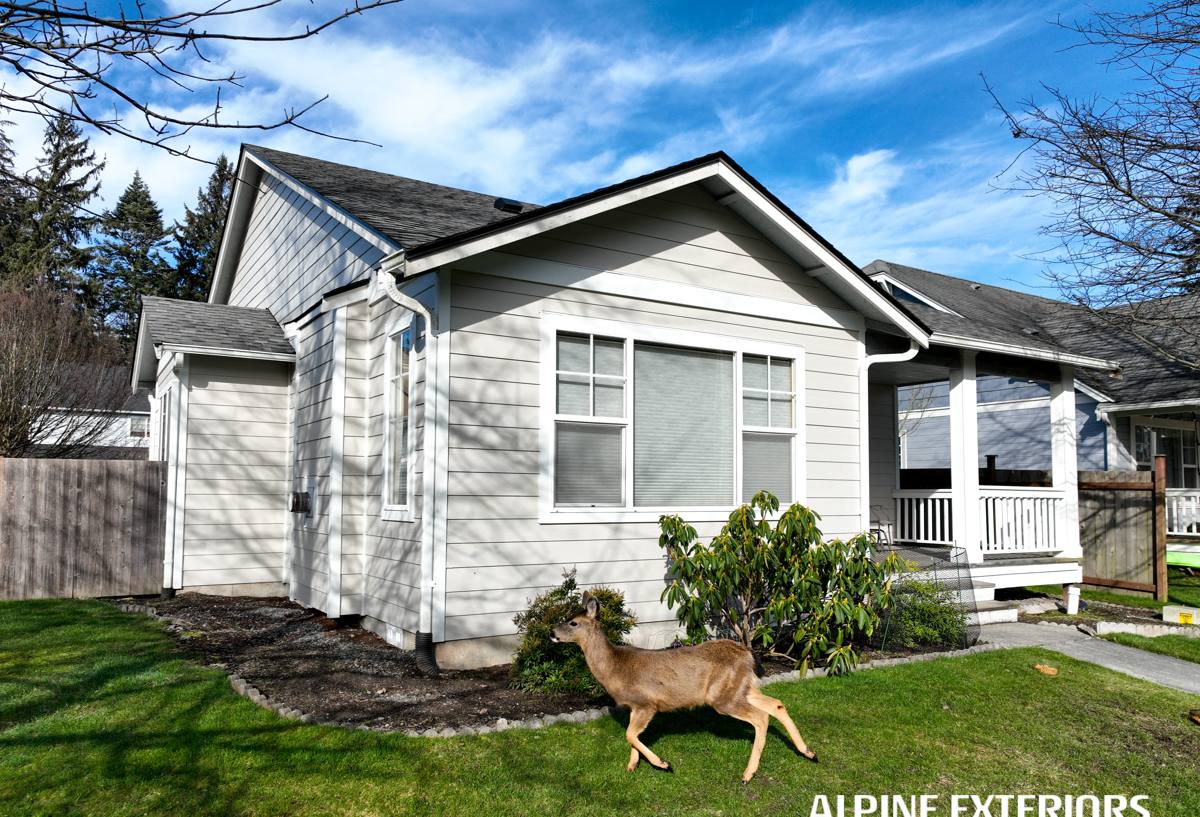
What "Custom" Actually Means on a Job Like This
A lot of homeowners hear "custom windows" and assume it just means a bigger price tag for the same product. That's not accurate, and it's worth being clear about what you're actually paying for:
- Windows built to the precise rough opening of your home, rather than a standard size that needs packing, shimming, or trimming to fit.
- Frame material, glass package, and hardware chosen for the specific exposure — a west-facing window catching driving rain off the lake needs different flashing detail than a sheltered north-facing one.
- Sill and flashing work designed for how water actually moves down your specific wall, not a generic install sequence.
- Trim and cladding details that match the age and construction style of Sudden Valley-area homes, many of which were built across different decades with different water-management assumptions baked in.
The "custom" part is really about fit and detailing, not about ornamentation. A well-built custom install in a house with awkward framing, an out-of-square opening, or an older wall assembly will outperform a cheaper stock unit every time, because the weak point in most window failures isn't the glass — it's the gap around it.
Signs Your Current Windows Are Losing the Fight
Before we ever talk about replacement, it's worth knowing what to look for. Whatcom County's damp, mossy shoulder seasons hide a lot of early damage, so problems tend to show up later here than in drier climates.
Visible warning signs
- Fogging or a permanent haze between double-pane glass — the seal has failed and the gas fill is gone.
- Wood sills or lower corners that feel soft, spongy, or show dark staining.
- Hardware — locks, cranks, hinges — that's stiff, corroded, or won't fully engage.
- Visible daylight or a draft around the frame edges on a windy day.
- Moss or green growth building up on horizontal trim or sills, especially on shaded elevations.
- Paint that's bubbling or peeling specifically around the window perimeter, not the wall in general.
Any one of these on its own might just need a repair or a re-caulk. Several of them together, especially on a window that's original to the house, usually means the frame or seal has moved past the point where patching makes sense.
Material and Glass Choices: What Actually Holds Up Here
There's no single "best" window material — there's a best material for this climate, this exposure, and this budget. Here's how the common options actually perform under Sudden Valley's conditions, based on what we see in the field, not manufacturer marketing.
| Material | How it handles moist, salt-tinged air | Maintenance burden | Typical lifespan here |
|---|---|---|---|
| Vinyl | Doesn't corrode or rot; performs well against salt air | Low — occasional cleaning | 20–30 years |
| Fiberglass | Very stable, resists warping and moisture intrusion | Low | 30+ years |
| Aluminum-clad wood | Good exterior protection, but interior wood still needs the seal to hold | Moderate — watch for seal gaps at joints | 20–25 years if maintained |
| Bare wood | Most vulnerable to driving rain and prolonged moss-season dampness | High — repainting, sealing, sill checks | Highly variable; shortest if neglected |
| Uncoated aluminum | Corrodes faster in salt-influenced air; conducts cold | Moderate | 15–20 years |
We don't refuse to install wood-frame windows — some homeowners want the look and are committed to the upkeep, and that's a legitimate choice. But we'll always be straight about the maintenance commitment before you sign off, because a bare wood sill facing into driving rain on an exposed Sunnyland elevation is a very different proposition than the same window tucked under deep eaves on a sheltered side.
Glass packages worth the upgrade
For this area, we generally steer people toward double- or triple-pane units with a low-E coating and argon fill. The coating helps with heat retention through our long, gray winters, and the sealed multi-pane assembly resists the condensation buildup that damp air tends to cause on single-pane glass. It's not an exotic upgrade — it's close to standard for this climate now, and the cost difference over a basic clear double-pane unit is modest relative to the whole job.
Our Installation Process
The install sequence is where most window failures actually get decided, regardless of how good the window itself is. Here's how we approach a Sunnyland job:
- On-site measurement and assessment. We measure the actual opening, check for square, and inspect the surrounding framing and sheathing for any hidden rot or moisture damage before we ever order product.
- Material and glass selection. Based on that elevation's exposure — how much direct rain and wind it takes — we recommend frame material and glass package, and explain the trade-offs so you're deciding with full information.
- Removal and opening prep. Old units come out carefully so we can inspect the sill and framing underneath, which is often the first time hidden moisture damage becomes visible.
- Flashing and water management. This is the step that separates a good install from a bad one. Proper flashing tape, sill pans, and drainage details are installed so any water that gets behind the cladding has somewhere to go — critical given how much driving rain this area sees.
- Window setting and shimming. The unit is set level, plumb, and square, then shimmed and fastened per the manufacturer's specifications so the frame isn't under stress that will shorten its life.
- Insulation and air sealing. The gap between the window frame and rough opening is properly insulated and sealed — not just caulked on the surface, which is a common shortcut that fails within a few years.
- Exterior trim and finish. Trim is reinstalled or replaced and sealed to match the surrounding siding detail, keeping the whole assembly watertight.
- Final walkthrough. We check operation, look for any daylight gaps, and walk the homeowner through basic care for the new windows.
Cost Factors: What Actually Moves the Number
Every Sunnyland home is different, so we won't quote a flat per-window price without seeing the job — but these are the factors that most affect what a project costs:
| Factor | Why it matters |
|---|---|
| Window size and quantity | Larger openings and full-house replacements scale cost directly |
| Frame material | Vinyl is typically the most economical; fiberglass and clad-wood cost more upfront |
| Glass package | Triple-pane and specialty coatings add cost but pay back in comfort and durability |
| Condition of the existing opening | Hidden rot or out-of-square framing adds repair time before the new window can go in |
| Access and elevation | Upper-story or hard-to-reach windows take more labor and equipment |
| Trim and cladding scope | Full trim replacement costs more than reusing sound existing trim |
As a broad range, homeowners in this area typically see somewhere in the $600–$1,500 per window installed range depending on the factors above, with full-house replacements naturally landing at a wide spread depending on how many openings and how much material work is involved. The only way to get an accurate number is a walk-through of your actual windows.
Maintaining New Windows Through Moss Season
Even a well-installed window benefits from a little seasonal attention in this climate. A short annual routine goes a long way:
- Clear moss and organic debris off sills and horizontal trim before it holds moisture against the surface.
- Check that weep holes on the exterior frame are clear so water can drain rather than pool.
- Inspect exterior caulk lines each fall for cracking or gaps before the wet season sets in.
- Lubricate hardware — locks, cranks, hinges — once a year to keep it from stiffening or corroding.
- Wipe down interior sills after heavy rain events to catch any early sign of a seal issue.
None of this is heavy maintenance — it's the kind of five-minute-per-window check that prevents small issues from becoming sill replacements down the road.
Why a Crew That Already Works Sunnyland Matters
Window installation looks similar on paper everywhere, but the details that make it last are local. A crew that's worked homes in and around Sudden Valley already knows how different elevations in this neighborhood tend to take weather, which older homes commonly have hidden sill damage under original trim, and how the moss and moisture pattern here differs from a drier inland town twenty minutes away. That's not something you get from a national installer who parachutes in for a weekend job and leaves.
It also matters for accountability. A local crew is still around next year if a question comes up, and has a reputation in the neighborhood worth protecting. That's a different incentive structure than a traveling install team working off a one-time contract.
Getting an Honest Estimate
Not every window in a Sunnyland home needs replacing at the same time, and not every homeowner needs the top-tier glass package on every elevation. Part of doing this job right is telling you honestly which windows are still fine, which are close to the end of their service life, and where your money will actually make a difference — not upselling a whole-house job when a few units would do.
If you're noticing drafts, fogging, sticking sashes, or just want a straight assessment of where your windows stand, we're glad to take a look. Reach out for a free, no-pressure estimate using the form below, and we'll walk through your home's specific exposure and give you real numbers to work from.