 Sudden Valley Siding
 Why Happy Valley Homes Need More Than a Catalog Window
Homeowners in Happy Valley often start their window search the same way: comparing brands online, looking at U-factor numbers, and picking whatever looks good in a showroom. That's a reasonable starting point, but it skips the part that actually determines whether a window performs for the next 20 years in this part of Whatcom County. A window that's rated efficient in a lab isn't automatically efficient on a home that deals with salt-laden air, sideways rain, and months of shaded, damp conditions every year. The product matters, but so does how it's sized, sealed, and flashed for this specific climate, and that's where a lot of "energy-efficient" window jobs quietly fail.
This page covers what we actually look at when we replace windows on Happy Valley homes — not a generic rundown of window types, but the decisions that matter given the weather this neighborhood gets year-round.
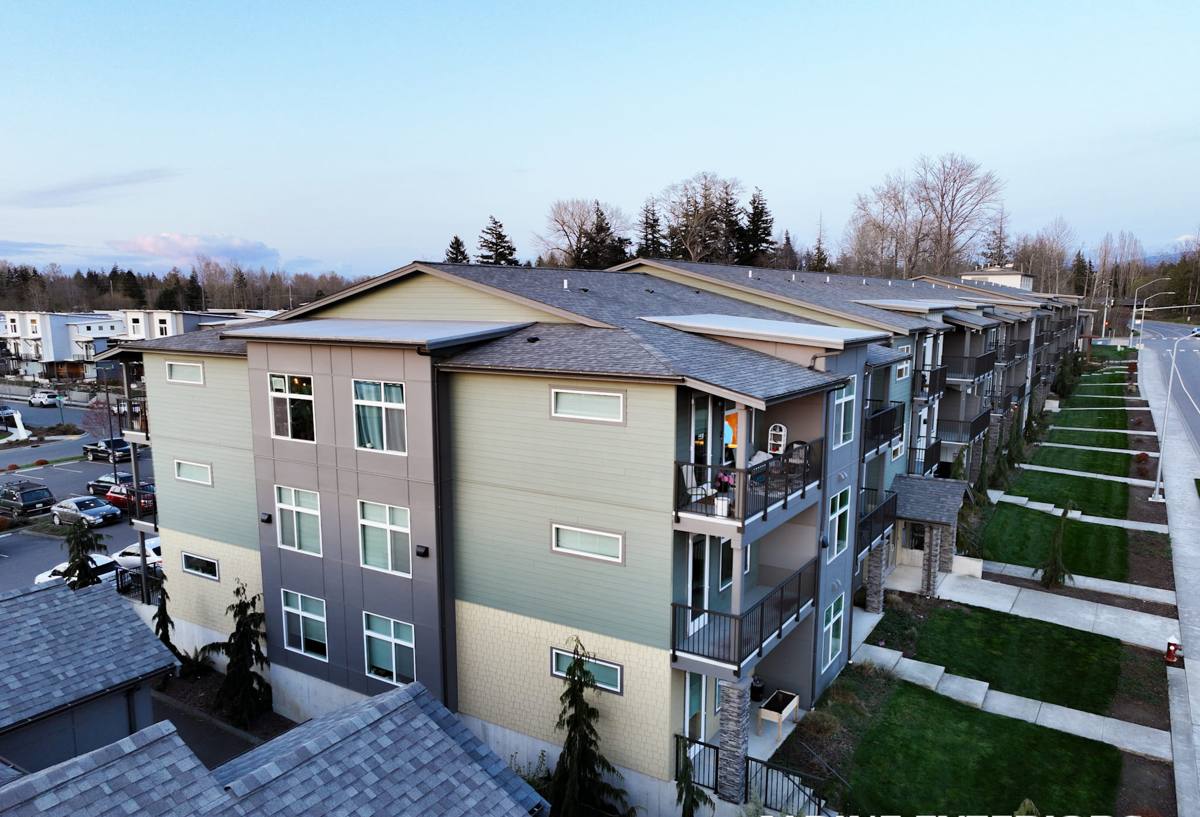
What This Climate Actually Does to Windows
Whatcom County's marine climate is mild compared to a lot of the country, which is exactly why window problems here tend to be slow and easy to miss until they're expensive. A few things stack up over time:
Salt Air and Metal Fatigue
Homes closer to open water and exposed to onshore air deal with slow corrosion on hardware, screens, and unprotected metal components. Cheap latches and roller mechanisms can start sticking or pitting years before the glass itself shows any problem. It's rarely dramatic — it just means the window stops sealing tightly, which quietly erodes the efficiency you paid for.
Driving Rain and Wind-Driven Water
Storms here don't just fall straight down — wind pushes rain sideways into wall assemblies and window openings. A window that isn't flashed correctly, or that relies on caulk alone to keep water out, will eventually let moisture behind the trim. You won't necessarily see it right away. You'll see it later as soft trim, a musty smell, or a slow rise in your heating bill because insulation around the frame has gotten wet and stopped doing its job.
The Long Moss Season
Extended stretches of overcast, damp weather keep north-facing and shaded exterior surfaces wet longer than homeowners expect. Moss and algae don't just grow on roofs — they take hold on sills, cladding, and anywhere water sits instead of draining. That constant moisture exposure is hard on wood components especially, and it's one of the main reasons we're careful about material choice and drainage detailing on every job in this area.
What "Energy-Efficient" Should Mean Here
Efficiency ratings are only useful if they're matched to the right conditions. For Happy Valley and the broader Sudden Valley area, we weigh these factors:
- U-factor: measures how well a window resists heat transfer. Lower is better for our heating-dominated climate — you want a window that keeps warm air in more than it needs to block summer heat gain.
- Solar Heat Gain Coefficient (SHGC): in a climate with limited sun, a moderate SHGC on south and west exposures can actually help with passive warmth, while shaded, north-facing rooms benefit less from this and more from a tight seal.
- Low-E coatings: help manage heat transfer without darkening the glass, and they hold up well in overcast climates where you still want as much daylight as possible.
- Gas fill and spacer type: insulated glass units with argon fill and a warm-edge spacer resist condensation better, which matters when interior humidity meets consistently cool glass for months at a time.
- Air infiltration rating: arguably the most overlooked spec. A window can have great glass performance and still leak air around the sash if the frame and weatherstripping aren't built or installed correctly.
Frame Material Comparison
| Frame Material | Moisture Resistance | Maintenance | Notes for This Climate |
|---|---|---|---|
| Vinyl | Very good | Low | Doesn't rot or corrode; a solid default for most Happy Valley homes, especially budget-conscious full-house replacements |
| Fiberglass | Excellent | Low | Handles temperature swings and moisture with minimal expansion/contraction; higher upfront cost but very stable long-term |
| Wood (unclad) | Poor without upkeep | High | We generally steer clients away from unclad wood on exposed, damp elevations — the maintenance schedule needed to keep it sealed doesn't match how this climate behaves |
| Aluminum-clad wood | Good | Moderate | Interior wood warmth with better exterior protection, but the cladding seams still need attention over time |
| Aluminum (uninsulated) | Fair | Moderate | Prone to condensation and heat loss unless thermally broken; we don't recommend it for primary living spaces here |
We're not against wood-clad or aluminum products outright — they have a place. But we'll tell you plainly if a product's maintenance demands don't fit your home's exposure, rather than sell whatever has the best margin.
Signs Your Current Windows Are Working Against You
Before recommending replacement, we look for these indicators. If you're noticing a few of these, it's worth having someone look closer:
- Visible condensation or fogging between the glass panes (a sign the seal has failed)
- Drafts you can feel near the frame even with the window fully latched
- Difficulty opening, closing, or locking — often the first sign of hardware corrosion or frame swelling
- Soft or discolored trim and sill areas, especially on north or west-facing walls
- Visible moss or persistent green staining on sills or nearby siding
- A noticeable jump in heating costs without a change in usage habits
- Single-pane glass or aluminum frames original to an older build
What a Correct Installation Actually Involves
The window unit itself is maybe half the job. The other half — the part that determines whether driving rain stays outside — is installation detailing. On every replacement we handle in Happy Valley, this includes:
- Removing the old unit carefully and inspecting the rough opening for hidden rot or prior water intrusion before anything new goes in.
- Sill pan flashing so any water that does get past the window has a sloped path back outside instead of soaking into the framing.
- Proper flashing tape sequencing — installed shingle-style (bottom to top) so each layer sheds water onto the one below it, never the reverse.
- Correct shimming and fastening so the frame doesn't rack out of square, which is a common cause of premature seal failure and hardware binding.
- Low-expansion insulation around the frame — enough to fill the gap without bowing the frame inward, which is a common DIY and low-budget-crew mistake.
- Exterior sealant and trim work matched to the cladding type, with attention to any spot where water could pool instead of drain.
- Interior finish work so the room looks finished, not just functional.
Skip any one of these steps and you can end up with a window that has a great efficiency rating on paper but still lets in drafts, or worse, hides a slow leak behind new trim.
Our Process, Start to Finish
1. On-Site Assessment
We walk the exterior with you, check exposure on each elevation, and look at existing window condition, framing, and any signs of past water intrusion. This is also when we talk through your priorities — is this about comfort, energy bills, appearance, or all three?
2. Product Recommendation
Based on that walk-through, we recommend frame material and glass package per elevation, not a single blanket choice for the whole house. A shaded, rain-exposed north wall and a sheltered south wall don't always need the same spec.
3. Written Estimate
You get a clear, itemized estimate — no vague lump sums. We explain what's driving the cost so you can make trade-offs if you need to.
4. Installation
Crews follow the flashing and sealing sequence above on every unit, not just the ones that are easy to reach. We protect landscaping and interior finishes while work is underway.
5. Final Walkthrough
We test operation on every window, check seals, and walk the exterior with you before calling the job done.
Cost Factors to Expect
Exact pricing depends on your home, but these are the main variables that move the number up or down:
| Factor | Impact on Cost |
|---|---|
| Frame material (vinyl vs. fiberglass vs. clad-wood) | Moderate to significant |
| Number of windows and openings replaced at once | Significant — bundling reduces per-unit cost |
| New construction vs. retrofit/insert installation | Moderate — full-frame replacement costs more but is sometimes necessary |
| Extent of hidden rot or framing repair needed | Variable — can't be known until old windows come out |
| Glass upgrades (tempered, tinted, grid patterns) | Minor to moderate |
| Trim and interior finish complexity | Minor to moderate |
We'd rather give you a broad, honest range up front and a firm number after the walk-through than quote low and surprise you later. If hidden rot turns up once old windows are out, we'll show you what we found before doing any additional work.
Why Local Experience in This Area Matters
A crew that mainly works drier inland climates will size up moisture protection differently than one that works Whatcom County exteriors regularly. We've seen what happens when flashing sequencing gets skipped, when the wrong frame material goes on an exposed wall, and when hardware isn't rated for salt-air exposure. That's not something you learn from a spec sheet — it's something you learn from doing the work on homes like yours, in weather like this, season after season. Sudden Valley Siding Companies has built our window process around what actually holds up here, not what looks good in a national ad campaign.
Ready for a Straight Answer on Your Windows?
If your Happy Valley home has drafts, fogged glass, sticking hardware, or you're just planning ahead for a remodel, we're happy to take a look and give you a clear, no-pressure estimate. Use the form below to get started — there's no obligation, and we'll tell you honestly what we find.