 Sudden Valley Siding
 Why Decks Wear Out Faster on South Hill
South Hill sits close enough to open water that homes here deal with a mix most inland Whatcom County properties don't: salt-laden air off the water, long stretches of driving rain, and a moss season that can run from October well into spring. None of that is a problem for a deck on its first few years. It becomes a problem for a deck on its tenth or fifteenth, when finishes have worn thin, fasteners have started to corrode, and moisture has found its way into places it shouldn't be.
We see the same pattern on deck after deck in this neighborhood: the boards look fine from a distance, but the framing underneath — ledger board, joists, footings — has been quietly absorbing moisture for years. Salt air accelerates corrosion on anything that isn't rated for it, and the region's rainfall means wood surfaces rarely get a long enough dry spell to fully shed the moisture they take on. Add moss, which holds water against the wood and shades it from what little sun reaches a shaded lot, and you've got a structure that ages faster than the same deck would in a drier climate.
A deck replacement done right for this area isn't just about new boards. It's about correcting the details that let moisture and salt cause damage in the first place, so the next deck lasts longer than the one it's replacing.
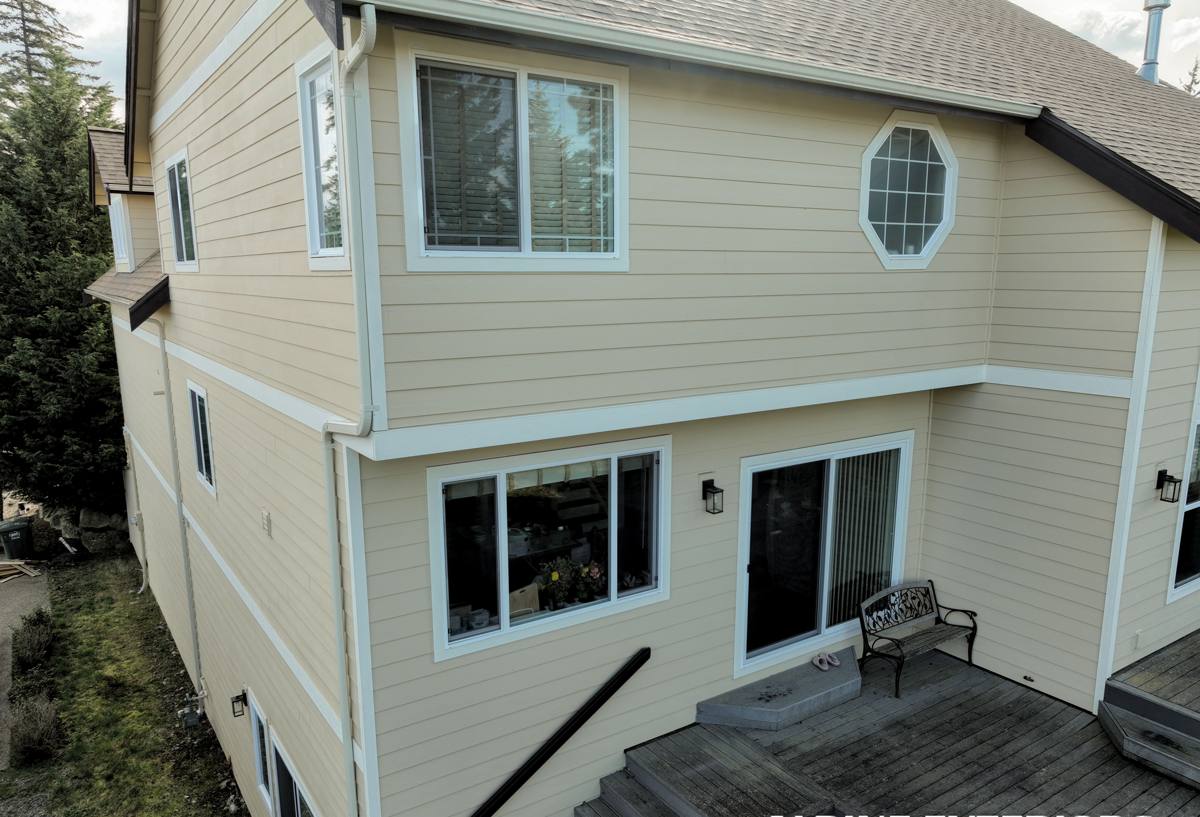
Repair or Replace? Know the Difference
Not every tired-looking deck needs to come out. Sometimes a repair — swapping a few boards, re-flashing a ledger, sistering a joist — is the honest answer, and we'll tell you that. Full replacement makes sense when the problems are structural or widespread rather than cosmetic. Here's what tips a deck from "repair" into "replace" territory:
- Soft or spongy spots in the decking that flex noticeably underfoot
- Rust streaks or crumbling wood around fasteners and joist hangers
- A ledger board that's separating from the house, or gaps showing daylight behind it
- Footings that have shifted, heaved, or show visible cracking
- Widespread checking, splintering, or gray, fibrous wood across most of the deck surface
- Persistent moss or algae growth that returns within weeks of cleaning
- A railing that wobbles when pushed — often a sign the posts are no longer solidly anchored
- A deck older than 20 years that has never had the framing inspected
If you're only seeing one or two of these and the framing is sound, repair is usually the more honest recommendation. When several show up together, patching individual boards just delays a full rebuild while masking a structural issue underneath.
What a Proper Deck Replacement Actually Includes
Tear-Out and Inspection
Once the old decking, railings, and any visible rot are removed, the framing gets a real inspection — not a glance. This is the point where we find out whether the ledger, joists, and footings are sound enough to build on, or whether they need to come out too. Skipping this step is how a "deck replacement" ends up being new boards over a compromised frame.
Ledger Board and Flashing
The ledger — the board that attaches the deck to the house — is the single most common source of hidden water damage on decks in this climate. If it isn't flashed correctly, rain runs behind it and into the house's wall framing, often for years before anyone notices. A correct install uses proper flashing, a water-resistant barrier, and stainless or coated fasteners rated for exterior, high-moisture use — not just whatever screws were on hand.
Footings and Framing
Footings need to sit below frost depth and bear on undisturbed soil, and joists need spacing sized correctly for the decking material and the loads the deck will actually see. This is also where we address the corrosion issue directly: in an area with salt air off the water, we use fasteners and joist hardware rated for coastal or high-corrosion exposure, not standard interior-grade hardware that will start rusting within a few seasons.
Decking and Fasteners
The visible surface is the last thing installed, not the first thing chosen. We talk through material options against how the deck is actually used and how much upkeep the household wants to take on — covered in the next section.
Choosing a Decking Material for This Climate
There's no single "best" decking material — there's a best fit for your maintenance tolerance, budget, and how exposed the deck is to moss-friendly shade or open salt air. Here's how the common options actually hold up here:
| Material | Moisture & Moss Behavior | Maintenance | Typical Lifespan |
|---|---|---|---|
| Pressure-treated wood | Absorbs water readily; needs sealing to resist moss and checking | Annual cleaning and re-sealing recommended | 10–15 years with upkeep |
| Cedar | Naturally rot-resistant but still needs finish maintenance in constant rain | Periodic staining/sealing | 15–20 years with upkeep |
| Composite decking | Won't rot or absorb water like wood; can still grow surface moss if never cleaned | Occasional washing, no sealing/staining | 25–30 years |
| PVC/capstock decking | Fully moisture-resistant surface; best resistance to salt air and staining | Lowest — soap and water as needed | 25–30+ years |
We're upfront about the trade-off: composite and PVC cost more up front than pressure-treated wood, but in a climate where wood decks need re-sealing almost every year to keep moisture and moss out, the lower-maintenance materials often work out more affordable over the life of the deck — not just in dollars, but in weekends spent maintaining it. Wood is still a legitimate choice for homeowners who want that look and are willing to keep up with sealing on schedule.
Code, Permits, and Structural Requirements
Whatcom County requires permits for most deck replacements, particularly when the deck is attached to the house or elevated more than a modest height off grade. Permitted work means the footings, framing, and railing heights get inspected against current code — which matters most on older decks originally built to a looser standard decades ago. We handle the permit application and schedule the required inspections as part of the job, so you're not left tracking down county paperwork on your own.
Railing height, baluster spacing, and stair guard requirements are the details most often out of compliance on older decks, and they're also the details that matter most for safety. Bringing a rebuilt deck up to current code isn't bureaucratic box-checking — it's the difference between a railing that holds and one that doesn't when it's actually leaned on.
Our Deck Replacement Process, Start to Finish
- Site visit and assessment — we look at the existing deck, the framing underneath where accessible, and how the space is actually used before recommending replacement over repair.
- Written estimate — material options, scope, and a clear price, with the trade-offs of each material spelled out rather than pushed toward the most expensive option.
- Permit and scheduling — we pull the required Whatcom County permit and set a start date that accounts for the local rain forecast, not just a calendar slot.
- Tear-out and framing inspection — old structure removed, framing inspected, any hidden damage flagged and discussed with you before we build over it.
- Rebuild — footings, framing, ledger flashing, decking, and railings installed to current code with corrosion-rated fasteners throughout.
- Final walkthrough and inspection sign-off — we go over the finished deck with you and make sure the county inspection is closed out.
Why a Crew That Already Works South Hill Matters
A deck built to a generic spec sheet doesn't account for what actually shortens a deck's life in this specific area — the salt exposure, the amount of shade a given lot gets, and how long moss has to establish itself before the next dry stretch. Crews who work South Hill regularly already know which fastener grades hold up locally, which lots need extra attention to drainage and shade, and how to sequence a tear-out and rebuild around the wetter months instead of getting caught mid-project by a stretch of driving rain.
There's also a practical side to hiring local: warranty and callback service is a five-minute drive away, not a scheduling gap while a crew based somewhere else works you into their route. If something needs a second look after the first wet season, that matters.
Keeping Your New Deck Ahead of Moss and Moisture
A correctly built deck still needs a little seasonal attention in this climate. A few habits go a long way toward getting the full lifespan out of the materials:
- Sweep debris and fallen leaves off the deck surface regularly in fall — trapped organic matter is what feeds moss growth
- Rinse or lightly scrub composite and PVC decking once or twice a year to keep surface moss from establishing
- Re-seal wood decking on the manufacturer's recommended schedule, not "when it looks bad" — by then moisture has already gotten in
- Check that gutters and downspouts near the deck are directing water away, not onto the deck surface or ledger area
- Look at fastener heads and hardware once a year for early rust staining, especially on railings and stair stringers exposed to open air
None of this is heavy maintenance — it's the difference between a deck that looks and performs the same at year fifteen and one that starts showing the same problems the old deck had by year eight.
If your deck is showing any of the signs above, or you just want an honest opinion on repair versus replacement, we're happy to take a look. Fill out the form below for a free, no-pressure estimate — we'll tell you what we actually see, not just what sells a job.