 Sudden Valley Siding
 Why Sunnyland Decks Wear Out Faster Than the Manual Says
Every deck manufacturer publishes a lifespan number, and almost none of those numbers were calculated for a deck sitting in Whatcom County. Sunnyland sits in a stretch of the Pacific Northwest where marine air, near-constant fall and winter rain, and a moss season that can run half the year all work on wood and hardware at the same time. Salt-laden air off the Sound accelerates corrosion in fasteners and connectors. Driving rain finds its way into any gap in flashing or decking that wasn't detailed correctly the first time. And moss doesn't just look bad — it holds moisture against boards and framing long after the rain stops, which is exactly the condition that causes rot.
None of this means a deck in this area is doomed. It means the materials, fasteners, and drainage details matter more here than they would in a drier climate, and a replacement that ignores that will fail again in the same way the old one did.
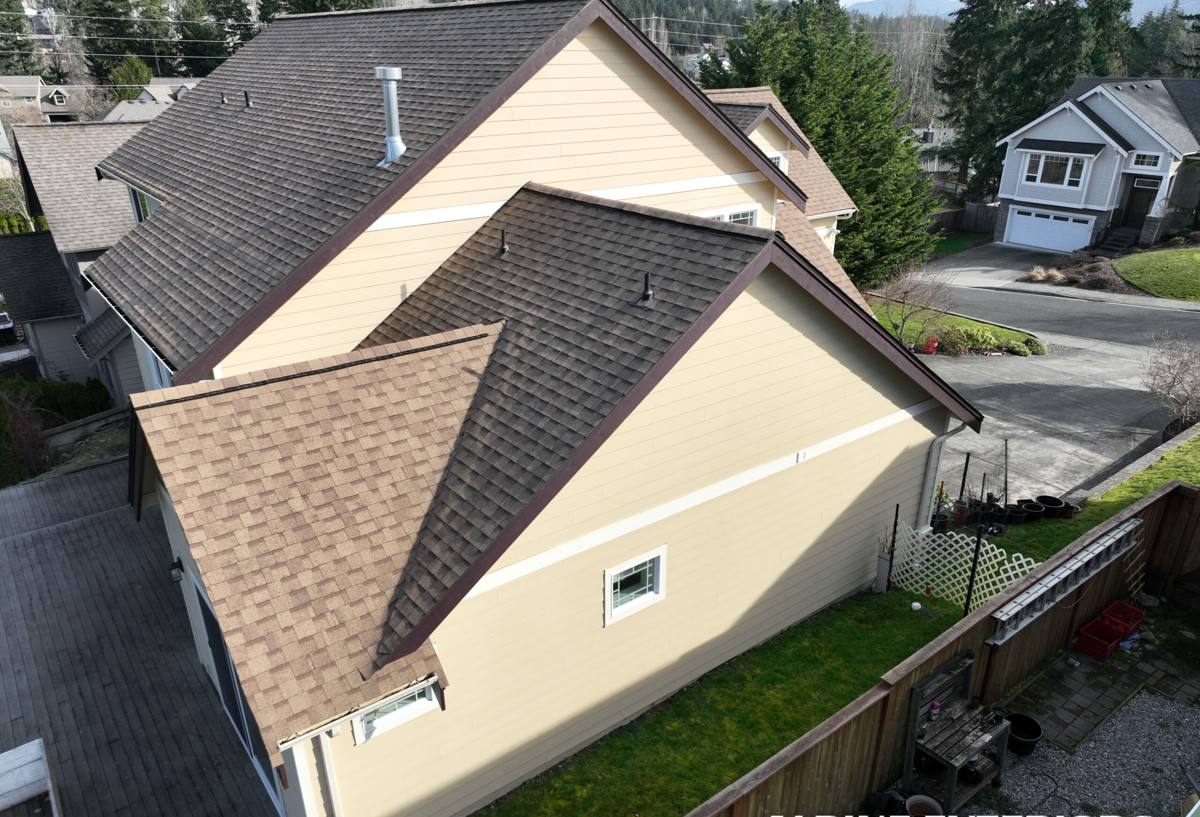
Signs Your Deck Has Reached the End of the Road
Not every tired-looking deck needs full replacement — but in this climate, cosmetic problems often mean structural ones are already underway underneath. Before you commit to a repair, it's worth knowing what actually signals "replace" rather than "patch."
- Soft, spongy, or discolored decking, especially near the house or around fasteners
- Rot or dark staining where the deck's ledger board meets the house
- Popped, rusted, or corroded fasteners and connector hardware
- Persistent moss or algae growth that returns within weeks of cleaning
- Visible sag, bounce, or movement when walking across the deck
- Cracked or split joists and beams, particularly at bolt holes
- Railings that flex or feel loose when pushed
If you're seeing two or more of these, especially rot near the ledger board or joists, a repair is usually a short-term fix on top of a bigger problem.
What a Correct Deck Replacement Actually Involves
A deck replacement is more than swapping old boards for new ones. Done right, it's a chance to fix the structural and moisture problems that shortened the life of the last deck.
Framing and Ledger Attachment
The ledger board — where the deck attaches to the house — is the single most common failure point on decks in wet climates. It needs proper flashing that sheds water away from the house framing, not just caulk over the old connection. Joists and beams should be sized correctly for the span and load, and any lumber in contact with the ground or masonry should be rated for that exposure.
Decking Material
Whether you go with wood or a manufactured decking product, the material has to be matched to a climate where boards stay damp for long stretches. We'll walk through the trade-offs below, but the short version is: whatever you choose, it should be installed with the spacing and ventilation that material actually needs, not the spacing that looks best on day one.
Fasteners and Hardware
This is where a lot of decks quietly fail early. Standard galvanized fasteners can corrode faster than expected in coastal air, especially in contact with pressure-treated lumber's chemical treatment. We use stainless or coated fasteners and connectors rated for the type of lumber and the exposure, not whatever is cheapest at the yard.
Railings and Code Compliance
Railing height, baluster spacing, and guard post attachment are all governed by building code, and they're also where a lot of older decks were built to whatever the previous owner thought looked fine. Replacement is the right time to bring these up to current code, both for safety and for resale.
Choosing a Decking Material for This Climate
There's no single "best" decking material — there's a best material for your budget, your maintenance appetite, and how much moisture exposure the deck actually gets. Here's how the common options compare for a property like yours.
| Material | Upfront Cost | Maintenance | Moisture Behavior | Typical Lifespan |
|---|---|---|---|---|
| Pressure-treated wood | Lowest | Annual cleaning, periodic staining/sealing | Prone to splitting and checking if not maintained; needs gaps for drainage | 10-15 years with upkeep |
| Cedar | Moderate | Regular sealing to hold color and resist moisture | Naturally moisture-resistant but still needs finish maintenance | 15-20 years with upkeep |
| Composite | Higher | Occasional washing; no staining or sealing | Doesn't rot, but lower-quality composites can absorb moisture at cut edges | 25-30 years, varies by brand |
| PVC/capped polymer | Highest | Lowest — washing only | Fully moisture-resistant surface, good for wet climates | 25-30+ years |
In a climate with this much rain and moss pressure, we lean toward recommending composite or capped polymer decking for homeowners who want to minimize the maintenance cycle — not because wood is a bad product, but because wood in this climate only performs as well as the maintenance schedule behind it. If you want the look and feel of real wood and are prepared to stay on top of sealing, cedar remains a solid choice.
How We Approach a Deck Replacement in Sunnyland
The process is straightforward, but skipping steps is exactly how decks in this area end up failing again in ten years instead of thirty.
- On-site inspection of the existing deck, ledger connection, and any structural framing that's accessible
- Discussion of material options based on your budget, maintenance preference, and how the deck is used
- Permit application through the local building department where required
- Removal of the old deck, including framing that's compromised, not just the surface boards
- New or reinforced framing with correctly flashed ledger attachment
- Installation of decking material with proper spacing, fastening, and ventilation
- Railing installation to current code
- Final walkthrough and, where applicable, inspection sign-off
Building In Drainage and Moss Resistance From Day One
Most moss and rot problems on decks in this part of Whatcom County trace back to water that had nowhere to go. A correct replacement addresses that at several points, not just at the surface:
Board spacing needs to allow water to drain through rather than pool on top. Under-deck airflow matters — a deck built tight against grade or landscaping without ventilation will stay damp long after the rain stops, which is exactly what moss and algae need to establish. Joist tape or flashing on the tops of joists keeps water from sitting in fastener holes, which is one of the more overlooked causes of hidden rot. And where a deck sits low to the ground or over soil that doesn't drain well, grading or a simple drainage path can make a real difference in how long the structure underneath lasts.
None of this is exotic work. It's just the detailing that gets skipped when a deck is built or replaced quickly, and it's the difference between a deck that needs attention again in five years and one that doesn't.
Permits and Local Code Considerations
Deck replacement in Whatcom County typically requires a permit, particularly when the work involves structural framing, a deck attached at a certain height above grade, or any change to the footprint. Requirements can vary depending on the specifics of the project and the jurisdiction handling your property, so we check what applies before work starts rather than assuming. Footing depth also matters here — footings need to be set below the frost line and bear on stable soil, which is worth getting right the first time rather than discovering a problem after the decking is already down.
What Affects the Cost of Your Deck Replacement
Every deck is different, so exact pricing depends on a site visit, but the main cost drivers are consistent from project to project:
- Total square footage of the deck
- Decking material chosen (wood, cedar, composite, or PVC)
- Condition of the existing framing and whether it can be reused or needs full replacement
- Height of the deck and complexity of the substructure
- Railing style and materials
- Whether stairs are being replaced or added
- Permit fees and any required inspections
As a general guide, most homeowners in this region see full deck replacement costs land somewhere in the range of a few thousand dollars for a smaller, simple wood deck up to well into five figures for a larger deck with composite or PVC decking, upgraded railings, and structural work. We'll give you a firm number after seeing the site, not a guess over the phone.
Why Hire a Crew That Already Works in Sunnyland
A deck replacement built to a generic spec sheet doesn't account for the fact that a deck in this area is fighting salt air, driving rain, and moss pressure for most of the year. A crew that already works in and around Sudden Valley has seen how decks in this specific climate actually fail — where the ledger boards rot first, which fastener types hold up and which don't, and how much drainage a deck really needs to keep moss from coming back season after season. That's the difference between a deck that's replaced once and one that needs replacing again in half the time.
If your deck is showing its age, we're glad to take a look and give you an honest read on whether it needs full replacement or just targeted repair. Reach out for a free, no-pressure estimate using the form below.