 Sudden Valley Siding
 Deck Repair Built for the Columbia Area of Sudden Valley
Homes in the Columbia area of Sudden Valley tend to share a few things: wooded, often sloped lots, plenty of shade from mature trees, and decks that see more moisture than sun for a good chunk of the year. That combination is hard on wood and hard on fasteners. A deck that looks fine from the porch door can have soft joists, corroded hardware, or a ledger connection that's been slowly failing for years. Deck repair here isn't just about swapping a few boards — it's about understanding how Whatcom County's climate specifically attacks a structure and fixing the actual cause, not just the symptom.
This page covers what local decks typically need, what a correct repair actually involves, how we approach the job, and why it matters to hire a crew that already knows this area rather than someone pricing the work from a generic estimate sheet.
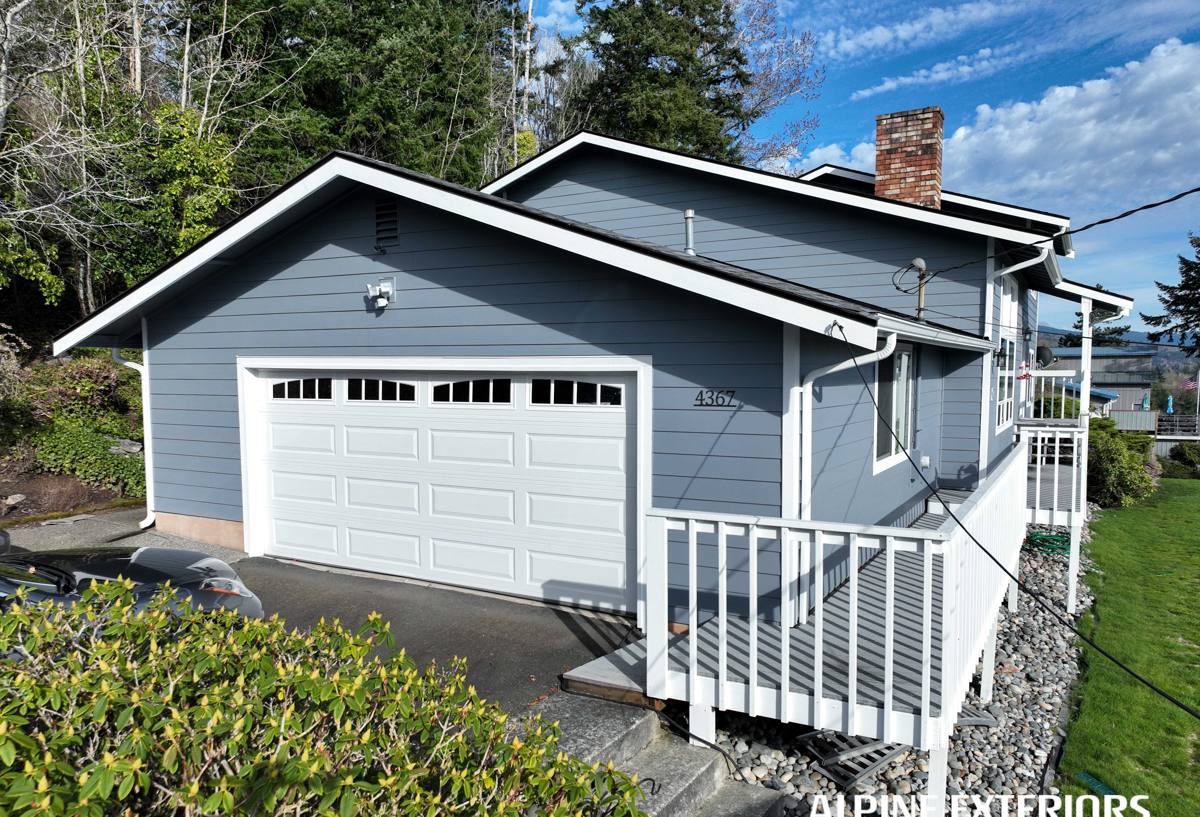
How the Local Climate Wears Down a Deck
Western Washington's marine climate — the salt-tinged, moisture-heavy air that moves in off the Sound and settles into Whatcom County's valleys and lake basins — doesn't take a season off. Around Sudden Valley, tree cover and lake-adjacent humidity add another layer on top of that. A few specific ways this shows up on decks:
Driving Rain and Standing Moisture
Sideways rain gets up under railings, behind fascia boards, and into any gap where flashing has failed or was never installed correctly. Once water gets past the surface, wood doesn't dry out quickly in a shaded, humid lot — it stays wet long enough for rot to start.
Moss and Algae Season
On shaded decks, moss and algae can hold moisture against the wood for months at a stretch. Beyond making boards slick and dangerous underfoot, that constant dampness accelerates decay in ways a homeowner often doesn't notice until a board flexes underfoot.
Fastener and Hardware Corrosion
Years of damp exposure corrode nails, screws, and structural connectors — especially older or mismatched hardware. Corroded fasteners lose their holding power long before the wood around them looks obviously bad, which is one reason a deck can feel "mostly fine" right up until it isn't.
Signs a Deck in This Area Needs Repair
Most deck failures don't happen suddenly — there are warning signs for months or years beforehand. Here's what we'd want a homeowner to check for, or flag for us during an inspection:
- Soft, spongy, or springy spots when you walk across the decking
- Railings or posts that wobble or flex when pushed
- Visible gaps, cracking, or splitting where boards meet the frame
- Dark staining, moss buildup, or a musty smell near the ledger board (where the deck attaches to the house)
- Rust streaks around nails, screws, or metal connectors
- Stairs that feel uneven, bouncy, or have separated from stringers
- Gaps opening up between the deck and the house siding or foundation
- Peeling or bubbling finish, especially on horizontal surfaces that hold water
Any one of these on its own might be minor. Several together, especially near the ledger or support posts, usually means it's worth having someone look at the structure, not just the surface.
What a Correct Deck Repair Actually Involves
A repair that only addresses what's visible from above tends to come back within a season or two. A repair done right starts underneath.
Structural Inspection First
Before we touch a board, we check the ledger board connection and flashing (the single most common failure point on older decks), the condition of joists and beams, post and footing stability, and whether the framing was sized and spaced correctly to begin with. A lot of older decks in this region were built to standards that have since been tightened, especially around ledger attachment and guardrail strength.
Fixing the Cause, Not Just the Symptom
If a board is rotted because water is pooling against the house due to missing or failed flashing, replacing the board without correcting the flashing just buys a year or two before it happens again. Correct repair means tracing moisture problems back to their source — usually a flashing, drainage, or ventilation issue — and fixing that alongside the visible damage.
Matching Materials and Fasteners
We use fasteners and hardware rated for exterior, high-moisture exposure, and we match new lumber or decking material to what's already there whenever that's the sound choice, or recommend an upgrade when the original material or hardware is clearly the reason for repeat failures. Mixing incompatible metals or using interior-grade fasteners outdoors is a common shortcut that causes the exact corrosion problems described above.
Matching the Repair to the Damage
Not every deck problem needs the same level of work. Part of an honest estimate is telling you which tier of repair actually fits what we find — not upselling a rebuild when a structural repair will do, and not patching over something that needs to come apart.
| Repair Tier | What's Typically Involved | Best For | Rough Lifespan Added |
|---|---|---|---|
| Spot / Board Repair | Replacing individual decking boards, fascia, or trim showing rot or splitting | Isolated damage where framing underneath is still sound | Several years, if the underlying moisture issue is also addressed |
| Structural Repair | Sistering or replacing joists/beams, re-securing or reflashing the ledger, reinforcing posts and footings | Soft spots, sagging, or movement traced to framing or connections | Extends the usable life of the whole deck significantly |
| Rail & Stair Repair | Rebuilding wobbly guardrails, resetting posts, repairing or rebuilding stringers and treads | Safety issues that don't necessarily involve the deck surface itself | Restores code-level safety immediately |
| Full Deck Rebuild | Removing and replacing most or all of the structure | Widespread rot, multiple failed structural repairs already attempted, or a frame that's simply undersized for current use | Full deck lifespan reset |
Most of the deck calls we get in this area land in the first two categories. A full rebuild is usually only the right call when neglect has gone on long enough that repair costs start approaching rebuild costs anyway.
How Our Process Works
- On-site inspection. We get underneath the deck as well as walk the surface — checking the ledger, joists, posts, footings, and railings, not just the decking.
- Honest assessment. We tell you what's actually wrong, what tier of repair it calls for, and what happens if it's left alone, in plain terms.
- Written estimate. Scope and pricing broken down clearly, so you know what you're paying for and why.
- The repair itself. Structural work first, then decking, railings, and finish work — done in the order that actually matters structurally, not just cosmetically.
- Sealing and finishing. Any exposed or new wood gets properly sealed or coated before we consider the job done, since a fresh repair left unprotected through a wet season undoes a lot of the work.
- Walkthrough and cleanup. We show you what was done and why, and leave the site clean.
Permits, Code, and Safety Considerations
Structural deck repairs — particularly ledger reattachment, guardrail work, and anything touching footings — can fall under Whatcom County building code requirements depending on scope. Guardrail height and baluster spacing, stair rise and run, and ledger fastening patterns are all things inspectors specifically look at, because they're the details most likely to fail and cause injury. We handle the permitting conversation as part of the estimate when a repair's scope calls for it, rather than leaving it for the homeowner to sort out afterward.
Maintenance After the Repair
A good repair should buy years, but it isn't maintenance-free, especially in a climate this wet. A few habits make a real difference:
- Sweep leaves and debris off the deck regularly, especially in fall — trapped organic matter holds moisture and feeds moss growth
- Reapply sealant or finish on the schedule appropriate to the product used, before the current coat has fully broken down
- Keep gutters and downspouts near the deck clear so runoff isn't dumping extra water onto or under it
- Check the ledger and flashing area once a year, since that's the spot most likely to develop a hidden problem first
- Treat visible moss or algae early rather than waiting for a full seasonal cleaning
Why It Matters to Hire a Crew That Already Works in Sudden Valley
A contractor who works regularly in Columbia and the rest of Sudden Valley already knows what to expect on a typical lot here: sloped access that affects how equipment and materials get to the deck, heavy tree cover that keeps certain areas damp far longer than an open lot would, and the kind of ledger and flashing shortcuts common on decks built a couple of decades ago. That familiarity shows up in a faster, more accurate inspection and fewer surprises once work starts. It also means someone who understands the practical realities of scheduling around this region's wet stretches, so repairs get done and sealed during a reasonable weather window rather than rushed or delayed.
If you're noticing soft spots, a wobbly rail, or just want a straight answer on what shape your deck is really in, we're happy to take a look. Reach out for a free, no-pressure estimate using the form below.