 Sudden Valley Siding
 Why Acme Homes Ask About Metal Roofing
Acme sits close enough to the water and the wet Whatcom County air that homeowners here deal with a specific combination of problems most roofing material was never designed to handle well: salt-laden air moving in off the water, long stretches of driving rain, and a moss season that can run most of the year in shaded, north-facing sections of a roof. When we get calls from Acme homeowners asking about metal roofing, it's usually because a composition shingle roof is showing granule loss, moss staining, or fastener corrosion years before it should, and they want to know if there's a better long-term option.
Metal roofing isn't the right fit for every home or every budget, and we'll say that plainly. But for homes in this specific pocket of Whatcom County, it solves several of the recurring problems we see over and over: it sheds water fast on steep and moderate pitches, it doesn't hold moisture against the roof deck the way organic shingle mat can, and a properly installed panel system gives moss far less to grip onto compared to a rough shingle surface.
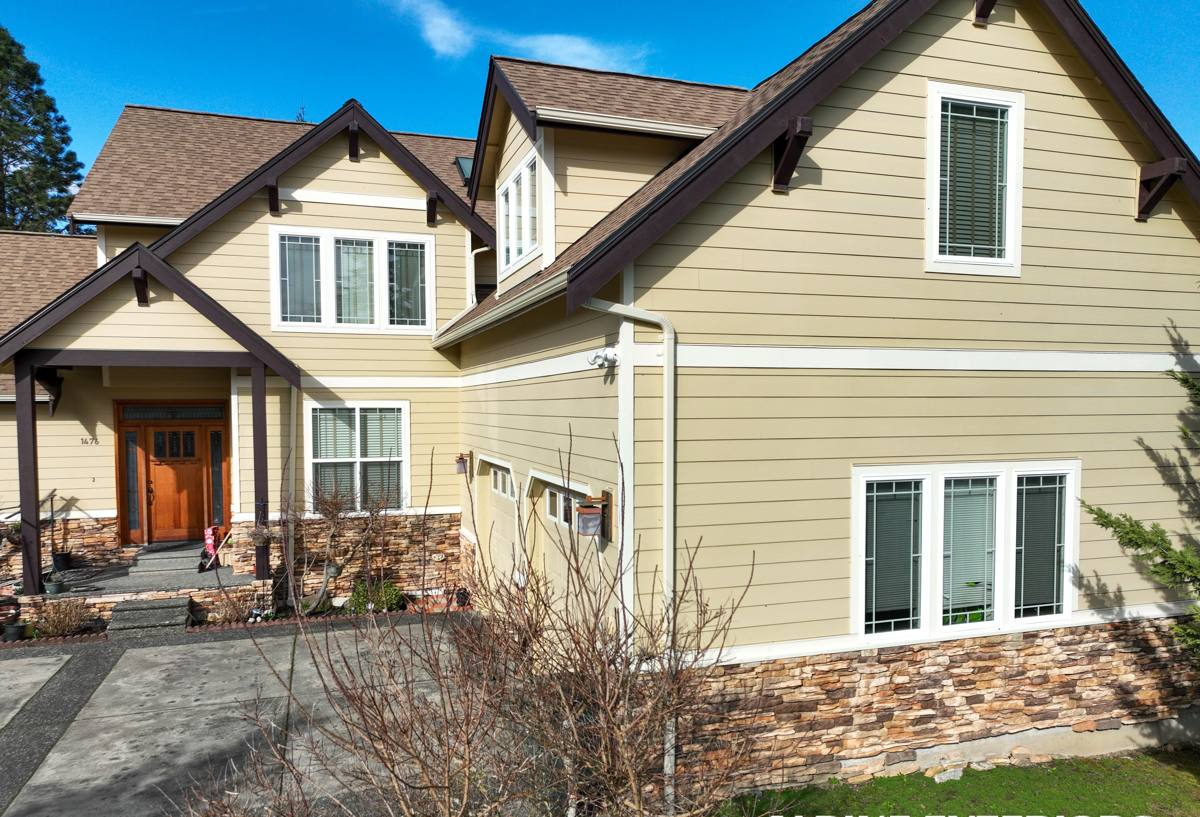
What Acme's Climate Actually Does to a Roof
It helps to be specific about what's happening, rather than just saying "wet weather is hard on roofs."
Salt Air and Fasteners
Homes closer to open water and exposed hillsides take airborne salt on every surface, including the roof. Over years, that accelerates corrosion on any exposed metal component that isn't rated for it — nail heads, flashing, gutter fasteners, and lower-grade exposed screws. This is one of the main reasons fastener choice and metal coating matter more here than they would on a roof thirty miles inland.
Driving Rain and Wind-Driven Water
Rain in this area doesn't always fall straight down. Wind pushes it sideways under eaves, into valleys, and behind poorly lapped flashing. A roof system that only performs well in calm, vertical rain will eventually leak here. Every seam, valley, and penetration on an Acme roof has to be detailed for water moving at an angle, not just water moving down.
Moss Season
Shaded roof sections — under trees, on north-facing slopes, in valleys that stay damp longer — grow moss for most of the year in this climate. Moss holds moisture against roofing material, lifts shingle edges, and works its way under flashing over time. A smoother, harder roofing surface with fewer places for spores to settle changes how much maintenance a roof needs, though it doesn't eliminate the need for it entirely.
What a Correctly Installed Metal Roof Includes
"Metal roofing" covers a wide range of quality, and the panels themselves are only part of the story. A correct installation for this climate includes several layers most homeowners never see once the job is done:
- Ice-and-water or high-quality synthetic underlayment at eaves, valleys, and penetrations — the roof's backup layer if wind-driven rain ever gets past the panels
- Proper fastener spacing and type matched to the panel profile and rated for coastal/salt-air exposure, not generic hardware-store fasteners
- Closed or properly vented ridge detailing that keeps wind-driven rain out while still allowing the attic space to breathe
- Correctly lapped and sealed flashing at every valley, wall intersection, chimney, and vent penetration — this is where most roof leaks actually start, on any roofing material
- Panel expansion allowance so metal can move slightly with temperature swings without buckling or pulling fasteners loose over time
Skipping any one of these doesn't necessarily show up as a problem in year one. It shows up in year six or year ten, usually as a leak at a valley or a fastener that's backed out and started rusting. This is why we walk Acme homeowners through exactly what's happening at each of these details before we start, not just the panel color and profile.
Panel Types: What We Actually Recommend and Why
There isn't one "best" metal roofing system — the right choice depends on the roof's pitch, the home's style, and the homeowner's budget and maintenance expectations.
| Panel Type | How It's Fastened | Best For | Maintenance Reality |
|---|---|---|---|
| Standing Seam | Concealed clips, no exposed fasteners on the field | Homes wanting the longest service life and cleanest look | Lowest maintenance; no exposed fastener heads to corrode or re-seal over time |
| Exposed Fastener Panel | Screws driven through the panel face | Budget-conscious projects, outbuildings, some roof styles | Fasteners need periodic inspection and occasional re-torquing or replacement as gaskets age |
| Metal Shingle/Shake Panels | Interlocking panels, concealed fasteners | Homeowners wanting a traditional shingle or shake look with metal's durability | Low maintenance; more seams than standing seam but still no exposed fastener heads |
For homes closer to the water or with heavy tree cover, we lean toward standing seam or concealed-fastener shingle panels specifically because of the salt air and moss issues described above — fewer exposed fasteners means fewer points where corrosion or moss can get a foothold. Exposed fastener panels still have their place, particularly on shops, garages, or budget-driven projects, as long as the homeowner understands the maintenance difference going in.
Our Process for Acme Metal Roof Projects
- On-site assessment — we look at the existing roof deck, ventilation, valleys, and any moss or moisture damage, not just the surface material
- Honest scope discussion — what needs full replacement versus what can be addressed with better flashing or ventilation alone
- Deck repair as needed — any soft, rotted, or moss-damaged decking gets replaced before a single panel goes on; metal over a bad deck just hides the problem
- Underlayment and flashing installation — the part of the job that determines whether the roof actually stays dry through a real Whatcom County winter
- Panel installation — fastened and lapped to spec for the specific panel type and this climate's wind and salt exposure
- Final walkthrough — we go over the finished roof and what, if any, periodic maintenance it needs
Signs an Acme Roof Needs Attention Now
Homeowners often wait too long simply because a roof "still looks okay" from the ground. Some warning signs are only visible up close or from the attic side.
- Dark streaking or thick moss growth concentrated on shaded or north-facing slopes
- Granules collecting in gutters or at downspout outlets (shingle roofs)
- Soft spots or noticeable sagging along the roofline
- Rust staining running down from flashing, fasteners, or valleys
- Daylight visible through the roof deck from inside the attic
- Water stains on ceilings or in the attic after wind-driven rain events
- Flashing that's visibly lifted, cracked, or separated from the roof surface
Any one of these is worth a closer look before it becomes a bigger repair. A roof that's leaking at a valley or penetration is almost always a flashing problem, not necessarily a sign the whole roof is failing — which is exactly why an honest, specific assessment matters more than a quick guess from the driveway.
What Drives the Cost of a Metal Roof in This Area
We won't quote a number without seeing the roof, but these are the real factors that move the price up or down on Acme projects:
| Factor | Why It Matters |
|---|---|
| Panel type | Standing seam runs higher than exposed fastener panel due to labor and concealed clip systems |
| Roof complexity | Valleys, dormers, and multiple roof planes add flashing work and labor time |
| Deck condition | Rotted or moss-damaged decking found during tear-off adds repair cost but prevents bigger problems later |
| Existing layers | Tear-off of old shingle layers versus a straightforward deck adds labor |
| Ventilation upgrades | Older homes often need attic ventilation corrected as part of a re-roof, which affects long-term performance |
| Access and pitch | Steep or hard-to-access roofs take longer and require more safety setup |
Metal roofing typically costs more upfront than composition shingle. The trade-off homeowners are weighing is a longer service life and less recurring maintenance against that higher initial investment — which is a reasonable thing to think through carefully rather than something we'd push on every home.
Why It Matters That We Already Work in Acme
A roofing crew that regularly works Acme and the broader Sudden Valley area already knows which slopes hold moss longest, which roof orientations take the worst of the driving rain, and how salt exposure varies even within a few miles depending on elevation and tree cover. That's not something you get from a one-time visit — it's the kind of detail that shapes fastener choice, flashing specification, and where we recommend extra underlayment, before we ever climb on the roof.
It also means we're not guessing at permitting requirements or working blind on a home style we've never seen before in this specific part of Whatcom County. Local knowledge doesn't replace a careful on-site assessment, but it means that assessment starts from an informed place instead of a generic one.
Get an Honest Look at Your Roof
If you're weighing metal roofing for a home in Acme — whether you're dealing with moss, an aging shingle roof, or just want to understand the real trade-offs before deciding — we're happy to take a look and walk you through what we see, no pressure and no obligation. Use the form below to request a free estimate.