 Sudden Valley Siding
 Why Yew Street Roofs Wear Differently
Homes along Yew Street sit inside the broader Sudden Valley community, tucked against Lake Whatcom and surrounded by the tree cover that makes this part of Whatcom County so appealing to live in. That same setting is exactly what shortens the working life of a roof here. Moisture off the lake lingers in the air, tree canopy keeps roof planes shaded and slow to dry, and the region's marine air carries enough salt content to accelerate corrosion on fasteners, flashing, and exposed metal edges. None of this is dramatic on its own, but stacked together over 15-20 years it adds up to a roof that ages faster than the same product would in a drier, sunnier climate.
If you've walked your attic or gutters lately and noticed dark streaking, soft moss patches, or granules collecting at the downspouts, that's this climate doing its slow work. A roof replacement done right for a Yew Street address isn't just "put new shingles on" — it's addressing the specific ways moisture and shade attack a roof system in this part of Washington.
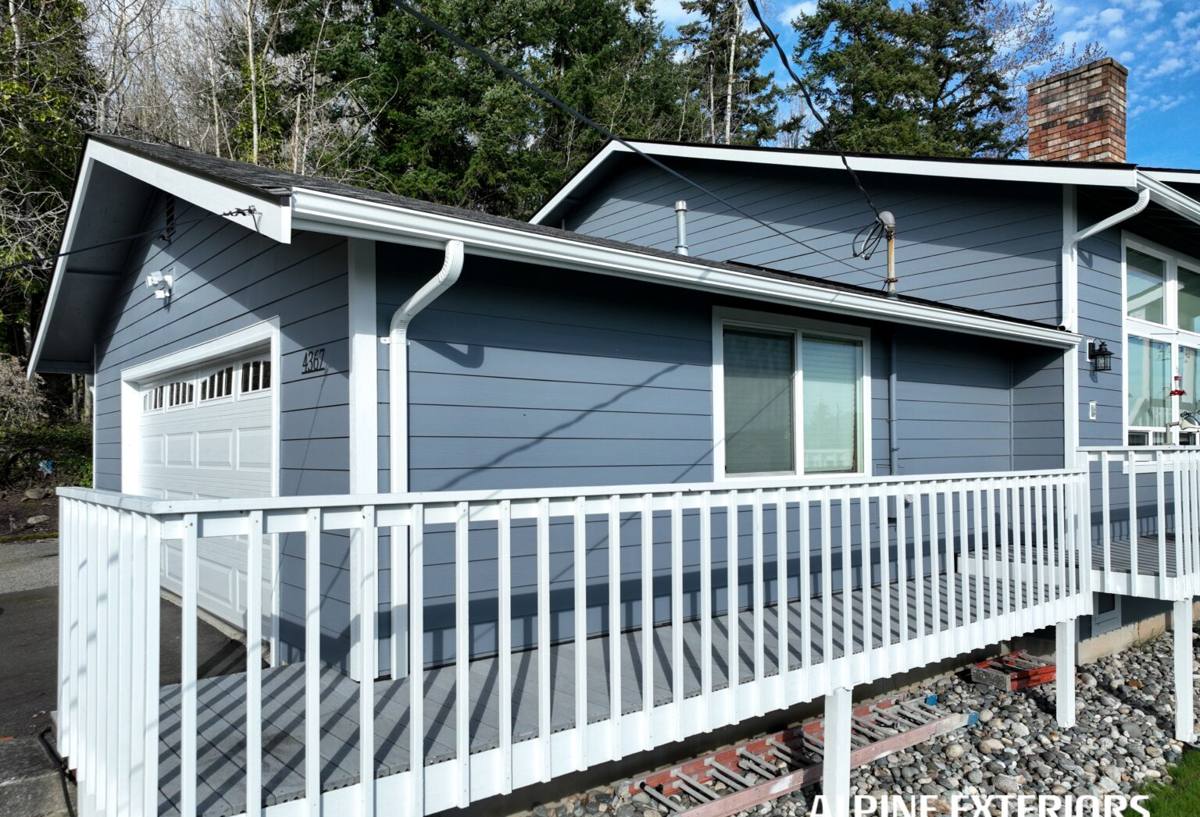
What Driving Rain and Moss Season Actually Do to a Roof
Driving Rain
Sudden Valley gets wind-driven rain off the lake and through the tree gaps, which pushes water sideways instead of letting it simply run downhill off the roof plane. That sideways pressure finds every weak point: nail heads that have backed out slightly, old or brittle pipe boot seals, and step flashing where a roof meets a wall or chimney. On a roof nearing the end of its service life, this is usually where the first leaks show up — not in the open field of shingles, but at the transitions and penetrations.
Moss and Prolonged Moisture
Whatcom County's long, wet, mild winters give moss a genuinely long growing season compared to drier parts of the state. Moss doesn't just look bad — its root structure works into shingle mat and granule layers, holding moisture against the roof surface long after a storm has passed. That constant damp cycle is what breaks down asphalt shingles from underneath, and on shaded, north-facing roof planes (common on tree-lined lots like those around Yew Street) it can cut years off an otherwise sound roof.
Salt Air
Coastal and near-lake salt exposure in this region is milder than true oceanfront but still real. It shows up as premature rust on exposed nail heads, drip edge, and lower-grade flashing metal. It's a slow corrosion, which is why we specify corrosion-resistant fasteners and flashing metals on every replacement rather than treating that as an upgrade.
Signs a Yew Street Roof Needs Replacing, Not Patching
- Granule loss heavy enough that shingles look patchy or blotchy, especially on south and west-facing slopes
- Moss or algae staining that comes back within a season of cleaning
- Soft spots or sagging when walked, especially near valleys or eaves
- Daylight visible through the roof deck from inside the attic
- Multiple past patch repairs in different areas of the same roof
- Shingles curling, cupping, or cracking at the edges
- Rust streaking below flashing or exposed fasteners
- Interior ceiling stains that reappear after rain, even if a past repair "fixed" them
One or two of these items usually means a targeted repair is still the right call. Several at once, especially combined with a roof already past 18-20 years old, is when replacement becomes the more honest recommendation — repeated patching on a roof at that age tends to cost more over time than doing the job once, correctly.
What a Correct Roof Replacement Involves Here
A roof replacement for this climate is built in layers, and each layer has a job. Skipping or downgrading any one of them is where premature failures come from, regardless of how good the shingle brand is.
Tear-Off and Deck Inspection
We remove the existing roofing down to the deck rather than overlaying new material on old — overlays trap moisture and hide deck damage, which is a poor trade-off in a climate that already fights moisture. Once exposed, the deck gets checked board by board for soft spots, delamination, or rot, particularly around valleys and any area that's been leaking. Damaged sections get replaced before anything new goes down.
Moisture Barrier and Underlayment
Given the driving rain and long wet season here, we install synthetic underlayment across the full roof and self-adhered ice-and-water membrane at the vulnerable zones — eaves, valleys, and around every penetration. This is the layer that keeps the house dry even if wind-driven water gets under the shingle surface, which it eventually will on any roof over enough years.
Flashing and Metal Work
All step flashing, counter-flashing, valley metal, and drip edge gets replaced, not reused. Given salt air's slow corrosion effect, we use corrosion-resistant metals and fastener coatings as standard practice, not an upsell. Reusing old flashing to save cost is one of the most common shortcuts in this trade, and it's also one of the most common causes of a leak reappearing within a year or two.
Ventilation
Proper intake and exhaust ventilation keeps attic moisture from condensing against the underside of the deck — a real risk in a climate this damp, especially on shaded roof planes that never fully dry out. We check existing ventilation as part of every replacement and correct it where it's inadequate, rather than leaving a known problem in place under new shingles.
Roofing Material Installation
Shingles, panels, or shakes go down per manufacturer spec — correct nailing pattern, correct exposure, correct starter course and ridge detail. In this climate, installation precision at the seams and laps matters more than which brand of shingle is on the label, because most leaks trace back to installation detail, not material defect.
Material Options for This Climate
| Material | Moss/Moisture Resistance | Typical Lifespan Here | Notes for Yew Street Homes |
|---|---|---|---|
| Standard asphalt shingle | Moderate — needs periodic moss treatment | 15-20 years | Most common, budget-friendly, works fine with good ventilation and shade management |
| Algae-resistant (AR) shingle | Better — copper-infused granules resist moss/algae growth | 20-25 years | Worth the modest upgrade cost on shaded, tree-covered lots |
| Metal roofing | Strong — sheds moisture fast, nothing for moss to root into | 40-50+ years | Higher upfront cost, minimal moss maintenance, good match for salt-air corrosion resistance when properly coated |
| Cedar shake | Weakest without diligent upkeep | Varies widely | Requires the most maintenance in this exact climate; we're upfront that it's a higher-upkeep choice here, not a failure of the product itself |
We don't push any one material as the only right answer. A shaded lot with heavy tree cover might get more value from algae-resistant shingles or metal than from a standard shingle that will need moss treatment every year or two. A more open, sunnier lot has more flexibility. Part of a good estimate is looking at your specific lot's sun exposure and tree cover before recommending a material.
Our Process for a Yew Street Roof Replacement
- On-site inspection. We walk the roof and attic, check the deck condition, ventilation, flashing points, and moss/moisture pattern specific to your lot's shade and exposure.
- Honest scope and estimate. You get a written scope covering tear-off, deck repair allowance, underlayment, flashing, ventilation, and material options — with the trade-offs of each material explained plainly.
- Scheduling around weather. Roofing in this region means working around wet stretches. We schedule tear-off in windows where the deck won't sit exposed longer than necessary, and we don't leave a roof open overnight if avoidable.
- Tear-off and deck inspection. Old roofing comes off, deck gets inspected and repaired as needed, documented before covering it back up.
- Underlayment, flashing, and ventilation correction. The moisture-management layers go in first, correctly, before any finish material is installed.
- Material installation. Shingles, metal, or shakes installed to manufacturer spec with attention to the seams and laps that matter most in wind-driven rain.
- Final walkthrough and cleanup. We walk the finished roof with you, cover care and moss-prevention basics for your specific lot, and clean the site fully — gutters, ground, driveway.
Timeline Expectations
A typical single-family roof replacement in this area runs one to three days of active work once tear-off begins, weather permitting. Rain delays are normal here and we build them into scheduling rather than rushing a deck that needs to stay dry.
Cost Factors to Understand Before You Get Quotes
| Factor | Why It Moves the Price |
|---|---|
| Roof size and pitch | More square footage and steeper pitches take more material and labor time |
| Number of layers to remove | Tear-off of multiple old layers costs more than a single-layer tear-off |
| Deck condition | Rot or soft decking found during tear-off requires repair before new roofing goes down |
| Material choice | Standard shingle, algae-resistant shingle, and metal carry different material costs |
| Roof complexity | Valleys, dormers, chimneys, and skylights all add flashing and labor time |
| Access and site conditions | Tree cover, driveway slope, and staging space can affect labor time on a lot like those around Yew Street |
We won't quote a number without seeing the roof — anyone who does is guessing. What we can say honestly is that a roof priced well below other estimates in this area is usually cutting one of the layers described above, most often the underlayment quality, flashing replacement, or deck repair allowance.
Why Local Experience on Yew Street Specifically Matters
A crew that already works this neighborhood knows which roof planes around here tend to hold moss longest, which lots get the most wind-driven rain off the lake, and how tree cover on a given street affects drying time after a storm. That's not something you get from a general contractor passing through the area once. It shows up in small decisions — where we add extra ice-and-water membrane, which ventilation corrections we recommend, how we sequence a job around this area's weather patterns — that make the difference between a roof that performs for its full expected life and one that needs attention again in five years.
It also means we're accountable locally. If something needs a follow-up look after a hard winter, we're not driving in from out of the area — we're already working nearby.
Maintenance After Your New Roof Goes On
- Have moss growth treated or removed at the first sign of it, especially on shaded north-facing slopes
- Keep gutters clear so water isn't backing up under the eave edge during heavy rain
- Trim back tree branches that keep a roof section shaded and slow to dry
- Schedule a visual roof check every year or two, even without a known problem
- Address small flashing or sealant issues immediately rather than waiting for a leak
A new roof done correctly for this climate should need very little beyond this kind of basic upkeep. The goal of the underlayment, flashing, and ventilation work described above is precisely to remove the conditions that cause premature failure, so ongoing maintenance stays simple.
Get a Straight Answer on Your Roof
If you're weighing a repair against a full replacement, or just want an honest read on how much life is left in a Yew Street roof, we're happy to take a look. The estimate is free, there's no pressure attached to it, and you'll get a plain-language explanation of what we see and what we'd recommend — whether that's a full replacement or not. Fill out the form below to schedule a time.