 Sudden Valley Siding
 Why Lake Whatcom Puts Extra Wear on a Roof
A roof at Lake Whatcom works harder than a roof a few miles away on open, sunny terrain. The lake sits in a bowl of second-growth fir and cedar, so most homes here get long stretches of shade, especially on north- and east-facing slopes. Add in Whatcom County's steady parade of wet weather rolling off Puget Sound, and you get a roof surface that rarely gets a real chance to dry out between storms. Moist, salt-tinged marine air moves inland through the county for much of the year, and combined with the tree cover around Sudden Valley, it creates a near-constant low-grade dampness on shaded roof planes that can stretch from early fall well into spring.
None of that means a roof here fails faster than it should. It means the maintenance and repair standard has to account for moss, trapped moisture, and driving rain finding every weak seam. A patch job that would hold up fine on a dry, open lot can fail within a season on a shaded lake-facing roof if it doesn't account for these conditions. That's the standard we hold ourselves to on every repair, not just the ones where the problem is obvious from the ground.
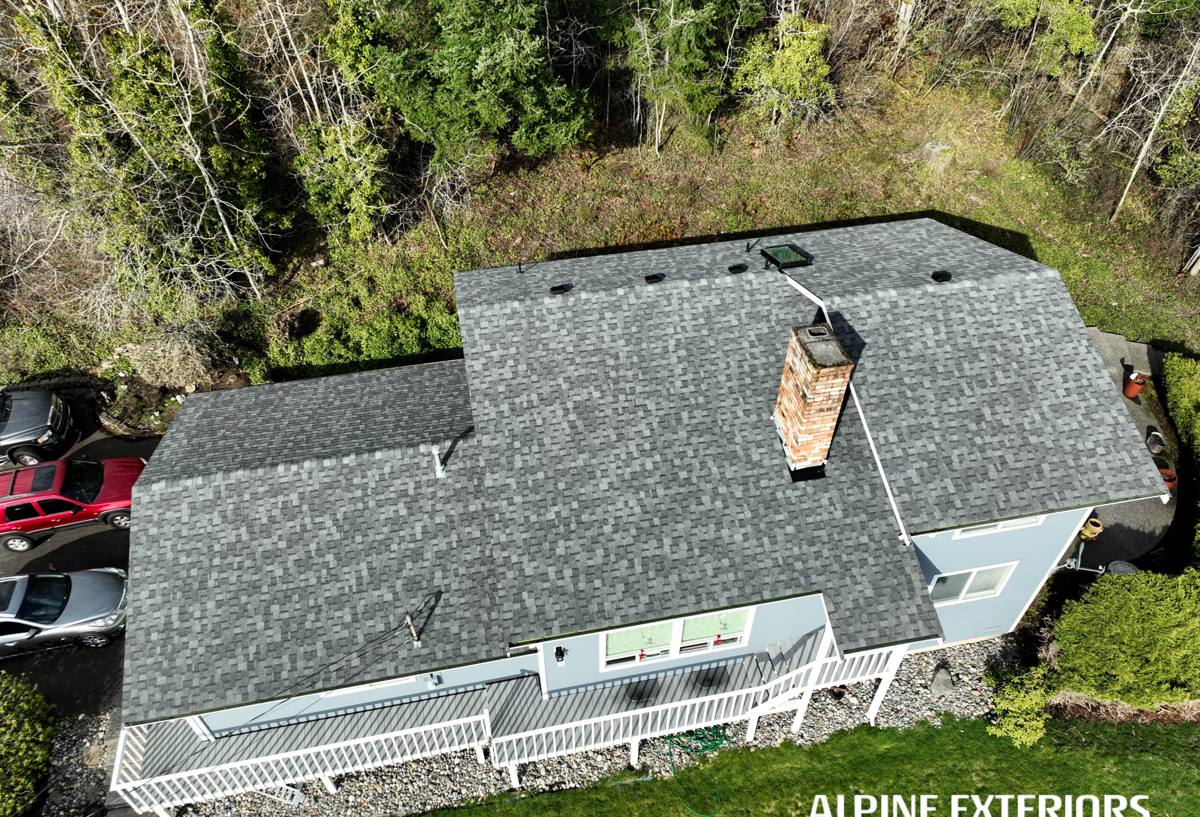
Common Roof Problems We See Around Lake Whatcom
Most repair calls in this area fall into a handful of recurring categories. Knowing which one you're dealing with matters, because the fix, and the cost, is different for each.
| Problem | Typical Cause Here | What It Needs |
|---|---|---|
| Moss and algae buildup | Shaded, damp roof planes under tree canopy | Careful removal, treatment, and often better drainage or trimming |
| Clogged valleys and gutters | Fir needles and cedar debris shedding year-round | Clearing plus a look at whether the valley flashing underneath is still sound |
| Flashing leaks at chimneys, vents, and skylights | Driving, wind-blown rain forcing water sideways under old or thin flashing | Removal and proper re-flashing, not just fresh caulk over the old piece |
| Soft or stained decking | Long-term moisture intrusion that went unnoticed under shingles or moss | Cutting back to sound wood and replacing the damaged section before re-covering |
| Granule loss and thinning shingles | Repeated wet-dry cycling and age | Section repair if isolated, or a conversation about remaining roof life if widespread |
Most Lake Whatcom homes we work on are covered in composition asphalt shingle, with some cedar shake on older properties and a growing number of standing-seam metal roofs on newer builds. Each material fails differently and needs a different repair approach, which is one more reason a generic patch isn't the same as a correct one.
What a Correct Roof Repair Actually Involves
Diagnosis Before Anything Gets Touched
A repair that starts with cutting into shingles before anyone has traced the leak back to its actual source is a repair that's guessing. Water can travel several feet from where it enters a roof to where it shows up as a stain on a ceiling, especially on the lower-slope sections common in this area. A proper visit means getting on the roof, checking the attic or crawlspace where accessible, and confirming the entry point before any material is removed.
Matching Materials and Techniques
Repairs should use materials compatible with what's already on the roof, in the same weight and style where possible, so the patch doesn't stand out or age differently than the surrounding field. Flashing gets replaced with new metal formed and lapped correctly, not smeared with sealant as a shortcut. Sealant has its place as a finishing detail, not as the primary defense against driving rain.
Checking Ventilation While We're Up There
A lot of moisture problems in shaded, wet climates aren't purely about what's landing on the roof from outside. Poor attic ventilation traps warm, moist household air against the underside of the deck, which speeds up rot and can mimic or worsen an exterior leak. Any real repair should include a quick check of intake and exhaust venting, because fixing a leak while ignoring a ventilation problem just buys time before the same spot fails again.
Moss, Algae, and the Shade Problem
Moss is the single most common complaint we hear from homeowners around the lake, and it's more than cosmetic. Moss holds water against the roof surface, lifts shingle edges as it grows, and keeps the deck underneath from drying out between rain events. Left long enough, it works its way under the shingle tabs and starts the exact moisture problems described above.
Soft Wash, Not Pressure Wash
High-pressure washing strips granules off asphalt shingles and can drive water up under the shingle tabs, which creates the very leak you were trying to prevent. Correct moss removal uses a low-pressure treatment and manual clearing, followed by an application meant to slow regrowth, not a pressure washer wand aimed straight at the shingles.
Prevention Matters as Much as Removal
Where it's practical, thinning overhanging branches to let in more light and air movement does more for long-term moss control than any one-time cleaning. We'll point out where trimming would help, though what happens to a tree on a homeowner's property is always the homeowner's call.
What Affects the Cost of a Roof Repair
| Factor | Why It Matters |
|---|---|
| Size and number of repair areas | One small flashing fix costs far less than several separate leak areas across the roof |
| Roof pitch and access | A steep roof, or one with limited ladder access around the home, takes longer and needs more safety setup |
| Hidden damage once opened up | A visible leak is sometimes just the tip of a larger area of soft decking that adds material and labor |
| Material type | Cedar shake, metal, and asphalt repairs each require different materials and skills |
| Moss or debris removal needed | Heavy moss coverage adds cleaning time before the actual repair work can even start |
We always inspect first and give you real numbers for your roof, not a guess based on square footage alone.
Repair or Replace? How We Help You Decide
Not every roof problem is a repair, and not every roof problem is a replacement. Homeowners are often surprised in both directions — sometimes a roof they assumed was a total loss just needs a section repaired, and sometimes a "small leak" is actually a sign the roof is at the end of its useful life underneath.
- Isolated leak, sound decking nearby, and shingles still flexible: usually a repair
- Widespread granule loss, multiple soft spots, or a roof already past its expected lifespan: replacement is worth discussing
- Leak tied to one bad flashing detail (chimney, skylight, dormer): almost always a repair
- Repeated leaks in different spots over a year or two: a sign the roof's overall condition, not one detail, is the real problem
We'll give you a straight answer either way, including when the honest answer is that a repair will hold for a good while longer and a full replacement isn't worth the money yet.
Our Roof Repair Process for Lake Whatcom Homes
Inspection
We get on the roof, not just in the driveway with binoculars. That means checking the actual shingles, flashing, valleys, and vents up close, plus looking at the attic side where it's accessible.
Scope and Quote
You get a written explanation of what's wrong, what we plan to do about it, and what it costs, before any work starts. No open-ended "we'll see once we get up there" billing for a defined repair.
The Work
Repairs are done to match the existing roof as closely as possible, with proper flashing and underlayment details rather than surface patches. If we find something worse than expected once we open up the area — soft decking, for example — we stop and talk to you before proceeding, rather than covering it up.
Cleanup and Follow-Up
Old material, nails, and debris get cleared from the roof and the ground around the house. We'll also tell you what to keep an eye on afterward, especially if moss or drainage was part of the original problem.
Signs You Need Roof Repair Now, Not Later
- Water stains on a ceiling or upper wall, especially after a heavy or wind-driven rain
- Visible moss mats, particularly on shaded north- or east-facing slopes
- Shingles that look cupped, curled, or are missing granules in patches
- Daylight visible through the roof deck from inside the attic
- Gutters or valleys that stay clogged with needles and debris no matter how often they're cleared
- Flashing around a chimney, skylight, or vent pipe that looks rusted, lifted, or gapped
- A musty smell in the attic that wasn't there before
Catching any of these early is almost always cheaper than waiting. A small flashing repair now is a fraction of the cost of replacing rotted decking later.
Why a Crew That Already Works Lake Whatcom Matters
Roofing crews that mostly work drier, more open parts of the county don't always think about shade patterns, tree debris load, or how moss behaves differently on a lakefront lot than it does a few miles away in town. A crew that regularly works Sudden Valley and the rest of the Lake Whatcom area already knows which slopes tend to hold moisture, how access around the lake affects a job, and what a repair needs to survive the next wet season rather than just look finished on the day we leave.
Many homes here are also part of the Sudden Valley community, so scheduling and access sometimes need a little extra coordination compared to a standalone property elsewhere in the county. A crew that already works in the neighborhood is used to that and plans around it instead of treating it as a surprise.
That local familiarity also means faster, more accurate estimates. We're not guessing at how Whatcom County's rain patterns or the lake's tree cover will affect a repair — we've already seen how it plays out on roofs like yours.
Get a Straight Answer About Your Roof
If you're dealing with a leak, heavy moss, or just want a second opinion before a repair turns into something bigger, we're happy to take a look. Fill out the form below for a free, no-pressure estimate on your Lake Whatcom home.