 Sudden Valley Siding
 Composite Decking Built for Happy Valley's Damp, Shaded Lots
Happy Valley sits inside the kind of Whatcom County weather pattern that's hard on any outdoor structure: long stretches of driving rain off and on for months, salt-tinged air moving in from the Sound on a west wind, and tree cover dense enough that plenty of decks here never get a full afternoon of direct sun. That combination is exactly what shortens the life of a poorly built deck and exactly what a properly built composite deck is designed to shrug off. We're not selling composite as a trend product. We install it because, for this specific micro-climate, it solves real problems that wood decking in this neighborhood runs into year after year.
This page is about one job in one area: composite decking for homes in and around Happy Valley. Not a general decking overview, not a national buying guide — what actually matters when you're building or replacing a deck on a lot that sees this much moisture and this much shade.
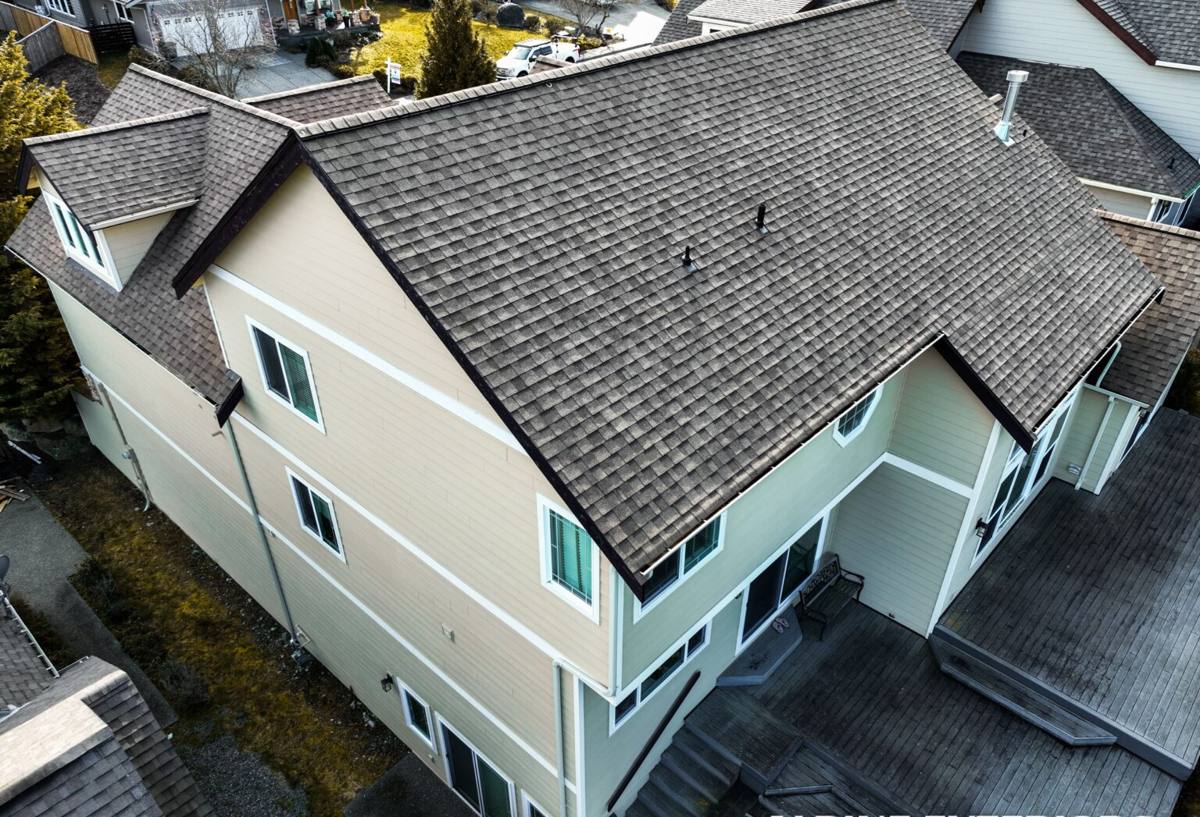
What Whatcom County Moisture and Moss Season Actually Do to a Deck
A deck doesn't fail because of one bad storm. It fails from cumulative exposure — the same boards going through repeated wet-dry cycles for months at a stretch. In Happy Valley, that shows up in a few predictable ways:
- Wood decking that sits in shade holds moisture longer between rains, which is exactly the condition moss and algae need to establish themselves on the board surface.
- Salt-carrying air accelerates corrosion on exposed fasteners, hinges, and any uncoated metal hardware, which is why fastener choice matters as much as board choice.
- Driving rain doesn't fall straight down — it gets pushed sideways under railings and against ledger boards, so water intrusion points that would be minor in a drier climate become chronic problems here.
- Long moss season means a deck surface can stay damp and slick well into the day even after the rain stops, which is a real slip hazard on stairs and near entry doors.
None of this is unique to any one house — it's the baseline condition for outdoor structures in this part of Whatcom County. The deck design has to account for it from the ledger board down to the footings, not just at the surface.
Why Composite Fits This Climate Better Than Bare Wood
Wood decking can absolutely be done right here, and there's nothing wrong with choosing it if that's the look you want — it just demands a maintenance schedule (stripping, brightening, re-sealing) that a lot of homeowners underestimate until they're two seasons behind on it. Capped composite decking was engineered specifically for the failure modes wood struggles with in wet, shaded conditions: it doesn't absorb water into the board core the way wood fiber does, it doesn't need annual sealing, and a quality capped product resists the surface staining that moss and algae leave behind on wood.
The trade-off is upfront cost and installation precision — composite is less forgiving of sloppy substructure work than wood, which we'll get into below. It's not a "better in every way, no downsides" material. It's the better fit for a house that sits in shade for most of the day and doesn't get a dry season long enough to let wood fully recover between wet spells.
Composite vs. the Alternatives — Honest Comparison
| Material | Moisture Behavior | Maintenance | Typical Lifespan | Upfront Cost |
|---|---|---|---|---|
| Pressure-treated wood | Absorbs and releases moisture; prone to cupping and splintering in shade | Annual cleaning, periodic sealing/staining | 10-15 years before major repair | Lowest |
| Uncapped composite | Better than wood, but surface can still absorb moisture and stain over time | Occasional cleaning; more prone to mold in shaded areas | 15-20 years | Moderate |
| Capped composite | Sealed outer shell resists moisture absorption and surface staining | Periodic washing only, no sealing | 25+ years, manufacturer-warrantied | Higher |
| PVC/vinyl decking | Fully moisture-resistant, doesn't support organic growth as a food source | Lowest maintenance | 25-30 years | Highest |
For most Happy Valley homes, capped composite is the sweet spot between cost and how well it handles the specific moisture and shade conditions here. We'll walk you through PVC as an option too if low maintenance is your top priority and budget allows — it's just a different price bracket.
What a Correctly Built Composite Deck Involves
Composite boards get a lot of the marketing attention, but the board is only as good as what's underneath it. Most composite deck problems we get called to look at — soft spots, boards that have bowed, railings that have loosened — trace back to substructure or fastening mistakes, not the decking material itself.
Substructure and Ledger Attachment
The ledger board (where the deck attaches to the house) is the single most common water-intrusion point on any deck. It needs proper flashing that directs water away from the house band board, not just caulk, which fails within a couple of seasons in this rainfall pattern. Joists underneath composite decking should be spaced correctly for the specific board's span rating — composite typically needs tighter joist spacing than wood, and running standard wood-decking spacing under composite boards is a common shortcut that leads to bounce and premature sagging.
Fastening and Board Layout
Hidden fastener systems are standard on quality composite installs now — they keep the deck surface free of exposed screw heads, which both looks cleaner and removes another spot for water to pool. Fastener hardware should be stainless or coated specifically for coastal/marine exposure given the salt air moving through this area; standard zinc-coated screws will corrode faster here than in a drier inland climate.
Drainage and Ventilation Underneath
A deck built low to the ground with poor airflow underneath traps moisture against the joists year-round, which is exactly the moss-and-mildew scenario you're trying to avoid by choosing composite in the first place. Proper under-deck ventilation and grading that moves water away from the footings matters as much on a composite deck as it does on any other structure.
Railings, Stairs, and Code Compliance
Any deck above a certain height needs code-compliant guardrails — generally 36 to 42 inches depending on the specific requirement that applies to your build, with baluster spacing that meets fall-protection standards. Stair treads need consistent rise and run, and given how slick a shaded, moss-prone deck surface can get, we typically recommend a composite board with real texture underfoot rather than a smooth or high-gloss finish, especially on stairs and any north-facing sections that rarely see direct sun.
Footing depth also matters more here than people expect — footings need to go below frost depth and rest on undisturbed, well-draining soil, which on some Whatcom County lots means going deeper or adding drainage gravel around the footing to keep water from pooling against it.
Our Process, Start to Finish
On-Site Assessment
We start by looking at the actual site — slope, shade pattern, existing structure if you're replacing a deck, and how water currently moves across the yard and off the roofline near the ledger attachment point. This is where we catch problems before they become part of the build.
Design and Material Selection
We walk through composite board options, color and texture (darker colors show less algae staining over time but run warmer underfoot; lighter colors show growth more easily but stay cooler), railing style, and layout. You get a clear, honest cost breakdown before anything is ordered.
Build and Inspection
Substructure first, with attention to flashing, joist spacing, and fastener spec, then decking, then railings and stairs. Any required permit inspections happen at the appropriate stages, not after the fact.
Final Walkthrough
We go over the finished deck with you — fastening, railing stability, drainage — before we consider the job done.
Maintenance: What Composite Actually Needs Here
Composite is low-maintenance, not no-maintenance, especially in a shaded, damp environment. A seasonal wash-down — a stiff brush and mild soap, or a low-pressure rinse — keeps pollen, moss spores, and organic debris from building up in board grooves before they get a chance to establish. Keep gutters and downspouts near the deck clear so you're not dumping extra roof runoff directly onto the deck surface. Trim back overhanging branches where you can; more filtered light on the deck surface means faster drying between rains and less moss pressure overall.
Checklist: What to Confirm Before Your Composite Deck Build Starts
- Board manufacturer and whether it's capped or uncapped composite, with warranty terms in writing
- Joist spacing specified for the exact board being installed, not a generic wood-decking spacing
- Ledger board flashing method, not just caulk or sealant alone
- Fastener type rated for coastal/marine exposure conditions
- Railing height and baluster spacing matching current code requirements
- Footing depth and drainage plan appropriate to your specific lot and soil
- Under-deck ventilation and grading to move water away from the structure
- A written, itemized estimate before any demolition or ordering begins
Why Hiring a Crew That Already Works Happy Valley Matters
A deck built to a generic spec sheet can still fail in a climate it wasn't really planned for. Crews that work regularly in Whatcom County's wetter neighborhoods already know where moisture collects on a shaded lot, which fastener grade holds up against salt air, and how much slope and drainage a deck actually needs here versus what a manufacturer's install guide assumes for a drier region. That local pattern recognition is the difference between a deck that looks right at handoff and one that's still tight and dry five wet seasons later.
If you're planning a new composite deck or replacing an aging one in Happy Valley, we're glad to come take a look and give you a straightforward, no-pressure estimate — no obligation, just an honest read on what your specific lot and structure need.