 Sudden Valley Siding
 Why Geneva's Climate Is Rough on Siding
Homes around Geneva and the broader Sudden Valley area sit under heavy conifer canopy and close to Lake Whatcom, and that combination creates conditions that are genuinely harder on exterior siding than most parts of the country deal with. Marine air moving inland off the Salish Sea keeps humidity high most of the year and carries salt-laden moisture into Whatcom County's inland valleys, even away from the immediate coastline. Add driving rain that comes sideways during fall and winter storms, and a shaded, wooded lot that never fully dries out between rains, and you get a long moss and algae season that can run eight months or more.
None of that means siding is doomed here — it means the material and the installation both have to be chosen for this climate specifically, not for a generic weather pattern. That's the whole reason we standardized on one product instead of offering several.
Why We Only Install James Hardie Here
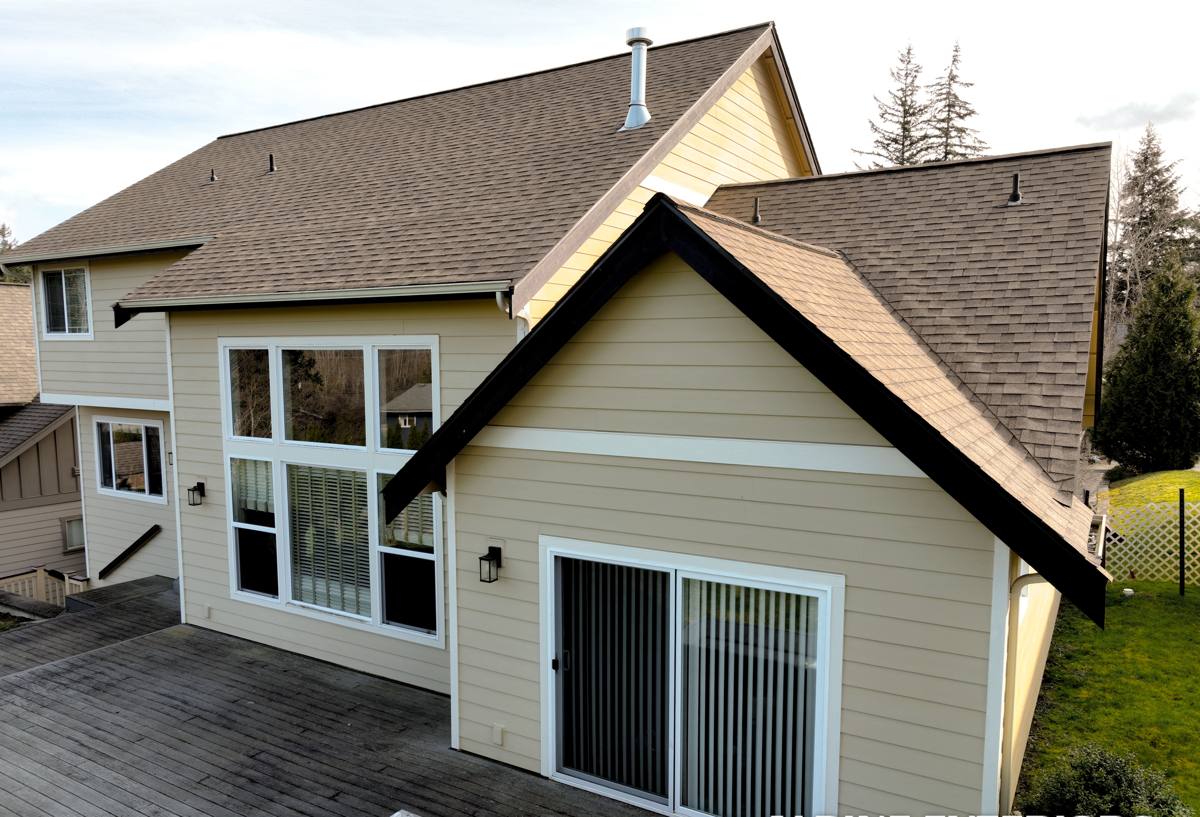
We install James Hardie fiber cement siding exclusively. We don't offer vinyl, LP SmartSide, Cemplank, Allura, primed spruce, or cedar, and that's a deliberate call, not a lack of options. Each of those alternatives has a real weakness in exactly the conditions Geneva homes face: vinyl can warp and doesn't hold a factory finish the way fiber cement does, engineered wood products are more sensitive to sustained moisture exposure at cut edges and seams, and cedar demands ongoing sealing and staining to keep moss and rot at bay under tree cover. Fiber cement doesn't solve every problem on its own, but it starts from a much stronger baseline for a wet, shaded, wind-driven-rain climate.
Built for This Specific Climate Zone
James Hardie engineers its siding by climate zone, and the Pacific Northwest falls under their HZ5 product line — formulated for regions with sustained moisture, freeze-thaw cycling, and high humidity. That's not marketing language; it affects the actual composition of the board, including how it handles moisture absorption and dimensional stability when it's wet for long stretches, which is most of the year around Lake Whatcom.
ColorPlus Factory Finish
The other piece that matters for this climate is the finish. Hardie's ColorPlus color system is baked on in a factory under controlled conditions, not brushed or sprayed on site. That gives you a denser, more consistent finish that sheds water and resists the kind of surface staining that field-applied paint struggles with, especially on siding that stays damp under shade for days at a time. It also comes with a longer finish warranty than site-applied paint jobs typically carry, which matters when you're repainting a house every several years just to keep ahead of mildew and streaking.
What a Correct James Hardie Installation Actually Involves
Fiber cement siding is only as good as the installation behind it. Hardie publishes detailed installation requirements, and in a climate like Geneva's, skipping or shortcutting them is where problems start — not with the board itself.
Moisture Management Behind the Siding
Correct installation starts with a weather-resistive barrier and properly lapped flashing at every window, door, and horizontal transition, installed so water is directed out and down rather than trapped behind the cladding. Many installers also add a rainscreen or drainable housewrap detail behind the siding, which creates a small air gap so any moisture that does get behind the boards can drain and dry instead of sitting against the back of the panel. On a shaded, lake-adjacent lot, that drying capacity is what separates siding that lasts decades from siding that develops hidden rot at the sheathing.
Fastening, Clearances, and Caulk
Hardie specifies fastener type, spacing, and placement for a reason — under-driven or over-driven nails, or fasteners in the wrong zone of the board, can crack the material or open a path for water. Ground clearance, deck and roof clearance, and gaps at inside/outside corners also need to follow the manufacturer's minimums; closing those gaps up "for a tighter look" is one of the most common mistakes that leads to moisture problems down the road. Caulking at butt joints and trim should use a high-quality, paintable sealant rated for exterior use, not a bead that will shrink and crack within a couple of seasons.
- Weather-resistive barrier installed and lapped correctly before any siding goes up
- Flashing at every window, door, deck ledger, and roof-to-wall transition
- Manufacturer-specified fastener type, spacing, and embedment
- Correct clearances from grade, roofing, decks, and horizontal surfaces
- Proper joint and corner treatment with exterior-rated sealant
- Field-cut edges primed or sealed per Hardie's instructions
Our Process for a Geneva Project
The steps don't change much house to house, but how carefully each one is done is where quality shows up years later.
| Step | What Happens |
|---|---|
| Site walk and assessment | We look at existing siding, trim, moisture history, tree cover, and sun/shade exposure on each elevation |
| Tear-off and sheathing check | Old cladding comes off and we inspect the sheathing underneath for hidden rot before covering it back up |
| Barrier and flashing | New weather-resistive barrier, window/door flashing, and drainage detailing go in before any siding |
| Hardie installation | Boards, trim, and accessories installed to manufacturer spec with correct fasteners and clearances |
| Final inspection and cleanup | Walk-through on every elevation, touch-up of any exposed cut edges, and site cleanup |
Cost Factors for a Geneva Home
There's no honest flat number for a re-side, but the variables that actually move the price are consistent from house to house.
| Factor | Why It Matters |
|---|---|
| Amount of hidden damage found at tear-off | Rot or damaged sheathing found under old siding has to be repaired before new siding goes on |
| House shape and trim detail | More corners, dormers, and trim boundaries mean more cutting, flashing, and labor time |
| Product line and profile | Lap siding, shingle-style panels, and board-and-batten carry different material and labor costs |
| Access and site conditions | Steep lots, limited driveway access, or tight tree cover near the house can slow staging and setup |
| Existing moisture or drainage issues | Sites with a history of standing water or poor grading may need drainage correction as part of the job |
Why a Crew That Already Works This Area Matters
A siding job in a dry, sunny climate and one in a shaded, lake-adjacent, high-humidity area like Geneva aren't the same job, even with identical materials. A crew that regularly works around Sudden Valley and Lake Whatcom already knows to plan around the wetter shoulder seasons, to check tree cover and drainage patterns before quoting, and to build in the drying details that matter here rather than defaulting to a bare-minimum install. If your property is part of the Sudden Valley community association or another HOA in the area, it also helps to work with a contractor who's used to coordinating exterior work within those guidelines, so you're not the one chasing down approvals mid-project.
Local experience also shows up in smaller ways — knowing which elevations on a typical Geneva lot get the least sun and need extra attention to drainage and finish durability, and recognizing early signs of moss or moisture trouble on existing siding during the initial walk-through instead of missing them.
Keeping Moss and Algae From Taking Over
ColorPlus finish and a correctly installed rainscreen reduce how much moss and algae take hold, but no siding in this climate stays maintenance-free forever. A little seasonal attention goes a long way.
- Rinse siding with a garden hose once or twice a year, focusing on shaded, north-facing walls
- Avoid pressure washers on fiber cement — they can force water behind boards and damage the finish
- Keep tree branches and shrubs trimmed back so shaded walls get airflow and some sun exposure
- Clear debris out of gutters so overflow doesn't run down the siding face
- Check caulking at joints and trim every couple of years and re-seal if it's cracking or pulling away
- Have any soft spots, staining, or bubbling trim inspected promptly rather than waiting
Is It Time to Re-Side?
Not every house with some moss or a few worn boards needs a full re-side right away. Signs that it's worth having someone look sooner rather than later include soft or spongy spots when you press on the siding, paint or finish that's peeling rather than just dulling, visible gaps or warping at seams and corners, and moisture damage showing up on interior walls near exterior corners. Catching these early, especially before another wet Whatcom County winter, keeps a repair from turning into a bigger sheathing problem.
If you're weighing a full re-side against patch repairs, it usually comes down to how much of the house is affected and how old the existing siding already is — a professional assessment is worth more here than guessing from the driveway.
If you're in Geneva or anywhere around Sudden Valley and want a straight answer on what your home actually needs, we're happy to take a look and give you a free, no-pressure estimate.