 Sudden Valley Siding
 Why Fairhaven Roofs Take a Beating
Fairhaven sits close enough to Bellingham Bay that salt-laden air is part of daily life, and that's before you factor in the driving rain and long, gray moss season that define a Whatcom County winter. A roof out here isn't just shedding water — it's fighting corrosion, wind-driven moisture intrusion, and organic growth almost year-round. Homes a few miles inland in Sudden Valley deal with less salt but just as much rain and moss, so the underlying problems are the same even if the exposure looks different.
Salt Air and Coastal Exposure
Airborne salt accelerates the breakdown of metal flashing, fasteners, and vent components faster than most homeowners expect. Galvanized nails and untreated steel flashing can start showing rust streaks on a roof that's only a decade old, well before the shingles themselves are worn out. It's one of the reasons flashing material and fastener choice matter more here than in a dry inland climate.
Driving Rain and Wind-Driven Moisture
Storms off the water don't just drop rain straight down — wind pushes it sideways, under shingle tabs and up against flashing that was only ever designed to handle vertical runoff. A roof that would hold up fine in a calmer climate can leak here simply because the underlayment and flashing detailing weren't built for sideways-driven water.
The Long Moss Season
Cool, damp weather from fall through spring gives moss and algae months to establish themselves, especially on north-facing slopes and anywhere shade keeps a roof from drying out between rains. Moss doesn't just look bad — it holds moisture against the roofing material and works its way under shingle edges, which shortens the life of an otherwise sound roof.
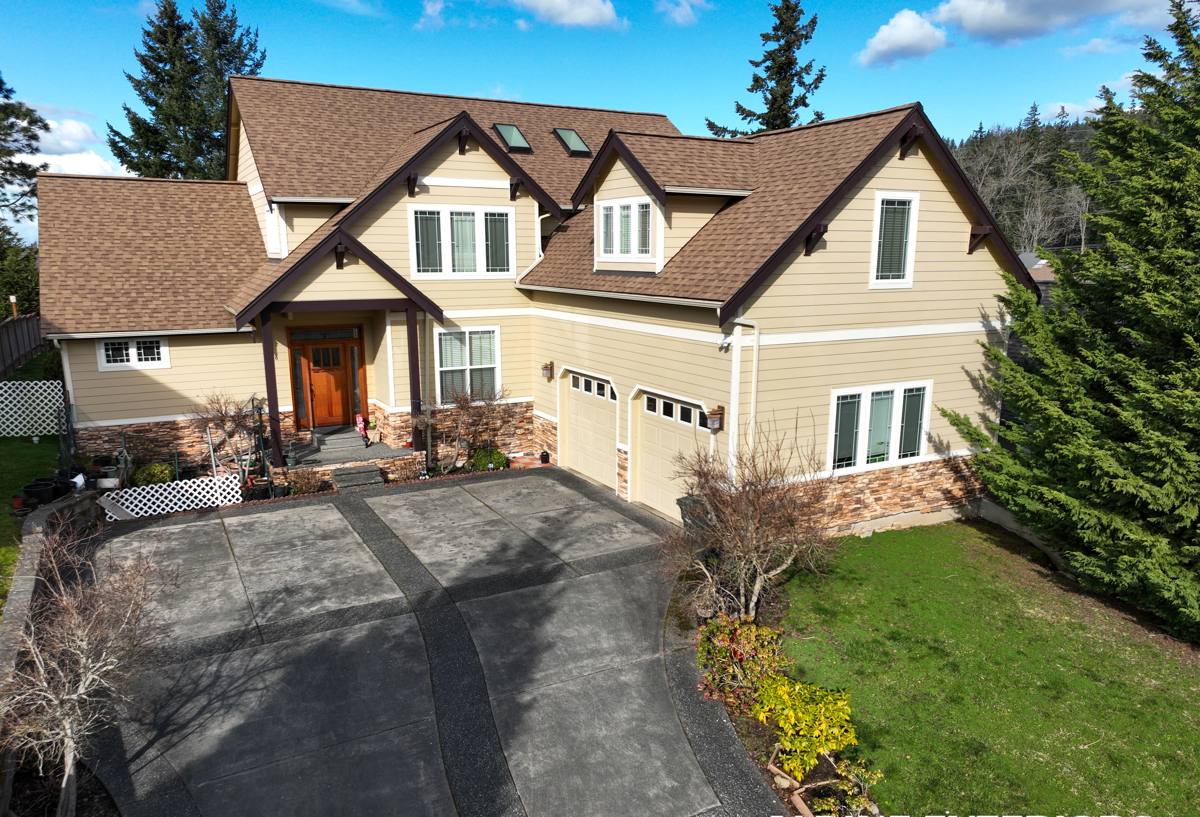
Signs a Fairhaven Roof Needs Replacement, Not Another Repair
Not every roof problem calls for a full tear-off. But there's a point where patching individual leaks stops making financial sense and starts becoming a pattern of chasing the same water into new places. Here's what tells us a roof has crossed that line:
- Granule loss heavy enough that you can see bare, shiny patches on multiple slopes
- Shingles that are curling, cupping, or cracking, especially on south- and west-facing exposures
- Soft or spongy decking felt underfoot in the attic, or daylight visible through the roof boards
- Moss growth thick enough to lift shingle edges rather than just sitting on the surface
- Flashing around chimneys, skylights, or valleys that's rusted, separated, or was never properly stepped in
- Leaks that show up in a different spot every time it rains hard, rather than one consistent point
- A roof already past 20-25 years old for asphalt shingle, especially if it's never had algae-resistant granules
If you're only seeing one or two of these, a repair may still make sense. If you're seeing several at once, replacement is usually the more honest answer, and we'll tell you that directly rather than stringing out repairs on a roof that's already failing.
What a Correct Roof Replacement Involves Here
Tear-Off and Deck Inspection
We remove the old roofing down to the deck rather than layering over it. That's the only way to actually see the plywood or plank sheathing underneath, which is where the real damage from years of moisture intrusion usually shows up. Any soft, delaminated, or rotted decking gets replaced before anything new goes down — skipping this step is how a brand-new roof ends up with a soft spot within a few years.
Underlayment and Ice-and-Water Barrier
Given how much wind-driven rain this area sees, we don't treat underlayment as an afterthought. Self-adhered ice-and-water barrier goes in at eaves, valleys, and around every roof penetration — the places wind-driven water is most likely to find a way in — with synthetic underlayment covering the rest of the deck. This is one of the few places where spending a little more up front prevents most of the leaks we get called out to fix on other people's work.
Flashing Details
Step flashing at walls and chimneys, properly woven valley flashing, and new flashing at every vent and pipe boot are non-negotiable on a replacement. Reusing old flashing to save a little time is a common shortcut, and it's exactly where salt-air corrosion and driving rain tend to cause the first leaks on an otherwise new roof.
Ventilation
Balanced intake and exhaust ventilation keeps the attic dry and temperature-stable, which matters for both shingle lifespan and moss prevention — a roof that dries out faster between rains grows less moss. We check existing soffit and ridge ventilation on every replacement and correct it if it's undersized or blocked, which is common on older Whatcom County homes.
Material Options for This Climate
There's no single "best" roofing material — the right call depends on budget, how long you plan to stay in the home, and how much maintenance you want to take on. Here's how the common options actually compare for a coastal, moss-prone climate like Fairhaven and Sudden Valley:
| Material | Moss/Algae Resistance | Typical Lifespan Here | Maintenance |
|---|---|---|---|
| Architectural asphalt shingle (algae-resistant) | Good, with copper-infused granules | 20-25 years | Periodic soft washing, gutter clearing |
| Standard 3-tab asphalt shingle | Fair, no algae protection | 15-18 years | More frequent moss treatment needed |
| Standing seam metal | Excellent — moss struggles to grip smooth metal | 40-50+ years | Low; occasional fastener/seam check |
| Synthetic/composite shingle | Good, varies by product | 30-40 years | Low to moderate |
Metal roofing carries the highest upfront cost but the least ongoing moss battle, since algae has a much harder time gripping a smooth, well-sloped metal surface. Algae-resistant asphalt shingle is the most common choice for good reason — it balances cost and performance well for this climate, as long as it's installed with the underlayment and flashing detail this area actually requires.
Moss and Algae Prevention Built Into the Job
Prevention is more effective — and cheaper — than treatment after the fact. On every replacement we install zinc or copper strips just below the ridge on slopes with a history of moss growth. Rainwater washing over the strip carries trace metal ions down the roof, which creates conditions moss and algae don't like. It's a passive system with no moving parts and nothing to maintain.
Where a roof sits under heavy tree cover, we'll also talk through realistic canopy trimming to get more sun and airflow onto the slope, since no roofing product fully overcomes a roof that never dries out. And we always confirm attic ventilation is correct as part of the same job — a roof that vents properly sheds moisture faster and gives moss less to work with in the first place.
Our Process, Start to Finish
- Free on-site inspection, including the attic, not just a look from the ground
- Written estimate that breaks out material, labor, and any decking replacement contingency
- Material selection and scheduling, with weather windows planned around Whatcom County's wetter months where possible
- Tear-off, deck inspection and repair, and disposal — the property is cleared of old materials the same day whenever weather allows
- Underlayment, flashing, and new roofing installed per the manufacturer's specifications
- Final walkthrough with you before we consider the job finished, including attic ventilation and cleanup
What Drives the Cost of a Fairhaven Roof Replacement
Every roof is priced on its own specifics, but the factors that move the number are consistent. Knowing them ahead of time makes it easier to compare estimates apples-to-apples:
| Factor | Why It Matters |
|---|---|
| Roof size and number of slopes | More square footage and complexity means more material and labor time |
| Pitch and access | Steep or hard-to-access roofs take longer and require more safety equipment |
| Decking condition | Rotted or soft sheathing found during tear-off adds material and labor not visible in a ground inspection |
| Material choice | Standard asphalt, algae-resistant asphalt, synthetic, and metal all carry different material costs |
| Number of penetrations | Chimneys, skylights, and vents each need individual flashing work |
| Layers of existing roofing | Tear-off of multiple old layers takes longer than a single-layer removal |
We won't quote a number without seeing the roof, including a look in the attic — anyone willing to give you a firm price over the phone is guessing, and that gap usually shows up as a change order later.
Why a Crew That Already Works Fairhaven and Sudden Valley Matters
A roofer who works this specific stretch of Whatcom County knows which slopes hold moss the longest, which flashing details actually stop wind-driven rain coming off the bay, and how local decking tends to age in homes of a certain era. That's not something you get from a crew that mainly works drier inland areas and treats every job the same. It also means we're a known, findable name if a warranty question comes up years down the road, not a company that did one job and moved on.
Keeping Your New Roof Sound in Whatcom County Conditions
A correctly installed roof still benefits from basic upkeep in this climate. Clear gutters and downspouts before the fall rains start, since clogged gutters back water up under the roof edge. Have moss growth addressed early with a soft wash rather than pressure washing, which can strip granules and shorten shingle life. And after major windstorms, a quick visual check for lifted shingles or damaged flashing catches small problems before they become interior leaks.
If you're seeing signs of wear on a Fairhaven or Sudden Valley roof, or just want an honest read on how much life it has left, we're happy to take a look. The estimate is free, there's no pressure attached to it, and you'll get a straight answer about whether you need a repair or a full replacement.