 Sudden Valley Siding
 What Edgemoor's Marine Climate Does to Siding Over Time
Edgemoor sits close enough to the water that homes here take a different kind of weathering than siding just a few miles inland in Whatcom County. Salt-laden air, wind-driven rain off the water, and long stretches of low winter sun combine to break down siding faster than most manufacturers' glossy brochures admit. If you've owned a home here more than a few years, you've probably already seen it: chalky paint, soft spots at the bottom courses, or a green-black film that keeps coming back no matter how many times you scrub it off.
Salt Air and Corrosion
Airborne salt doesn't just affect boats and railings. It settles on exterior surfaces and accelerates corrosion of fasteners, trim flashing, and any exposed metal components. On siding systems that rely on face-nailing or lightweight trim coil, that corrosion shows up as rust streaks and loosened boards years before it should. Salt exposure also makes paint film breakdown happen faster, which matters a lot if your siding depends on a field-applied topcoat to stay protected.
Driving Rain and Wind-Driven Water
Edgemoor's exposure to weather coming off the water means rain doesn't just fall straight down — it gets pushed sideways into wall assemblies during storms. That kind of wind-driven moisture finds every gap in flawed flashing, every under-caulked joint, and every siding product that wasn't detailed with a real drainage plane behind it. Over time, water that gets behind the cladding and can't escape is what actually causes rot, not the rain itself.
Moss, Shade, and Slow-Drying Walls
Between mature tree cover and the region's long wet season, north- and west-facing walls in this area can stay damp for days after a storm. That's exactly the environment moss and algae need to establish themselves on a wall surface. Siding materials that absorb moisture or hold it against the surface — instead of shedding it and drying out — end up hosting more organic growth, staining faster, and needing more frequent cleaning or repainting.
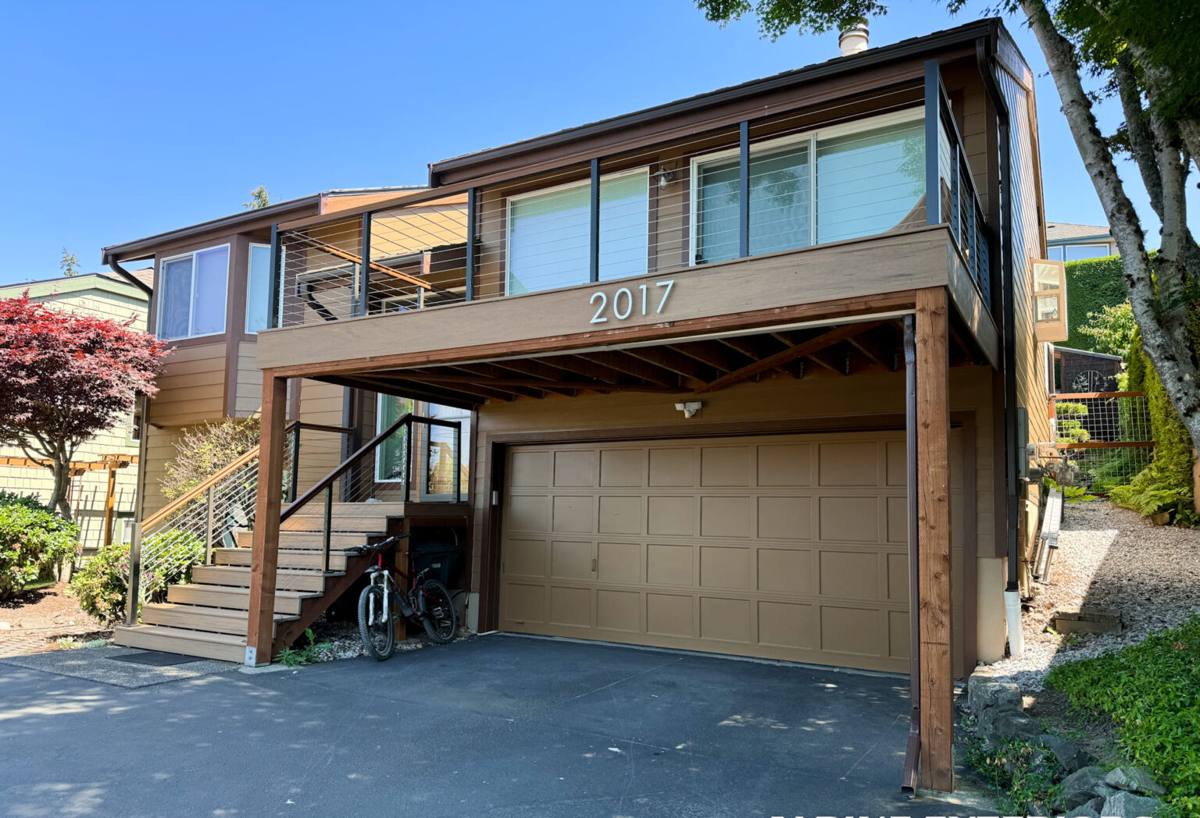
Why James Hardie Fiber Cement Fits This Environment
We install James Hardie exclusively, and a coastal Whatcom County climate is a good example of why. Fiber cement doesn't rot, doesn't swell with moisture absorption the way wood-based products can, and it's non-combustible — a real advantage during wildfire smoke and ember seasons that have become more common across Western Washington. Two things matter most for a property like an Edgemoor home:
- ColorPlus Technology finish: a factory-applied, baked-on finish that resists fading and chalking far longer than field-applied paint, which is the finish layer that struggles most with salt air and UV exposure.
- Climate-engineered HZ formulation: James Hardie manufactures region-specific product formulations for areas that see sustained moisture and freeze-thaw cycling side by side — which describes this part of Whatcom County accurately. That engineering is built into the board itself, not added on-site.
None of that replaces good installation. A high-quality board installed poorly will still fail early. But it gives a correctly installed system a real head start against the specific stresses this location creates.
What a Correct Installation Actually Involves
Most siding failures we get called out to inspect in this area aren't material failures — they're installation shortcuts that only show themselves after a few wet seasons. A correct James Hardie install on an Edgemoor home should include:
- A continuous water-resistive barrier behind the siding, lapped correctly at every seam so water sheds downward and out, never inward.
- Flashing at every horizontal trim transition, window and door head, and any point where the wall plane changes — not just caulk standing in for flashing.
- Manufacturer-specified fastener type, spacing, and penetration depth, with corrosion-resistant fasteners given the salt-air exposure.
- Proper clearance between the bottom of the siding and grade, roofing, decks, and hardscape — Hardie specifies minimum clearances for a reason, and cutting them close is one of the most common corner-cutting mistakes we see.
- Correctly sized gaps at butt joints and around penetrations, caulked with a product rated for movement and UV exposure, not just whatever tube was on the truck.
Skipping any one of these doesn't usually cause an obvious problem on day one. It shows up two, five, or eight years later as a soft spot, a stain, or a warranty claim that gets denied because the installation didn't meet the manufacturer's requirements.
Comparing Common Siding Choices in This Climate
Homeowners in Edgemoor and around Sudden Valley often ask us to explain, plainly, how the main siding options actually perform once salt air, driving rain, and moss season are part of the equation.
| Material | Moisture Behavior | Maintenance Load | Typical Longevity Here |
|---|---|---|---|
| James Hardie fiber cement | Doesn't absorb/swell; sheds water when properly flashed | Occasional wash; factory finish resists fading | Decades with correct install and upkeep |
| Vinyl | Sheds water but can warp/distort with heat and impact | Low, but color fades and can't be refinished | Moderate; often replaced sooner than expected |
| Cedar / untreated wood | Absorbs moisture; prone to rot if drying is slow | Regular repainting/staining and inspection | Shorter without disciplined maintenance |
| Engineered wood siding (e.g., LP-style) | Resists rot better than raw wood but still moisture-sensitive at cut edges | Field finish and edge sealing must be kept up | Variable; heavily dependent on installation and upkeep |
This is exactly why our company standardized on James Hardie and doesn't install vinyl, engineered wood, or untreated cedar: in a climate like this one, the maintenance and moisture trade-offs of the alternatives cost homeowners more over time than the upfront savings are worth.
Our Process for an Edgemoor Project
- On-site assessment: we walk the home, check current siding condition, look at drainage around the foundation, and note elevations that take the worst weather exposure.
- Moisture check during tear-off: once old siding comes off, we inspect sheathing for hidden rot or trapped moisture before anything new goes up — this is often where problems from the old install first show themselves.
- Sheathing repair if needed: any compromised sheathing gets replaced before we move forward, not covered over.
- Water-resistive barrier and drainage plane installation: installed continuously and lapped correctly for this climate's wind-driven rain.
- James Hardie installation to manufacturer spec: correct fasteners, spacing, clearances, and flashing at every transition.
- Caulking and finish detailing: since ColorPlus boards arrive pre-finished, this step is about sealing joints properly, not painting the whole house.
- Cleanup and final walkthrough: site cleared, and we walk the finished job with the homeowner.
- Warranty registration: so the manufacturer's transferable warranty is properly on file from day one.
Why a Crew That Already Works This Neighborhood Matters
Siding work in Edgemoor isn't identical to siding work twenty miles inland. A crew that already works this part of Whatcom County knows which elevations typically take the worst wind-driven rain, how much moss pressure to expect on shaded north walls, and how salt exposure changes fastener and flashing choices. That's the difference between a crew reading a general installation manual and a crew that's already seen how this specific stretch of coastline treats a wall assembly over several winters. It also means fewer surprises on quotes — we're not guessing at drainage conditions or access challenges common to properties near Sudden Valley and the surrounding water-adjacent neighborhoods.
Living With Hardie Siding in a Moss-Prone, Salt-Air Climate
Correct installation gets you most of the way to a low-maintenance exterior, but a coastal climate still asks a little upkeep of any siding material. For Hardie siding specifically, that means:
- An occasional gentle rinse to keep salt residue and organic buildup from accumulating, especially on shaded walls.
- Keeping gutters clear and downspouts directed away from the wall so runoff isn't concentrating water at the base of the siding.
- Trimming back vegetation that keeps a wall section shaded and damp longer than the rest of the house.
- Periodically checking caulked joints and touching them up if they've dried out or separated, since caulk is the one component that isn't factory-engineered like the board itself.
None of this is heavy maintenance — it's closer to the kind of light seasonal check most homeowners already do for gutters and downspouts.
What Affects the Cost of a Project Like This
Every Edgemoor home is a little different, so we don't quote sight-unseen prices, but the main cost drivers on a real project are consistent:
- Total square footage and the home's number of stories, which affects both material and access/scaffolding needs.
- Condition of the existing sheathing — moisture damage found during tear-off can add repair scope that isn't visible from the outside beforehand.
- Amount of trim, corner, and accessory detail work versus large flat wall runs.
- Complexity of the roofline and how many flashing transitions the installation requires.
- Site access, given some properties near the water and on sloped lots take more setup time than a flat, open lot.
We walk through all of this on-site so the number you get reflects your actual house, not a generic estimate.
If you're weighing a siding project on an Edgemoor home, we're happy to take a look and give you a straight, no-pressure estimate — use the form below to get started.