 Sudden Valley Siding
 Why Edgemoor Decks Wear Out Faster Than the Rest of the House
If you own a home in Edgemoor, you already know your deck ages differently than a deck fifty miles inland. The proximity to Bellingham Bay means salt-laden air is a daily fact of life, not an occasional storm event. That salt air accelerates corrosion on anything metal — fasteners, joist hangers, post brackets — long before the wood itself shows real damage. Add Whatcom County's long stretch of driving rain each fall and winter, plus a moss season that can run from October through May under tree cover, and you get a deck that's fighting moisture and corrosion on two fronts at once.
None of this means Edgemoor decks are doomed to early failure. It means they need to be built and repaired with that combination in mind — different fastener choices, different attention to drainage and airflow, and a repair schedule that catches problems while they're still cosmetic instead of structural.
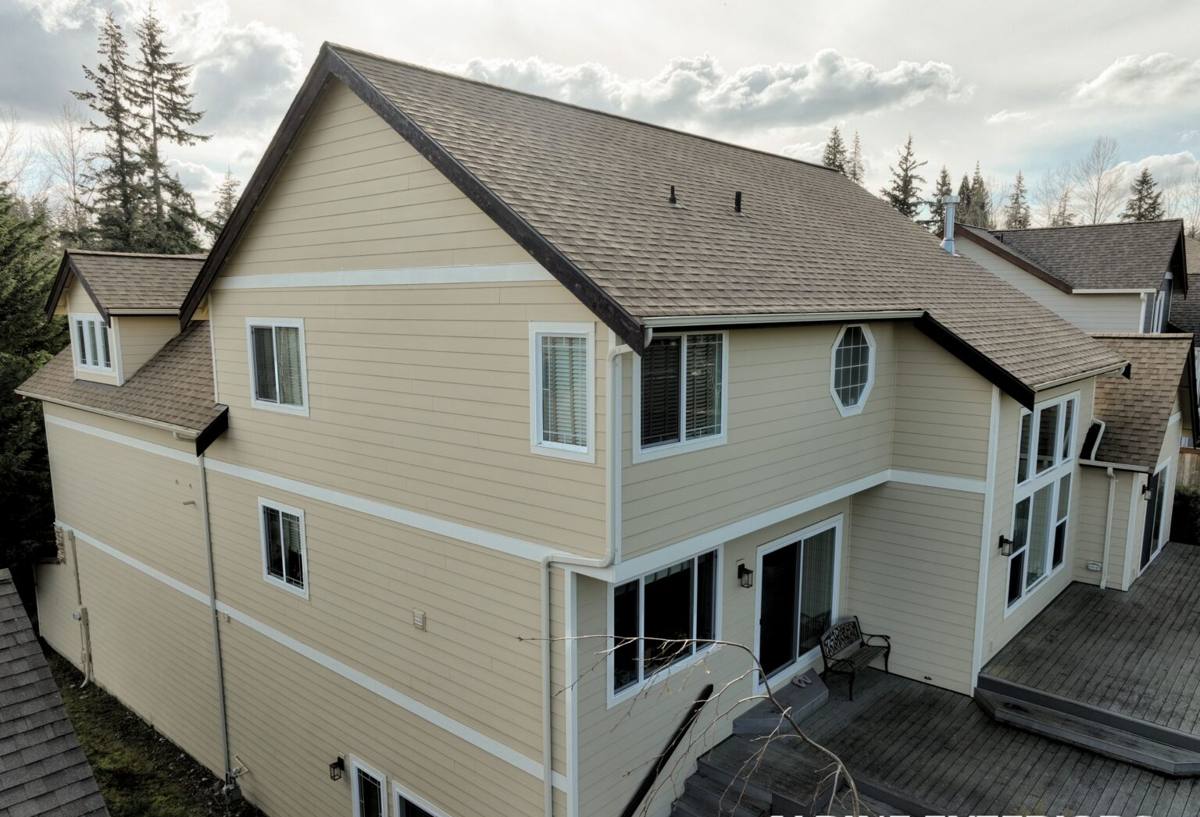
Signs Your Deck Needs Repair, Not Just a Cleaning
A lot of homeowners power-wash the moss off their deck every spring and assume that's maintenance handled. Cleaning matters, but it doesn't tell you what's happening underneath the boards or at the ledger connection to the house. Here's what actually signals a repair is due:
- Boards that feel spongy or flex noticeably when you walk across them
- Green or black staining that returns within weeks of cleaning, especially in shaded corners
- Rust streaking below fastener heads or around joist hangers
- Gaps opening up between the ledger board and the house siding or foundation
- Railing posts that wiggle at the base, even slightly
- Consistent standing water on the surface after rain instead of quick runoff
- Visible splitting or cupping on boards that face west or get the most direct rain
Any one of these on its own might be minor. Two or three together usually mean moisture has already gotten past the surface and into the framing.
Why Moisture Damage Hides Well in This Climate
In a drier climate, rot announces itself — wood dries out between rain events and damage is easier to spot by color and texture. In Edgemoor, the wood rarely gets a long dry stretch, especially under the tree canopy common in this part of Whatcom County. That means rot and fastener corrosion can progress for a full season or two before a homeowner notices anything beyond "the deck looks a little tired." A hands-on inspection with a moisture meter and a probe on the framing tells you what a visual check alone can't.
What a Correct Deck Repair Actually Involves
A repair that just replaces the boards you can see is a cosmetic fix, not a structural one. A correct repair works from the ground up:
| Component | What We Check | Common Edgemoor Issue |
|---|---|---|
| Ledger board connection | Flashing, fastener condition, gap or separation from house | Water intrusion behind flashing from driving rain |
| Posts and post bases | Rot at the base, corrosion on brackets, plumb and stability | Base rot from soil contact and poor drainage |
| Joists and beams | Soft spots, hanger corrosion, proper spacing and support | Rusted hangers from salt air exposure |
| Decking surface | Cupping, splitting, fastener pop, moss/algae staining | Moisture retention on shaded or north-facing sections |
| Guardrails and stairs | Post attachment, baluster spacing, stair stringer condition | Loose posts from repeated freeze-thaw cycling of fasteners |
Skipping the framing check and only replacing surface boards is one of the most common shortcuts in this trade — and it's exactly the kind of repair that fails again within a year or two on a deck exposed to this much moisture.
Repair vs. Replace: What Actually Drives That Decision
Homeowners often ask us to just quote "fixing the deck" before we've looked at it, and we understand the instinct to get a number fast. But the honest answer is that repair-versus-replace comes down to a handful of factors we can only judge in person:
| Factor | Favors Repair | Favors Replacement |
|---|---|---|
| Framing condition | Solid joists and posts, isolated surface issues | Widespread soft spots or rot in structural members |
| Age of the deck | Under 10-12 years, built to a reasonable spec | Original construction is older or undersized for current code |
| Extent of damage | Limited to a few boards or one section | Damage spread across most of the deck surface |
| Fastener type used originally | Stainless or quality hot-dip galvanized still intact | Standard galvanized showing widespread rust |
| Attachment to house | Ledger and flashing sound | Ledger separation or long-term water intrusion at the house |
We'd rather tell a homeowner honestly that a full rebuild is the better long-term value than patch something that's going to need the same fix again in two winters. That's a judgment call, not a sales pitch, and we'll walk you through our reasoning either way.
Material Choices That Actually Hold Up Near the Bay
Decking Materials
Pressure-treated lumber, cedar, and composite decking are all viable choices, and each comes with trade-offs rather than a single "best" answer. Pressure-treated lumber is the most economical and easiest to repair in sections, but it needs a consistent finish schedule to resist moisture in this climate. Cedar has natural rot resistance and a look many Edgemoor homeowners prefer, but it's softer and shows wear from foot traffic and moss growth faster if left unsealed. Composite decking resists moisture and moss better than either wood option and needs far less upkeep, but it carries a higher upfront cost and, if the substructure underneath isn't sound, composite boards can mask framing problems rather than reveal them the way wood does.
Fasteners and Hardware
This is where salt air exposure really shows up. Standard electro-galvanized screws and hangers corrode noticeably faster this close to the bay than they would inland. Our standard for Edgemoor repairs is stainless steel or heavy hot-dip galvanized fasteners and connectors rated for exterior, coastal-adjacent use — it costs a bit more up front, but replacing rusted-out hardware in five years costs far more than the difference does today.
Code and Safety Basics We Won't Skip
Guardrail height, baluster spacing, and stair rise/run all have code minimums for a reason, and repair work is a common place for these to quietly drift out of compliance — a post that gets reset without checking current spacing requirements, for example. When we repair a guardrail or stair system, we bring it up to current safety standards as part of the job, not as an upsell. The same goes for ledger board flashing: if we're opening that connection up for any reason, we make sure the flashing detail is actually keeping water out of the house framing, since that's the single most expensive mistake to leave unaddressed.
Our Deck Repair Process in Edgemoor
- On-site inspection: We walk the full deck, probe suspect boards and framing, and check moisture readings at the ledger, posts, and joists.
- Honest assessment: You get a clear explanation of what's failing, what's still sound, and whether repair or replacement makes more sense for your situation.
- Written scope and estimate: No vague line items — you'll know exactly which boards, connectors, and framing members are being addressed.
- Repair work: Structural issues get fixed first, then decking, then railings and stairs, with fasteners and hardware matched to this climate.
- Final walkthrough: We check the repaired deck together before we consider the job done.
Why a Crew That Already Works in Edgemoor Matters
Deck repair isn't identical from town to town. A crew that mostly works drier inland jobs may default to standard-grade hardware and a lighter sealing schedule because that's what holds up where they usually work. A crew that's repaired decks throughout Whatcom County's waterfront and near-waterfront neighborhoods already knows which corners of a deck fail first in this air, which fastener grades are worth the extra cost, and how much moss buildup is normal wear versus an early warning sign. That local pattern recognition is the difference between a repair that lasts one season and one that lasts a decade.
Keeping a Repaired Deck in Good Shape Between Visits
A few habits go a long way toward stretching the life of any repair we do:
- Clean moss and algae off the surface at least once a year, more often in heavily shaded areas
- Keep gutters and downspouts near the deck clear so runoff doesn't pool against posts or the ledger
- Reapply sealant or stain on wood decking on the schedule the product actually calls for, not just when it looks faded
- Trim back overhanging branches to cut down on shade, debris buildup, and moss growth
- Check railing posts for wobble each spring, especially after a hard winter
- Sweep standing debris out of board gaps so water can drain instead of sitting
If you're noticing soft spots, rust streaks, or a deck that just doesn't feel as solid as it used to, we're glad to come take an honest look. We offer free, no-pressure estimates for Edgemoor homeowners — you can use the form below to get started.