 Sudden Valley Siding
 Deck Replacement Built for Geneva's Conditions
Geneva sits close enough to Lake Whatcom and the surrounding tree cover that decks here take a different kind of beating than decks in a dry inland subdivision. Between the driving rain off the water, the shade from mature evergreens, and a moss season that can run from early fall through late spring, wood and even some composite decks in this pocket of Whatcom County age faster than homeowners expect. If your deck is graying unevenly, feels soft in spots, or grows moss faster than you can scrub it off, that's not a cosmetic problem — it's usually a sign the structure underneath is losing its fight with moisture.
We work on decks throughout Sudden Valley and the surrounding Geneva area regularly, which matters more than it sounds like it should. A deck built to a generic spec sheet and a deck built for this specific mix of shade, rain, and lake-effect dampness are not the same project, even if they look identical from the street.
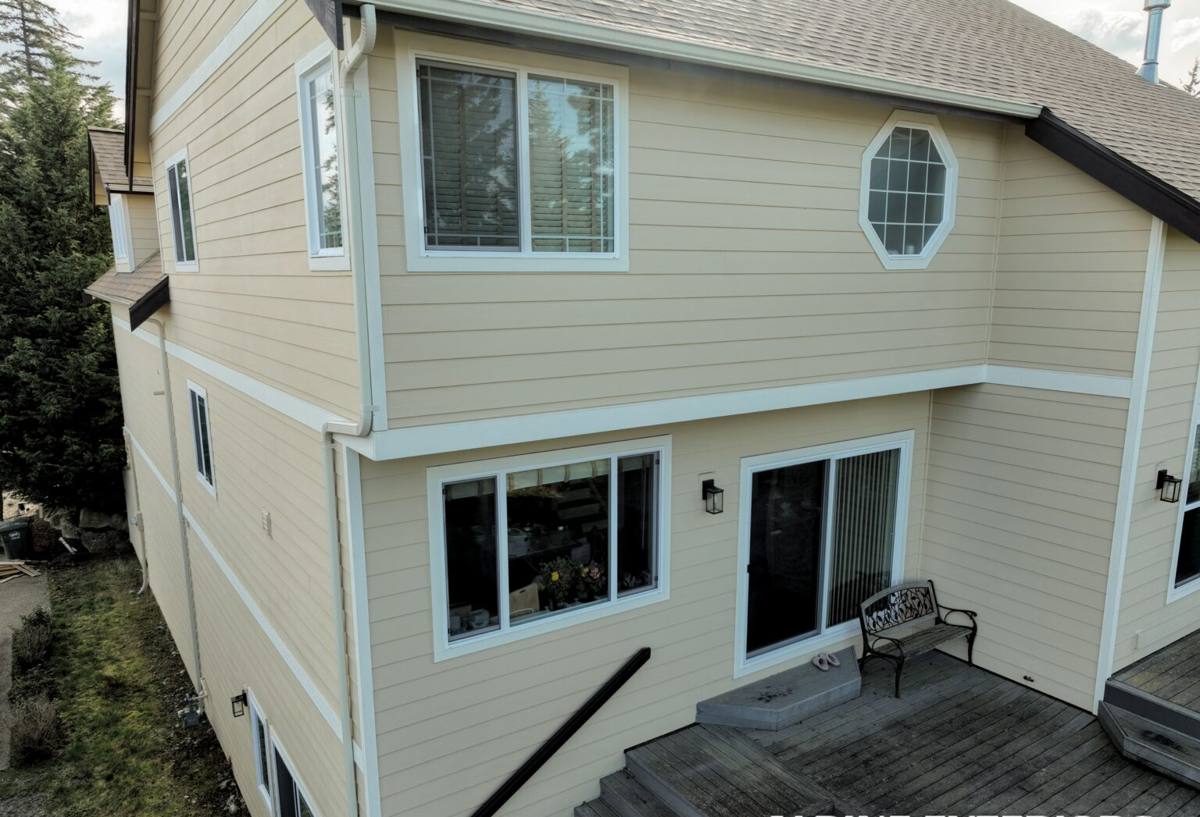
Why Local Homes Lose Decks Early
Rain That Doesn't Just Fall — It Drives
Whatcom County storms often come with wind, which pushes rain sideways into the undersides of boards, around railing posts, and into any gap where flashing was skipped or done poorly. Decks that would hold up fine in a calmer climate develop rot at these entry points years before the visible surface looks bad.
Shade and Moss: A Slow, Steady Problem
Tree cover near the lake keeps decks damp longer after every rain. That extended dry-out time is exactly what moss and algae need to establish themselves. Once moss takes hold on decking boards, it holds moisture against the wood constantly, accelerating rot underneath a surface that might still look mostly fine on top.
Ground Moisture and Older Footings
Properties near Lake Whatcom often sit on ground that stays damper longer than average, which affects post footings and ledger board connections over time. A lot of older Sudden Valley-area decks were built before current flashing and footing standards were common practice, so replacement is often the point where those underlying issues finally get corrected instead of covered over again.
Repair or Replace? How to Tell
Not every tired-looking deck needs a full replacement, but a lot of them do once you know what to check. Use this list as a starting point before you decide:
- Screwdriver test: push a screwdriver tip into the deck boards, ledger, and post bases — if it sinks in easily, that wood is compromised
- Soft or spongy spots when you walk across the deck, especially near the house or stair stringers
- Persistent moss or dark staining that comes back within weeks of cleaning
- Gaps or rust streaks around ledger board bolts where the deck attaches to the house
- Railing posts that wiggle at the base, which usually points to rotted framing, not just a loose bolt
- Visible daylight or water staining underneath the deck after it rains
If you're only seeing one or two of these on isolated boards, a repair may genuinely be enough. If several show up together, or if the ledger board and framing are affected, replacement is almost always the more honest recommendation — patching a failing structure just delays the cost and adds risk.
What a Correct Deck Replacement Actually Involves
A deck replacement done right is a structural project, not a board-swap. Here's what we consider non-negotiable on any deck we replace in this area:
- Full removal of old decking, railing, and framing down to what's actually still sound
- Inspection and, where needed, replacement of ledger board, joists, beams, and post footings
- Proper ledger flashing where the deck meets the house — this is the single most common failure point we find on older decks here
- Joist tape or an equivalent moisture barrier on top of framing before decking goes down, since exposed joist tops are where rot starts under composite decking too
- Correct joist spacing for the decking material chosen, not just re-using whatever spacing the old deck happened to have
- Railing and stair systems that meet current code, including baluster spacing and guard height
- Ventilation and drainage planning underneath the deck so water has somewhere to go besides sitting against framing
Skipping the flashing and moisture-barrier steps is the fastest way to end up replacing a deck again in ten years instead of twenty-five or thirty. We don't cut those corners regardless of budget — if a project needs to shrink to fit a budget, it shrinks in scope (size, railing style, decking grade), not in the parts that keep water out of the framing.
Decking Material Options for This Climate
There's no single "best" decking material — there's a best fit for how much maintenance you're willing to do and how the deck sits relative to shade and moisture. Here's how the common options compare for a property like this:
| Material | Moisture/Moss Resistance | Maintenance | Typical Lifespan |
|---|---|---|---|
| Pressure-treated wood | Fair — needs sealing to perform well | Annual cleaning and re-sealing | 10–15 years with upkeep |
| Cedar | Good natural resistance, but surface still needs care | Regular cleaning, periodic staining | 15–20 years with upkeep |
| Capped composite | Very good — resists moisture absorption into the core | Occasional washing, no sealing/staining | 25–30+ years |
| PVC decking | Excellent — essentially non-absorbent | Occasional washing | 25–30+ years |
In a shaded, damp spot near the lake, we lean toward recommending capped composite or PVC for the walking surface, simply because they don't give moss and mildew organic material to feed on the way wood does. That's a maintenance-and-longevity recommendation based on how these materials behave in wet, shaded conditions — not a claim that wood decking is a bad product. Plenty of homeowners still prefer real wood for the look and are happy to keep up with the sealing schedule it needs.
What Drives the Cost of a Deck Replacement Here
| Factor | Why It Matters Locally |
|---|---|
| Framing condition | Rotted joists, beams, or footings found during demo add cost but shouldn't be skipped |
| Decking material | Composite and PVC cost more upfront than wood but less over the deck's life |
| Ledger and flashing work | Proper flashing takes more time than a quick reattachment, and it's the part that prevents future rot |
| Access and site slope | Sloped lots and limited equipment access near the lake can add labor time |
| Railing and stair complexity | Cable, glass, or multi-level stair systems add cost beyond standard wood or composite railing |
| Permit requirements | Structural decks typically require a permit and inspection, which is time and a fee, not something to skip |
We give a written estimate that breaks these out so you can see where the money is going, rather than one lump number. If we find framing damage once demo starts, we stop and show you before doing any additional work — no surprise change orders sprung on you after the fact.
Permits and Working Near the Lake
Deck replacements that involve new footings, structural framing changes, or railing height changes generally require a building permit in Whatcom County, and properties closer to Lake Whatcom can have additional setback or shoreline considerations depending on the specific lot. We handle the permit application and inspection scheduling as part of the job so you're not left figuring out county requirements on your own. If your property has any shoreline-related restrictions, that's something we'll flag and help you navigate rather than guess around.
Our Process, Start to Finish
The process is the same whether it's a small deck off a back door or a larger multi-level deck: an on-site visit to assess the framing (not just the surface boards), a written estimate that separates material, structural, and labor costs, a permit pulled before demo starts if the scope requires one, full demo and framing inspection, rebuild with proper flashing and moisture protection, decking and railing installation, and a final walkthrough where we point out anything you should know about maintaining the new deck. We clean up the site fully before we consider the job done — old decking and fasteners don't get left behind for you to deal with.
Keeping a New Deck Healthy in This Climate
Whatever material you choose, a little seasonal attention goes a long way given how much moss and moisture this area sees:
- Sweep leaves and needles off the deck regularly in fall — trapped debris holds moisture against boards
- Wash the deck surface at least once a year with a deck-safe cleaner to knock back early moss and algae growth
- Check that gaps between boards stay clear so water can drain through instead of pooling
- Inspect railing posts and stair connections once a year for movement or soft wood
- Reseal wood decking on the manufacturer's recommended schedule — don't wait until it looks obviously weathered
- Keep gutters and downspouts near the deck clear so runoff isn't dumping extra water onto or under it
If you're in Geneva or elsewhere around Sudden Valley and your deck is showing its age, we're glad to take a look and give you a straight answer on repair versus replacement — no pressure, no inflated scope. Reach out for a free estimate using the form below.