 Sudden Valley Siding
 Why Edgemoor Homes Need Windows Built for This Climate
Edgemoor sits in one of the more demanding microclimates in Whatcom County. Homes here deal with a combination most window manufacturers never test for on a single wall: salt-laden air drifting in off the water, wind-driven rain that hits siding and window frames sideways rather than straight down, and a long, damp moss season that keeps north- and west-facing surfaces wet for weeks at a stretch. A window that performs fine in a dry inland climate can fail here in a fraction of the time if it wasn't selected and installed with this specific exposure in mind.
We install custom windows throughout the Sudden Valley area, and Edgemoor is one of the neighborhoods where we see the clearest pattern: it's rarely the window unit itself that fails first. It's the flashing, the sealant, and the frame material reacting to years of salt air and standing moisture. Get those details right and a quality window will outlast its warranty. Get them wrong and even an expensive window will show rot, fogging, or air leaks well before its time.
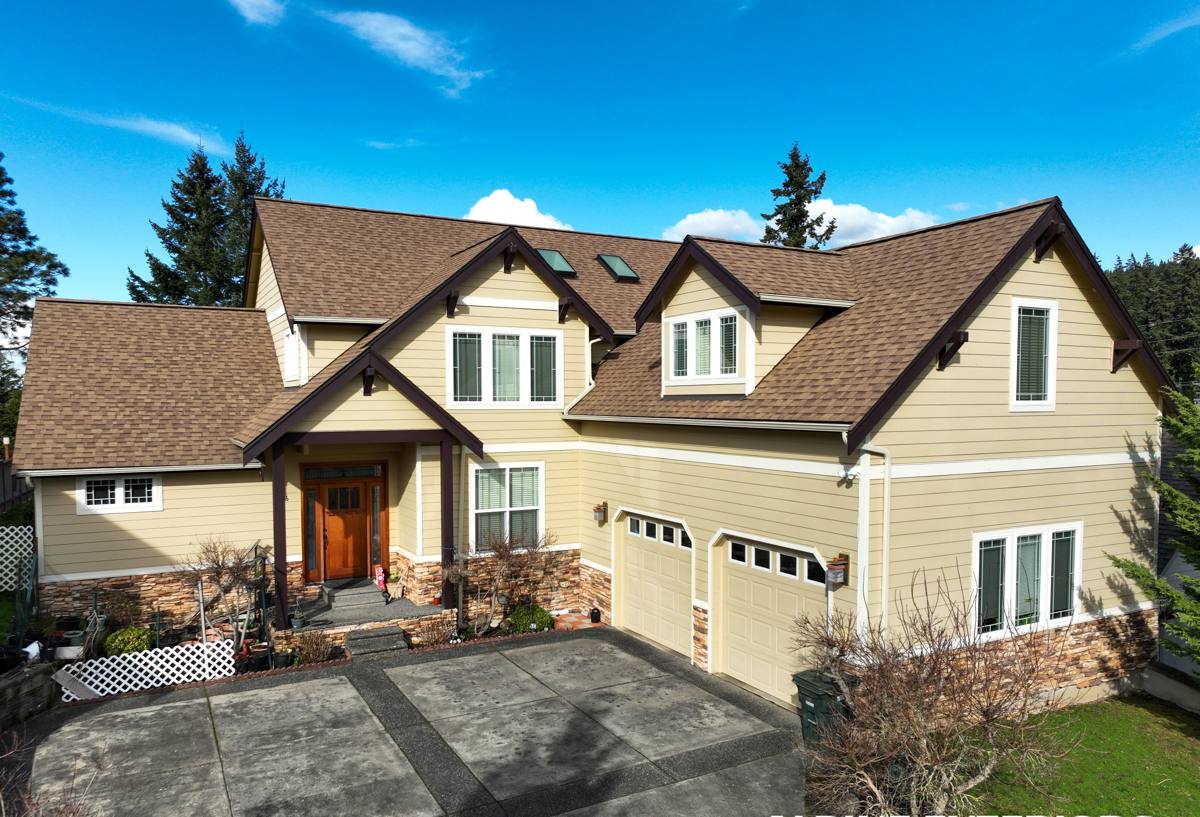
What Salt Air and Driving Rain Actually Do to a Window
It helps to understand the failure modes before talking about solutions, because they drive every decision we make on an Edgemoor job.
Salt Air
Airborne salt is corrosive to unprotected metal components — hinges, cranks, screws, and especially lower-grade aluminum hardware. Over time it also degrades certain sealants and finishes faster than a standard inland warranty accounts for. This is why hardware quality and finish grade matter as much as the glass package when we're specifying windows for this area.
Wind-Driven Rain
Rain that comes in at an angle doesn't just run down a window — it gets pushed and pressurized into any gap in the flashing or sealant. A window that would be watertight in a calm rain can leak in a wind-driven storm if the flashing details around the rough opening weren't built for that pressure. This is almost always a flashing and installation issue, not a product defect.
Extended Moss Season
Moss doesn't grow on the glass, but it thrives in the damp, shaded conditions common on north- and west-facing walls here for much of the year. That sustained moisture load stresses wood trim, caulk joints, and any exposed fasteners nearby. Trim and sill details that would be fine in a drier climate need extra attention in these microclimates.
What a Correct Installation Involves
A custom window job is really two jobs: the window itself, and the opening it goes into. We treat both with equal weight.
Assessing the Existing Opening
Before we talk products, we check the rough opening for hidden rot, undersized or missing flashing, and any signs of past water intrusion. On older Whatcom County homes it's common to find openings that were never properly flashed to begin with, especially on additions or older remodels. We flag this honestly rather than installing a new window over a compromised opening.
Flashing and Weatherproofing
This is the step that determines whether a window stays dry for 20 years or leaks in year three. We use a shingle-lap sequence — sill pan flashing first, then side flashing, then head flashing — so water is always directed outward and downward, never trapped behind the window. For exposed elevations that take direct wind-driven rain, we pay extra attention to sill pan drainage and back-dam details.
Setting and Sealing the Window
The unit is shimmed level and plumb, fastened per manufacturer spec (over-fastening or under-fastening both cause problems), and sealed with an appropriate exterior sealant — not just a bead of caulk around the trim. Interior air sealing is done separately from exterior weatherproofing; conflating the two is a common shortcut that traps moisture inside the wall cavity.
Finish Work
Trim, sill, and any exterior casing are finished with materials and fasteners rated for coastal exposure. This is where we again think about salt air and moss: stainless or coated fasteners, and finish products chosen for how they hold up wet, not just how they look on install day.
Choosing Frame Materials for a Marine Climate
There's no single "best" window material — each has real tradeoffs, and the right call depends on the specific wall, exposure, and budget. Here's how the common options actually perform in Edgemoor's conditions.
| Frame Material | Salt Air / Moisture Behavior | Maintenance | Typical Lifespan Here |
|---|---|---|---|
| Vinyl | Good — won't corrode or rot; seams and welds are the weak point in driving rain if not detailed well | Low | 20–30 years |
| Fiberglass | Very good — dimensionally stable, resists moisture and salt corrosion well | Low | 30+ years |
| Wood-clad | Fair — the clad exterior handles weather, but any breach exposes wood core to rot risk in a wet climate | Moderate — exterior low, interior wood needs periodic attention | 20–30 years if maintained |
| Aluminum | Poor to fair — prone to corrosion and condensation in coastal/marine air unless thermally broken and properly finished | Moderate to high | Variable — highly dependent on finish quality |
For most Edgemoor homes we lean toward vinyl or fiberglass on exposed elevations, and reserve wood-clad for interior-facing or more protected walls where its appearance is worth the added upkeep. We'll walk through the honest tradeoffs for your specific home rather than defaulting to one product line.
Glass Packages and Hardware: What Actually Matters
Beyond the frame, two other choices meaningfully affect performance in this climate.
- Dual or triple-pane glazing with a quality low-E coating and argon fill improves both energy performance and condensation resistance — a real issue on cool, humid days common to this area.
- Corrosion-resistant hardware (stainless steel or coated) on locks, hinges, and cranks holds up far better against salt air than standard-grade hardware, which can start seizing or pitting within a few years near the water.
- Warm-edge spacer systems in the glass unit reduce the cold spot at the edge of the glass, which lowers condensation risk on interior sills during our wetter months.
- Weatherstripping quality matters more than most homeowners expect — it's the first line of defense against wind-driven rain finding its way past a closed sash.
Signs Your Current Windows Are Losing the Fight
Because failures here tend to be gradual, many homeowners don't realize how much a window has degraded until it's well past due. Watch for:
- Fogging or moisture between panes (a failed seal on double- or triple-pane units)
- Soft or discolored wood trim or sill, especially on north- or west-facing windows
- Visible moss or persistent green staining around the frame or sill
- Drafts or a noticeable temperature difference near the window on windy days
- Hardware that's stiff, corroded, or difficult to lock
- Paint or finish that's peeling specifically around the window opening rather than the broader wall
- Difficulty opening or closing that wasn't there a year or two ago
Any one of these can be minor on its own, but together they usually point to a flashing or seal failure that's worth addressing before it reaches the framing behind the wall.
What Drives Cost on a Custom Window Job
Every home and opening is different, so we don't quote sight-unseen — but these are the main factors that move the price up or down.
| Factor | Why It Matters |
|---|---|
| Frame material | Vinyl is typically the most economical; fiberglass and wood-clad cost more upfront but bring different durability profiles |
| Opening condition | Hidden rot or prior water damage found during removal adds repair scope before the new window goes in |
| Window size and configuration | Custom shapes, large picture windows, and multi-unit combinations cost more than standard replacement sizes |
| Glazing and hardware upgrades | Triple-pane glass, upgraded coatings, and corrosion-resistant hardware add cost but reduce long-term maintenance |
| Exposure and access | Second-story or hard-to-access windows on exposed elevations take more time to flash and finish correctly |
| Trim and finish scope | Full exterior trim replacement costs more than reusing sound existing trim |
As a rough starting point, straightforward single-window replacements often land in the low-to-mid thousands per opening, with full custom installations, larger units, or opening repairs running higher. We'll give you real numbers once we've actually looked at your windows and openings.
Why It Matters That We Already Work in This Area
Window installation isn't one-size-fits-all, and a crew that mostly works drier inland climates can miss details that matter here. Working regularly in Sudden Valley and surrounding Whatcom County neighborhoods means we've already seen how salt air ages hardware, how wind-driven rain finds weak flashing points, and how moss season stresses trim and sill details in this specific setting. That's not something you can fully substitute with a product spec sheet — it comes from doing the work here, repeatedly, and paying attention to what actually holds up.
We also know which elevations on a typical Edgemoor lot take the worst of the weather, which helps us prioritize where to spend a little more on materials or detailing and where standard specs are perfectly adequate. That kind of judgment call is where local experience pays off.
Simple Maintenance That Extends Window Life Here
A well-installed window still benefits from basic upkeep in this climate:
- Rinse salt residue and debris from frames and tracks a couple of times a year, especially after storms
- Keep gutters and nearby vegetation clear so water and organic debris don't sit against window trim
- Check and refresh exterior caulk joints every few years — sealant is a wear item, not a permanent fix
- Address moss or green staining on trim promptly rather than letting it sit through another wet season
- Exercise locks and cranks periodically so hardware doesn't seize from disuse plus salt exposure
If your Edgemoor home has windows showing their age, or you're planning new construction and want the openings done right from the start, we're happy to take a look and talk through honest options for your specific exposure and budget. Use the form below to request a free, no-pressure estimate.