 Sudden Valley Siding
 Composite Decking Built for Cordata's Wet Side of the County
Cordata sits in one of the wetter, greener corners of Whatcom County, and that's exactly the kind of setting where a deck either earns its keep for twenty-plus years or turns into a maintenance headache by year five. The neighborhood's tree cover, proximity to moisture-heavy air moving in off the Sound, and long stretches of overcast, drizzly weather mean any outdoor structure here is fighting a slower, quieter battle than decks in drier climates ever face: constant dampness, moss and algae growth, and repeated freeze-thaw cycles through the winter months.
Composite decking exists specifically to solve that problem, but only when it's specified and installed correctly for the site. We install composite decking for homeowners throughout Sudden Valley and the surrounding Whatcom County communities, and Cordata jobs get the same attention to drainage, ventilation, and board selection that we'd give a deck three blocks from the lake. This page walks through what actually matters for a composite deck in this specific climate — not generic decking marketing.
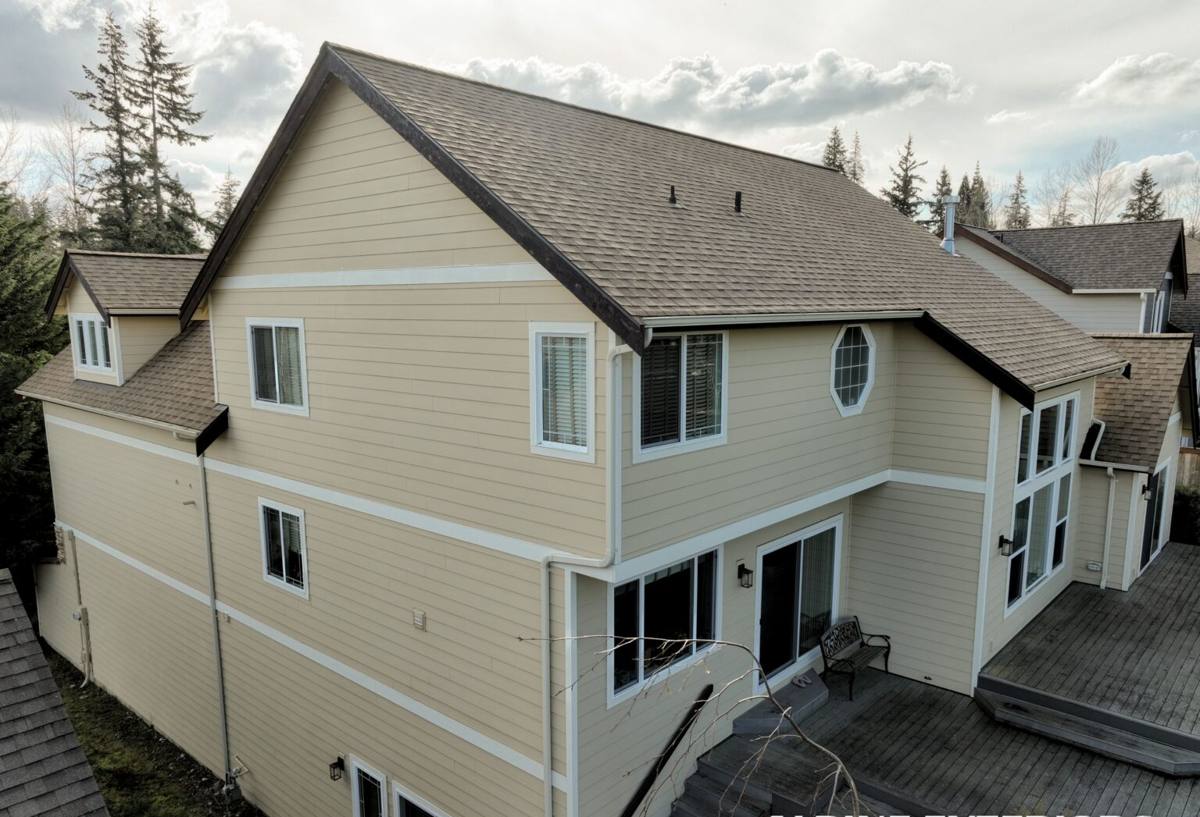
Why the Local Climate Changes the Decking Conversation
Homeowners moving to the area from drier regions are often surprised at how much climate dictates deck performance here. A few specifics worth understanding before you decide on materials:
Moss and Algae Season Runs Long
In Whatcom County, moss isn't a once-a-year nuisance — shaded, damp surfaces can host active moss and algae growth for eight or nine months of the year. Cordata's mix of mature landscaping and tree canopy means decks here often sit in partial shade for a good chunk of the day, which slows drying time after every rain. A deck surface that can't shed water quickly becomes a moss farm.
Salt Air and Driving Rain
Even away from the immediate waterfront, this part of the county gets salt-laden air carried in on storms off the water, combined with wind-driven rain that hits siding and decking at an angle rather than falling straight down. That combination accelerates corrosion on fasteners and hardware and pushes moisture into places a purely vertical rain wouldn't reach — end grain, board gaps, and ledger connections.
Freeze-Thaw Cycling
Whatcom County winters aren't brutally cold, but they do cycle above and below freezing repeatedly. Wood that's absorbed moisture and then freezes will split and check over time. Composite material handles this far better than wood, but only if it's manufactured with a genuine moisture-resistant core and installed with the gaps and fastening it needs to move as temperatures shift.
What "Correct" Composite Decking Actually Involves
A lot of decking failures we get called out to inspect aren't material failures — they're installation shortcuts that a wetter climate exposes faster than a dry one would. Getting it right means addressing the whole system, not just the boards.
Substructure and Framing
- Joists and beams rated for ground contact or fully protected with joist tape, since composite boards trap moisture against the frame more than open wood decking does
- Proper joist spacing for the specific composite product — many composites require tighter spacing than standard wood decking, especially on diagonal or picture-frame layouts
- Ledger board flashing that actually sheds water away from the house rim joist, not just a bead of caulk
- Post footings sized and set below frost depth for our local conditions
Drainage and Airflow Underneath
This is the piece that gets skipped most often and matters most in a climate like ours. A composite deck built low to the ground with no ventilation underneath will trap humidity, and that humidity works its way back up into fastener holes and cut edges. We grade the ground beneath the deck to shed water, keep a minimum clearance for airflow, and avoid enclosing the underside without vents when skirting is requested.
Board Selection and Layout
Not all composite boards are equal, and the differences matter more here than in a dry climate:
- Capped composite (a fully wrapped polymer shell around the core) resists moisture intrusion at the surface far better than uncapped or capped-only-on-top boards
- Proper expansion gaps between boards and at end joints, sized to the manufacturer's spec for our temperature swings
- Hidden fastener clip systems that avoid puncturing the board's protective cap, since every puncture is a potential moisture entry point
- End caps or trim on exposed board ends, which is where uncapped composite is most vulnerable
Composite vs. Wood vs. PVC: An Honest Comparison for This Climate
We install more than one decking material because no single product is right for every budget and every job. Here's how the main options actually stack up for a wet, moss-prone property like the ones in Cordata.
| Material | Moisture Behavior Here | Maintenance Burden | Typical Lifespan (Local Conditions) |
|---|---|---|---|
| Pressure-treated wood | Absorbs moisture readily; prone to splitting and moss growth without regular treatment | Annual cleaning, periodic staining/sealing | 10-15 years before major repair or replacement |
| Capped composite | Sheds surface moisture well; core protected from the wet/dry cycling that damages wood | Periodic washing to prevent surface moss buildup | 25-30+ years with proper installation |
| Uncapped/older composite | Can absorb moisture at cut ends and fastener points over time | More frequent cleaning; watch for swelling at edges | 15-20 years, shorter near constant shade |
| Cellular PVC decking | Essentially impervious to moisture absorption | Lowest maintenance; occasional washing | 25-30+ years, though higher upfront cost |
We're straightforward with every Cordata homeowner about these trade-offs. Wood costs less upfront but demands real annual upkeep in this climate to avoid rot and moss. Composite costs more initially but is built for exactly the conditions this neighborhood deals with. We don't push a single brand — we help you match the product to your budget, sun exposure, and how much maintenance you actually want to do each year.
Our Process for a Cordata Composite Deck
Every deck we build follows the same core process, adjusted for the site conditions we find.
1. On-Site Assessment
We look at drainage patterns around the proposed deck location, existing shade and tree cover, soil conditions for footings, and how the deck ties into the house — including how it interacts with your siding and any existing water management at the wall.
2. Material Selection Walkthrough
We show you real board samples, discuss the maintenance trade-offs above, and talk through color and board profile options that hold up to sun fading and moss staining rather than just looking good on day one.
3. Permitting and Structural Planning
Decks attached to the home typically require a permit through the local jurisdiction, and elevated decks need engineered footing and ledger connections. We handle that paperwork and inspection scheduling as part of the job.
4. Framing and Substructure
This is where the climate-specific decisions get built in: joist tape, flashing, proper footing depth, and ventilation clearance underneath.
5. Decking Installation
Boards go down with the fastening system specified for that product, correct expansion gaps, and attention to drainage slope across the deck surface so water runs off rather than pooling.
6. Final Walkthrough
We go over basic care — what cleaning routine keeps moss from taking hold, what not to do (pressure washing too aggressively can damage a composite cap), and what your warranty actually covers.
What to Check Before You Sign a Contract
Whether you hire us or someone else, these are the questions worth asking any contractor bidding a composite deck in this climate:
- Does the bid specify joist tape or another moisture barrier on the framing, or just the decking itself?
- Is there a written plan for underside ventilation, especially if any skirting is planned?
- What expansion gap spacing is called out, and does it match the manufacturer's spec for our temperature range?
- Is the fastening system hidden-clip or face-screwed, and how does that affect the board's moisture cap?
- What's the manufacturer's warranty, and does it require a specific installer certification to stay valid?
- Does the contractor have experience with permitting through your specific jurisdiction?
Why Local Experience in This Area Matters
A composite deck installed by someone unfamiliar with Whatcom County's moisture patterns will often look fine for the first year or two and then start showing problems — soft spots at fastener locations, moss taking hold in shaded corners, or gapping that wasn't sized for our seasonal temperature swings. We work in Sudden Valley, Cordata, and the surrounding communities regularly enough to know which lots drain poorly, which yards hold shade long into the afternoon, and which board profiles actually shed water well versus which ones just look good in a showroom.
That local pattern recognition is the difference between a deck that needs real attention in year three and one that's still solid at year twenty. It also means when something does come up under warranty, you're calling a crew that's still working in your neighborhood, not chasing down an installer who did one job here and moved on.
Maintenance Realities for Cordata Composite Decks
Even low-maintenance composite isn't zero-maintenance in this climate. A realistic yearly routine looks like this:
- Sweep debris and standing leaves off the surface regularly through fall, since trapped organic matter feeds moss and algae
- Wash the deck surface once or twice a year with a soft-bristle brush and a composite-safe cleaner, more often in heavily shaded areas
- Check fastener points and board ends each spring for any signs of movement or moisture staining
- Keep gutters and downspouts near the deck clear so runoff isn't dumping directly onto or under the structure
- Trim back overhanging branches where practical to improve sun exposure and drying time
None of this is heavy labor, but skipping it in a climate like ours lets moss and moisture problems get a head start that's harder to reverse later.
Get a Straightforward Estimate
If you're planning a new deck or replacing an aging one in Cordata, we're happy to walk the site, talk through material options honestly, and give you a clear estimate with no pressure to decide on the spot. Use the form below to get started.