 Sudden Valley Siding
 Building New in Columbia? Get the Windows Right the First Time
New-construction window installs are different from a retrofit, and if you're building or framing a home in the Columbia area near Sudden Valley, that difference matters more than most builders let on. With new construction, the window unit is installed with its nailing fin directly to the sheathing before siding goes on, which means the window flashing becomes part of the home's primary water management plane. Get that sequencing wrong and you won't see a problem for a year or two — you'll see it after the first real Whatcom County storm season, when water finds the gap nobody sealed correctly.
We install new-construction windows on homes throughout the Sudden Valley area, and Columbia's mix of lakeside exposure, tree cover, and marine weather patterns puts specific demands on window selection and installation that a generic install crew often misses.
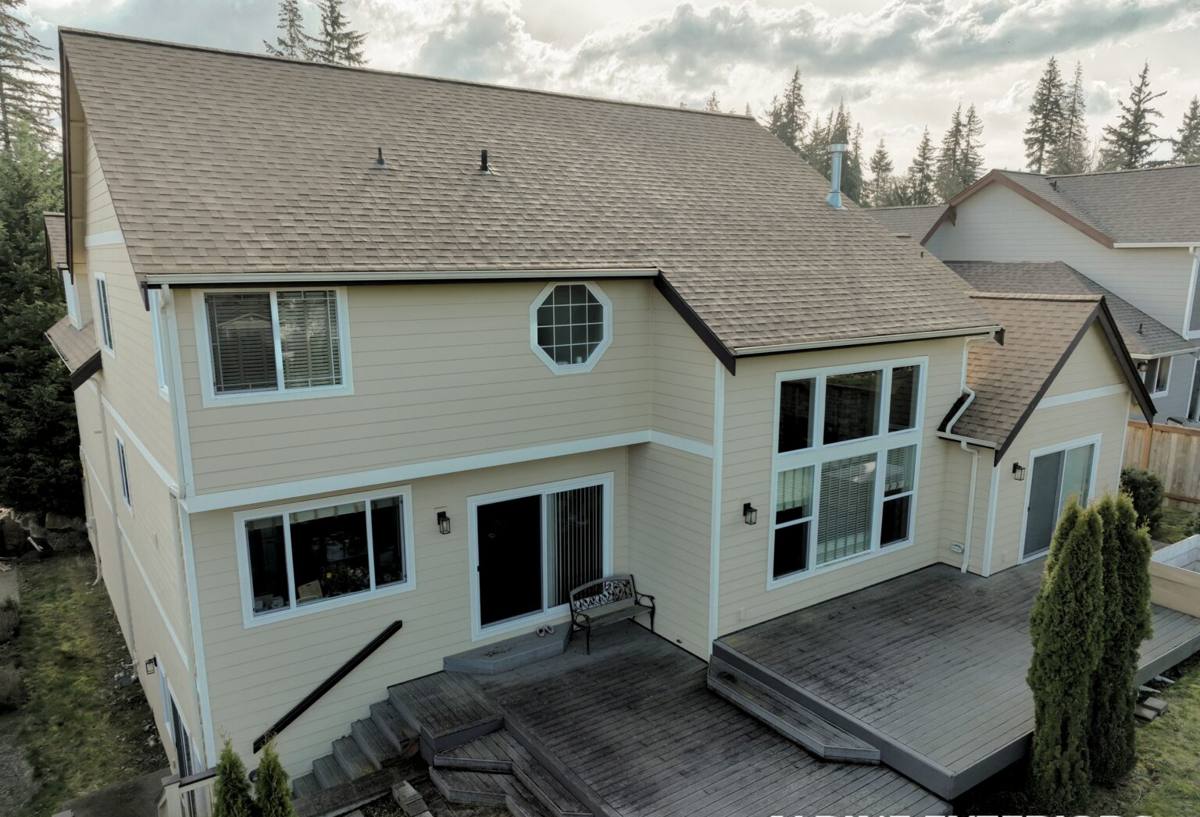
What Columbia's Climate Actually Does to a Window Opening
Whatcom County sits close enough to the Salish Sea that salt-laden air moves through on a regular basis, and Columbia's position near Sudden Valley's tree-lined lake environment adds its own moisture load on top of that. Three things drive most of the window failures we get called out to fix on homes in this area:
- Salt air corrosion — untreated or poor-grade fasteners, hinges, and cladding around window openings corrode faster here than in drier inland climates.
- Driving rain — wind-driven rain doesn't just hit a window face, it gets pushed sideways and upward into any flashing gap, which is why lap direction and flashing overlap order matter more here than in calmer climates.
- Long moss season — extended damp, shaded periods (common under Sudden Valley's tree canopy) keep moisture sitting against trim and sill areas for weeks at a time, which accelerates rot wherever water intrusion has already started.
None of this means you need exotic materials. It means the flashing detail, the sealant choice, and the fastener spec need to match the actual exposure of the wall, not a generic spec sheet.
Why This Matters More at New Construction Than Retrofit
On a retrofit, you're often working around an existing weather barrier that's already proven itself for years. On new construction, there's no track record yet — the window opening, the housewrap, the flashing tape, and the siding all have to work together correctly on day one, because it's much harder and more expensive to fix a bad detail once siding is closed up over it. We treat new-construction window openings as the single most important water-management decision in the whole build.
What a Correct New-Construction Window Install Involves
A proper install follows a sequence — skip a step or do it out of order and the whole assembly stops working as a system, even if every individual product is good.
- Rough opening check. Confirm the opening is square, level, and sized correctly with proper clearance — before any window ever gets set.
- Sill pan flashing. A sloped or back-dammed sill pan under the window unit so any water that does get past the window has somewhere to go besides your framing.
- Housewrap integration. The weather-resistive barrier gets cut and lapped so it directs water out and over the window flange, not behind it — this is a shingle-style lap sequence, bottom to top.
- Window setting and fastening. Unit set plumb, level, and square, shimmed correctly, fastened per the manufacturer's schedule (skipping fastener locations is a common shortcut that shows up as air and water leaks later).
- Flashing tape at the flanges. Jambs and head flashed in the correct order — jambs first, head last — with full adhesion, no bridging over gaps.
- Sealant at the interior and exterior. Backer rod and sealant where called for, with attention to the compatibility of sealant and flashing tape chemistry — some combinations don't bond well together.
- Interior air sealing. Low-expansion foam or sealant at the interior gap between frame and rough opening, which also matters for energy performance.
Any one of these steps done wrong won't fail an inspection, and it won't be visible once siding is installed. It'll show up as a stain, a soft spot, or a draft two winters later.
Choosing the Right Window for a Columbia Build
We don't push one brand as the only option — the right window depends on your home's exposure, your budget, and your maintenance preferences. What we do insist on is matching frame material and glazing package to the actual climate load the window will see.
| Frame Material | Salt Air / Moisture Behavior | Maintenance | Typical Fit |
|---|---|---|---|
| Vinyl | Doesn't corrode; performs well in humid, salt-air conditions | Low — occasional cleaning | Most new-construction homes, good value |
| Fiberglass | Excellent stability in temperature and moisture swings | Low | Homes wanting a longer-term, lower-movement frame |
| Wood-clad | Good if cladding is intact; exposed wood trim needs upkeep in damp shade | Higher — trim and joints need monitoring | Homeowners who want a wood interior look and will keep up maintenance |
| Aluminum | Conducts cold and can corrode without proper coating in salt air | Moderate | Limited use; we discuss trade-offs case by case |
Glazing matters as much as frame choice. For homes under heavy tree cover near Sudden Valley, we often talk through low-E coatings for both energy performance and to reduce condensation risk during the long damp stretches of fall and winter.
Sizing and Placement Decisions Worth Making Early
Because you're framing new, this is the one window job where you actually get to choose window size and placement before anything is fixed in place. A few things worth deciding with your builder or us before framing locks in:
- Overhang and eave depth relative to window height — more overhang reduces direct rain exposure on upper-story windows.
- Window placement relative to prevailing wind and rain direction on the lot.
- Egress requirements for bedrooms, confirmed against local code before rough openings are framed.
- Whether any windows sit close enough to grade or a deck level to need extra sill flashing detail.
Our Process for Columbia New-Construction Jobs
We work directly with builders and owner-builders in the Sudden Valley area, and our process is built around one goal: the window opening is airtight and watertight before siding closes over it, and it stays that way.
- Site visit and rough-opening review before window order, so sizes and details are locked in correctly.
- Window selection walkthrough — frame material, glazing package, and hardware, matched to each elevation's actual exposure.
- Flashing and sill pan installation following manufacturer instructions and a consistent shingle-lap sequence.
- Photo documentation of flashing details before they're covered by siding — useful for your records and for warranty purposes.
- Final fit, operation, and seal check once siding and trim are complete.
Why a Crew That Already Works Columbia Matters
A window installer who mostly works drier, inland areas can do a technically correct install and still get the exposure assumptions wrong — under-flashing a wall that actually takes direct wind-driven rain, or skipping a sill pan because "it usually doesn't need one" where they're used to working. Crews who install regularly in the Sudden Valley and broader Whatcom County area size flashing overlaps, sealant choice, and sill details to what this climate actually delivers, not to a national average.
There's also a practical scheduling reason: new-construction window work has to sync with framing and siding subcontractors. A crew already familiar with the pace and expectations of local builds in this area fits into that schedule without becoming the bottleneck.
Common Mistakes We See on New-Construction Window Openings
| Mistake | Why It's a Problem Here |
|---|---|
| Skipping the sill pan | Any water that gets past the window has nowhere to drain, so it sits in framing during our long wet season |
| Taping flanges out of shingle order | Reverses the water path, actively directing driving rain into the wall instead of away from it |
| Incompatible sealant and flashing tape | Some sealant chemistries don't bond to certain tapes, creating a false seal that fails quietly |
| Under-fastening the window flange | Leads to air and water infiltration that often isn't visible until interior finishes show damage |
| Ignoring exposure differences by elevation | A wall facing prevailing wind and rain needs more conservative detailing than a sheltered wall |
What This Costs and What Drives the Price
New-construction window costs vary based on window count, size, frame material, and glazing package, plus site-specific flashing needs. Broadly, expect the window units themselves and the labor for correct flashing and installation to both matter — a cheap install on a good window, or a good install on a poorly matched window, both shortchange the final result. We'll walk through your plans and give you a clear, itemized number rather than a rough guess, because a per-window ballpark on new construction is rarely accurate without seeing the plan set.
Get a Straight Answer Before You Frame
If you're building in Columbia or elsewhere near Sudden Valley, the best time to talk with us is before the rough openings are framed — it's the cheapest point to correct a sizing or placement issue. We're happy to look at your plans, walk the site, and give you a straightforward, no-pressure estimate for the window package and installation. Fill out the form below to get started.