 Sudden Valley Siding
 Building Decks in Columbia the Way This Climate Actually Requires
A deck in the Columbia area of Sudden Valley doesn't fail the way a deck fails in a dry climate. It doesn't crack from sun exposure or dry out and split first. It fails from the inside out — moisture working into joints, fasteners corroding where nobody can see them, and moss quietly holding water against wood or composite decking for months at a time. Whatcom County's damp, marine-influenced weather means a deck here is under a low, steady load of moisture almost year-round, with only a short dry window in summer to let anything fully dry out. Building a deck that holds up in Columbia isn't about using fancier materials — it's about getting the details right that a dry-climate builder would never think twice about.
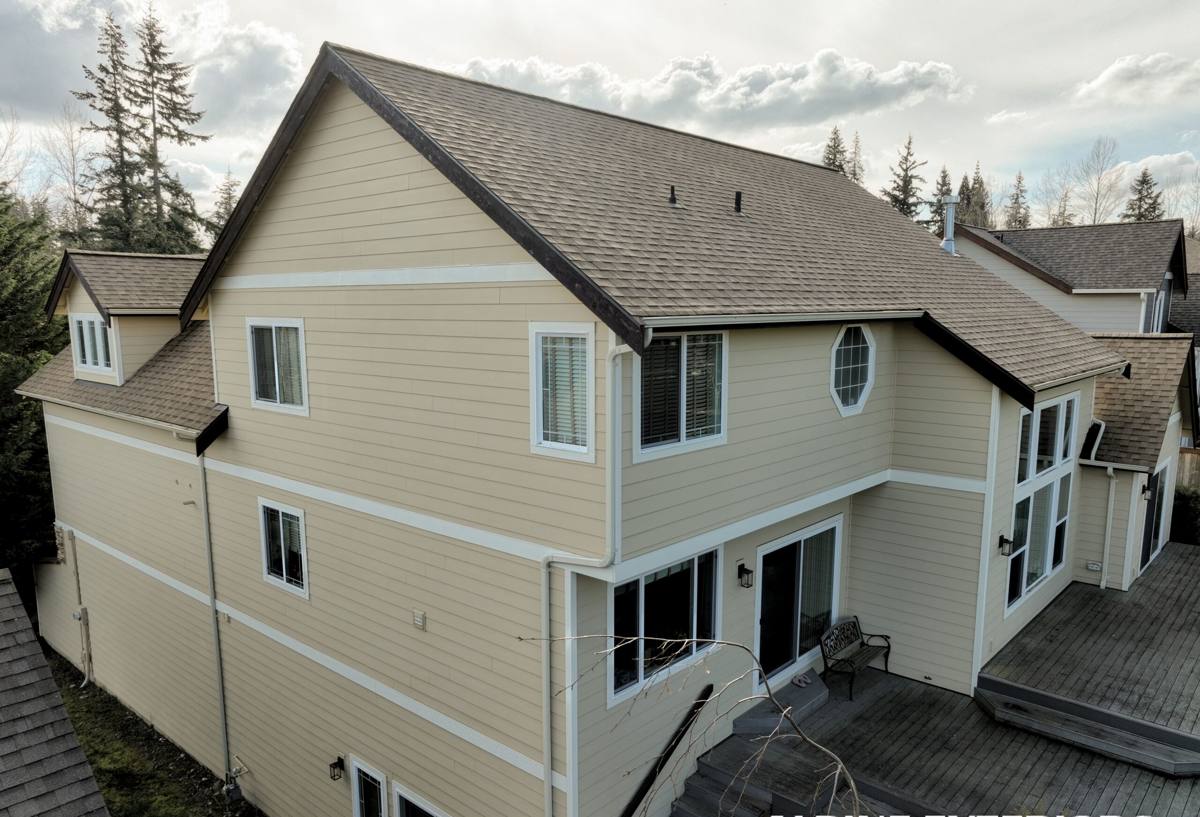
What This Climate Does to an Outdoor Deck
Moisture That Never Fully Clears
Between the fall rains, winter drizzle, and spring dampness, a lot of decks in this part of Whatcom County spend more months wet than dry. That doesn't ruin a deck by itself — wood and composite decking are both designed to get wet — but it punishes any part of the build where water can collect instead of shed. Flat horizontal surfaces, tight board spacing, and end grain left unsealed all trap moisture instead of letting it move through.
A Long Moss Season
Moss and algae need shade, moisture, and time — and Sudden Valley's tree cover and long damp season hand them all three. On a deck, moss isn't just cosmetic. It holds water against the surface, breaks down wood fiber faster than plain rain does, and turns boards slick and dangerous underfoot, especially on stairs and shaded sections of the deck that never get direct sun to dry out.
Salt Air and Hardware Corrosion
Columbia sits back from open water, but Whatcom County's marine air still carries salt inland on storm winds, and it settles on anything metal outdoors — fasteners, brackets, railing hardware. Standard coated screws and connectors that would be fine in a drier inland climate can start rusting within a couple of seasons here, and once a fastener corrodes, it weakens exactly where the deck's structural connections depend on it most.
Where Decks in This Area Actually Fail First
After years of repairs and rebuilds in this region, the failure points are predictable. Almost every deck problem we get called out for traces back to one of these three spots:
The Ledger Board Connection
This is the board that ties the deck to the house, and it's the single most common source of hidden rot. If it isn't flashed correctly to shed water away from the house band board, moisture gets trapped between the ledger and the wall and rots both from the inside — often for years before it shows on the surface.
Footings and Post Bases
Wood posts set directly in or near ground contact, or post bases without a gap to keep the post end dry, absorb moisture from the ground and freeze-thaw cycles year after year. Footings also need to sit below frost depth, which matters for stability, not just code compliance.
Fasteners and Connector Hardware
Interior-grade or standard exterior screws, especially in contact with pressure-treated lumber's chemical treatment, corrode faster in a damp, salt-tinged climate. The wrong fastener in the wrong wood is a slow structural problem, not a cosmetic one.
Choosing a Decking Material for a Columbia Home
There's no single "right" decking material for this climate — there's a right material for a given budget, maintenance appetite, and how much shade and moss exposure the specific site gets. Here's how the common options actually compare under these conditions:
| Material | Moisture Tolerance | Moss/Algae Resistance | Maintenance | Typical Lifespan Here |
|---|---|---|---|---|
| Pressure-treated lumber | Good if detailed correctly | Low — needs regular cleaning | Annual cleaning, periodic sealing | 15–20 years |
| Cedar | Naturally moisture-resistant | Moderate | Sealing every 1–2 years to hold color and resist moss | 15–25 years |
| Capped composite | Excellent | Higher, but not immune — still needs occasional cleaning | Periodic washing, no sealing | 25–30+ years |
| PVC decking | Excellent | Good | Low — occasional washing | 25–30+ years |
Composite and PVC cost more up front but remove the sealing schedule entirely, which matters in a climate where the dry window to reseal a deck is short. Cedar and pressure-treated lumber cost less initially but only perform well long-term if the maintenance actually happens on schedule — something worth being honest with yourself about before choosing.
Getting the Structural Details Right the First Time
In a wetter climate, the difference between a deck that lasts fifteen years and one that lasts thirty almost always comes down to details that are invisible once the project is finished:
- Self-adhering joist tape over every joist top, not just at the ledger, to keep water from soaking into end grain and fastener penetrations
- Proper ledger flashing that directs water out and away from the house wall, not just a bead of caulk
- Board spacing wide enough for real drainage and airflow, not just tight-fit appearance
- Stainless steel or heavy hot-dip galvanized fasteners and structural hardware, sized for this climate rather than the cheapest exterior-rated option
- A ventilation gap under low decks so the underside can dry out between rain events instead of staying damp against the ground
None of this shows up in a photo of a finished deck, which is exactly why it's the part homeowners should ask about before signing a contract, not after.
Railings, Stairs, and Code Requirements
Any deck with a walking surface roughly 30 inches or more above grade needs a code-compliant guardrail, and most jurisdictions — including here in Whatcom County — require a permit once a deck reaches that height or attaches structurally to the house. Guardrails generally need to be at least 36 inches high for residential decks, with baluster spacing that keeps a 4-inch sphere from passing through, and stair rails have their own separate height and graspability requirements. Getting this wrong isn't just a code issue — it's a liability issue on stairs that are already more slip-prone than usual because of moss and rain.
Homes in Sudden Valley may also fall under community association design guidelines in addition to county permitting, so it's worth checking both before finalizing a design rather than after materials are ordered.
How We Approach a Columbia Deck Project
- Site visit and assessment — checking sun exposure, drainage, existing structure (for replacements), and how much shade and moss risk the specific spot has
- Design and material selection — matching decking material, hardware, and layout to the site conditions and your maintenance preference, not a one-size default
- Permitting — handling the Whatcom County permit and inspection process so nothing gets built that has to be torn out later
- Construction — framing, flashing, joist tape, and fastener details done in the order that actually protects the structure, not just the order that's fastest
- Final walkthrough — going over the finished deck and a realistic maintenance schedule so you know what upkeep it actually needs
Keeping a New Deck Looking Good Through a Long Moss Season
A well-built deck in this climate still needs some seasonal attention — the goal is to make that upkeep minimal, not eliminate it entirely. A simple, realistic maintenance routine covers most of it:
- Sweep debris and standing leaves off the deck regularly in fall — trapped leaves hold moisture and feed moss growth
- Clean moss and algae off the surface at least once a year, ideally before it gets thick and slick, especially on shaded areas and stairs
- Check and reseal wood decking on the schedule its finish requires — don't wait until it's visibly gray and dry
- Inspect ledger flashing and post bases yearly for any sign of trapped water or early rot
- Keep gutters and downspouts near the deck clear so runoff isn't dumping extra water onto or under the structure
What Actually Drives the Cost of a Custom Deck
Every deck quote is different, but the same handful of factors move the price up or down on almost every project:
| Factor | Why It Matters |
|---|---|
| Size and footprint | More square footage means more framing, decking, and footings |
| Decking material | Composite and PVC cost more upfront than wood but need less long-term maintenance |
| Height and multi-level design | Taller decks need more substantial framing, footings, and stair runs |
| Railing style | Cable, glass, and composite railing systems cost more than standard wood or metal baluster railings |
| Site access and grading | Difficult access or uneven ground adds labor and equipment time |
| Permitting scope | Attached, elevated decks require permitting and inspection, which adds time and a modest fee |
Rather than quote a number that doesn't reflect your specific lot and design, we walk the site and give you a real range based on what's actually being built.
Why a Crew That Already Works in Columbia Matters
A deck built by a crew unfamiliar with this specific microclimate tends to look fine on completion day and start showing problems two or three winters later — flashing detailed for a drier region, fasteners spec'd without accounting for salt-tinged air, or a maintenance schedule that assumes more sun exposure than a shaded Sudden Valley lot actually gets. A crew that already works in this neighborhood knows which details in the standard deck-building playbook need to be upgraded here, understands the local permitting process, and has seen firsthand how these specific homes and lots behave through a full wet season, not just on a sunny install day.
If you're planning a new deck or replacing one that's showing its age, we're happy to walk the site with you and put together a straightforward, no-pressure estimate — just fill out the form below.