 Sudden Valley Siding
 Board & Batten in a Bellingham Setting
Board & batten shows up all over Bellingham and the surrounding Whatcom County neighborhoods — on modern farmhouse builds, craftsman remodels, cabin-style homes tucked near Lake Whatcom, and as an accent on gables, dormers, and entry bays layered over standard lap siding. The vertical lines read as clean and current, and the style pairs well with the wood-and-water character of homes in this part of the state. But board & batten is also one of the easiest siding styles to get wrong, because the same vertical joints and wide, flat faces that make it look good are exactly what wind-driven rain and standing moisture go looking for.
This page covers what board & batten actually needs to hold up here — not the generic version you'd read on a national siding site, but what changes when the wall in question is exposed to Bellingham's weather year-round.
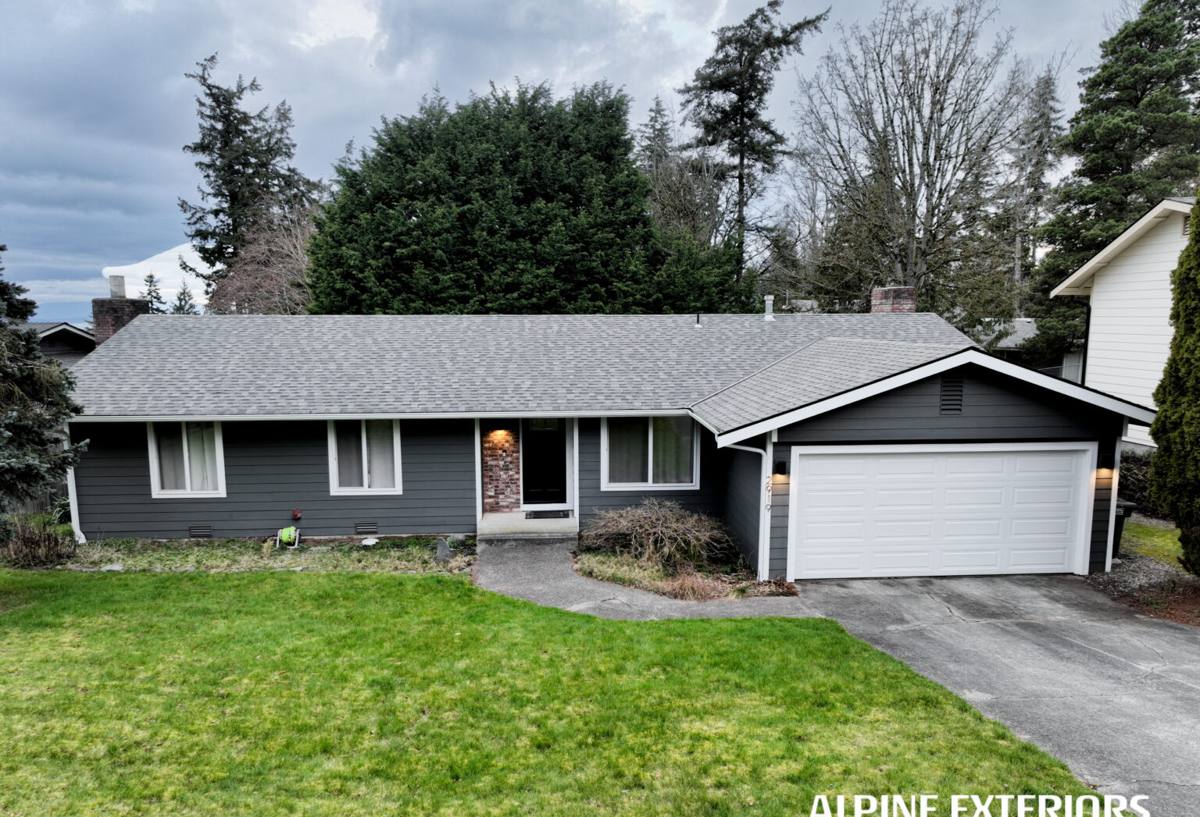
What Bellingham's Climate Actually Does to Vertical Siding
Whatcom County's marine climate looks mild on paper, but it is relentless in the specific ways that matter for exterior siding. Three conditions in particular shape how board & batten needs to be built here.
Salt Air Off the Bay
Homes closer to Bellingham Bay and the water deal with a steady, low-level dose of salt-laden air. Salt accelerates corrosion on fasteners and trim hardware, and it wears down cheap paint films faster than inland exposure does. A board & batten system near the water needs corrosion-resistant fasteners and a finish engineered to hold color and integrity in that air, not just a coat of field-applied paint.
Driving Rain
Storms coming off the water rarely fall straight down — they come in sideways, and vertical board & batten has more vertical seams per square foot than lap siding does. Every batten joint is a place wind-driven rain can be pushed up and behind the board if there is no drainage path built into the assembly. A system that relies on caulk alone to keep that seam dry will eventually fail; caulk is a maintenance item, not a waterproofing strategy.
A Long Moss Season
Shaded elevations, tree cover, and Bellingham's extended damp season keep north- and west-facing walls wet longer than they would stay wet almost anywhere drier. That extra moisture supports moss and mildew growth on any surface that does not get a chance to dry out between rain events, and it will find every spot where board & batten was installed tight against the sheathing with no airflow behind it.
How Board & Batten Fails When It's Installed Wrong
We get called to look at board & batten installed by other crews more often than almost any other siding style, and the failure patterns repeat from house to house:
- Battens and boards face-nailed directly to the sheathing with no gap for water to drain or air to circulate behind the panel
- Butt joints and horizontal transitions sealed with caulk instead of properly flashed and lapped
- Fastener spacing that doesn't account for panel expansion, leading to splitting and popped nail heads within a few seasons
- Cut edges left unsealed or unprimed, so moisture wicks into the panel core from the inside out
- Battens installed over housewrap with no rainscreen gap, trapping the wall assembly in a permanently damp cycle
None of these are exotic mistakes. They are standard shortcuts that hold up fine in a dry climate and fail predictably in ours.
What a Correct Installation Requires
A board & batten system built for Bellingham's exposure needs a handful of things every time, regardless of which product ultimately goes on the wall:
- A true drainage gap — furring strips or a rainscreen mat — between the siding and the water-resistive barrier so bulk water can drain and the wall assembly can dry
- Stainless or hot-dip galvanized fasteners sized and spaced to the manufacturer's climate-zone specification
- Factory-sealed or field-primed cut edges on every panel before it goes up, not after the fact
- Proper flashing and head flashing at every horizontal joint, window, and door transition, with caulk used as a backup rather than the primary seal
- Batten spacing and fastening that allows for material movement without splitting or fastener pull-through
- A finish system rated to hold color and film integrity through salt air exposure and prolonged UV and moisture cycling
Board & Batten Material Options Compared
Homeowners researching board & batten usually run into the same short list of materials. Here is how they actually compare for Bellingham's exposure — not in a lab, but on a wall that sees salt air, driving rain, and months of shade and moss pressure every year.
| Material | Moisture Behavior | Maintenance Burden | Typical Performance Here |
|---|---|---|---|
| James Hardie fiber cement (HardiePanel plus battens, factory ColorPlus finish) | Non-combustible, engineered HZ formulation for wet climates, dimensionally stable when installed with a drainage gap | Low — no repainting cycle, occasional washing | Long-term performance backed by a strong transferable warranty on both material and finish |
| LP SmartSide (engineered wood) | Wood-based core is more vulnerable at cut edges and joints once moisture gets past the surface finish | Moderate — edge sealing and touch-up matter more over time | Shorter service life than fiber cement if joints aren't maintained closely |
| Vinyl vertical board & batten | Won't rot, but expands and contracts more, and can warp or fade under UV and temperature swings | Low to moderate — but little to no repair option once faded or brittle | Appearance often degrades before the material actually fails |
| Cedar or primed spruce board & batten | Natural material, most sensitive of the group to our rain and moss exposure without diligent upkeep | High — refinishing, sealing, and moss or mildew treatment on a recurring schedule | Shortest realistic lifespan without consistent maintenance investment |
We install James Hardie exclusively, and we're not going to pretend the other products in that table don't have their own fans or legitimate use cases — LP SmartSide and cedar both have real strengths in the right setting. But for the specific combination of salt air, wind-driven rain, and a long moss season that Bellingham puts on an exterior wall, we've standardized on the product that holds up with the least ongoing burden on the homeowner.
Our Process for a Bellingham Board & Batten Project
- On-site assessment of the elevations getting the board & batten treatment, including which walls face prevailing wind and rain and which stay shaded long enough to grow moss
- Inspection of the existing sheathing and water-resistive barrier before anything new goes up, because board & batten installed over a compromised wall just hides the underlying problem
- Installation of a proper drainage gap behind the new siding, sized to the wall assembly and its exposure
- Installation of James Hardie panel and batten trim with manufacturer-spec fasteners, flashing at every transition, and sealed cut edges
- Final walkthrough covering fastener lines, joint sealing, and finish consistency before we call the job finished
Why We Install Only James Hardie for This Application
Board & batten is unforgiving of installation shortcuts, which is exactly why the material underneath matters as much as the crew doing the work. James Hardie fiber cement is non-combustible, holds its factory-applied ColorPlus finish through the freeze-thaw and wet-dry cycling common in this region, and comes in HZ product lines engineered specifically for climates like the Pacific Northwest. The finish is backed by a genuine transferable warranty on the material itself, which matters if the home ever changes hands. We've seen enough vinyl, engineered wood, and unfinished wood board & batten fail early in this exact climate that we no longer install those alternatives, even when a homeowner would prefer the lower upfront cost. That's a standard we hold to on every job, not only the ones sitting closest to the water.
Why Local Experience in Bellingham and Sudden Valley Matters
A crew that only installs board & batten occasionally, in a drier region, typically doesn't build in the drainage gap, fastener corrosion resistance, or joint detailing this climate actually requires — because they've never had to go fix the callback that follows. We work Bellingham and the Sudden Valley area regularly enough to know which elevations take the worst of the driving rain, which walls stay shaded and damp long into the season, and what Whatcom County inspectors expect to see on a rainscreen detail before they sign off. That familiarity shows up in fewer surprises during the job itself and a wall that keeps performing years after the crew has left.
Keeping Board & Batten Performing Once It's Installed
Even a correctly installed system benefits from a bit of basic upkeep. A short annual routine goes a long way in this climate:
- Rinse the siding once or twice a year, focusing on shaded and north-facing walls where moss and mildew take hold first
- Walk the exterior after major windstorms and check for loose battens, popped fasteners, or damaged trim
- Keep gutters clear and downspouts directed away from the wall so runoff isn't concentrating water at the base of the siding
- Trim back vegetation that shades a wall and keeps it from drying out between rain events
- Address any caulk failure or visible gap at a joint promptly rather than waiting for it to become a full repair
If you're weighing board & batten for a Bellingham home and want a straight answer about what your specific walls need, we're glad to take a look and put together a free, no-pressure estimate — no obligation, just an honest read on the job.