 Sudden Valley Siding
 Why Acme Homes Ask More of Their Windows
Acme sits back in the wooded foothills of Whatcom County, along the South Fork Nooksack, under more tree cover and less direct sun than open communities closer to the water like Sudden Valley or Bellingham. That shade is part of what makes the area beautiful, and it's also part of what wears out windows faster than homeowners expect. Less sun means slower drying after every rain. Combined with the driving rain and long stretches of damp, overcast weather that move through this part of Whatcom County most of the year, window frames, sills, and seals here spend more time wet than they would in a drier, sunnier climate.
Whether a home sits closer to the marine air off the Sound or further back in the valley near Acme, the underlying problem is the same: moisture that doesn't fully dry out between storms works into wood, finds gaps in old caulking, and eventually shows up as rot, fogged glass, or a moss-streaked frame. Windows are one of the first places that damage shows, because every window is a seam in the building envelope — a place where the wall was cut open and has to be sealed back up correctly.
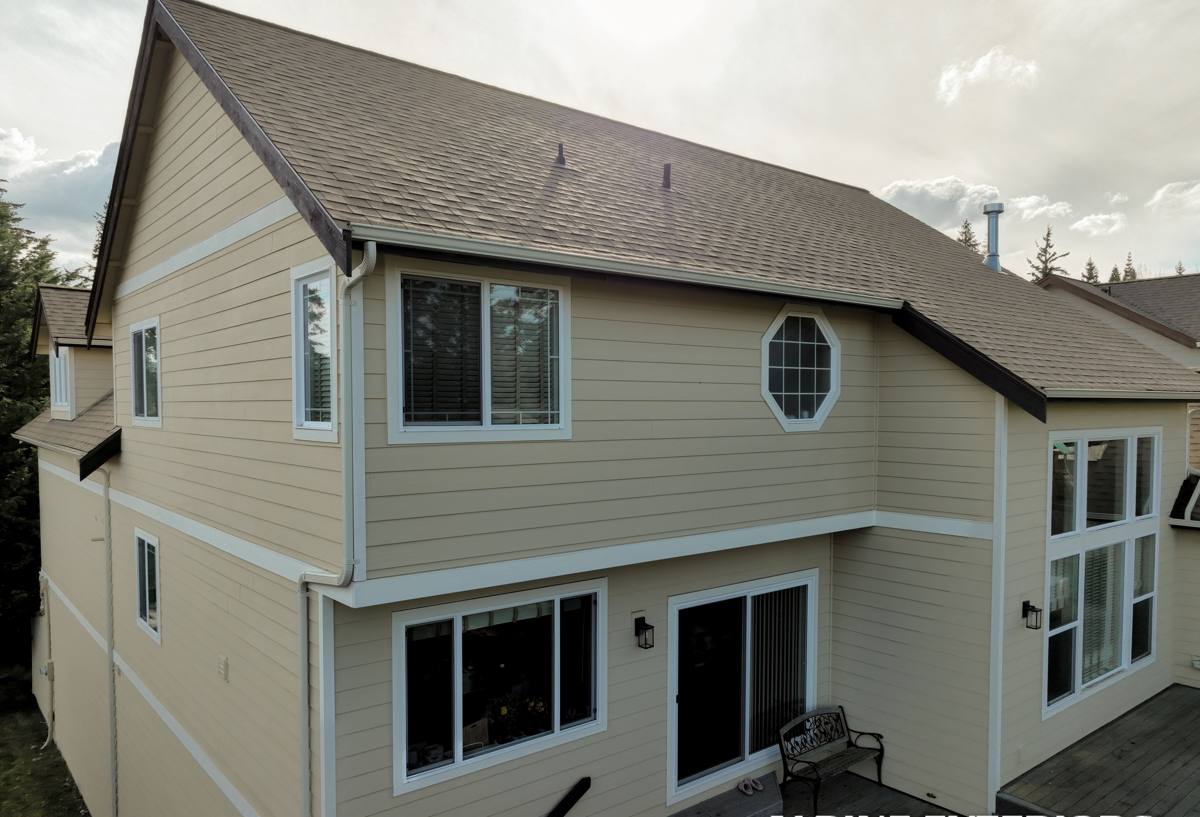
Signs Your Current Windows Are Already Losing the Fight
Most window failures don't happen overnight. They show up as small symptoms for a year or two before something fails outright. If you're seeing any of the following on a home in or around Acme, it's worth having the windows looked at before the next wet season:
- Fog or haze trapped between the panes of a double-pane window (the seal has failed and the gas fill is gone)
- Soft, spongy, or discolored wood at the sill, corners, or trim
- Moss or dark algae staining on frames, especially on north- or shade-facing walls
- A draft you can feel standing next to the window on a windy day
- Windows that are painted or swollen shut, or that stick when you try to open them
- Condensation forming on the inside of the glass during cold mornings
- Visible gaps or cracked caulking where the frame meets the siding or trim
Any one of these on its own isn't an emergency. Several of them together, especially on a home more than 15–20 years old, usually mean the original installation is nearing the end of what caulk and paint can cover up.
What a Correct Custom Window Installation Actually Involves
"Custom" doesn't just mean an unusual size or shape, though we do build to whatever opening a home actually has rather than forcing a stock size to fit. It means the installation is built around how water moves around that specific opening — not just how the window looks once it's in.
A correct install starts below the window, not at it. The sill pan — the flashing that catches any water that gets past the glass or frame and directs it back outside instead of into the wall cavity — has to be installed and lapped correctly before the window ever goes in. From there, the window has to be shimmed level and square, sealed with the right flashing tape and backer rod/sealant combination (not just a bead of caulk around the outside), and tied into the home's weather-resistant barrier so water sheds down and over the window rather than behind it. Skip any one of those steps and the window can look perfect for a few years while quietly rotting the framing behind it.
Full-Frame vs. Insert Replacement
There are two honest ways to replace a window, and the right one depends on the condition of what's already there, not on which is faster to sell.
An insert (or "pocket") replacement keeps the existing exterior frame in place and fits a new window unit inside it. It's less invasive and often less expensive, and it's a fine option when the existing frame and sill are still solid and dry. A full-frame replacement removes the window down to the rough opening, so we can actually see and address the sheathing and framing underneath — which matters on a home in Acme's climate, because that's exactly where hidden rot from a past bad seal tends to hide. We'll tell you honestly which one your home needs after we open things up, rather than defaulting to whichever is easier.
Choosing Materials That Hold Up in Acme's Damp Woods
Material choice matters more here than it would in a drier climate, because whatever you pick is going to spend a lot of its life wet or humid. Here's how the common options actually compare for a home in this area:
| Material | Moisture Behavior | Maintenance | Typical Lifespan |
|---|---|---|---|
| Vinyl | Won't rot; performance depends on quality of the frame and welds | Low — occasional cleaning | 20–30+ years |
| Fiberglass | Very stable in wet/humid swings, minimal expansion or contraction | Low | 30+ years |
| Wood-clad | Attractive interior wood with an exterior shell, but any breach in the cladding lets moisture reach the wood core | Higher — cladding seams and interior wood need periodic attention | Varies widely with maintenance |
| Bare wood | Handsome, but most exposed to rot in a shaded, high-moisture setting like Acme | Highest — regular repainting/sealing required | Shortest without diligent upkeep |
We're not going to tell you wood windows are worthless — plenty of older homes have them and they can be maintained. But we're honest that in a shaded, high-rainfall setting like Acme, a material that doesn't depend on an intact paint film to stay dry is the lower-maintenance, lower-risk choice for most homeowners, and it's what we recommend by default.
Our Process, Start to Finish
- On-site assessment. We look at each opening, check for existing moisture damage, and note anything unusual about the framing before quoting anything.
- Measurement and product selection. We measure exact openings and walk through material, glazing, and style options based on your home and budget.
- Scheduling around weather. Openings only stay exposed for part of a day, but we still plan installs around Whatcom County's rain patterns to keep the home protected while work is underway.
- Removal and inspection. Old windows come out and we inspect the sheathing and framing underneath before anything new goes in — this is where hidden rot gets caught.
- Installation. Sill pan flashing, correct shimming, flashing tape, and sealant integration with the existing siding or WRB, done in that order.
- Interior and exterior finish work. Trim, caulking, and paint or stain to match the surrounding wall.
- Walkthrough and warranty paperwork. We test every window with you and go over what's covered before we consider the job done.
What Drives the Cost of a Custom Window Project
Every home is different, so we won't quote a number without seeing the openings, but these are the factors that actually move the price:
| Factor | Why It Matters |
|---|---|
| Number of openings | More windows means more labor and material, but per-window cost often drops slightly on larger jobs |
| Full-frame vs. insert | Full-frame involves more labor and often trim/siding repair, but is necessary when framing is damaged |
| Material | Vinyl, fiberglass, and wood-clad carry different material costs and different long-term maintenance costs |
| Size and shape | Custom shapes, large picture windows, or bay/bow configurations require custom fabrication |
| Existing damage | Rot found in the framing during removal adds repair work before the new window can go in |
| Access | Second-story or hard-to-reach openings take more time and equipment |
The honest way to budget is to get an actual on-site look rather than a phone estimate — a quote based on square footage or a rough guess almost never survives contact with what's actually behind the old trim.
Why a Crew That Already Works in Acme Matters
Window installation is one of those jobs where local familiarity actually changes the outcome, not just the sales pitch. A crew that regularly works homes in Acme and the surrounding Whatcom County foothills knows what kind of framing and construction to expect in homes of a given era in this area, knows to plan installs around the wetter stretches of the year rather than getting caught mid-job by a storm, and has already seen what happens when a window was installed without a proper sill pan in a shaded, slow-drying spot like this.
There's also a practical benefit to hiring a siding contractor for window work rather than a window-only outfit: the window opening and the siding around it are part of the same water-management system. When the same crew handles both, the flashing and sealant details at the window tie directly into the siding work instead of being two separate contractors' work meeting at a seam neither one takes responsibility for.
Caring for New Windows Through the Wet Season
A correctly installed window still benefits from basic upkeep, especially in a climate like this one:
- Keep gutters and downspouts clear so roof runoff isn't pouring past the window during heavy rain
- Clean debris and moss out of tracks and weep holes at the start and end of the wet season
- Check exterior caulking once a year and touch up any cracks before they let water in
- Trim back branches or vegetation that keep a window in constant shade and slow down drying
None of this takes much time, but it's the difference between a window that looks and performs the same in year fifteen as it did in year one, and one that starts showing the same problems the old one had.
If your windows are fogging, drafty, or showing moss and staining, we're happy to take a look and give you a straightforward, no-pressure estimate — just fill out the form below to get started.