 Sudden Valley Siding
 Windows in Alger Take a Different Kind of Beating
Alger sits in that stretch of Northwest Washington where marine air off the Sound meets the wetter, wooded terrain around Whatcom and Skagit counties. Homes here don't just get rained on — they sit in a near-constant cycle of damp air, wind-driven rain, and shaded ground that never fully dries out between storms. Add the salt content that rides in on the marine layer and the moss that colonizes anything holding moisture for more than a few days, and you've got a set of conditions that will find every weakness in an aging window long before it shows up anywhere else on the house.
Most window failures we see in this area aren't dramatic. They're slow. A seal that's been working a little harder every winter finally gives out. A wood sill that's stayed damp under a shaded eave starts to soften. Hardware that's spent a decade in salt-tinged air seizes up or corrodes. By the time a homeowner notices, the window has usually been underperforming for a year or two already.
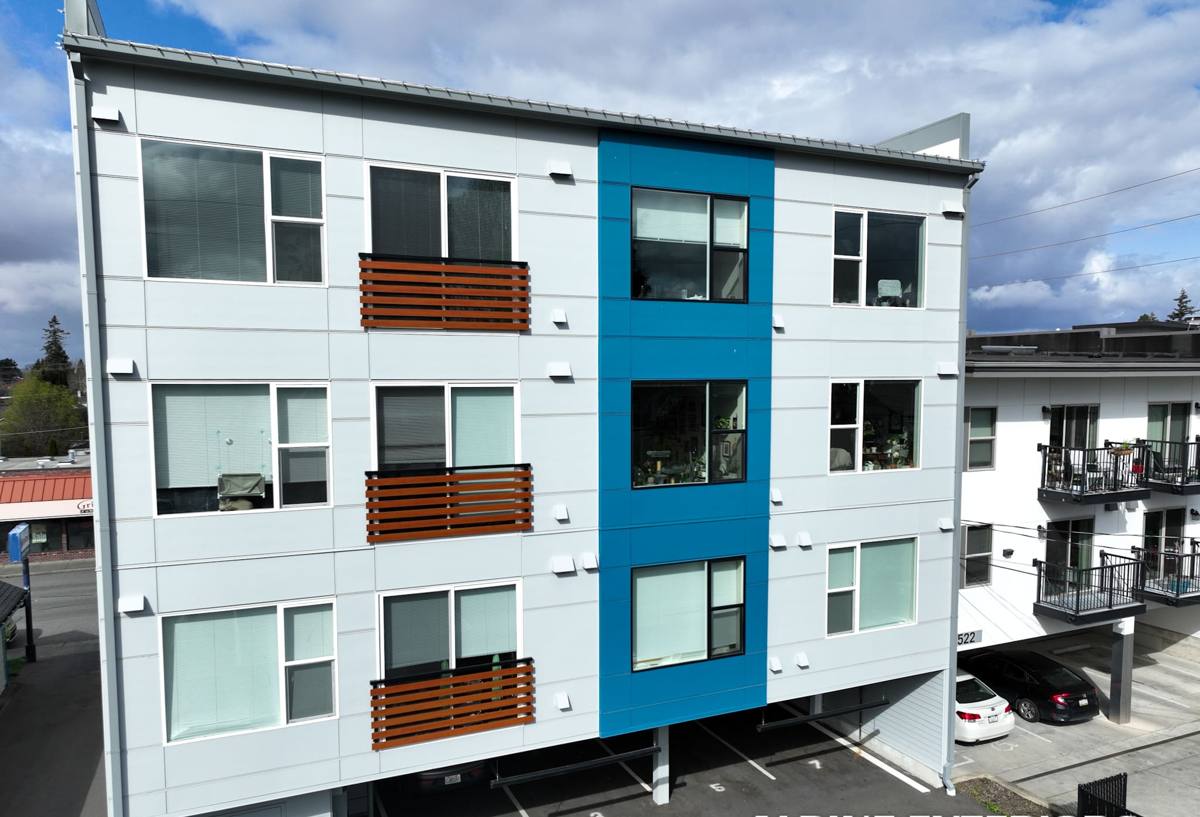
What Salt Air, Driving Rain, and Moss Season Actually Do to a Window
Driving rain finds the gaps
Wind-driven rain doesn't behave like a gentle shower. It hits siding and window trim at an angle, which means it's constantly testing flashing, caulk lines, and the seal between the window unit and the rough opening. A window that was installed correctly can shrug this off for decades. One that was installed with shortcuts — missing flashing tape, caulk used in place of proper drainage, no sill pan — will eventually let water track behind the frame and into the wall cavity, where it does damage you can't see until it's expensive.
Salt air shortens the life of hardware and finishes
Homes closer to the water pick up airborne salt that settles on everything outside, including window hardware, screen frames, and exposed fasteners. Over years, that accelerates corrosion on lower-grade hinges, locks, and cranks, and it can dull or pit finishes that aren't rated for coastal exposure. It's a slow process, but it's steady, and it's one more reason to spec hardware and finishes that are actually built for a marine climate rather than a generic inland one.
Moss season adds a moisture load most homeowners underestimate
The long stretch of cool, wet months here means moss doesn't just grow on roofs — it takes hold on window sills, trim, and anywhere else that stays damp and shaded. Moss holds water against the surface it's growing on, which keeps wood trim and sills wetter for longer than open rain exposure alone would. On older wood-sash windows especially, that persistent dampness is what starts rot, not any single storm.
Signs Your Alger Home Needs Window Replacement
Not every issue means a full replacement — some are fixable with maintenance. But if you're seeing more than one or two of these, it's worth having someone look before it turns into a wall repair instead of a window repair:
- Fogging or a permanent haze between the panes of a double-pane window (the seal has failed and the gas fill is gone)
- Soft, spongy, or discolored wood at the sill or bottom corners of the frame
- Windows that are noticeably harder to open, close, or lock than they used to be
- Visible moss or persistent green staining on the sill or lower trim
- Drafts you can feel near the frame even when the window is fully latched
- Paint that's bubbling, peeling, or won't hold on the exterior trim around the window
- A musty smell near a window that doesn't go away with cleaning
- Condensation on the interior glass on cold mornings, especially if it's new or worsening
What a Correct Window Replacement Job Actually Involves
The window unit itself matters, but most of the failures we get called out to fix trace back to installation, not the product. A correct job in this climate means paying close attention to the parts nobody sees once the trim goes back on.
Full-frame replacement vs. insert replacement
An insert (or "pocket") replacement drops a new window into the existing frame and is faster and less invasive — it works fine when the existing frame is still sound and square. Full-frame replacement removes the old unit down to the rough opening, which is the right call whenever there's evidence of water intrusion, rot, or a frame that's shifted out of square. In a climate that's been quietly pushing moisture into these openings for years, we'd rather open the wall and confirm the framing is dry and solid than seal a new window over a problem that's still there.
Flashing and drainage, not just caulk
Caulk is a backup, not a strategy. A correct install integrates flashing tape or a sill pan with the building's existing weather-resistive barrier so that any water that does get past the window sheds back out, rather than pooling at the sill and working into the framing. This is the single biggest factor in whether a window installation holds up to years of driving rain — and it's also the step that's easiest for a rushed crew to skip because it's invisible once the trim is on.
Insulation and air sealing around the frame
Gaps around the new frame need to be filled with a low-expansion foam or backer rod and sealant rated for the movement a window frame goes through with temperature swings — not packed with fiberglass batting, which does little for air sealing and nothing for moisture control. Done right, this step also cuts down on the drafts and cold spots homeowners notice most in winter.
Choosing Window Materials for This Climate
There's no single "best" window material — the right choice depends on budget, the style of the house, and how much exposure that particular wall gets. Here's how the common options actually compare for a home dealing with salt air, rain, and moss:
| Material | Moisture Behavior | Maintenance | Best Fit |
|---|---|---|---|
| Vinyl | Won't rot; performs well against rain and humidity | Low — occasional cleaning | Most homes; strong value and durability trade-off |
| Fiberglass | Excellent moisture and temperature stability, very low expansion/contraction | Low | Homes wanting a premium, long-service window; higher upfront cost |
| Wood (unclad) | Attractive but vulnerable to prolonged dampness and moss contact if not maintained | High — repainting, sealing, sill inspection | Historic or period-style homes where the look matters more than upkeep |
| Wood-clad (aluminum or vinyl exterior) | Good — the cladding protects the wood from direct weather | Moderate | Homes wanting a wood interior look with better exterior durability |
For homes exposed to more direct wind and rain, we also pay attention to hardware grade and glazing — corrosion-resistant hardware and a warm-edge spacer system in the glass unit both hold up better to years of marine air and temperature swings than budget-grade components.
Our Window Replacement Process
- On-site assessment — we look at every window being considered, check for rot or moisture at the sill and framing, and note which openings need full-frame replacement versus an insert.
- Honest recommendation — we walk through material and glazing options for your budget and the specific exposure of each wall, without pushing a single "house brand."
- Precise measurement and ordering — accurate measurements avoid the delays and gaps that come from a unit that doesn't fit the opening cleanly.
- Removal and inspection — old units come out carefully so we can confirm the condition of the framing before anything new goes in.
- Installation with proper flashing and sealing — sill pans, flashing integration, and correct fastening, not just foam and caulk.
- Interior and exterior finish work — trim, caulking lines, and touch-up so the job looks finished, not patched.
- Final walkthrough — every window is opened, closed, and locked in front of you before we call the job done.
What Affects the Cost
Window replacement pricing varies a lot based on the specifics of the job, so we'd rather explain the factors than throw out a number that doesn't apply to your house. In general, homeowners in this area should expect a broad range from a few hundred dollars per window for a straightforward vinyl insert replacement up to well over a thousand per window for larger openings, premium materials, or full-frame work with repair. The factors below move that number more than anything else:
| Factor | How It Affects Cost |
|---|---|
| Insert vs. full-frame replacement | Full-frame costs more due to added labor and trim/siding work, but is necessary where there's rot or a compromised frame |
| Window size and count | Larger openings and whole-house jobs cost more per unit but usually get better pricing per window than one-offs |
| Material (vinyl, fiberglass, wood-clad) | Fiberglass and wood-clad run higher than standard vinyl; the trade-off is longevity and appearance |
| Glazing package | Double vs. triple pane, and coatings for solar control or extra insulation, add cost but affect comfort and energy bills |
| Existing damage | Rot repair, resheathing, or reframing found during removal adds cost but prevents a callback in a year or two |
| Access and site conditions | Upper-story windows, tight clearances, or difficult site access can add labor time |
Why a Crew That Already Works Alger Matters
Window replacement isn't just about the product going in — it's about how well the installer understands the conditions that window has to survive. A crew that regularly works this part of Whatcom and Skagit counties knows what driving rain off the water does to a poorly flashed opening, knows which materials hold up against a long moss season without babysitting, and doesn't have to relearn the local weather patterns on your house. That familiarity shows up in fewer callbacks, better scheduling around weather windows for exterior work, and a straighter answer when you ask what your home actually needs versus what's easiest to sell.
It also matters for warranty support. A local crew that's still around next year — and the year after — is the one who actually shows up if a seal fails early or a sill needs a second look. That's worth more than a marginally lower quote from someone passing through.
Keeping New Windows Performing Through the Wet Season
A correct installation buys you years of low-maintenance performance, but a little upkeep extends that further in this climate:
- Clear moss and debris off sills and trim before it gets a foothold, especially heading into fall
- Check and refresh exterior caulk lines every couple of years — sealant does wear out even on a good install
- Keep gutters and downspouts clear so runoff isn't sheeting directly across window trim
- Wipe down hardware periodically if your home gets direct salt air exposure, to slow corrosion
- Watch for condensation between panes — it's the first sign a seal is starting to fail
If you're weighing whether it's time to replace windows on your Alger home, we're happy to take a look and give you a straight assessment — no pressure, no pushy upsell. Use the form below to request a free estimate.