 Sudden Valley Siding
 Building Decks That Actually Hold Up in Geneva
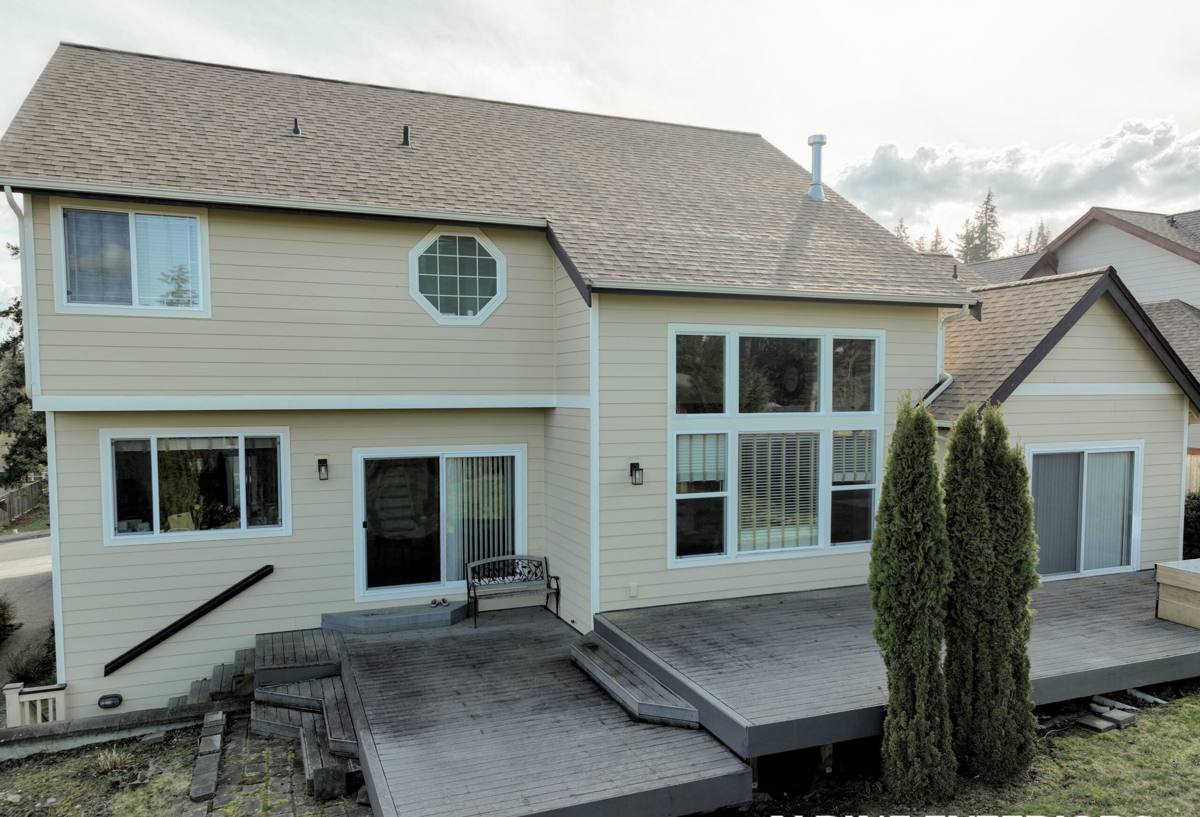
Geneva homes sit in a stretch of Whatcom County where the weather doesn't do decks any favors. Between salt-laden air drifting in off the water, long stretches of driving rain, and a moss season that seems to start earlier every year, an outdoor deck here works harder than the same structure would almost anywhere else in the state. We build and rebuild custom decks for homes in this area, and the decks that last aren't the ones with the fanciest railings — they're the ones built with the local climate as the starting assumption, not an afterthought.
This page covers what a custom deck for a Geneva-area home actually needs, what separates a deck that lasts fifteen-plus years from one that starts failing at year five, and how we approach the work when we're on your property.
What This Climate Does to an Ordinary Deck
A deck built to a generic spec — the kind you'd get from a crew that doesn't know this stretch of Whatcom County — tends to fail in predictable ways out here:
- Fasteners corrode early. Salt air accelerates corrosion on standard galvanized screws and nails, especially where two dissimilar metals meet. Rust streaks down decking boards and weakens connections long before the wood itself gives out.
- Moss and algae colonize shaded, damp boards. A deck under tree cover or on the north side of a house stays wet longer after every rain. Moss isn't just cosmetic — it holds moisture against the board surface and turns walking surfaces slick and dangerous.
- Ledger boards and framing rot from the inside out. Driving rain finds its way behind poorly flashed ledger connections and into end-grain cuts that weren't sealed. By the time you see soft wood or staining on the siding above the deck, the damage has usually been building for a couple of seasons.
- Footings heave or settle unevenly. Persistent saturation of the soil around undersized or shallow footings leads to a deck that develops a lean or a bounce over time.
None of this is inevitable. It's a function of material choices, detailing, and workmanship — and it's exactly where we focus.
What a Correctly Built Deck Requires Here
Framing and Fasteners
We frame with pressure-treated lumber rated for ground contact where posts and beams are near or in the soil, and we fasten with stainless steel or heavy-duty coated exterior screws — not standard galvanized hardware that starts showing rust streaks within a couple of wet seasons. Every joist hanger, post base, and structural connector is corrosion-resistant hardware matched to the fastener, not mixed metals that accelerate each other's decay.
Ledger Flashing and Water Management
Where a deck attaches to the house, the ledger board connection is the single most common failure point we see on older decks in this area. Done right, it means proper flashing that directs water away from the house framing, a gap or membrane between the ledger and the siding, and fasteners sized and spaced to carry the actual structural load — not just enough screws to hold the board up temporarily. This detail alone is often the difference between a deck that's fine at year twenty and one that's rotting the rim joist by year seven.
Decking Material Choice
Wood, composite, and PVC decking each behave differently in a climate with this much moisture and moss pressure. We'll walk you through the honest trade-offs for your specific site — sun exposure, tree cover, and how much upkeep you actually want to do — rather than pushing one product as a default.
Footings Sized for Local Soil and Frost
We set footings to the depth and diameter the structure and local code actually call for, not the minimum that happens to pass. Undersized footings are one of the more common shortcuts we find when we're asked to fix or rebuild an existing deck.
Decking Material Comparison for Geneva Conditions
| Material | Moisture & Moss Behavior | Maintenance | Typical Lifespan Here |
|---|---|---|---|
| Pressure-treated wood | Absorbs water readily; needs sealing to resist moss and staining | Annual cleaning/sealing recommended | 10–15 years with upkeep |
| Cedar | Naturally rot-resistant but still surface-stains and grows moss in shaded areas | Periodic cleaning and oil/stain | 15–20 years with upkeep |
| Composite decking | Doesn't absorb water like wood, but can still grow surface algae/moss in shaded, damp spots | Occasional wash-down, no sealing/staining | 25+ years, varies by brand and warranty terms |
| PVC/capped polymer | Best moisture resistance of the group; least prone to hidden rot | Lowest maintenance | 25–30+ years, varies by brand and warranty terms |
There's no universally "right" answer here — a shaded, tree-covered lot near the water pushes us toward lower-maintenance materials, while a sunnier, more open site gives wood a fairer chance to perform.
Railings, Stairs, and Structural Details
Railings and stair stringers take direct weather exposure and repeated stress from foot traffic, so we build them to the same standard as the deck frame itself — not as an afterthought once the decking is down. Post bases are set to shed water rather than trap it, baluster spacing and rail height meet current code, and stair stringers are cut from material sized for the span rather than whatever's left over from framing. On a sloped or uneven Geneva lot, stair and railing layout also has to account for grade changes that aren't always obvious until we're standing on the site.
Our Process for a Geneva Deck Project
- On-site assessment. We look at sun exposure, tree cover, drainage patterns, and the condition of the house wall where the deck will attach — all of it drives material and detailing decisions.
- Design and material selection. We talk through decking material, railing style, and layout with the actual trade-offs laid out, not a sales pitch for the highest-margin product.
- Permitting. Deck projects of meaningful size typically require a permit; we handle that process so you're not chasing paperwork.
- Framing and footings. Footings, posts, beams, and joists go in first, built to carry the actual load with corrosion-resistant hardware throughout.
- Ledger and flashing. If the deck attaches to the house, this connection gets the most careful attention on the whole project.
- Decking, railings, and stairs. Final surfaces go on last, with fastener spacing and gapping set to handle wood movement and drainage.
- Final walkthrough. We go over maintenance expectations specific to the material you chose so there are no surprises down the road.
Why a Crew That Already Works Geneva Matters
A deck built by a crew unfamiliar with this part of Whatcom County tends to make the same mistakes over and over: standard fasteners in a salt-air environment, ledger flashing that assumes a drier climate, or decking material chosen without accounting for how much shade and moisture the lot actually gets. We work on homes throughout Sudden Valley and the surrounding Geneva area regularly, which means we're not guessing at how a given material or detail will hold up here — we've already seen how the last several seasons treated similar decks nearby, and we build accordingly.
That local familiarity also shows up in smaller ways: knowing which sites tend to hold moisture longer after a storm, which lots get heavier moss growth under tree cover, and how to sequence a build around this region's rain patterns so framing isn't sitting exposed and soaking for weeks.
Maintaining Your Deck Once It's Built
Whatever material you choose, a little seasonal attention goes a long way in this climate:
- Sweep debris and standing leaves off the deck regularly — trapped organic matter is what feeds moss and algae growth.
- Check and clear gaps between boards so water can drain through rather than pooling on the surface.
- Inspect the ledger board area and any spots where the deck meets the house at least once a year for staining or soft wood.
- Re-seal or re-stain wood decking on the schedule the product calls for — skipping a cycle in this climate shows up fast.
- Wash composite or PVC decking periodically to keep surface algae from taking hold in shaded areas.
- Look at fasteners and hardware for rust streaks or loosening, particularly after a hard winter.
Getting Started
Every Geneva-area lot is a little different — sun exposure, tree cover, grade, and how close you are to open water all change what the right deck build looks like. If you're planning a new deck or dealing with an older one that's showing its age, we're happy to come take a look, walk the site with you, and lay out honest options with no pressure to decide on the spot. Reach out using the form below for a free estimate.