 Sudden Valley Siding
 Windows in Happy Valley Face a Tougher Job Than Most
A window here isn't just holding back weather in the abstract — it's fighting a specific, repeating pattern. Marine air moves through Whatcom County most of the year, carrying salt and moisture that settle into every seam of a home's exterior. Add driving rain that comes in sideways during winter storms, and a moss season that can stretch from fall through spring, and you've got a set of conditions that will find any weakness in a window's seal, frame, or flashing faster than it would in a drier inland climate.
Homes in Happy Valley, whether older builds with original single-pane units or newer construction with builder-grade windows, all deal with the same basic problem: moisture that doesn't let up long enough for materials to fully dry out between exposures. That's the detail that should drive every decision about window installation in this area, from the product you choose to how the opening is prepped before a new window ever goes in.
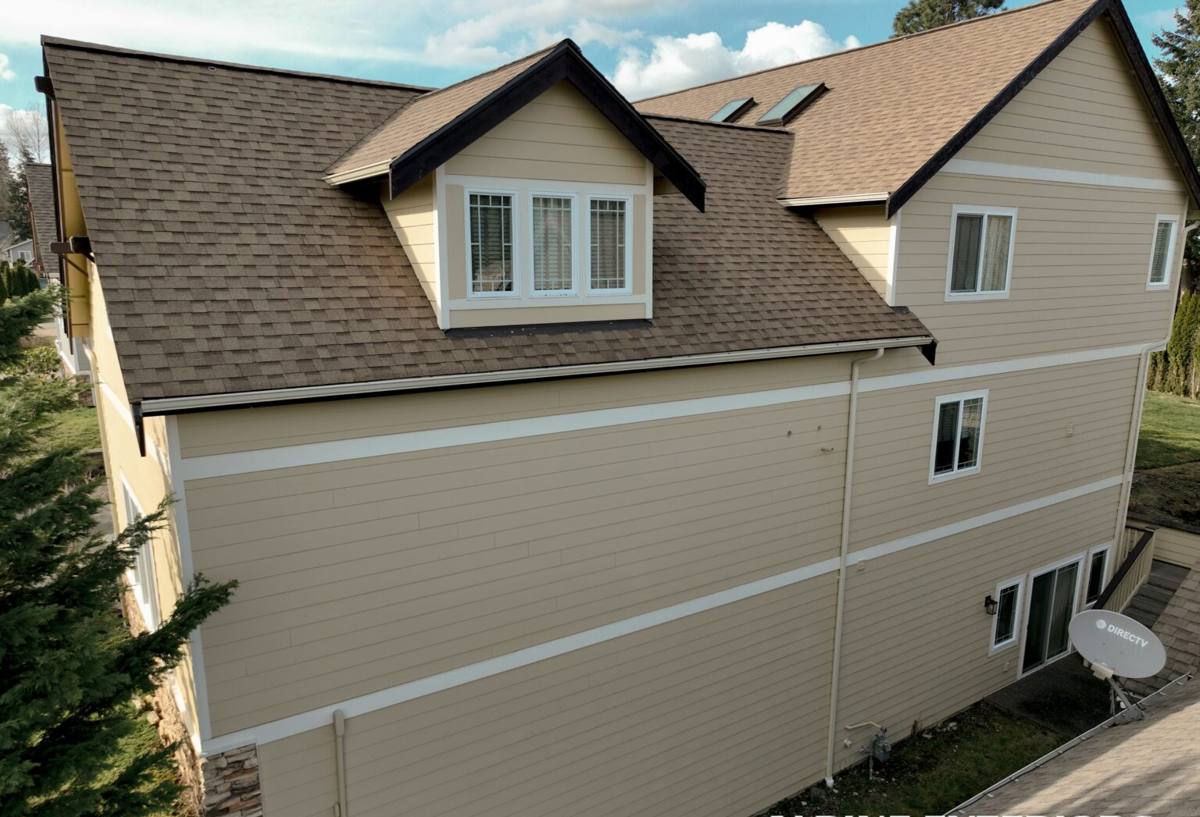
How This Climate Wears Down a Window Over Time
Frames and Sills
Wood and lower-grade composite frames absorb moisture at the corners and along the sill first, since that's where water sits longest after a storm. Once moisture gets past the finish, it doesn't take long for soft spots, swelling, or paint failure to show up — even if the glass itself is fine.
Seals and Glazing
Insulated glass units rely on a sealed edge to keep the gas fill and dead air space intact. Constant damp-dry cycling and salt-laden air stress that seal faster than it would in a dry climate. When it fails, you get fogging or condensation between the panes — a sign the unit is done, not something you can fix with new caulk.
Moss and Organic Growth
A long moss season means algae and moss don't just grow on roofs — they take hold in window tracks, on sills, and in any horizontal surface that stays damp. Left alone, that growth holds moisture against the frame and finish, accelerating exactly the kind of decay described above.
Signs Your Windows Are Due for Replacement
Some of these show up gradually, others all at once after a hard winter. Worth checking for before deciding whether you need a full replacement or just service:
- Fogging or a milky haze between the panes of double-pane glass
- Visible gaps, drafts, or a noticeable temperature difference near the window when it's cold or windy out
- Wood that feels soft, spongy, or discolored at the sill or corners
- Paint or finish that's bubbling, peeling, or chalky around the frame
- Windows that stick, won't stay open, or are hard to latch
- Moss or dark staining building up in the tracks that won't stay gone after cleaning
- A noticeable jump in heating costs without any other obvious cause
Any one of these on its own might just need attention. Several together, especially on a window that's original to the house, usually means replacement is the more honest answer than another repair.
What a Correct Window Installation Actually Involves
The window itself matters, but most of the failures we get called out to fix started with how the opening was prepped, not with the product. This is where a rushed job and a correct job look completely different once you're a few years down the road.
Removal and Opening Prep
Once the old window is out, the opening gets inspected — not just measured. That means checking the framing and sheathing underneath for rot or moisture damage that was hidden behind the old unit, especially in a climate where problems tend to build slowly, out of sight, before they show up inside.
Flashing and Water Management
This is the step that decides whether the window stays dry for the next twenty years or starts leaking in five. Proper flashing directs any water that gets behind the siding or trim back out and away from the framing, using a sequence — sill pan, jamb flashing, head flashing — that overlaps correctly so water always sheds downward and out, never into the wall.
Insulation and Air Sealing
The gap between the window frame and the rough opening gets sealed and insulated properly — not stuffed with fiberglass and forgotten. Low-expansion foam or backer rod and sealant, applied correctly, keeps air and moisture from working their way in around the edges, which is one of the most common ways homeowners end up with drafts even after "new" windows.
Finish Work
Interior and exterior trim gets reset and caulked with a sealant rated for the exposure it'll see. On the exterior especially, this is a spot where using the wrong caulk or skipping it altogether shows up as a callback within a year or two in this climate.
Choosing a Frame Material Built for This Climate
There's no single "best" window material for every home — it depends on your budget, the look you want, and how much upkeep you're willing to do. Here's how the common options hold up under salt air, driving rain, and a long damp season:
| Frame Material | How It Handles This Climate | Maintenance |
|---|---|---|
| Vinyl | Doesn't rot or corrode from salt air; handles moisture well | Low — occasional cleaning |
| Fiberglass | Very stable in temperature swings and moisture; strong seal life | Low — occasional cleaning |
| Aluminum | Durable but conducts cold and can corrode near salt air over time | Moderate — watch for pitting |
| Wood-clad | Good look, but exposed wood or damaged cladding is vulnerable to rot in constant damp | Higher — finish and caulk need regular attention |
For most homes in Happy Valley, we steer people toward vinyl or fiberglass because they hold up with the least maintenance in exactly the conditions this area sees year-round. Wood-clad windows can still be the right call for a specific look, but we're upfront that they'll ask more of you in upkeep — that's a trade-off worth knowing before you buy, not after.
Our Window Installation Process
- On-site assessment. We look at your current windows, note any signs of moisture damage in the framing, and talk through what you actually need — full replacement, a few problem units, or a mix.
- Measuring and product selection. Openings are measured precisely, and we go over frame material, glazing options, and style so you're choosing based on how it performs here, not just how it looks in a brochure.
- Written estimate. You get a clear scope of work and price before anything is ordered — no surprises added mid-job.
- Removal and inspection. Old windows come out carefully, and we check the opening underneath before anything new goes in.
- Flashing and installation. New windows are set, flashed, insulated, and sealed following the sequence that actually keeps water out long-term.
- Finish and cleanup. Interior and exterior trim is finished, the site is cleaned up, and every window is checked for smooth operation and a tight seal before we call it done.
What Affects the Cost of a Window Installation
Exact pricing depends on your home and the scope of work, but these are the factors that move the number up or down:
| Factor | How It Affects Cost |
|---|---|
| Frame material | Vinyl is typically the most budget-friendly; fiberglass and wood-clad cost more upfront |
| Glazing (double vs. triple pane) | Triple-pane costs more but adds insulation value worth considering given our winters |
| Number of windows | Per-window cost usually drops somewhat as the total count on a job goes up |
| Condition of the opening | Hidden rot or framing repair adds labor and material beyond the window itself |
| Window size and style | Large picture windows or bay/bow configurations cost more than standard double-hung |
| Access and site conditions | Second-story or hard-to-reach openings can add labor time |
As a very general ballpark, homeowners in this area often see single window replacements ranging from a few hundred dollars for a small, straightforward swap up to well over a thousand per window for larger units, premium glazing, or openings that need repair work first. Whole-house jobs bring the per-window cost down but raise the total. The only way to get a real number is a walkthrough — every home's mix of window sizes, condition, and material choice changes the math.
Why Hire a Crew That Already Works in Happy Valley and Sudden Valley
Window installation isn't a one-size-fits-all trade skill — a crew that mostly works in a dry inland climate can do a technically fine install and still miss the details that matter here. Working regularly in Whatcom County means we already know which flashing sequences hold up against driving rain coming off the water, how much attention moss and organic growth need around window tracks, and what kind of caulk and sealant actually last through a full wet season instead of failing after one winter.
It also means faster response if something needs a look after the fact, familiarity with the kind of older housing stock common in and around Sudden Valley, and a crew that isn't guessing about local permitting or building department expectations. None of that shows up in a brochure, but it's the difference between a window installation that's still performing in fifteen years and one that's back on someone's repair list in five.
Keeping Your New Windows Performing After Installation
A correct installation gets you most of the way there, but a little ongoing attention keeps windows performing at their best in this climate:
- Clean tracks and sills regularly to keep moss and algae from taking hold
- Check exterior caulking once a year and touch up any spots that have cracked or pulled away
- Keep gutters and downspouts clear so water isn't dumping near window openings
- Trim back vegetation that keeps foliage or branches pressed against window exteriors
- Operate each window a few times through the year so hardware doesn't seize up
- Watch for any new fogging between panes — it's a sign the seal has failed and isn't repairable
If you're noticing drafts, fogged glass, or windows that just aren't performing the way they should, we're happy to take a look and give you a straightforward, no-pressure estimate for what it would take to fix it — whether that's a couple of problem windows or the whole house. Use the form below to get started.