 Sudden Valley Siding
 Why Bellingham Siding Takes More Punishment Than It Looks Like
Bellingham and the Sudden Valley community around Lake Whatcom sit in a stretch of Whatcom County where the weather rarely does your siding any favors. Moist air off the Puget Sound region keeps humidity high most of the year, driving rain comes in sideways during fall and winter storms, and the tree-covered hillsides that make this area beautiful also keep siding shaded, damp, and slow to dry out. That combination is exactly what fiber cement, wood, and vinyl siding all struggle with over time: repeated wetting and drying cycles, prolonged moisture contact, and a moss and algae season that can run from late fall well into spring.
None of that means your siding is doomed. It means small problems here don't stay small very long. A cracked panel edge or an open seam that would sit harmless for years in a dry climate becomes a path for water intrusion in one or two Bellingham winters. Siding repair done right in this area isn't about patching what's visible — it's about stopping water before it gets behind the wall.
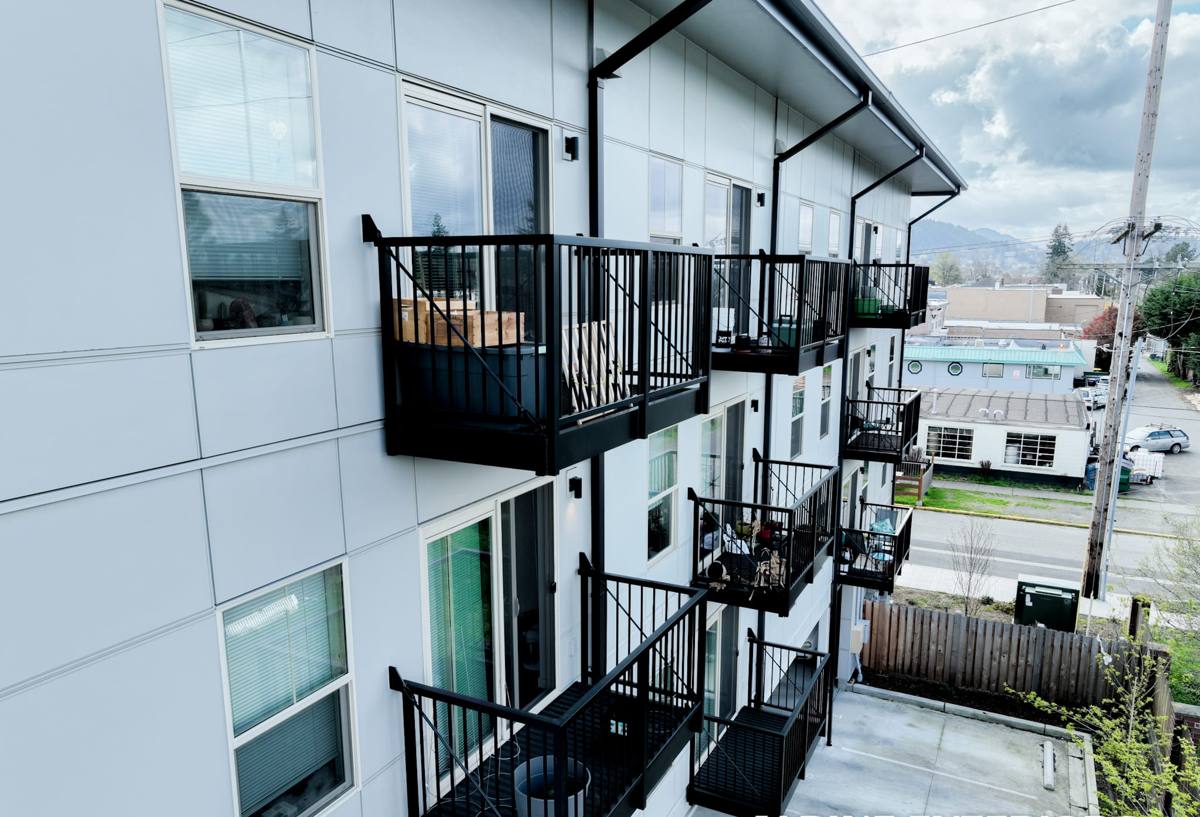
Signs Your Siding Needs Repair
Most siding damage we get called out for in Bellingham and Sudden Valley falls into a handful of categories. If you're seeing any of the following, it's worth having someone look before the next wet season:
- Hairline cracks at panel corners, butt joints, or around nail heads
- Soft, spongy, or visibly swollen sections (common where wood-based or engineered wood siding has taken on water)
- Paint peeling or bubbling in isolated patches rather than across a whole wall
- Dark streaking, green or black staining, or a fuzzy moss film in shaded, low-sun areas
- Gaps or missing caulk at trim boards, window returns, and siding seams
- Small impact damage — cracked or punctured panels from debris, ladders, or equipment
- Isolated damage near the ground line, roof-to-wall transitions, or under downspouts
Any one of these on its own is usually a manageable repair. Several showing up in the same area, especially near a roofline or foundation, often means water has already been getting behind the siding for a while — which changes the scope of the fix.
What a Correct Repair Actually Involves
A siding repair that just covers the visible damage and calls it done is one of the most common ways homeowners end up paying for the same problem twice. A correct repair has two parts: fixing what you can see, and figuring out why it happened in the first place.
Finding the Root Cause
Before we touch a panel, we look at what's around it — flashing at windows and rooflines, the condition of caulk joints, grading and drainage at the base of the wall, and whether the weather-resistive barrier behind the siding is still doing its job. In a climate that gets as much driving rain as Bellingham does, a repair that doesn't address the water source just delays the next repair.
Matching the Existing Siding
If your home has James Hardie fiber cement siding with a factory ColorPlus finish, a damaged panel should be replaced with the correct profile and, where possible, a matching finish batch — not just caulked and touched up with brush paint. Touch-up paint on a ColorPlus panel almost never matches the factory finish exactly under direct sunlight, and it doesn't carry the same warranty coverage. On older siding where the original color has been discontinued, we'll walk you through the honest options: a close match on the repaired section, or repainting a full elevation for a uniform look.
What We Won't Do
We won't caulk over rot, paint over a swollen or delaminating panel, or patch a section without checking what's happening behind it. Those shortcuts hide a problem for a season or two and then hand it back to you bigger.
Repair or Replace? How We Actually Decide
Not every damaged section needs a full re-side, and not every "repair" is a good use of money. Here's the general breakdown we use when we're standing in front of your house:
| Factor | Repair Usually Makes Sense | Replacement Usually Makes Sense |
|---|---|---|
| Extent of damage | Isolated to one or two sections | Spread across multiple elevations |
| Underlying structure | Sheathing and framing are dry and sound | Rot or water damage found behind the siding |
| Siding material | Fiber cement in otherwise good condition | Failing wood-based product or widespread cracking |
| Age of siding | Under 10–15 years, still performing well | Nearing or past its service life |
| Color/finish match | Current color still available | Discontinued color across a highly visible elevation |
We'll give you a straight answer either way. If a repair is the right call, we're not going to talk you into a full re-side.
Why We Repair — and Recommend — James Hardie Fiber Cement
We install James Hardie fiber cement siding exclusively, and that shows up in how we handle repairs too. Hardie's ColorPlus finish and HardieZone HZ5 formulation (built for climates like ours with real freeze-thaw and heavy moisture exposure) are engineered to resist exactly the conditions Bellingham throws at a house — driving rain, high humidity, and long stretches without direct sun to dry things out. When it's installed correctly and a panel does get damaged, it repairs cleanly: cut, replace, reseal, done.
We do get called to look at damage on vinyl, LP-type engineered wood, and older primed wood or cedar siding, and we'll always give you an honest read. Small, isolated damage on those materials can often be patched. But we've seen enough moisture-related failure on engineered wood and wood siding in this climate — swelling at seams, rot at butt joints, paint that won't hold — that when the damage is extensive or the underlying material is compromised, our recommendation is a straight answer: replace that section, or that elevation, with James Hardie rather than repairing a product that's fighting the local climate on borrowed time. That's a professional judgment call based on how these materials actually perform here, not a sales pitch.
Our Repair Process
- Inspection and diagnosis. We look at the visible damage and the areas around it — flashing, caulk, grading, and drainage.
- Written scope and estimate. You get a clear explanation of what's damaged, why, and what fixing it correctly involves.
- Sourcing matching material. For Hardie repairs, we identify the correct panel profile and finish match before starting.
- The repair itself. Damaged material comes out, the cause gets addressed, and new material goes in to spec — proper fastening, flashing, and sealant, not just a patch.
- Cleanup and walkthrough. We show you exactly what was done and why.
Why a Crew That Already Works Bellingham and Sudden Valley Matters
Siding repair in this area isn't the same job as siding repair in a dry inland climate, and it isn't the same job in every part of Whatcom County either. A crew that regularly works Sudden Valley and greater Bellingham knows what moss and algae growth actually look like at different stages here, understands how the tree cover and lake proximity around Sudden Valley keep certain walls damp longer than others, and has already seen how driving rain off the water tends to find the same weak points — window returns, butt joints, low corners — house after house.
If your property sits within an HOA or community association, as many in the Sudden Valley area do, we're also used to working within whatever documentation or approval process that involves, so repairs don't stall out on paperwork. And when you call about a leak or visible damage after a storm, a local crew can get eyes on it faster than someone driving in from outside the county.
Cost Factors for Siding Repair in Bellingham
Every repair is priced on its own scope, but the same handful of factors drive cost up or down on most jobs we see in this area:
| Factor | Why It Matters |
|---|---|
| Number and location of damaged sections | Ground-level repairs are simpler than second-story or steep-access areas |
| Hidden damage behind the siding | Rot or moisture in the sheathing adds scope once panels come off |
| Color and finish matching | Current colors are straightforward; discontinued colors may mean a full-elevation repaint |
| Underlying cause | Fixing bad flashing or drainage adds labor beyond the panel swap itself |
| Access | Landscaping, decks, or tight sightlines around a home can add time |
We won't quote a number without seeing the damage, but we'll always explain what's driving the price before any work starts.
Keeping Your Siding in Good Shape After the Repair
- Do a visual walk-around each spring, after moss season, looking for new staining or open joints
- Keep gutters and downspouts clear so water isn't overflowing onto siding below
- Remove moss and algae buildup gently — pressure washing directly at fiber cement seams can force water behind panels
- Redirect sprinklers or irrigation that hit the siding directly
- Keep shrubs and trees trimmed back so walls get some airflow and sun exposure
- Re-caulk high-wear joints (around trim and window returns) before they fail, not after
If you're seeing damage, staining, or open seams on your Bellingham or Sudden Valley home, we're happy to take a look and give you a straight read on what it needs. Reach out for a free, no-pressure estimate using the form below.