 Sudden Valley Siding
 Why Lake Whatcom Homes Wear Out Siding Differently
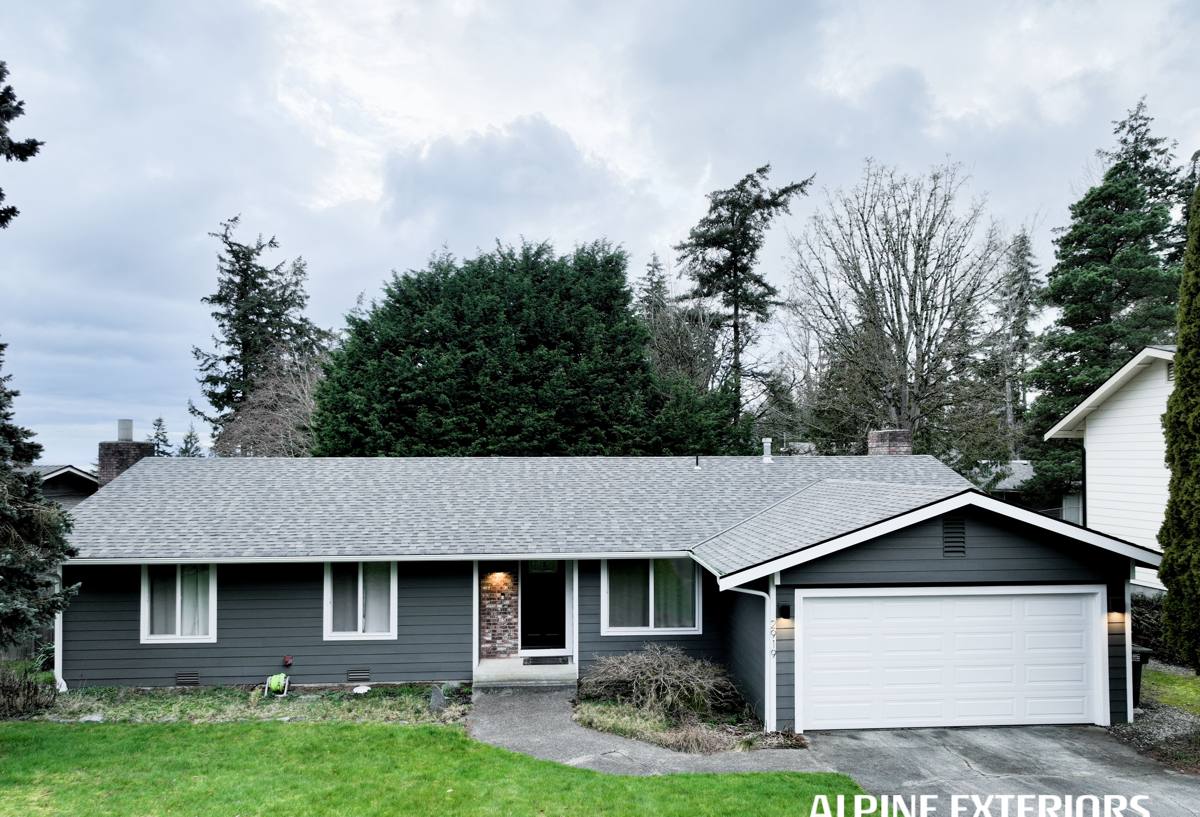
Sudden Valley sits tucked into the tree line along Lake Whatcom, and that setting is beautiful — but it's also demanding on a house. The tall evergreen canopy that gives the neighborhood its privacy also blocks sun and airflow on a lot of exterior walls, especially the north and lake-facing sides. Those walls stay wet longer after every rain, and Whatcom County gets a lot of rain: long, low-intensity stretches from fall through spring that drive moisture sideways into siding joints and trim rather than just running off a roof.
Add the moisture-laden marine air that moves through this part of Whatcom County off the Salish Sea, and you get a climate where siding doesn't just get rained on — it stays damp. Shaded, poorly ventilated walls near the water are where we consistently see the earliest failures: moss and algae staining that comes back within a season of cleaning, paint that won't hold, and trim that softens years before it should. None of that is a reflection on the homeowner — it's what this specific setting does to siding that wasn't chosen or installed with it in mind.
That's the lens we bring to every Lake Whatcom and Sudden Valley project: this isn't a generic siding job, it's a job for a house that sits in shade, near water, in a long wet season, and needs a product and an installation detail that actually accounts for that.
Warning Signs It's Time to Replace, Not Just Patch
Homeowners around the lake often start with spot repairs — caulking a gap, replacing a board, pressure-washing moss off. Those buy time, but they don't fix what's underneath if the siding system itself is failing. Signs it's past patching:
- Soft or spongy spots when you press on siding, especially near the bottom courses or under windows
- Paint or finish that fails again within a couple of years of repainting
- Moss or algae staining that returns quickly after cleaning, particularly on shaded, lake-facing walls
- Visible warping, buckling, or cupping in individual boards or panels
- Gaps opening up at trim, corners, or butt joints where caulking has pulled away
- Rot at the bottom of siding boards near grade or where siding meets the roofline
- A noticeable jump in heating bills, which can point to air and moisture getting behind failing siding
If you're seeing two or more of these on the same wall, that's usually a sign of a system problem — moisture getting behind the siding — not just surface wear.
What a Correct Siding Replacement Job Actually Involves
Tear-off and inspection
The old siding has to come off before anyone can tell you what's really going on. Once it's off, the sheathing underneath gets inspected for rot, soft spots, and past water damage — especially around windows, doors, and any spot where the old siding was showing failure. Covering damaged sheathing with new siding just hides the problem for a few more years; it should be repaired or replaced as part of the job, not skipped to save time.
Moisture management comes first
In a climate like this one, the weather-resistive barrier and flashing details matter more than the siding itself. That means a properly lapped house wrap, correct flashing at every window and door, and kick-out flashing wherever a roofline meets a wall so runoff is directed away from the siding instead of down behind it. On a lake lot with heavy tree cover and long wet seasons, a missed flashing detail is exactly the kind of thing that turns into a rot problem a few years down the road.
Installation to manufacturer specification
Fiber cement siding has documented nailing patterns, minimum clearances from grade and roof surfaces, and joint treatment requirements. Following them isn't optional — it's what the product's warranty is actually based on. That includes correct fastener spacing and depth, proper gaps and caulking at butt joints, and keeping the bottom edge of the siding the right distance above grade, decks, and roof surfaces so water doesn't wick into the material.
Why This Crew Installs Only James Hardie Fiber Cement
We install one siding system — James Hardie fiber cement — and we don't install vinyl, LP SmartSide, primed spruce, cedar, or other fiber cement brands. That's not a marketing position, it's a standard we hold because of what we've seen matter over time in a climate like this one:
- It's non-combustible, which matters in a wooded, tree-lined community like Sudden Valley
- ColorPlus factory-applied finish holds color and resists the fading and peeling that repainting cycles struggle with in a shaded, wet climate
- Hardie's HZ5 product line is engineered for climate zones that see the kind of moisture and freeze-thaw cycling common in the Pacific Northwest
- It doesn't swell, rot, or provide the same food source for moss and mildew that wood-based products can in constant shade
- The manufacturer warranty is strong and transferable, which protects resale value on a lake-area home
We'll walk you through the honest trade-offs of other products if you're weighing options — every siding material has real strengths — but for what this neighborhood's climate does to a house year after year, Hardie is what we're willing to put our name behind.
Our Process for Sudden Valley and Lake Whatcom Projects
- On-site assessment — we walk the exterior, check existing siding condition, and look at shade, drainage, and lake-side exposure specific to your lot
- Sheathing and moisture check once old siding is removed, with any needed repairs scoped before new siding goes on
- Material selection — Hardie plank profile, texture, and ColorPlus color chosen for your home
- Installation following manufacturer flashing and fastening specifications, with extra attention to any lakeside or shaded walls
- Site cleanup and a final walkthrough so you can see the completed work and ask questions before we consider the job done
Cost Factors for Lake Whatcom Siding Replacement
| Factor | Why It Matters on This Job |
|---|---|
| Home size and wall area | Sets the base material and labor cost; larger lake-view homes with more elevation naturally cost more |
| Sheathing condition | Homes with long-term moisture exposure near shaded walls sometimes need sheathing repair, discovered only after tear-off |
| Home shape and detail | Dormers, multiple rooflines, and lake-facing decks add cutting, flashing, and trim work |
| Site access | Some Sudden Valley lots have steep grades or limited driveway access that affect staging and labor time |
| Siding profile and color | Wider reveals, specialty trim, and certain ColorPlus colors carry different material costs |
Why a Crew That Already Works This Neighborhood Matters
Sudden Valley isn't a typical subdivision — it's a private, amenity-based community with its own access points, road conditions, and, on many streets, architectural guidelines homeowners are expected to follow. A crew that's already worked here knows how to navigate that without it becoming your problem to manage. That includes understanding typical lot layouts around the lake, the kind of shaded, moisture-heavy wall conditions common to the area, and how to stage a job efficiently on lots where access isn't always a straight driveway.
It also means we're not guessing at what this climate does to a house — we've seen it firsthand on homes near yours, and that shapes how we flash a roofline, where we pay extra attention on a shaded wall, and what we tell you to expect from the finished product over the next 20 to 30 years.
Caring for New Siding Around the Lake
Correctly installed Hardie siding is low-maintenance, but "low-maintenance" doesn't mean "no maintenance" in a shaded, wet climate like this one. A few habits go a long way:
- Rinse shaded, moss-prone walls once or twice a year with a garden hose — avoid high-pressure washing directly at joints and trim
- Keep gutters and downspouts clear so runoff isn't sheeting down the siding face
- Trim back vegetation and tree limbs near walls to improve airflow and sun exposure where possible
- Do a quick visual check of caulking at trim and joints once a year, and have any gaps addressed before wet season
- Address any soft spots, staining, or paint failure early rather than waiting — catching an issue early is a small fix, catching it late usually isn't
If you're weighing a siding replacement on a home in Sudden Valley or elsewhere around Lake Whatcom, we're happy to take a look and give you a straightforward, no-pressure estimate — just fill out the form below.