 Sudden Valley Siding
 Storm Damage in Happy Valley: What Local Roofs Are Up Against
Happy Valley sits close enough to Sudden Valley that homes here deal with the same weather pattern year-round: wind events off the water, long stretches of driving rain, and a moss season that can run from late fall through early spring. None of those things cause damage on their own in a single afternoon. What actually gets a roof into trouble is the combination — wind that lifts or cracks shingles, followed by weeks of rain that finds every opening the wind created, followed by moss that holds moisture against the roof deck long after the storm has passed.
That's the pattern we look for whenever we're called out to a Happy Valley property after a storm. It's rarely one dramatic failure. It's usually a small entry point — a lifted shingle tab, a cracked pipe boot, a seam where flashing pulled loose — that's been feeding water into the roof system for longer than the homeowner realizes. Salt-laden air moving in off the water accelerates corrosion on exposed metal fasteners and flashing, which is part of why storm damage here tends to show up first at metal-to-shingle transitions rather than in the field of the roof.
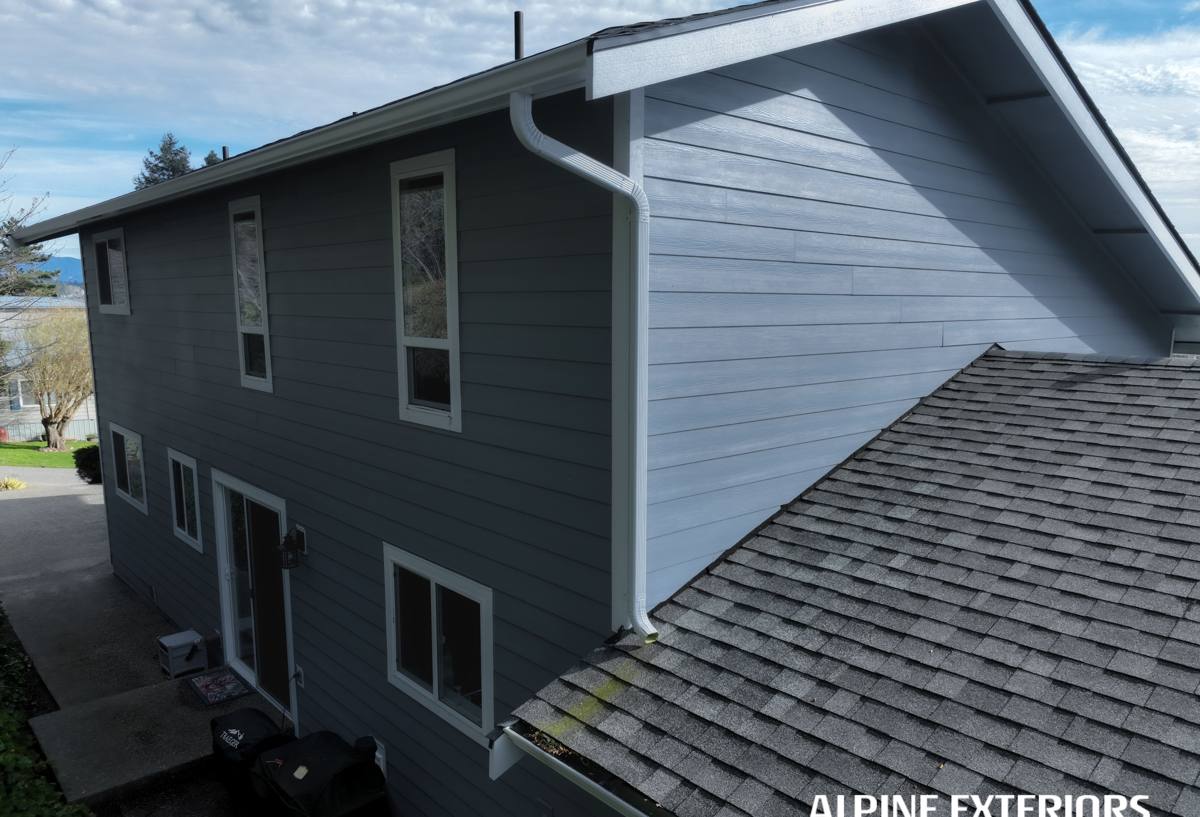
How to Tell If Your Roof Has Storm Damage
Some damage is obvious from the ground. Most of it isn't. After any significant wind or rain event, it's worth doing a quick walk-around of the exterior and attic before assuming everything is fine.
- Shingle tabs that look lifted, curled, or missing altogether, especially on the side of the roof that faces prevailing wind
- Granules collecting in gutters or at downspout outlets — a sign of shingle wear or hail impact
- Dented or creased metal flashing around chimneys, vents, and skylights
- Soft or discolored ceiling patches inside the home, particularly near exterior walls or light fixtures
- Damp, musty smell in the attic, or visible daylight through the roof deck
- Moss buildup at shingle edges and in valleys, which traps water even after a storm has cleared
- Gutters pulling away from the fascia or sagging under debris weight
If you see any combination of these, the roof needs a real inspection rather than a guess from curbside. Some of the most damaging leaks start from openings too small to spot without getting on the roof or into the attic.
What a Correct Storm Damage Repair Actually Involves
A repair that actually holds isn't just replacing the shingles that are visibly missing. Water rarely stays where it enters — it travels along the deck and framing before it shows up as a stain inside the house, which means the visible damage and the actual damage are often in different spots.
Assessment Before Any Repair Work
We start with a full inspection of the roof surface, flashing, penetrations, and — where accessible — the attic and decking underneath. This tells us whether we're dealing with a contained repair or whether water has already reached the wood structure underneath the roofing material.
Addressing the Underlying Cause, Not Just the Symptom
Replacing a shingle without checking the flashing, underlayment, and decking beneath it just resets the clock until the next storm finds the same weak point. A correct repair matches materials to what's already on the roof, ties new underlayment properly into the existing field, and re-seals every penetration it touches — not just the one that failed.
Matching Materials and Techniques
Shingle color and profile matching matters for more than appearance — mismatched or incompatible materials can create their own water paths. We also account for local exposure conditions when selecting fasteners and flashing, since corrosion-prone metal in a salt-air environment can undo an otherwise solid repair within a few seasons.
Our Process From Call to Completed Repair
Storm repair work moves faster than a full re-roof, but it still deserves the same order of operations. Skipping steps to save a day is usually what leads to a callback.
- Initial contact and scheduling — we get basic details about the storm event and visible damage, and get someone out promptly, especially if there's active water intrusion
- On-site inspection — roof surface, flashing, valleys, penetrations, and attic where accessible
- Written scope and estimate — what needs repair, what materials are involved, and a realistic cost range before any work starts
- Temporary protection if needed — tarping or sealing an active leak point so the damage doesn't spread while materials are sourced
- Repair work — matched materials, proper flashing detail, and full re-sealing of the affected area
- Final walkthrough — reviewing the completed work with the homeowner and checking gutters and drainage while we're already up there
We try to minimize the number of separate trips a homeowner has to coordinate. If we're already on the roof addressing storm damage, we'll flag anything else worth knowing about — a weak spot in the flashing two feet away, moss buildup starting in a valley — rather than let it turn into a second service call.
Repair vs. Replacement: Cost Factors
Not every storm-damaged roof needs a full replacement, but knowing which situation you're in matters before you commit to either path. The table below covers the main factors that push a decision one way or the other.
| Factor | Favors Repair | Favors Replacement |
|---|---|---|
| Age of roof | Under 10-12 years, otherwise sound | Nearing or past expected lifespan |
| Extent of damage | Localized — one section, valley, or penetration | Widespread across multiple roof planes |
| Decking condition | Dry, structurally sound underneath | Soft, rotted, or water-stained decking found |
| Moss/moisture history | Isolated, recently developed | Long-term moss growth with underlying wear |
| Material availability | Existing shingle line still matched or close | Discontinued material, poor match likely |
| Insurance scope | Adjuster approves targeted repair | Adjuster or inspection supports full replacement |
We'll always tell a homeowner honestly which side of this table their roof falls on. A repair that's cheaper today but doesn't hold isn't actually the more affordable option once you count the second visit.
Insurance and Storm Claims — What Homeowners Should Know
Many storm repairs in this area go through homeowners' insurance, and the process goes more smoothly when the paperwork and the physical repair line up. We provide detailed written estimates and, where useful, photo documentation of the damage that a homeowner can submit with a claim. We're happy to be on-site if an adjuster wants to walk the roof, and we'll answer direct questions about scope of work.
What we won't do is inflate a scope to match a settlement number or claim damage that isn't there — that approach causes problems for homeowners later, not just for us. An honest scope, documented clearly, holds up better through the claims process than an inflated one.
Materials We Use and Why
Material choice on a storm repair isn't just about matching what's already on the roof — it's about picking materials that hold up to the specific conditions Happy Valley and the wider Sudden Valley area see year after year.
Flashing and Fasteners
Given the salt content in the air here, we favor corrosion-resistant flashing and fastener options over standard-grade materials wherever the existing system allows it. It costs a little more up front and saves a callback down the road.
Underlayment
Because this area gets extended stretches of driving rain rather than isolated downpours, we pay close attention to underlayment overlap and sealing at seams — a detail that matters far more here than in drier climates where a single layer might get away with more.
Moss Treatment Considerations
Where moss has contributed to the damage, we address it as part of the repair rather than leaving it to return. That can mean physical removal, adjustments to keep water moving off the roof properly, or recommending zinc or copper strip installation as a preventive measure — framed as an option, not an upsell, since not every roof needs it.
Why Local Experience in Happy Valley Matters
A crew that works this area regularly already knows the failure patterns before they walk up the driveway. We know which roof orientations in Whatcom County take the worst of the wind, which valleys tend to hold moss the longest, and which flashing details fail first when salt air and driving rain work on a roof for years at a time. That knowledge shortens the inspection and sharpens the repair — we're not learning the local weather pattern on your roof.
It also means we're not a crew that shows up once after a storm and disappears. If a repair needs a follow-up check after the next heavy rain, or if a homeowner has a question a season later, we're still the same local business, not a storm-chasing outfit that worked the region for a month and moved on.
Maintenance After the Repair to Prevent Repeat Damage
A good repair extends the life of the roof, but a few habits on the homeowner's side help it stay that way through the next storm season.
- Clear gutters and downspouts before the fall rains start, so water has somewhere to go besides under the shingles
- Trim back tree limbs that overhang the roof — they drop debris that holds moisture and feeds moss growth
- Do a visual check after any major wind event rather than waiting for a leak to show up inside
- Address small moss patches early, before they spread across a valley or ridge
- Keep an eye on attic ventilation — poor airflow speeds up moisture damage from the inside out
If you're dealing with storm damage on a Happy Valley or Sudden Valley area home, we're glad to take a look and give you a straight answer about what it needs. Reach out for a free, no-pressure estimate using the form below.