 Sudden Valley Siding
 Why Geneva Homes Need Siding Built for This Climate
Geneva sits inside the stretch of Whatcom County where marine air, sustained rain, and shade from mature evergreen cover combine into some of the toughest conditions a house exterior deals with anywhere in the state. Salt-laden air off the water accelerates corrosion on fasteners and trim. Driving rain, pushed sideways by wind rather than falling straight down, finds every gap in a siding system that wasn't detailed correctly. And the long moss season — realistically eight or nine months out of the year in shaded, north-facing exposures — keeps siding damp for days at a stretch even between storms.
None of that is exotic information to anyone who's lived in Sudden Valley for more than a winter. But it matters enormously when you're choosing a siding product and a crew to install it, because the failures we see on Geneva homes are almost never about the product looking bad after a few years — they're about moisture getting behind the cladding and rotting the sheathing underneath, or about a "maintenance-free" product needing more upkeep than anyone was told to expect.
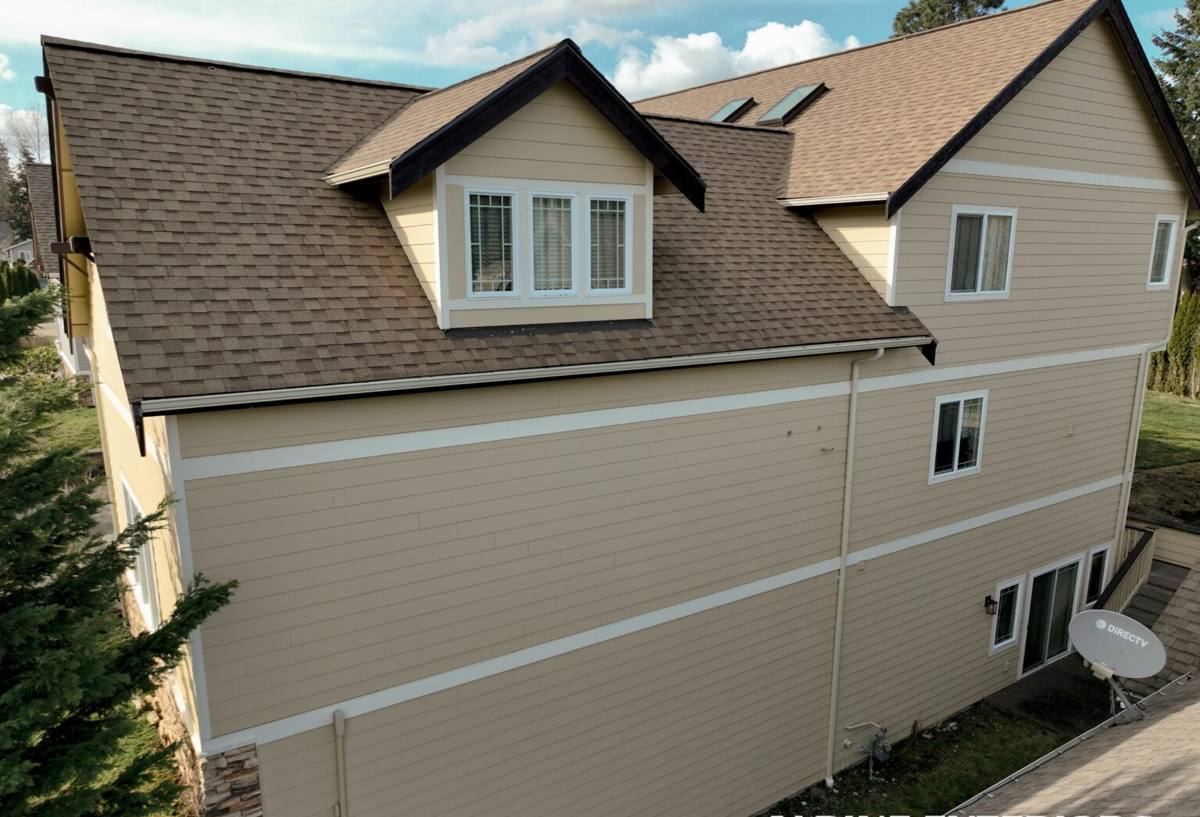
What a Correct Installation Actually Involves
Siding is a system, not a product. The board or panel you see is the last layer of a stack that has to work together to keep water out and let any moisture that does get in dry back out. On a Geneva-area home, that stack typically includes:
- A weather-resistive barrier (housewrap or building paper) installed shingle-style so every seam sheds water downward
- Properly lapped and sealed flashing at every window, door, and roof-to-wall transition
- A drainage gap or rain screen behind the siding so bulk water has somewhere to go besides your sheathing
- Correct fastener type, spacing, and depth for the specific product being installed
- Sealed penetrations everywhere a pipe, vent, or hose bib passes through the wall
- Proper clearance between the bottom of the siding and grade, decks, and roof lines
Get any one of those wrong and the siding itself becomes almost irrelevant — water will find its way in regardless of what the surface material is rated for. This is the part of the job that doesn't show up in a photo and that a lot of bids skip past quickly. It's also where the real cost of a "cheap" installation shows up, usually five to ten years later, hidden behind a wall that looks fine from the driveway.
Where We See Installation Failures Locally
The recurring problems on older Sudden Valley and Geneva homes we've inspected aren't mysterious: missing or reversed window flashing, siding installed tight to the ground or a deck surface with no clearance, caulk used as a substitute for flashing, and fasteners driven too deep or into the wrong substrate. Every one of those is a workmanship issue, not a product defect — which is exactly why we treat the crew and the process as seriously as the material.
Our Installation Process for Geneva Homes
- On-site assessment. We walk the exterior, check the current siding and trim for hidden rot or moisture damage, and look at drainage, grading, and roof-line transitions specific to your lot.
- Tear-off and sheathing inspection. Old siding comes off and the sheathing underneath gets inspected before anything new goes up. Soft or water-damaged sheathing gets replaced — it's not something we cover over.
- Weather barrier and flashing. Housewrap and flashing go in shingle-lapped, with special attention to window heads, sills, and any roof-to-wall intersection, which are the highest-risk spots in this climate.
- Rain screen / drainage gap. A ventilated gap is built in behind the siding so incidental moisture can drain and the wall assembly can dry.
- Siding installation. James Hardie boards or panels are installed to manufacturer fastening specs — correct nail type, spacing, and clearance from grade, decks, and roofing.
- Trim, caulking, and touch-up. Joints are sealed with the correct sealant, factory-finish touch-up paint is applied where fasteners or cuts exposed raw material, and everything is cleaned up.
- Final walkthrough. We go over the finished job with you, point out anything you should know about care going forward, and answer questions before we consider the job done.
Why We Install James Hardie and Nothing Else
We standardized on James Hardie fiber cement for every home we side, including in Geneva, and we don't install vinyl, LP SmartSide, Cemplank, Allura, or primed wood siding. That's not a marketing position — it's a decision based on what holds up under sustained damp conditions and what doesn't.
The trade-offs with the alternatives
Vinyl is inexpensive and low-maintenance in the sense that it doesn't need paint, but it's also a thin plastic product that expands and contracts with temperature, can crack in impacts, and doesn't offer the same fire performance as fiber cement. LP SmartSide and other engineered wood products perform reasonably well when installation and caulking are maintained perfectly, but they're wood-based, and wood-based siding is more sensitive to the kind of prolonged dampness that a shaded, moss-prone lot produces — edge swelling and the need for diligent, ongoing caulk maintenance are real considerations, not hypotheticals. Primed cedar and spruce look great initially but require the most ongoing maintenance of any option here: regular repainting, caulk upkeep, and vigilance against moisture intrusion at end grain and joints.
Why Hardie holds up here specifically
James Hardie fiber cement is non-combustible, doesn't support rot the way wood-based products can, and holds its factory-applied ColorPlus finish far longer than field-applied paint holds up on wood siding. The HZ5 product line is engineered for regions with freeze-thaw cycles and sustained moisture exposure — a good match for Whatcom County's wet winters. It won't stop moss from growing on a shaded wall (nothing will), but it doesn't degrade from that moss sitting on it the way a wood-based product can. Hardie also backs the product with a strong, transferable limited warranty, which matters if you ever sell the house.
Cost Factors to Understand Before You Get Bids
| Factor | Why It Moves the Price |
|---|---|
| Tear-off scope | Full removal of old siding and any hidden sheathing repair adds labor and material cost, but skipping it is how problems get sealed in |
| Home shape and trim detail | Corners, dormers, and multiple roof-to-wall transitions all add labor-intensive flashing and cutting |
| Siding profile chosen | Lap siding, shingle-style panels, and board-and-batten each have different material and labor costs |
| Access and site conditions | Sloped Sudden Valley lots, tree cover, and limited staging space can add time versus a flat, open lot |
| Trim and accessory package | Fascia, soffit, and trim board replacement alongside siding affects total scope |
Broad, honest ranges are what we give upfront during a walkthrough — we won't quote a number sight unseen, because the factors above genuinely change the job.
What to Check Before Hiring Any Siding Contractor in Geneva
Because so much of installation quality is invisible once the job is finished, vetting the crew matters more than vetting the brand name on the material. A few things worth asking any contractor bidding your Geneva home:
- Do they replace damaged sheathing they find, or cover it and move on?
- What weather-resistive barrier and flashing method do they use at windows and roof lines?
- Do they build in a drainage gap, or install siding directly against the barrier?
- Are they a factory-trained or certified installer for the product they're proposing?
- Will they put the fastener schedule and clearances in writing, matching manufacturer specs?
- How do they handle warranty registration on your behalf?
A crew that already works regularly in Sudden Valley and Geneva knows the site conditions here — sloped lots, shaded exposures, and marine-influenced weather — without having to relearn them on your house. That familiarity shows up in fewer surprises during tear-off and a job sequenced around this area's weather windows rather than a generic schedule.
Maintenance After Installation
One advantage of fiber cement done correctly is how little ongoing maintenance it demands compared to wood-based options. Realistic expectations for a Hardie installation in this climate:
- Occasional rinsing to clear moss, pollen, and debris from shaded or low-airflow walls
- Periodic visual check of caulked joints and trim, especially after severe weather
- No repainting on a routine cycle — the ColorPlus finish is factory-baked and warrantied separately from the substrate
That's a meaningfully shorter list than what wood or vinyl siding typically asks of a homeowner in Whatcom County's climate over the same span of years.
Getting Started
If your Geneva home's siding is showing its age — moss buildup that won't rinse off, soft spots near the bottom edges, or paint that's failing faster each year — it's worth having someone look at what's underneath before deciding what to do next. We offer a free, no-pressure estimate: we'll walk the exterior with you, tell you honestly what we find, and give you a clear picture of what correct installation would involve for your specific home. Use the form below to get started.