 Sudden Valley Siding
 What Geneva's Spot on Lake Whatcom Does to a Roof
Geneva sits close to the water and under a heavy tree canopy, and both of those things shape what a roof has to survive here. Whatcom County pulls in marine air off the Salish Sea that carries salt and moisture well inland, and that damp air settles into low, shaded pockets around Lake Whatcom and doesn't burn off the way it would in a drier climate. Add driving rain that comes in sideways during winter storms, and you have a combination that finds every weak seam, every under-nailed shingle, and every gap in flashing faster than it would in most parts of the country.
The tree cover that makes Geneva and the rest of Sudden Valley attractive also keeps roofs shaded and slow to dry after a storm. That extra dampness is exactly what moss and algae need to get established, and once they do, they hold water against the roofing material for weeks at a time. A roof built or installed without that reality in mind will age faster here than the exact same product would in a sunnier, drier neighborhood.
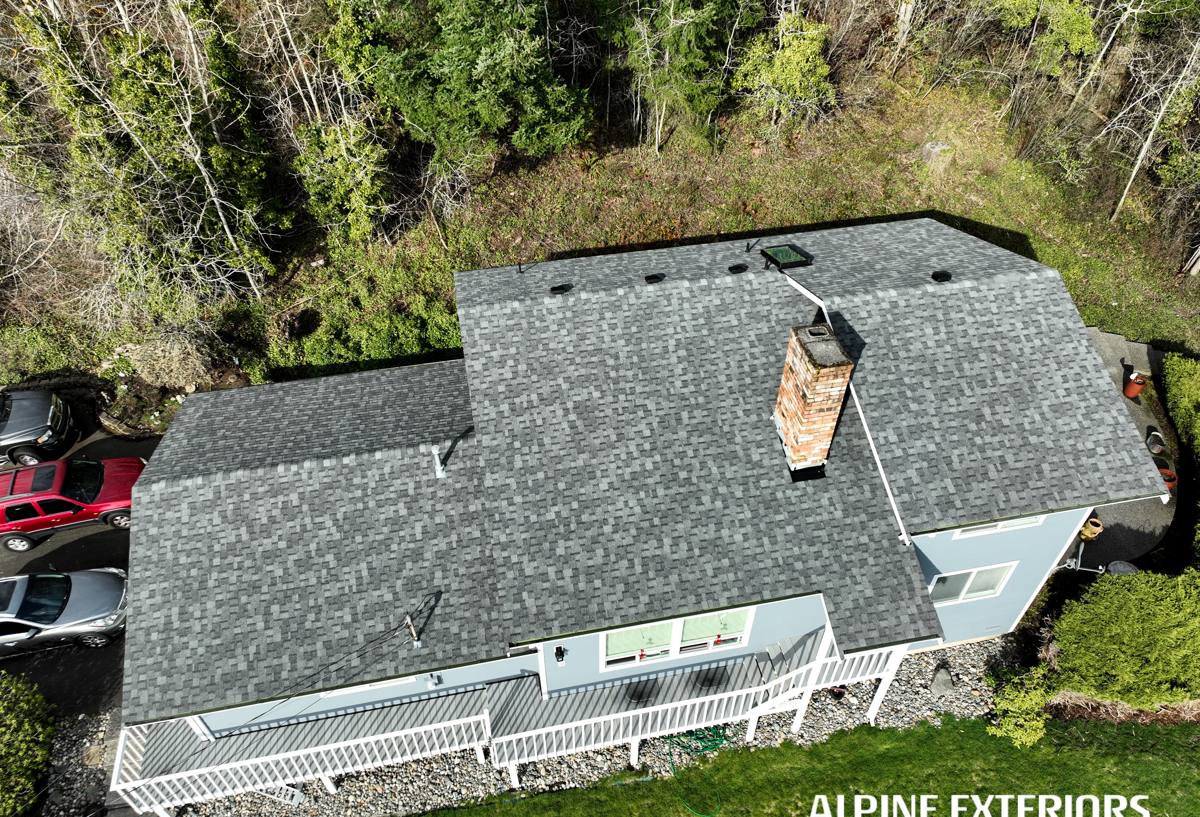
Signs a Geneva Roof Needs Replacement, Not Another Patch
Homeowners often call us after a leak, but the leak is usually the last stage of a problem that's been building for years. Some signs point clearly toward replacement rather than another round of spot repairs:
- Granules collecting in gutters or downspouts, and shingles that look patchy or thin in spots
- Shingle edges curling up or cupping, especially on south- and west-facing slopes
- Moss mats thick enough that you can't see the shingle surface underneath
- Soft or spongy decking felt underfoot, or daylight visible through the attic roof boards
- Repeated leaks in different spots after past repairs, rather than one isolated failure
- A roof approaching or past the 20–25 year mark for standard asphalt shingles
If only one or two of these apply and the roof is otherwise sound, a repair or partial re-cover may still make sense. Once several show up together, patching becomes a short-term fix on a roof that's already failing underneath.
What a Correct Roof Replacement Actually Involves
A roof replacement is more than swapping old shingles for new ones. In a climate like Whatcom County's, the parts you don't see matter as much as the shingle brand on top.
Full Tear-Off and Deck Inspection
We remove the existing roofing down to the deck rather than layering over it. That lets us actually see the plywood or plank sheathing underneath, which is where moss and long-term moisture damage usually show up first. Any soft, delaminated, or rotted decking gets replaced before anything new goes down — covering over bad decking just hides the problem for the next owner to deal with.
Underlayment and Water Protection at Eaves and Valleys
Synthetic or felt underlayment is the roof's real waterproofing layer; the shingles mostly shed water and take the weather. In areas that see driving rain and wind-driven water, we pay particular attention to self-adhered ice-and-water membrane at eaves, valleys, and anywhere water tends to pool or get pushed uphill by wind.
Ventilation That Matches the Attic
Attic ventilation controls how much moisture builds up under the roof deck from the inside. A roof that's well-built on top but poorly vented can still rot from underneath, especially in a humid, shaded environment like Sudden Valley. We balance intake at the eaves with exhaust at the ridge or roof vents so moist attic air actually has somewhere to go.
Flashing Around Penetrations and Walls
Chimneys, skylights, vent pipes, and any place a roof meets a wall are the most common leak points on an otherwise sound roof. New step flashing, counterflashing, and pipe boots are installed as part of a proper replacement rather than reused from the old roof, since flashing is cheap compared to the water damage it prevents.
Choosing a Roofing Material for a Geneva Home
There's no single "best" material for every house — the right choice depends on your roof's exposure to shade and moisture, your home's style, and how much long-term maintenance you're willing to do.
| Material | Typical Lifespan | Moss & Algae Resistance | Notes for Geneva/Sudden Valley |
|---|---|---|---|
| Standard 3-tab asphalt shingle | 15–20 years | Low without treatment | Budget option; shaded roofs will need earlier moss treatment and cleaning |
| Architectural/dimensional shingle | 25–30 years | Moderate, better with algae-resistant granules | Most common choice locally; good balance of cost and durability |
| Metal roofing (standing seam or panel) | 40–60 years | High — sheds moss and debris more readily | Higher upfront cost, strong performer under heavy tree cover and rain |
| Cedar shake | 20–30 years with upkeep | Low — needs regular treatment in wet, shaded settings | We'll discuss trade-offs honestly; shaded lake-area roofs are hard on untreated wood |
Many algae-resistant shingle lines use copper- or zinc-infused granules specifically to slow the growth that's such a problem under tree cover — worth asking about if your lot is shaded most of the day, which describes a lot of Geneva.
Our Roof Replacement Process
- On-site inspection and estimate. We walk the roof (weather permitting) and the attic, note the deck condition, ventilation, and any problem areas, and give you a written estimate with no pressure to sign on the spot.
- Material selection. We go over the options above in the context of your roof's exposure and your budget, so you understand the trade-offs rather than just picking a color.
- Scheduling around the weather. Whatcom County's wet season narrows the good installation windows. We plan tear-off days around forecasts and can dry-in a roof same-day to avoid leaving decking exposed overnight.
- Tear-off and deck repair. Old roofing comes off, damaged decking is replaced, and the deck is inspected before anything new is installed.
- Underlayment, flashing, and shingle or panel installation. Installed in the order and to the spec described above — this is where a rushed job cuts corners and a correct one doesn't.
- Final walkthrough and cleanup. We check ridge and valley lines, ventilation, and flashing, clear the site of debris and nails, and go over your warranty coverage before we consider the job done.
Living With Moss and Algae After the New Roof Is On
Even the best material benefits from a little upkeep in a climate this wet and shaded. A few habits go a long way toward protecting a new roof investment:
- Keep overhanging branches trimmed back so more sunlight and airflow reach the roof surface
- Clean gutters and valleys at least twice a year so water isn't backing up under shingle edges
- Have visible moss growth treated or gently removed before it builds into thick mats
- Avoid pressure washing shingles directly — it can strip granules and shorten shingle life
- Schedule a roof check after major windstorms, since that's when flashing and shingle damage most often starts
None of this replaces a proper inspection every few years, but it does slow down the two things — trapped moisture and organic growth — that shorten roof life fastest around Lake Whatcom.
Why a Crew That Already Works in Sudden Valley and Geneva Matters
Roofing around Sudden Valley comes with practical details that a crew unfamiliar with the area can miss: narrow or shared access roads, steep driveways, dense tree cover that limits staging space for material delivery and dumpsters, and Whatcom County permitting requirements that apply to roof replacements. A crew that's worked in Geneva before knows to plan around these before the trucks show up, not after.
There's also a judgment call in every roof replacement — how much decking to expect to replace, how aggressive the moss growth will be by the following winter, which slopes need extra attention because they never really dry out. That judgment comes from having actually worked on roofs in this specific microclimate, not just from general roofing experience somewhere drier.
Questions Worth Asking Before You Hire
Whoever you choose to replace a roof in Geneva, it's worth confirming a few basics up front:
- Are they licensed and insured to work in Washington State, and can they show proof?
- Do they tear off the old roof down to the deck, or offer to re-cover over existing shingles?
- What underlayment and ice-and-water protection do they use at eaves and valleys?
- How do they handle attic ventilation as part of the replacement, not as an afterthought?
- What warranty covers the materials, and what warranty covers their labor separately?
- Do they have experience with homes in shaded, moss-prone settings like Sudden Valley?
If a contractor can't answer these clearly, that's worth noticing before any contract is signed.
If your Geneva roof is showing its age or you just want an honest read on how much life it has left, we're happy to take a look. Fill out the form below for a free, no-pressure estimate — we'll tell you plainly whether you need a full replacement, a repair, or nothing at all right now.