 Sudden Valley Siding
 Ferndale Roofs Deal With a Different Kind of Wear
Ferndale sits close enough to Bellingham Bay and the Strait of Georgia that salt-laden air is a normal part of the weather here, and it does real work on a roof over time. Add in the driving, wind-pushed rain that rolls off Puget Sound through the fall and winter, plus a moss season that can run eight months or longer under the tree cover common in Whatcom County neighborhoods, and you have a roof environment that is more demanding than what a shingle warranty is typically tested against. None of this means Ferndale roofs fail faster than they should. It means they need repairs done by someone who understands why a leak started, not just where it's dripping.
Most of the repair calls we get in this area trace back to one of three things: fasteners and flashing that have corroded faster than expected because of airborne salt, water that got pushed sideways under shingles or trim during a storm instead of running off the surface, or moss and moisture sitting on the roof long enough to lift shingles and hold water against the deck. A repair that only patches the visible symptom without addressing which of these is actually happening tends to come back within a season or two.
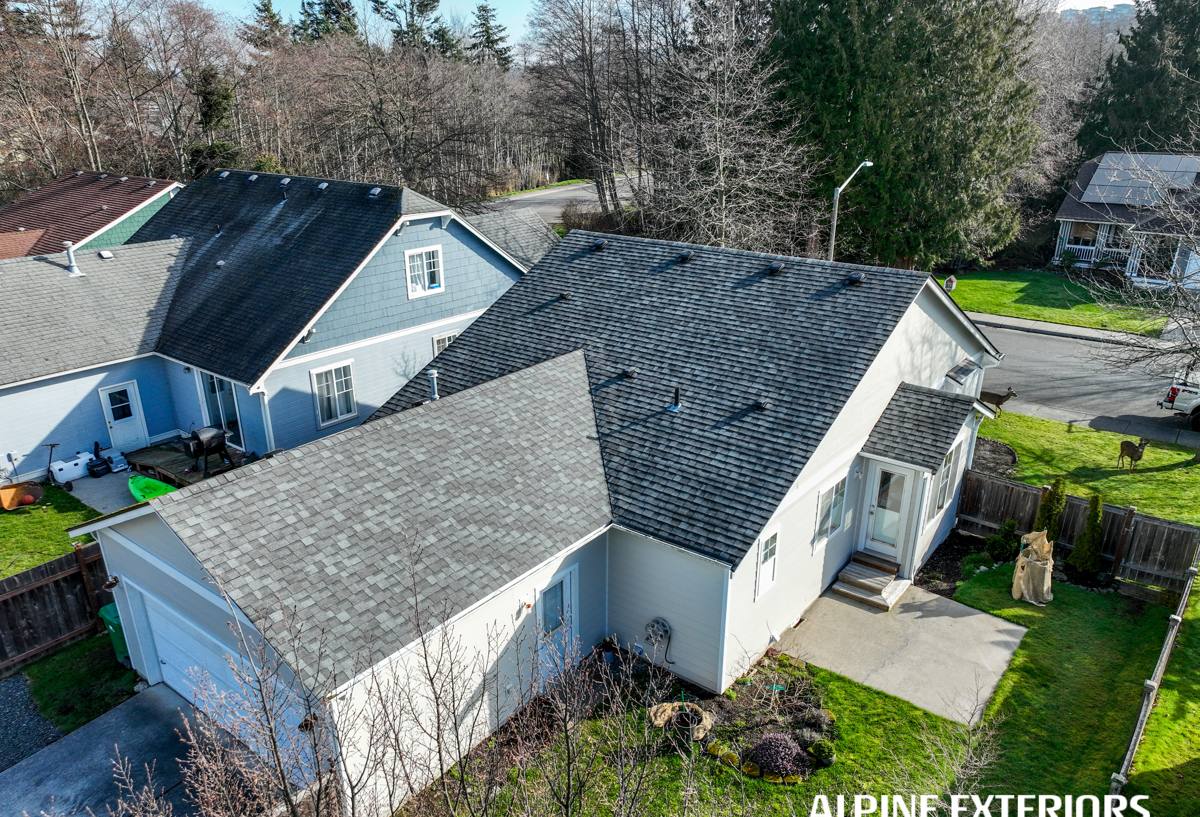
Common Roof Repair Issues We See in Ferndale
Moss and Organic Growth
Shaded, north-facing slopes and roofs near mature trees hold moisture longer, and moss takes hold in the gaps between shingle tabs. As it grows, it lifts the shingle edges, which lets wind-driven rain get underneath instead of shedding off the surface. Left alone through a couple of wet seasons, moss growth is one of the more common reasons a roof that still has years of shingle life left starts leaking anyway.
Flashing and Fastener Corrosion
Flashing around chimneys, skylights, and roof-to-wall transitions, along with the nails holding shingles down, are usually galvanized or coated steel. Salt air accelerates corrosion on unprotected metal, and once a fastener or a flashing seam starts to go, water finds its way in at that exact point, often well before the surrounding shingles show any wear.
Valley and Penetration Leaks
Roof valleys, and anywhere a pipe, vent, or skylight penetrates the roof deck, concentrate a lot of water in a small area. During a heavy Pacific storm with sustained wind, that water is moving fast and at an angle, not just running straight downhill, which exposes weak seals and worn underlayment at these transition points first.
Wind and Storm Damage
Whatcom County gets its share of strong wind events off the water. Lifted or torn shingles, bent ridge caps, and pulled flashing are common after a bad blow, and the damage isn't always visible from the ground.
What a Correct Roof Repair Actually Involves
A roof repair done right starts with figuring out the actual water path, not just patching the spot where a stain showed up inside the house. Water can travel several feet along the underlayment or decking before it finds a gap to drip through, so the ceiling stain and the source of the leak are frequently not in the same place.
Once we've traced the source, a proper repair typically includes:
- Removing and replacing damaged or moss-lifted shingles, not just the ones directly visible from the ground
- Checking the underlayment beneath the affected area for saturation or breakdown, and replacing it if it's compromised
- Re-sealing or replacing flashing at chimneys, skylights, vents, and roof-to-wall transitions with corrosion-resistant material
- Confirming the deck itself hasn't taken on soft spots or rot from prolonged moisture before closing the repair back up
- Checking attic ventilation near the repair area, since poor airflow traps moisture and shortens the life of a repair even when the surface work is done well
Skipping the underlayment or deck check is the most common shortcut we see on repairs that fail early. A shingle can look fine on top while the layer underneath is already soaked and beginning to rot.
Our Ferndale Roof Repair Process
1. On-Site Inspection
We walk the roof and the attic where accessible, and we look beyond the reported leak spot. Given the amount of valley and flashing work salt air causes in this area, we check those transitions even if that's not where the homeowner noticed the problem.
2. Honest Scope and Estimate
We tell you what's actually needed, in plain terms, before any work starts. If a repair is the right call, we say so. If the roof is old enough or damaged enough that a repair is a short-term fix at best, we'll tell you that too, so you can decide with full information rather than finding out later.
3. The Repair Itself
We match shingle type and color as closely as the existing roof allows, replace flashing with corrosion-resistant material appropriate for a coastal-influenced climate, and confirm the deck is sound before anything goes back down. We don't leave a repair area more vulnerable than the rest of the roof.
4. Cleanup and Walkthrough
We clear debris, check gutters and downspouts near the repair for anything that fell during the work, and walk you through what was done and what to watch for going forward.
Repair or Replace? How We Help You Decide
Not every roof problem in Ferndale needs a full replacement, and not every leak is a simple patch. The honest answer depends on the roof's age, how widespread the damage is, and how much moisture has already worked its way into the deck.
| Factor | Points Toward Repair | Points Toward Replacement |
|---|---|---|
| Roof age | Under 15-18 years, shingles otherwise in good shape | Nearing or past expected shingle lifespan |
| Damage extent | Isolated to one section, valley, or penetration | Spread across multiple slopes or recurring in different spots |
| Deck condition | Solid, dry decking under the affected area | Soft spots, rot, or repeated moisture intrusion found |
| Moss/algae history | Minor, recently treated or first occurrence | Long-term, heavy growth with lifted shingles across the roof |
| Prior repairs | First repair on this roof | Multiple past repairs in the same general area |
When the answer isn't obvious, we'll say so and explain the trade-offs rather than pushing you toward the bigger job by default.
Materials and Products We Use
For repairs, we prioritize matching what's already on the roof where possible, but we upgrade the parts that actually cause repeat failures in this climate. That means corrosion-resistant flashing and fasteners rather than standard galvanized where salt exposure is a factor, and algae-resistant shingles when a section needs full replacement in a moss-prone area. Algae-resistant shingles have copper or zinc granules built into the surface that discourage regrowth, which matters more on a shaded Whatcom County roof than it does inland.
We don't push products based on what's easiest to install or cheapest to source. If a particular trim or flashing style is more prone to holding water or corroding quickly in a coastal-influenced climate, we'll explain why we steer away from it and what we use instead, including the maintenance trade-offs either way.
Signs Your Ferndale Roof Needs Attention Now
Most roof repairs get cheaper and simpler the earlier they're caught. A few things worth checking, or having us check, before they turn into interior damage:
- Visible moss or dark streaking on north-facing or shaded slopes
- Shingle edges that look lifted, curled, or granule-bare
- Rust staining or gaps around flashing at chimneys, skylights, or vent pipes
- Water stains on interior ceilings, especially after a windy storm
- Sagging or soft-feeling spots visible from the attic side
- Granules collecting in gutters after normal rain, not just after a storm
- Daylight visible through the roof deck from inside the attic
Any one of these on its own might be minor. Two or more together, especially moss plus a recent leak, usually means it's worth a look before the next wet season.
Why a Crew That Already Works Ferndale Matters
A roof repair diagnosed by someone unfamiliar with this area's conditions often treats a Ferndale leak the same way they'd treat one in a dry inland climate — patch the visible spot, use standard fasteners, and move on. That approach misses why the leak happened in the first place. A crew that regularly works roofs exposed to Whatcom County's combination of salt air, driving rain, and long moss seasons knows to check flashing corrosion even when it's not the obvious culprit, and knows which slopes on a typical local roof are going to hold moss regardless of how new the shingles are.
That familiarity also means a faster, more accurate diagnosis. We're not guessing at how this climate behaves on a roof — we're applying what we've already seen work and fail on homes like yours.
After the Repair: Keeping Moss and Salt Damage From Coming Back
A repair holds longer with a little basic upkeep. Clearing debris and moss growth from valleys and shaded slopes once or twice a year keeps water moving off the roof instead of sitting on it. Keeping gutters clear prevents water from backing up under the lower courses of shingles during heavy rain. And if your property is close enough to the water that salt exposure is a real factor, a periodic visual check of flashing and exposed fasteners can catch corrosion while it's still a five-minute fix instead of a repeat leak.
If you're dealing with a leak, moss buildup, or storm damage on a Ferndale roof, we're happy to take a look and give you a straight answer about what it needs. Fill out the form below for a free, no-pressure estimate.