 Sudden Valley Siding
 Why Fairhaven Homes Wear Out Siding Faster
Homes in the Fairhaven area deal with a combination of stressors that inland Whatcom County properties don't see nearly as often. Proximity to the water means salt-laden air settles on exterior surfaces year-round, and that salt is corrosive to fasteners, hard on paint film, and quietly aggressive toward any siding material that isn't built to shed it. Add in driving rain that comes sideways off Bellingham Bay during fall and winter storms, and you've got a climate that tests every seam, every piece of trim, and every inch of caulk on a house.
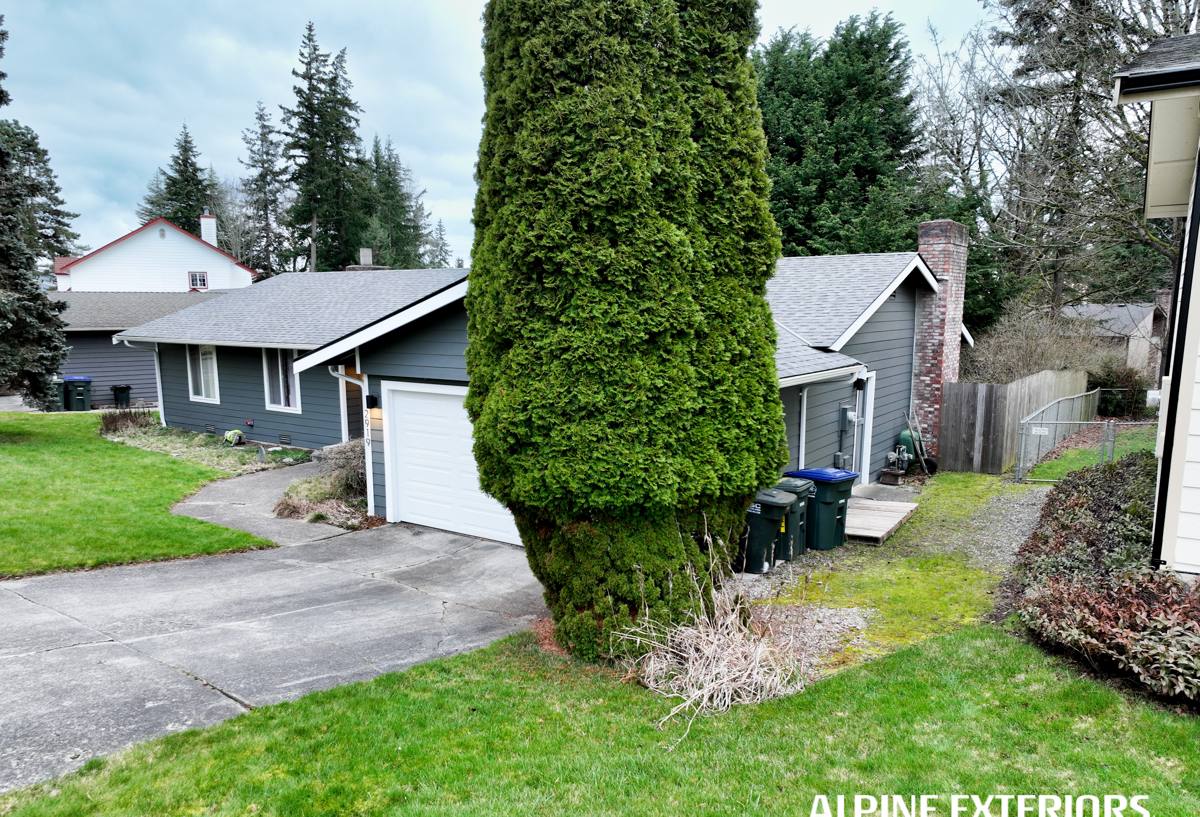
Then there's moss. Whatcom County's long wet season — often six to seven months of consistent moisture with limited direct sun on north- and west-facing walls — creates ideal conditions for moss and algae to take hold on siding, especially in shaded areas near mature trees or close-set lots. Moss isn't just cosmetic. It holds moisture against the siding surface, which accelerates rot in wood-based products and can stress paint and caulk joints over time.
Put those three factors together — salt air, driving rain, and moss — and you have a genuine stress test for exterior materials. Some products handle it. Others don't, and homeowners often don't find out until they're a decade or more into ownership.
What "Correct" Siding Replacement Looks Like Here
Replacing siding on a Fairhaven-area home isn't just swapping old boards for new ones. Done right, it addresses the conditions underneath the siding, not just the surface homeowners see.
Water Management Comes First
Before any new siding goes up, the wall needs a proper weather-resistive barrier and correctly installed flashing at every window, door, and penetration. In a climate with this much driving rain, a house wrap that's taped and lapped correctly — with flashing that directs water out and away rather than behind the siding — matters more here than in drier parts of the state. This is also the point where a crew finds and addresses any hidden rot or moisture damage from the old siding system before it gets covered up again.
Ventilation and Drainage
A rainscreen or drainage gap behind the siding gives any moisture that does get past the outer layer a path to escape instead of sitting against the wall sheathing. In a wet, salt-exposed environment, this detail is the difference between siding that dries out after a storm and siding that stays damp long enough to grow moss or feed rot.
Fastening and Fasteners
Salt air corrodes standard fasteners over time, which is why corrosion-resistant fastening is non-negotiable this close to the water. It's a small detail that's easy to skip and expensive to fix later, once staining or fastener failure shows up on the finished wall.
Why We Install Only James Hardie Fiber Cement
We standardized on James Hardie fiber cement siding for every job we do, including here in the Fairhaven area, and the reasoning comes directly from the climate this house is up against.
Fiber cement is dimensionally stable — it doesn't swell, cup, or absorb water the way wood-based or wood-adjacent products can. That matters in a climate with this much sustained moisture exposure. It's also non-combustible, which is a real consideration anywhere in Western Washington. And James Hardie's ColorPlus factory-applied finish is baked on and warranted separately from the substrate, which means it's engineered to hold color and resist the fading and chalking that salt air and UV exposure cause over time.
James Hardie also builds climate-specific HZ product lines, engineered for different moisture and temperature zones. That's a meaningful distinction — siding designed for a humid coastal climate performs differently than siding designed for a dry interior climate, and installing the right HZ line for this region is part of doing the job correctly.
| Factor | Why It Matters in Fairhaven |
|---|---|
| Moisture stability | Fiber cement resists swelling and warping under sustained wet-season exposure |
| Factory finish | ColorPlus finish resists fading and chalking from salt air and UV, backed by its own warranty |
| Fire resistance | Non-combustible material, relevant anywhere in the region |
| Climate engineering | HZ product lines are built for specific moisture/temperature zones, not one-size-fits-all |
| Long-term maintenance | Holds up to moss-prone conditions better than materials that absorb or trap moisture |
We don't install vinyl, LP SmartSide, Cemplank, Allura, or primed wood siding. Each of those products has legitimate uses and loyal fans, but none of them, in our professional judgment, hold up as consistently to this specific combination of salt air, sustained rain, and moss pressure as James Hardie does when installed to spec. That's a standard we apply to our own work, not a claim about what's "wrong" with other materials — it's simply the product line we're willing to put our name behind in this climate.
Signs Your Fairhaven Home Needs Siding Replacement
- Soft or spongy spots when you press on the siding, especially near the bottom courses or around windows
- Persistent moss or algae growth that returns quickly after cleaning
- Visible warping, cupping, or separation at seams and corners
- Paint that's peeling, bubbling, or chalking faster than it should
- Rising energy bills that suggest the wall assembly isn't performing the way it used to
- Staining or streaking around fasteners, which can point to corrosion issues underneath
Our Process for a Fairhaven Siding Replacement
1. On-Site Assessment
We walk the exterior, check for hidden moisture or rot, and evaluate how the current siding and water management are performing given the home's exposure — sun, shade, wind direction, and proximity to the water all factor in.
2. Removal and Substrate Repair
Old siding comes off, and any damaged sheathing or framing gets repaired before anything new goes up. This is the step that gets skipped on rushed jobs, and it's the one that determines whether the new siding lasts.
3. Weather Barrier and Flashing
A correctly lapped and taped weather-resistive barrier goes on, with flashing detailed at every window, door, and penetration point to direct water out, not in.
4. Drainage Plane Installation
A rainscreen or drainage gap is installed behind the siding so that any moisture that does get through has a clear path to drain and dry.
5. James Hardie Installation to Spec
Siding goes up using corrosion-resistant fasteners, correct nailing patterns, and proper clearances at grade, decks, and roof lines — all per James Hardie's installation requirements, which is what keeps the manufacturer's warranty intact.
6. Final Walkthrough
We review the finished work with the homeowner, confirm trim and caulking details, and make sure everything meets both our standard and the manufacturer's.
Why Local Experience Matters for This Job
A crew that regularly works homes in and around Sudden Valley and the Fairhaven area already understands how this specific stretch of Whatcom County behaves — how much moss pressure a north-facing wall near mature trees typically sees, how far driving rain travels up a wall during a winter storm, and where salt exposure tends to concentrate fastener corrosion first. That's not something you learn from a spec sheet; it's something you learn from doing the work here repeatedly and seeing how installations actually perform a few years later.
It also means fewer surprises during the estimate. A local crew can look at a home's orientation and site conditions and tell you honestly whether you're dealing with a straightforward re-side or whether there's likely hidden moisture damage that needs to be addressed first.
What Affects the Cost of Siding Replacement
| Cost Factor | Why It Matters |
|---|---|
| Extent of substrate repair | Hidden rot or water damage found during tear-off adds labor and materials |
| Home size and complexity | More corners, dormers, and trim details mean more labor time |
| Siding profile and accessories | Lap width, trim style, and accent details affect material costs |
| Access and site conditions | Steep grades, tight lot lines, or limited equipment access add time |
| Removal and disposal | Tear-off and haul-away of old siding is part of most full replacements |
Every home is different, and the only way to get an accurate number is a walk-through, but broadly, homeowners should expect siding replacement to be a mid-size exterior investment — smaller than a full remodel, larger than a paint job — with the biggest cost swings coming from how much repair work the substrate needs once the old siding comes off.
If your Fairhaven-area home is showing signs of wear from salt air, moss, or years of driving rain, we're happy to take a look and walk you through what we're seeing — no pressure, no obligation. Reach out using the form below to schedule a free estimate.